
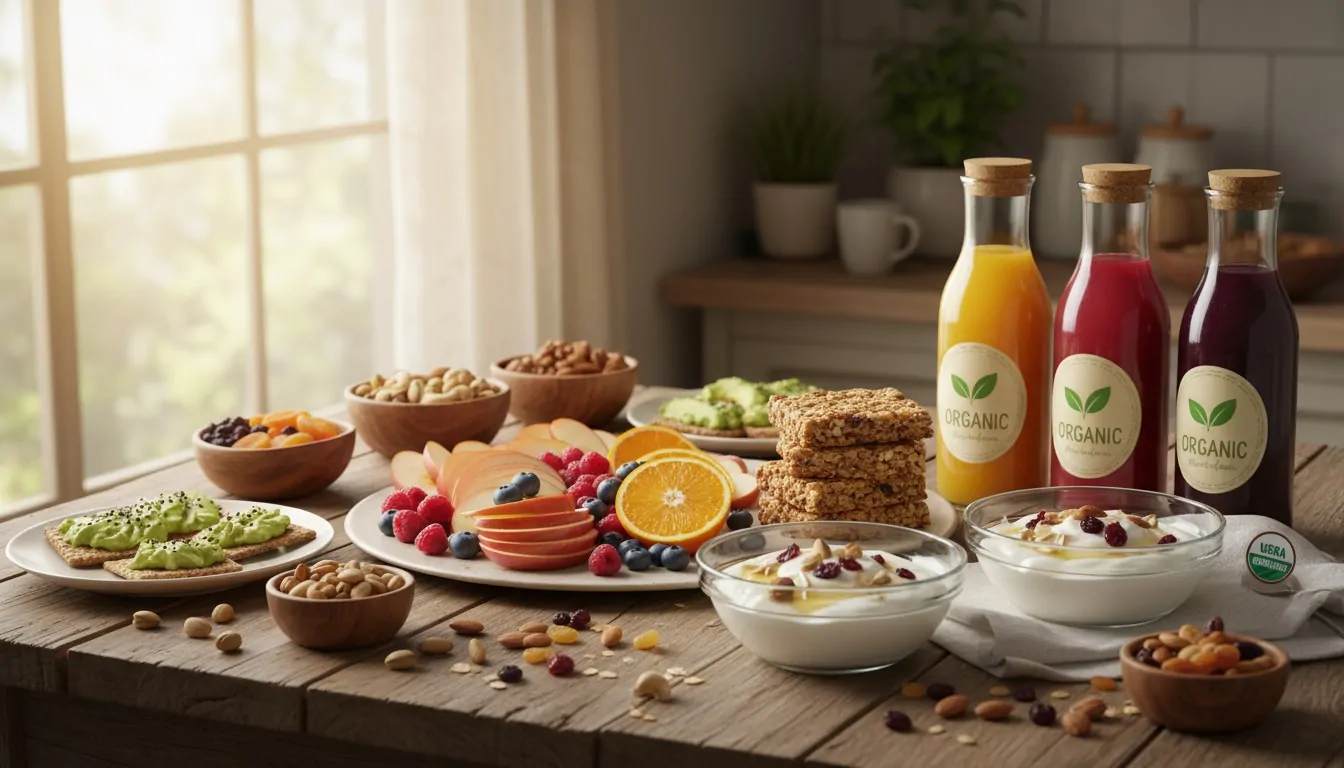
4:30 p.m., school's out. Léa runs towards you demanding her snack. You pull out… a store-bought chocolate bar. What if tomorrow you offered her a healthy alternative she'd enjoy just as much?
Creating organic snacks that are still nutritious for the whole family doesn't require hours of cooking or an excessive budget.
From quick organic recipes for children, to ready-made solutions like a portable fruit compote pouch , to organic alternatives to industrial biscuits, discover how to transform this moment into a truly delicious and healthy break.
This practical guide will provide you with many ideas for balanced snacks that will suit everyone, from toddlers to the hungriest teenagers!
Why choose organic snacks for your family?
The health benefits of organic food
Choosing organic snacks for your family is more than just a trend, it's also healthier! Indeed, certified organic products contain significantly fewer pesticide residues than their conventional counterparts.
The World Health Organization and the FAO have demonstrated this difference in several recent studies.
ANSES (French Agency for Food, Environmental and Occupational Health & Safety) also confirms that organic foods have lower levels of pesticide residues than conventional products.
The figures speak for themselves: according to the analysis by Générations Futures (2022), only 8.8% of organic fruits, vegetables and cereals contain pesticide residues, compared to 63.1% for conventional ones.
Beyond this health aspect, organic foods offer superior nutritional richness.
You should always think of a fruit as a sponge: the more it grows naturally in the sun, the more valuable nutrients it absorbs.
Harvested at optimal ripeness, organic fruits and vegetables concentrate more vitamins, minerals and antioxidants.
This nutritional density becomes particularly interesting for meeting the needs of growing children.
Taste is another notable advantage. An organic apple grown without chemical treatment develops more pronounced aromas.
This criterion greatly helps to make organic and nutritious snacks to children reluctant to eat fruit.
The positive environmental impact
Choosing organic for your snack contributes to the protection of biodiversity. Organic farming respects natural cycles, preserves soil quality, and protects water resources.
Passing on these environmental values to your children from snack time onwards teaches them to become responsible consumers.
Marine S., a mother of three, shared her experience on the "Que Choisir" forum:
Since we started eating organic snacks, my children understand better where their food comes from. We sometimes visit the local organic farm. It naturally raises their awareness.
The only thing that sometimes bothers her? The limited availability of certain products depending on the season. But normally, nature knows best, if we respect the cycles.
The nutritious organic snack: what timing and what portions?
The timing of an afternoon snack shouldn't be chosen randomly. To be truly effective, this snack should be eaten about two hours before dinner. In this context, certain light foods like fruit puree pouches or small, easily portable cereal biscuits are perfectly suited!
If it's too close to the evening meal, it risks suppressing the appetite. If it's too far away, it won't fulfill its energy function.
This snack should represent 10 to 15% of daily energy intake.
According to ANSES, breakfasts and snacks contribute 19% of total energy intake in children, compared to only 13% in adults.
For a 6-year-old, this equates to approximately 150-200 calories, but a growing teenager needs around 250-350 calories to last until dinner.
| Age range | ideal time | Recommended portion | Approximate calories |
|---|---|---|---|
| 2-5 years | 3:30 PM - 4:00 PM | 1 piece of fruit + 1 dairy product | 100-150 kcal |
| 6-10 years old | 4:00 PM - 4:30 PM | 1 piece of fruit + 1 cereal product + 1 dairy product | 150-200 kcal |
| 11-14 years old | 4:30-5:00 PM | 2 fruits or 1 fruit + compote + cereal product + dairy product | 250-300 kcal |
| 15-18 years old | 5:00 PM - 5:30 PM | Portions increased by 30% | 300-350 kcal |
| Adults | Variable | Portion size adapted to the activity | 150-250 kcal |
Creating a balanced organic snack: the essential elements
Carbohydrates: the energy to last until dinner
Carbohydrates are the main fuel for a balanced, homemade snack that gives you a boost. Prioritize whole grains, which release their energy gradually, instead of the fast-acting carbohydrates in refined sugar, which can ultimately leave you feeling tired.
A piece of organic wholemeal bread, a few rusks or a small portion of low-sugar cereal will do the trick.
Imagine carbohydrates like logs in a fireplace: simple sugars burn quickly and intensely, but are quickly extinguished. Complex carbohydrates release a steady heat for several hours.
This is exactly what children need to stay focused until dinner.
Eight-year-old Léo P. loves his Wednesday ritual, as his mother Marie J. explained on Facebook:
He spreads almond butter on his own organic wholemeal bread. Since he's been having this kind of snack, I've noticed he's been running to the candy cupboard less often!
Proteins and calcium: for growth
A nutritious organic snack should contain a source of protein and calcium. Organic dairy products – plain yogurt, fromage frais, and other soft cheeses – remain popular classics.
For vegan or lactose-intolerant families, plant-based alternatives enriched with calcium work very well.
According to ANSES, 57% of boys aged 13-15 and 80% of girls aged 16-17 are at risk of insufficient calcium intake.
Oilseeds also deserve a prominent place in our afternoon snack. A handful of almonds provides as much calcium as a glass of milk, with the added bonus of high-quality plant-based protein!
Caution with young children: offer them ground or pureed before age 5 to avoid any risk of choking.
Table of calcium intake according to sources
| Source of calcium | Quantity | Calcium (mg) | Benefits | Disadvantages |
|---|---|---|---|---|
| Organic natural yogurt | 125g | 150 | Probiotics, easily digestible | May be acidic |
| Organic cottage cheese | 100g | 120 | Rich in protein | Texture sometimes shunned |
| Enriched almond milk | 200ml | 240 | Lactose-free | Less protein |
| Almonds | 30g | 75 | Good fats, fiber | Allergen risk |
| Silken tofu | 100g | 130 | Neutral to cook | A taste to tame |
Fruits: vitamins and fiber
No snack would be complete without fruit. Choose organic, seasonal fruit: it contains more nutrients and supports local producers.
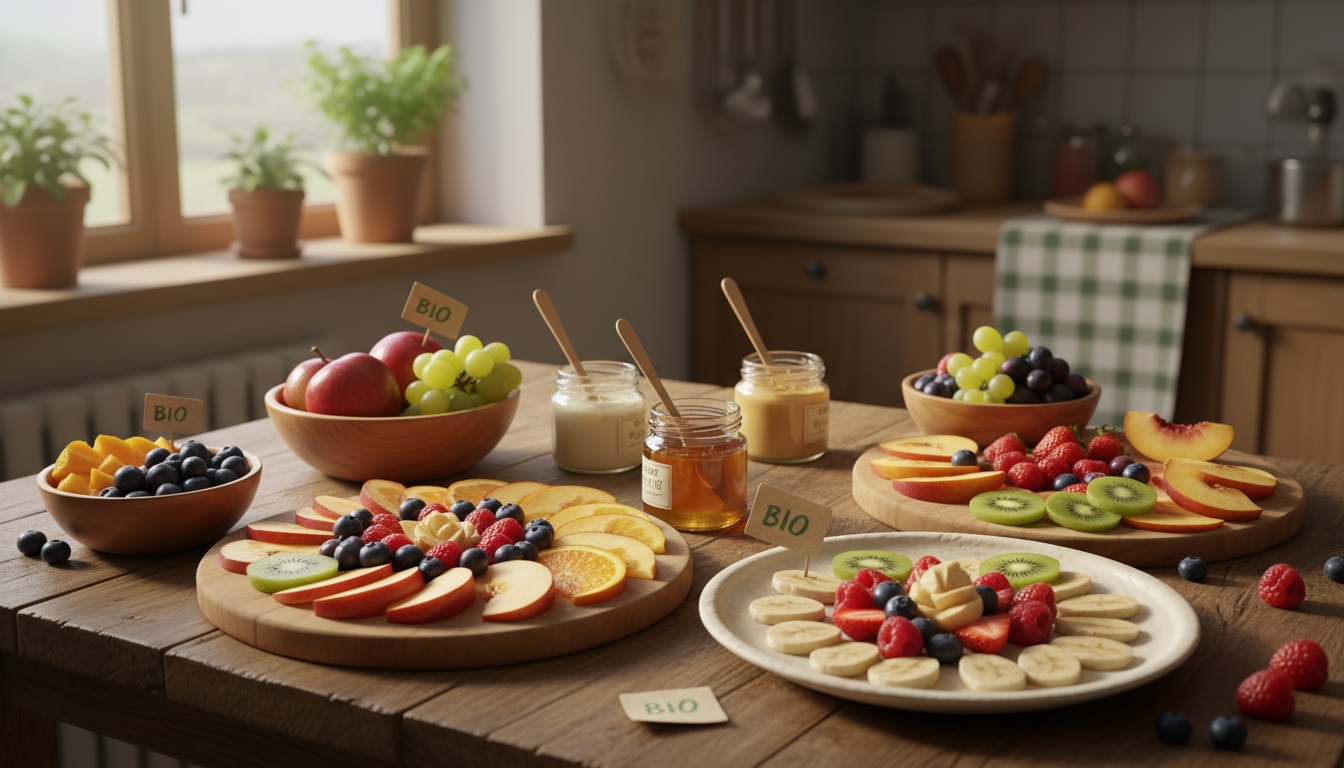
An apple in autumn, strawberries in spring, a peach in summer – following the seasons guarantees flavour and nutritional richness.
Unsweetened fruit purees are a practical alternative when children are reluctant to eat whole fruit. Organic fruit puree pouches fit easily into a schoolbag.
Always check the label: some compotes labeled "organic" still contain added sugar.
Thomas V., father of 5-year-old twins, found the solution and explains it on Instagram:
I cut the fruit into fun shapes with cookie cutters. Since then, they devour everything!
Hydration: often forgotten but essential
Water remains the ideal drink to accompany a snack. Yet, many children are turning away from it in favor of sugary, chemically-laden drinks.
To make it more attractive, offer lightly flavored water with a few slices of organic lemon or fresh mint leaves.
100% pure organic fruit juices can be consumed occasionally, but should never replace water. A glass of juice contains as much natural sugar as several pieces of fruit, but without the beneficial fiber.
Limit them to once or twice a week, no more!
💡 Did you know? The glycemic index of snacks
Foods with a high glycemic index (GI) cause a spike in blood sugar followed by a sharp drop, leading to fatigue and cravings. Complex carbohydrates maintain stable blood sugar levels for 3-4 hours.
Comparison :
- White bread: GI 75 → Energy 1h
- Organic wholemeal bread: GI 45 → Energy 3-4h
- Compote with sugar: GI 60 | without sugar: GI 35
Organic snack recipes for children: 5 quick and easy ideas
The quick snack in 5 minutes
When time is short, this combination saves the day: spread almond butter on a slice of organic wholemeal bread, add a few banana slices and a drizzle of honey. Yum!
Enjoy it with a glass of water or plant-based milk – it's just perfect. Total time: 5 minutes flat.
An even quicker variation: mix organic plain yogurt with chopped fresh fruit and a spoonful of honey. Sprinkle with a few oat flakes for crunch.
Homemade cereal bars
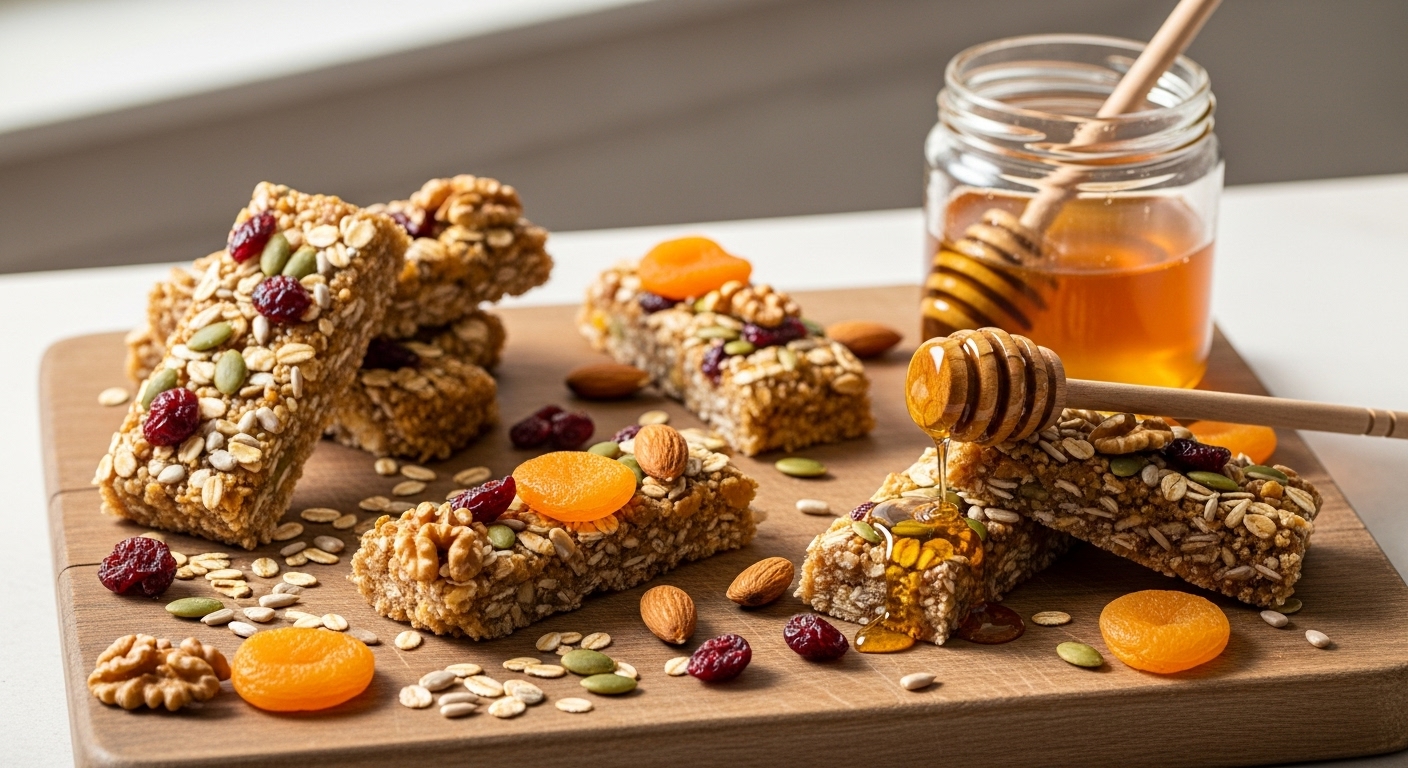
Ingredients: 200g organic oat flakes, 100g honey or agave syrup, 80g almond puree, 50g chopped dried fruit, 30g seeds.
Preparation: Mix all the ingredients in a bowl. Spread the mixture onto a baking sheet lined with parchment paper, to a thickness of about 1.5 cm. Bake for 20 minutes at 160°C.
Allow to cool completely before cutting into bars. Storage: 1 week in an airtight container.
Nutritional values (per 40g bar): 165 kcal | Protein: 4.5g | Carbohydrates: 22g | Fiber: 3.2g | Calcium: 45mg
These homemade bars are a great idea for a quick and healthy snack, perfect for on-the-go. Unlike store-bought versions, you control every ingredient.
Homemade applesauce in 10 minutes
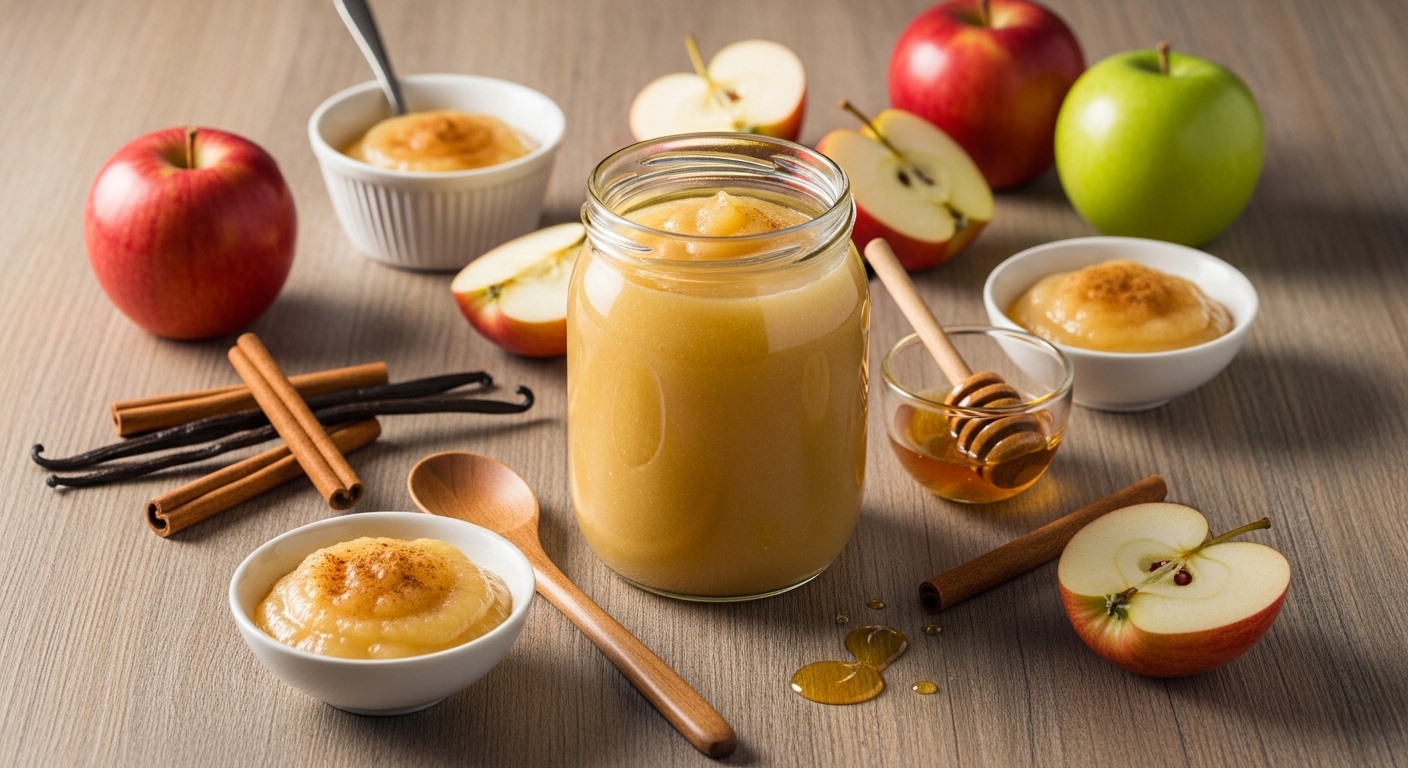
Peel and chop 4 organic apples. Add 2 tablespoons of water to a saucepan, cover and cook for 8 minutes over medium heat.
Roughly mash with a fork. No added sugar is necessary: the apples are enough.
Storage: 5 days in the refrigerator or 3 months in the freezer.
Date energy balls
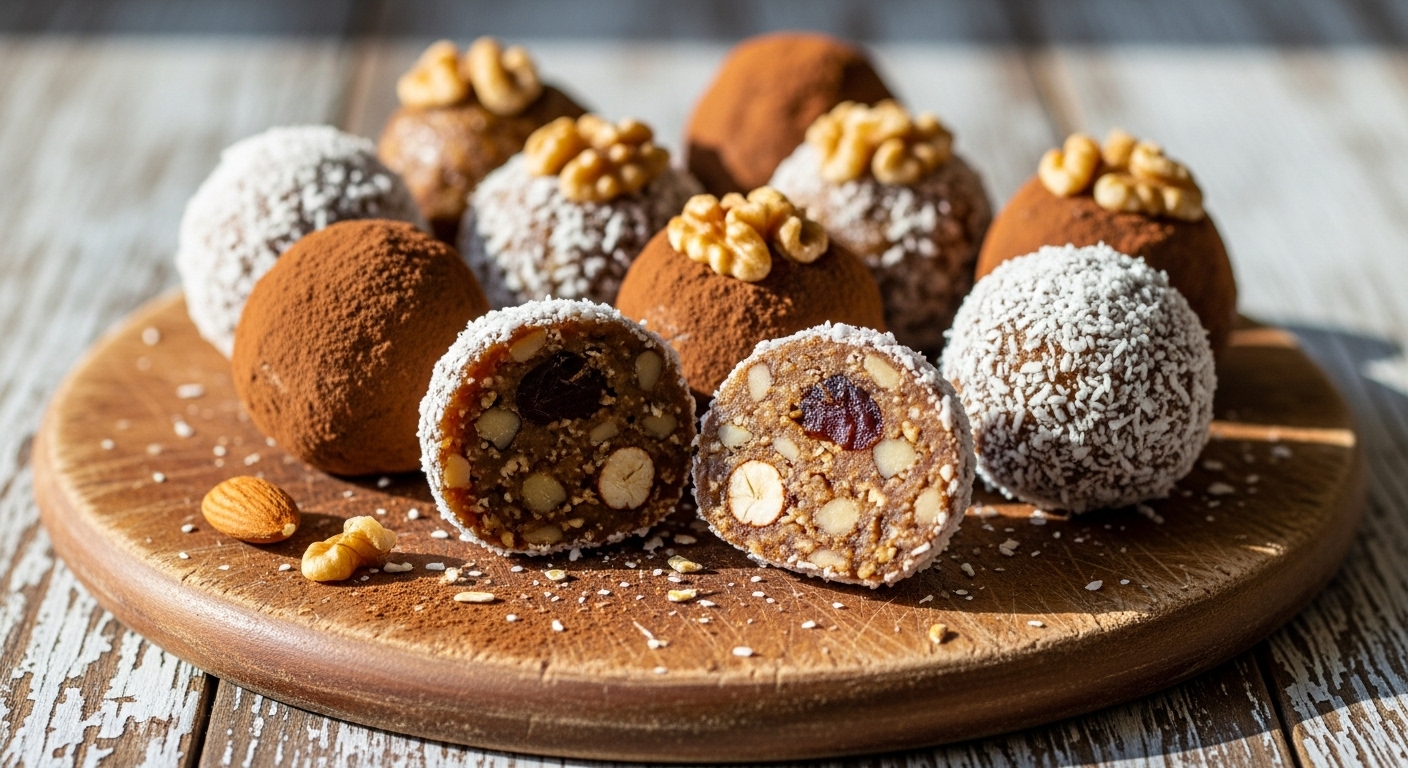
Blend 200g of pitted dates with 100g of almonds, 2 tablespoons of organic cocoa and a pinch of salt. Form balls the size of a walnut.
Roll them in shredded coconut. No cooking required.
Sophie, a mother of two, told us in the comments:
Energy balls are my secret weapon! My kids love rolling them themselves on Sundays. That gives us 10 snacks in advance.
Comforting organic rice pudding
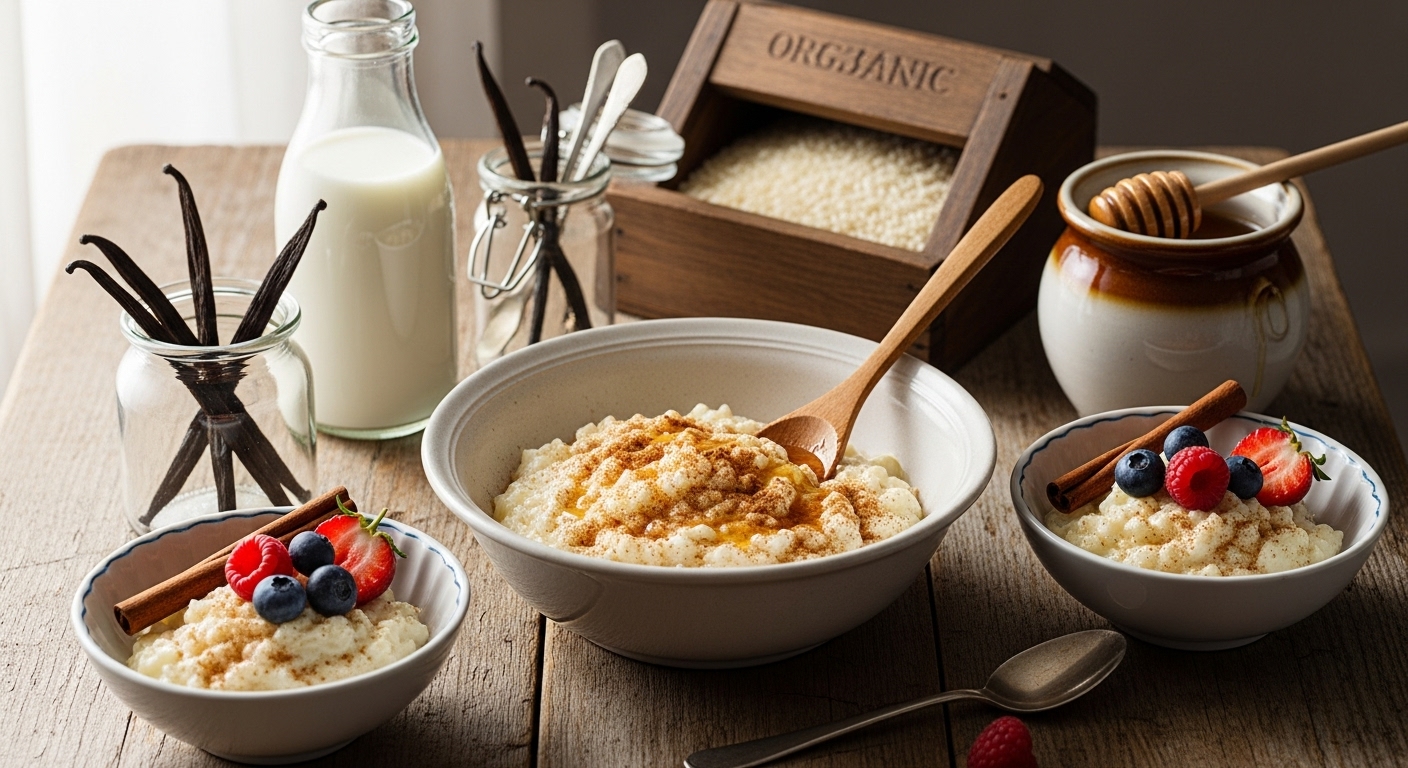
Bring 500ml of organic milk to a boil with 80g of organic short-grain rice. Add a split vanilla pod.
Cook for 30 minutes over low heat, stirring regularly. Sweeten lightly with honey at the end of cooking if needed.
Keep it well chilled in individual portions for 3-4 days.
Our Top 10 organic snacks to compare
| Type of snack | Preparation time | Nutritional value | Price/snack | Convenient transport | Recommended age |
|---|---|---|---|---|---|
| Apple + almonds | 2 min | 8/10 | 0,50€ | ⭐⭐⭐⭐⭐ | From age 5 |
| Wholemeal bread + nut butter | 3 min | 9/10 | 0,40€ | ⭐⭐⭐⭐ | From age 2 |
| Plain yogurt + fresh fruit | 5 min | 9/10 | 0,80€ | ⭐⭐⭐ | From 18 months |
| Homemade compote | 10 min | 7/10 | 0,25€ | ⭐⭐⭐⭐⭐ | From 6 months |
| Homemade cereal bars | 30 min | 8/10 | 0,35€ | ⭐⭐⭐⭐⭐ | From age 3 |
| Energy balls | 15 min | 8/10 | 0,45€ | ⭐⭐⭐⭐⭐ | From age 4 |
| Organic fruit compote pouch (commercially available) | 0 min | 6/10 | 1,20€ | ⭐⭐⭐⭐⭐ | From 6 months |
| Simple organic biscuits | 0 min | 5/10 | 0,60€ | ⭐⭐⭐⭐⭐ | From age 2 |
| Cottage cheese + honey | 2 min | 8/10 | 0,70€ | ⭐⭐⭐ | From 18 months |
| Homemade rice pudding | 30 min | 7/10 | 0,50€ | ⭐⭐⭐ | From 12 months |
Organic alternatives to industrial biscuits: which to choose?
Replace industrial biscuits
The shelves are overflowing with biscuits labeled "organic", but they are not all created equal. Look for a short and easy-to-read ingredient list: organic wholemeal flour, butter or vegetable oil, whole cane sugar.
Avoid endless ingredient lists packed with additives, even if advertised as natural!
ANSES warns of excessive sugar consumption among children: 75% of 4-7 year olds, 60% of 8-12 year olds and 25% of 13-17 year olds exceed the recommended thresholds.
Here are some selection criteria for good organic biscuits:
- Maximum 5 to 7 ingredients
- Wholemeal or semi-wholemeal flour as the first ingredient
- Less than 20g of sugar per 100g
- Absence of glucose-fructose syrup
- AB or Eurofeuille certification visible
Applesauce pouches: very practical but worth comparing
Confectionery pouches are the perfect on-the-go solution for toddlers' snacks at school. Their convenient size appeals to both parents and children.
But beware of marketing traps! Many pouches advertise "with fruit" when they mostly contain apple puree with only 10% of the advertised fruit.
To choose your commercially available pouches wisely: favor the labels "no added sugar" rather than "reduced sugar", check the actual percentage of fruit, and opt for 100% recyclable formats.
Reusable water bottles remain the most ecological and economical alternative.
Drinkable yogurts: beware of the pitfalls
Drinkable yogurt seems convenient for a snack on the go. The problem is: most commercially produced versions contain astronomical amounts of sugar.
A single drinking yogurt can contain the equivalent of 4 sugar cubes!
Choose a classic plain yogurt that you mix with blended fruit and a little honey. Pour everything into a small reusable pouch.
This gives you a homemade, organic, and sugar-free drinking yogurt. This organic snack recipe for children is often more popular than traditional plain yogurt with reluctant little ones.
Deciphering organic labels: which ones to favor?
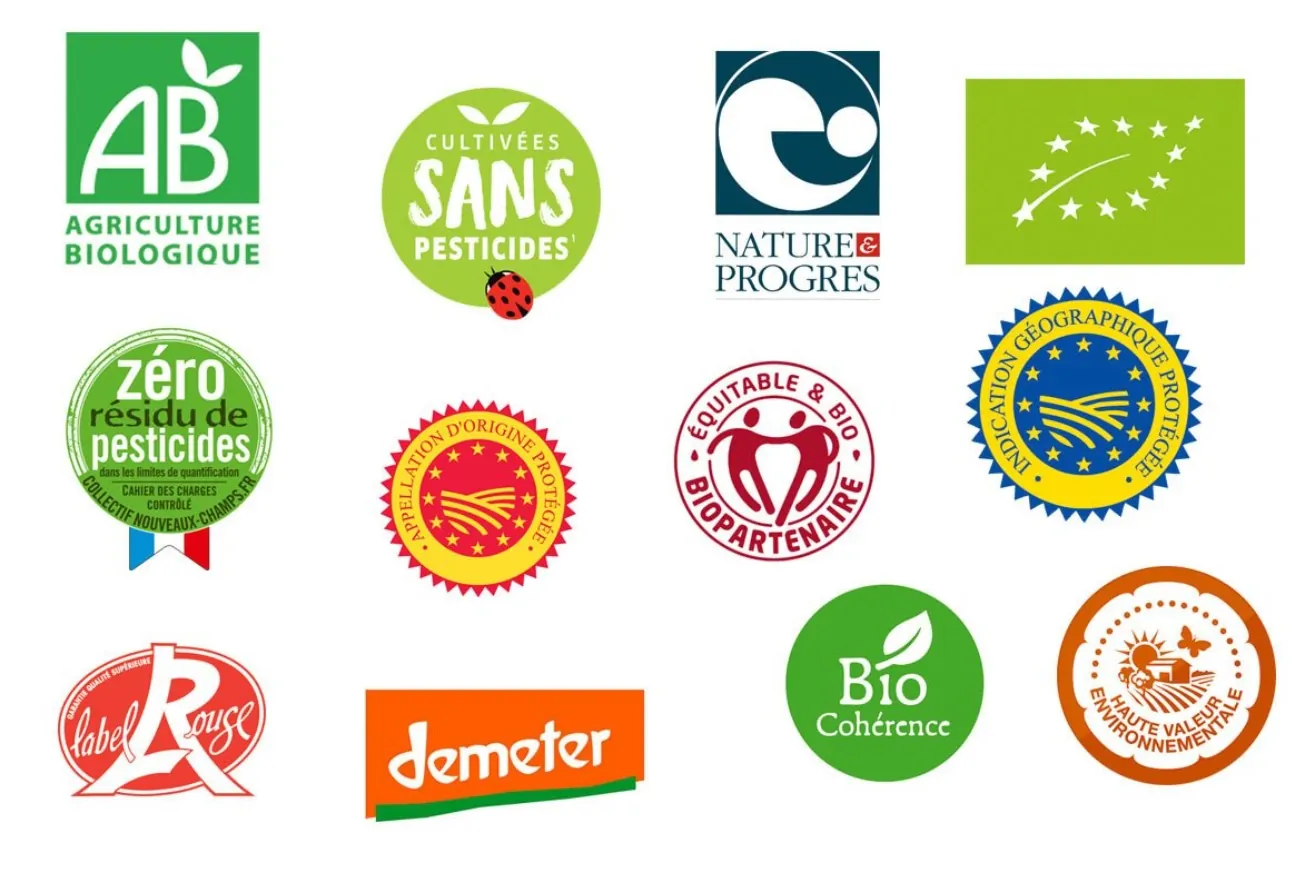
Organic Farming (AB label)
Official French label. Prohibits synthetic chemical pesticides, GMOs (< 0.9%) and requires annual inspections.
Eurosheet
A mandatory European organic label for all organic products sold in the EU. The specifications are slightly less strict than the French AB label.
Bio Coherence
More demanding private label: 100% organic ingredients (vs 95% for AB), ban on palm oil, priority to local production.
Demeter
Certified for biodynamic agriculture. The most demanding, with holistic practices.
Our advice: Choose at least AB or Euroleaf certification. For a more rigorous approach, opt for Bio Cohérence or Demeter.
Homemade balanced snacks: planning for the week
Sunday batch cooking
Dedicate an hour on Sunday afternoon to preparing snacks for the week. This organization will simplify things and leave you relaxed in the evening.
A typical batch cooking session:
- 1:00 PM - 1:30 PM: Prepare a batch of homemade cereal bars
- 1:30-2:00 PM: Make two large apple compotes
- 2:00 PM - 2:30 PM: Make 20 energy balls
- 2:30-3:00 PM: Prepare a cake or an organic yogurt cake
The result: you have 4 different types of snacks for the whole week. All you have to do is vary them each day by adding fresh seasonal fruit.
Regarding the budget: is organic food really more expensive?
| Type of snack | Monthly cost | Annual cost | Nutritional quality |
|---|---|---|---|
| Industrial chocolate bars | 60€ | 720€ | Weak |
| classic industrial biscuits | 45€ | 540€ | Average |
| Organic fruit compote pouches (commercially available) | 95€ | 1140€ | Good |
| Homemade organic snacks | 40€ | 480€ | Excellent |
| Homemade mix + store-bought organic products | 55€ | 660€ | Very good |
A homemade organic snack is cheaper than conventional industrial products, while guaranteeing incomparable nutritional quality.
Some tips to reduce costs: buy your organic fruits and vegetables in season (up to 30% cheaper), favour organic brands from retailers, prepare in large quantities to reduce the unit price, and join a CSA to benefit from weekly baskets at affordable prices.
A quick and healthy snack idea, suitable for all ages
For toddlers (2-5 years old)
Young children require appropriate portion sizes and safe textures. Choose easy-to-chew pieces and avoid foods that pose a choking hazard.
Suitable ideas: smooth compote + low-sugar organic biscuit, plain yogurt with mashed banana, wholemeal bread with thinly spread almond puree, cottage cheese with mixed compote.
For school-aged children (6-11 years old)
Children in this age group appreciate independence. Offer them a balanced, homemade snack that they can prepare themselves, at least partially.
Involve them in the races and in the preparations for Sunday.
Some examples: a homemade cereal bar accompanied by an apple and a bottle of water, wholemeal bread which they spread themselves with organic dark chocolate and a clementine, or cottage cheese with fruit which they cut up and some nuts.
For teenagers and adults
Teenagers burn a huge amount of energy, particularly between the ages of 12 and 17. Their needs literally explode.
A teenager's afternoon snack is like a real mini-meal 🙂
Here are some ideas for hearty snacks: 2 large slices of wholemeal bread with almond butter, a banana, nuts and plain Greek yogurt, or a large homemade smoothie, or even 3-4 energy balls accompanied by an apple, a piece of cheese and water.
For adults, an afternoon snack remains essential, especially after intense physical activity. A nutritious, organic snack around 5 p.m. helps prevent those cravings that lead to snacking on anything and everything before dinner.
Mistakes to avoid with organic snacks
Even when choosing organic products, certain mistakes can reduce your efforts to nothing.
First mistake: focusing solely on the organic label while forgetting about nutritional balance.
An organic cookie is still, first and foremost, a cookie, often very sweet and very fatty.
The second pitfall: falling into the trap of excessive sugar, even natural sugars. Honey, agave syrup, and coconut sugar are still sugars in the eyes of our bodies. Use these sweeteners sparingly.
Third mistake: neglecting hydration. Water plays a role in digestion and satiety. It should always accompany every snack.
Fourth pitfall: being misled by "false friends." Some ultra-processed organic products contain just as many additives as their conventional counterparts. Read labels carefully, even on organic products.
Fifth mistake: aiming for perfection every time you snack. Keep a few organic backup options in your cupboards. The goal is to do better most of the time, not to achieve exhausting perfection.
Answers to your questions
Is a snack really mandatory for my child?
Yes, an afternoon snack is an essential meal until the end of adolescence. It covers 15 to 20% of daily energy needs and prevents energy dips between lunch and dinner.
If your child isn't hungry, don't force them. Simply offer water and adjust the amount at dinner.
What to give as a snack when you're short on time?
Quick 2-minute version: wholemeal bread + 2 squares of dark chocolate + 1 apple + water. Or plain yogurt + banana + a few almonds.
On Sundays, prepare homemade cereal bars or energy balls that will keep all week.
Does organic food really cost more for snacks?
No, homemade organic food is cheaper! A homemade organic snack costs €0.40-€0.80 compared to €1.50-€2.00 for industrially produced organic food.
Tip: buy organic seasonal fruit (30% cheaper), favour store brands, and prepare in large quantities on the weekend.
My child refuses to eat fruit, what should I do?
Cut them into fun shapes with cookie cutters, present them on colorful skewers, or offer compotes without added sugar in reusable pouches.
Offer the same fruit 8 to 10 times: acceptance comes with repetition. Never force it, offer it without pressure.
Which organic products should you absolutely avoid for afternoon tea?
Beware of "false friends": ultra-sweet organic biscuits (>20g of sugar/100g), fruit pouches with less than 50% fruit, organic drinking yogurts with glucose-fructose syrup.
Read the labels: fewer than 5-7 ingredients = better choice. Organic does not automatically guarantee nutritional balance.
In short
Offering a balanced, organic family snack isn't a daily feat. This tasty break simply consists of: a seasonal fruit, a whole grain product, a source of protein, and water.
organic snack recipes for children , such as energy balls or cereal bars, require little time and ultimately cost less than industrial products.
Start gently by gradually replacing one or two snacks a week with organic alternatives to processed cookies. Involve your children in weekend preparations: they will quickly become your best ambassadors.
Sunday batch cooking transforms your organization and makes organic food accessible, even with a busy schedule.
Remember that the goal is to do better most of the time, not to achieve perfection. Every quick and healthy snack idea you adopt will lead you towards a diet that is more respectful of your family's health and the environment.
Your child is building their health capital right now, and that also depends on the nutritional quality of their snack.
⚠️ Important note: The information in this article is for informational purposes only and is not a substitute for professional medical advice. Every child has specific nutritional needs.
In case of known or suspected food allergies (nuts, gluten, lactose, etc.), it is imperative to consult a pediatrician or allergist before introducing new foods into your child's diet.
Always check the product composition and the presence of traces of allergens on the labels.
