
In short
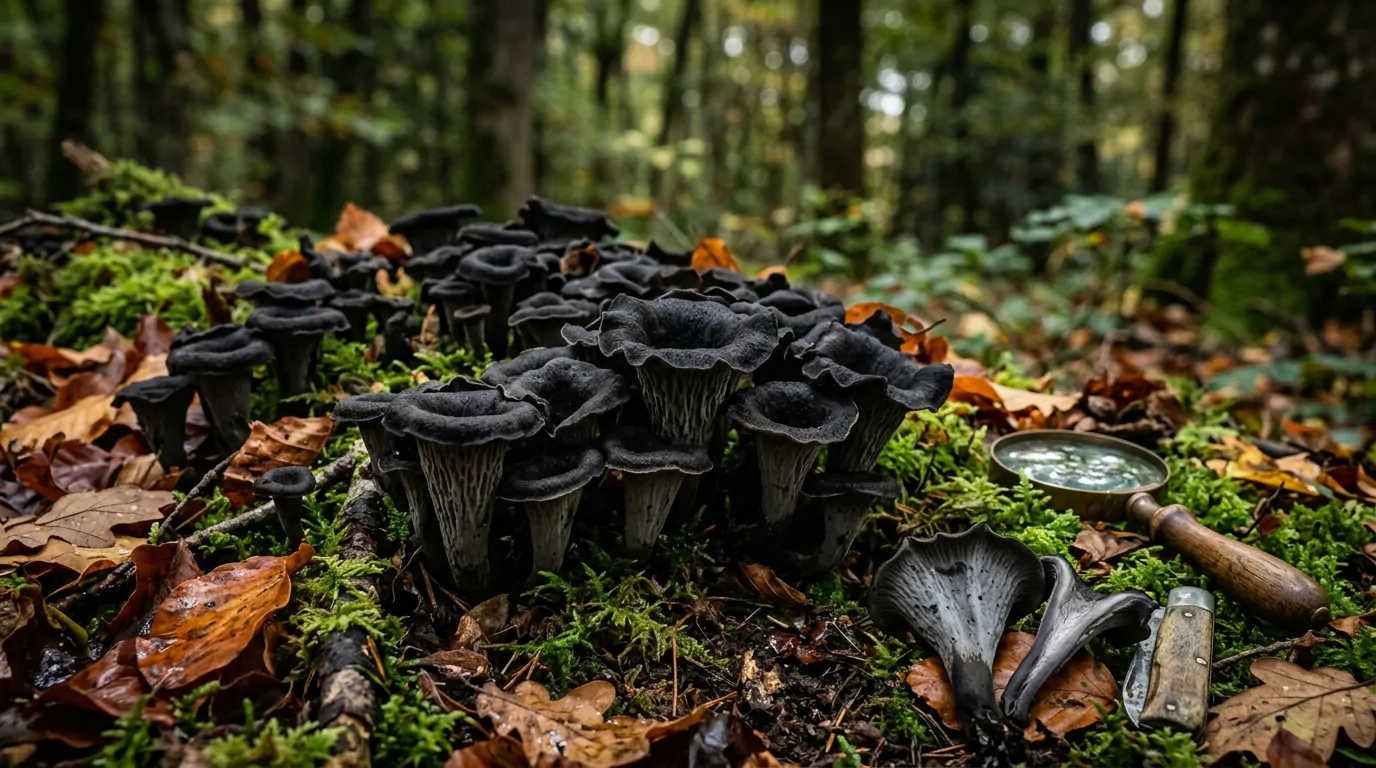
Are black trumpets dangerous… or not? The name is certainly frightening! Yet, behind this dramatic name lies a perfectly edible mushroom, prized by cooks for centuries.
If you are wondering whether it is safe to eat black trumpet mushrooms , the answer is yes — provided you identify them correctly and take some common-sense precautions.
This article will give you many tips for picking, identifying and cooking this forest mushroom with confidence!
Are black trumpet mushrooms dangerous?
A clear answer: edible and non-toxic
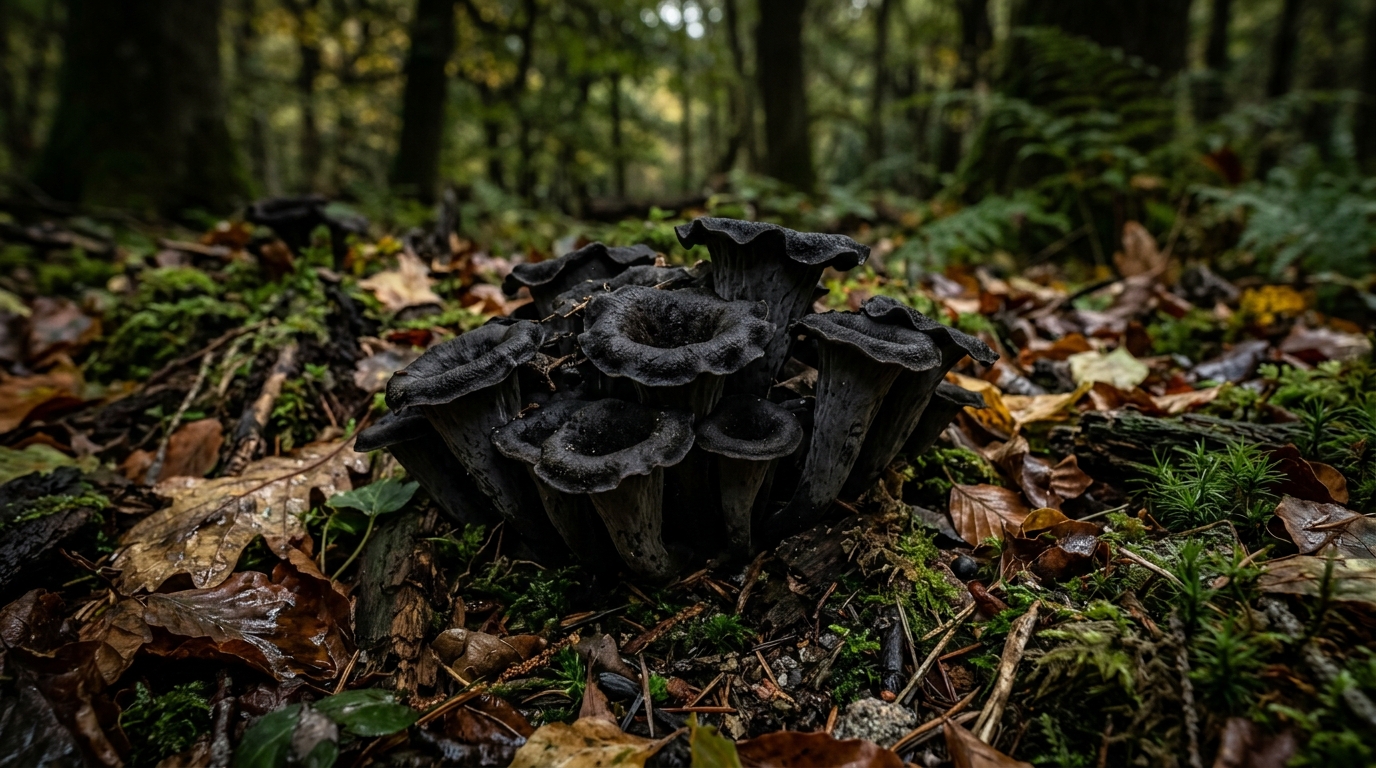
Let's be clear: black trumpet mushrooms are not poisonous. They are edible mushrooms, recognized as such by mycologists and health authorities.
Their Latin name, Craterellus cornucopioides, leaves no room for doubt in the scientific literature.
They have been consumed for a very long time in France, particularly in the Southwest, mountain regions and areas of humid oak forests.
They feature in many traditional recipes and are sold dried in delicatessens.
The question of whether black trumpet mushrooms are poisonous or edible often comes up among novice foragers. The answer remains the same: they are safe when properly identified, cleaned, and cooked.
Raw, they can slightly irritate the intestines, like many forest mushrooms — but once cooked, they pose no particular problem.
Their flavor is intense, almost smoky, with very pronounced earthy notes. It is precisely this aromatic richness that makes them so sought after in cooking!
Why this unsettling name, despite everything?
The name " black trumpet " is primarily a matter of aesthetics. These mushrooms often grow in autumn, the season of decline, in dark, damp undergrowth. Their black or anthracite gray color, their hollow shape reminiscent of a funeral horn… all contribute to a sinister image.
In reality, the name comes from a visual metaphor, not a warning about their toxicity.
Some also believe that their appearance in the dead leaves, a time when nature seems to fall asleep, has contributed to this morbid reputation.
Other languages are more poetic: the Italians call them trombetta dei morti, the English horn of plenty , emphasizing their gustatory generosity rather than their disturbing aspect.
This mushroom therefore suffers from an unfair image problem!
Its appearance and season have earned it a reputation that does not reflect its real qualities at all — nor the possible risks of the black trumpet, which, let us remember, are almost non-existent apart from misidentification.
How to identify black trumpet mushrooms?
The typical color and shape of the mushroom
Knowing how to recognize black trumpet mushrooms begins with observing their general shape.
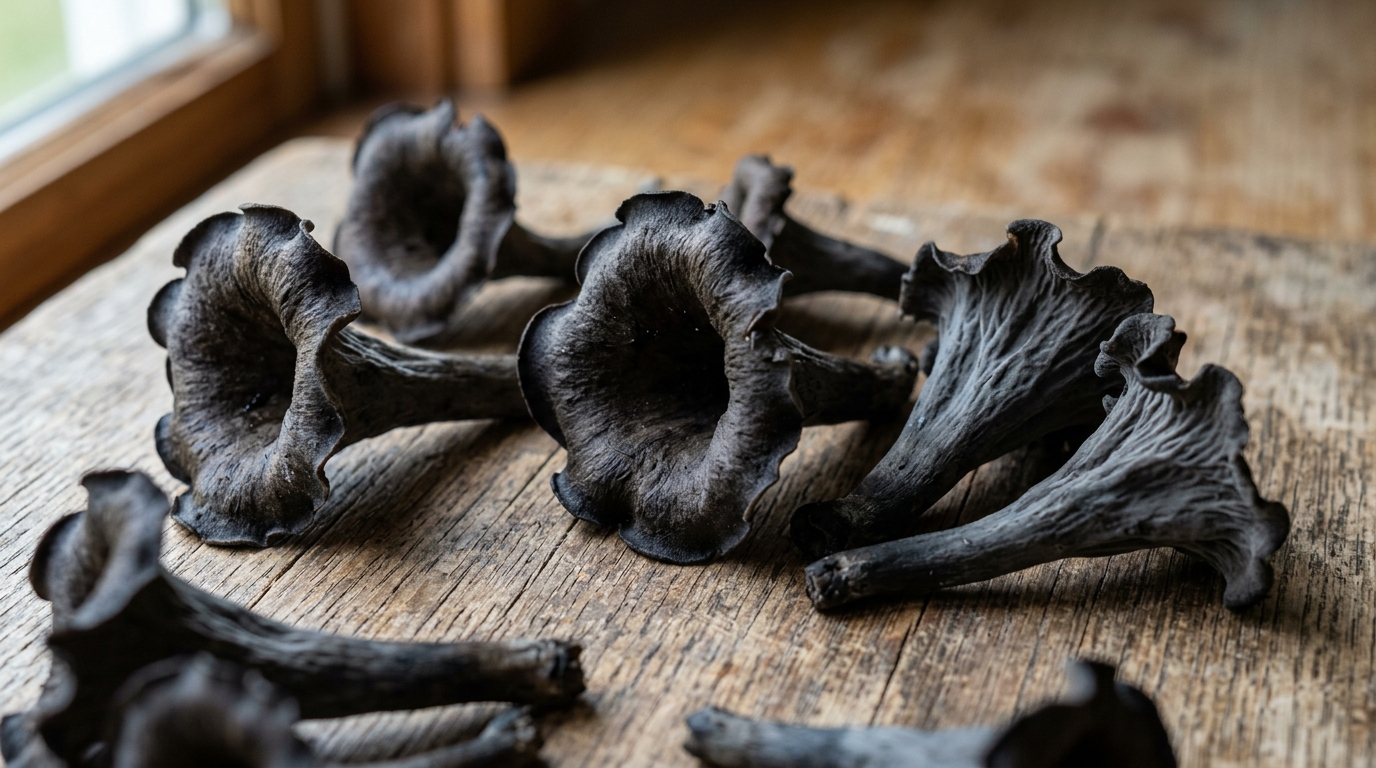
These mushrooms have a hollow funnel shape or an elongated tube, open at the top like an inverted trumpet. Their size varies between 5 and 12 centimeters in height.
The color is dark: very dark grey, blackish brown, sometimes almost black depending on the ambient humidity. The outer surface (the fertile part) is slightly lighter, with bluish-grey reflections.
As it dries, the mushroom darkens further and shrivels.
The cap is not distinct from the stem: the whole body forms a continuous, hollow structure, making it easily recognizable.
The absence of gills: a key criterion
This is one of the most reliable identification criteria!
The black trumpet mushroom does not have gills — those small, regular blades that are seen under the cap of many mushrooms.
The outer surface of the trumpet is smooth or very slightly wrinkled, almost matte.
Running your finger over it, you won't feel any protruding structures. This fertile surface, grey to grey-blue, is where the spores are produced.
This absence of marked gills is a solid starting point for identifying the mushroom.
Combined with the hollow tube shape and dark color, this criterion considerably reduces the risk of confusion with dangerous species, most of which have clearly visible gills.
The ideal season to find them in the forest
The black trumpet season mainly extends from the end of summer until the first frosts, from September to November depending on the region.
In milder areas, they can appear as early as August or persist until December.
They grow in deciduous forests — oaks, beeches, hornbeams — on calcareous and well-drained soils. They are often found in dense groups, sometimes hidden under dead leaves or at the base of mosses.
Their dark color makes them inconspicuous in the forest litter. Once a group has been found, it is necessary to look around: for they rarely grow alone and are often concentrated in specific areas that regular foragers revisit every year.
🍄 Checking tool: Is it a trumpet of death?
Answer the following questions to assess whether the mushroom you found is indeed the black trumpet (Craterellus cornucopioides).
The risks of confusion you absolutely must know
Difference between the black trumpet and the black chanterelle
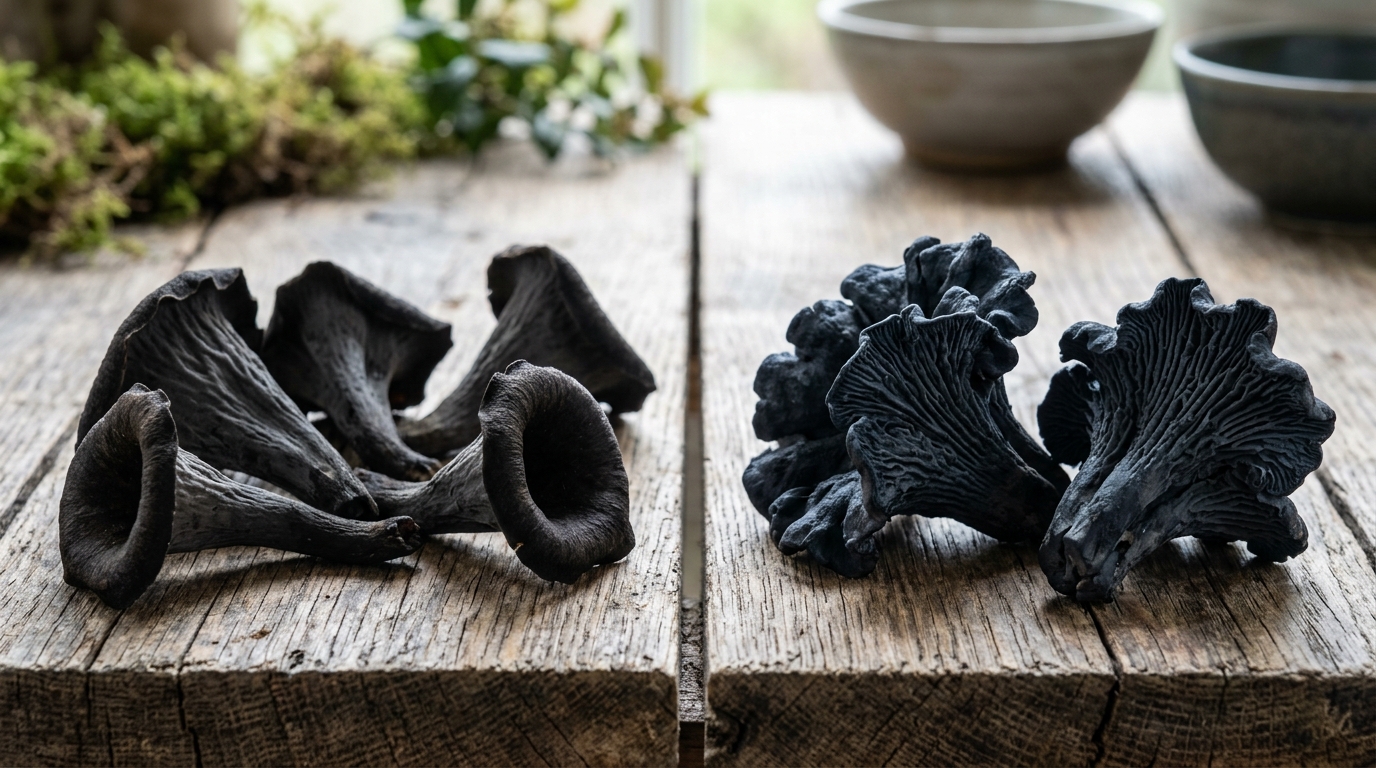
The difference between black trumpet and black chanterelle deserves clarification: in reality, these two names often refer to the same mushroom.
Craterellus cornucopioides is sometimes called "black chanterelle" or "black girolle" depending on the region. There are not two distinct species here.
The confusion stems from local vernacular names, which vary from region to region. In some areas, "chanterelle noire" does indeed refer to the black trumpet.
In others, this name may refer to a dark form of Cantharellus cinereus, a related and also edible species.
The important point: neither of these two mushrooms is poisonous. But accurately identifying the species remains a good habit.
If you harvest a dark funnel-shaped mushroom and are unsure of the two names, look at the outer face: the black trumpet is smoother, Cantharellus cinereus has more pronounced folds.
| Characteristic | Trumpet of Death | Cantharellus cinereus |
|---|---|---|
| External face | Smooth to slightly wrinkled | Well-defined creases |
| Color | Black to very dark gray | Grey-brown to slate grey |
| Edibility | Yes | Yes |
| Risk | Non-toxic | Non-toxic |
Other black mushrooms not to be confused
The confusion of the black trumpet mushroom with other fungi becomes truly concerning when we talk about other dark species that grow in the same environments.
The main risk concerns two fungi:
- The scalloped helvella (Helvella lacunosa) : irregular saddle-shaped cap, hollow and ribbed stem. Its shape is quite different, but an untrained eye could mistake the two from a distance. It is considered suspect, even slightly toxic when raw.
- The dark bladder cup fungus and certain species of black cup fungus: cup-shaped or spherical, with a black internal surface. They don't have the same silhouette at all but can confuse a beginner.
In any case, no deadly species truly resembles the death trumpet to a careful observer.
The truly dangerous mushrooms (death cap, cortinarius, etc.) have very different shapes, colors, and structures.
The risk exists especially if you pick the fruit without looking properly.
How to avoid identification errors?
The first rule: never pick a mushroom that you cannot identify with certainty. It's simple, but it's fundamental!
Some practical tips:
- Use a illustrated mycological guide , with color photos and precise descriptions.
- Photograph the mushroom from all sides before picking it — from above, below, in cross-section.
- Do not rely solely on color: light and humidity can alter the visual appearance of a mushroom.
- If possible, go out with an experienced forager on your first trips into the forest.
- Have your harvest validated by a pharmacist, who can identify the species harvested.
Never mix unidentified mushrooms with edible mushrooms in the same basket. A single toxic specimen can contaminate the entire harvest.
Safely picking black trumpet mushrooms
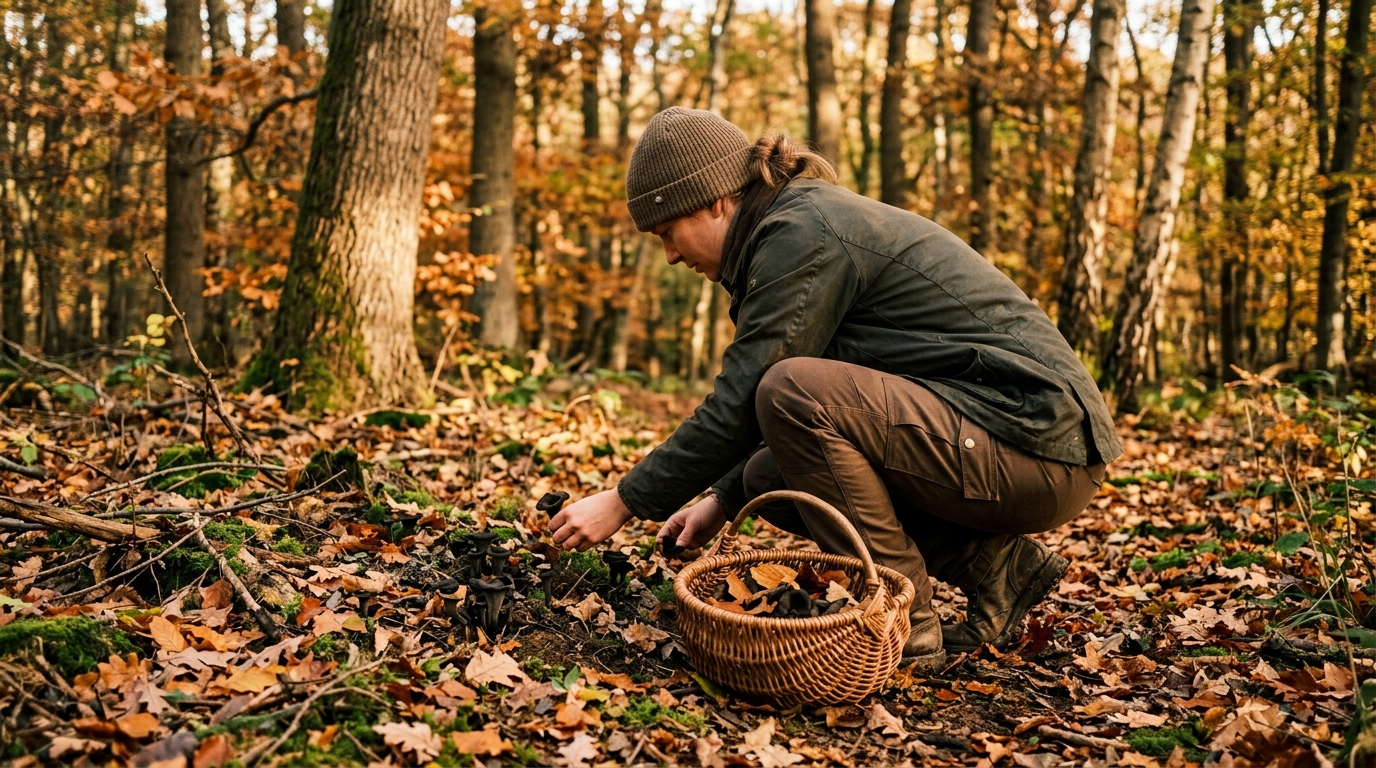
Choose a healthy and unpolluted environment
Safe harvesting of black trumpet mushrooms begins even before touching the mushroom: it begins with choosing the location.
Fungi are bioaccumulative organisms. This means they absorb heavy metals, pesticides, and pollutants present in the soil.
Absolutely avoid areas near busy roads, factories, fields treated with pesticides, or former industrial sites.
Opt for remote forests, protected natural areas, or terrain you know well.
Healthy soil produces healthy mushrooms. If you want to harvest and cook wild products with peace of mind, the picking location is just as important a decision as identifying the mushroom itself.
Have your harvest checked by a pharmacist
In France, pharmacists are trained in mushroom identification , and this free service is too often ignored by amateur mushroom pickers, even though it constitutes the most accessible safety net!
Present your harvest whole, without washing or cutting the mushrooms, so that the pharmacist can examine them in their natural state. Specify where and when you picked them.
This check is particularly important if you are a beginner, if you have collected unusual species, or if you have any doubt about the identification of one or more specimens. It's better to go home empty-handed than sick!
Good habits to adopt before returning home
Once the harvest is over, a few simple habits reduce the risks:
- Sort the mushrooms on site if possible, removing those you cannot clearly identify.
- Transport them in a wicker basket or ventilated crate — never in a sealed plastic bag which accelerates fermentation.
- Wash your hands thoroughly after picking, before putting your fingers in your mouth.
- Never taste a raw mushroom directly in the forest to "test" its edibility.
- Keep a few whole, uneaten specimens aside in case symptoms appear after eating — this makes identification easier in a medical emergency.
Keep a record in a notebook of the time, place, and type of currency consumed during each outing. In case of a medical emergency, this information is invaluable to emergency physicians.
Symptoms of poisoning and what to do

General signs of mushroom poisoning
Even though black trumpets are not toxic, it is useful to know the symptoms of black fungus poisoning in order to react quickly if something is wrong — especially in case of confusion with another species.
The signs of mushroom poisoning vary depending on the species involved and the quantity ingested.
We generally distinguish between:
- Short-term syndromes (less than 6 hours) : nausea, vomiting, diarrhea, abdominal pain, sweating. Often of gastrointestinal origin, they are uncomfortable but rarely serious.
- Long-onset syndromes (more than 6 hours, sometimes 24 to 48 hours) : neurological, hepatic, or renal symptoms. These forms are rarer but potentially severe. They involve highly toxic mushrooms such as the death cap (Amanita phalloides).
A delay of more than 6 hours between ingestion and the appearance of the first symptoms is a serious warning sign that requires urgent medical attention.
It's also important to know that edible mushrooms that are poorly stored or cooked can cause digestive problems, even if they aren't toxic themselves. Freshness and cooking are just as important as identification!
What should you do if you have any doubts after ingestion?
If you experience symptoms after consuming mushrooms, here's what to do:
- Do not wait for symptoms to worsen. Contact emergency services (SAMU) or your local poison control center.
- Do not induce vomiting unless advised otherwise by a doctor.
- Keep any uneaten mushrooms left over, or take a picture if you don't have any left, to help with identification.
- Remember the exact time you ate and the approximate quantity.
In France, the national number for poison control centers is 15 (SAMU), or you can contact your regional poison control center directly. The European emergency number 112 also works from any phone.
Prepare and cook black trumpet mushrooms
The nutritional value of this forest mushroom
Now that you're sure you've found the right mushrooms, it's time to cook them 🙂
The nutritional value of black trumpet mushrooms is interesting for such a low-calorie food. They are very low in fat and sugar, with a high water content when fresh.
They provide dietary fiber, minerals such as potassium, iron and phosphorus, as well as B vitamins. Their protein content is modest but not negligible for a plant.
What truly sets them apart is their concentrated aroma once dried. As with recipes like creamy morel sauce, dehydrated mushrooms release far more intense flavors than fresh ones—a trick appreciated by cooks.
Cleaning steps before cooking
Black trumpet mushrooms often grow in leaf litter and plant debris. Their hollow, funnel-shaped cavities easily trap soil, leaves, and small insects. Careful cleaning is therefore necessary!
- Cut off the earthy base of the plant.
- Carefully open the hollow tube and check the inside: remove any visible debris.
- Rinse quickly under cold water, rubbing gently. Do not soak: the mushrooms will absorb too much water.
- Drain them in a colander, then dry them with absorbent paper or let them air dry.
If your black trumpet mushrooms are very sandy, give them two or three quick rinses rather than a long soak. The goal is to remove the dirt without damaging the mushroom's texture.
The best ways to cook them healthily
Black trumpet mushrooms can be cooked in many ways. Their woody and slightly smoky flavor complements a variety of dishes.
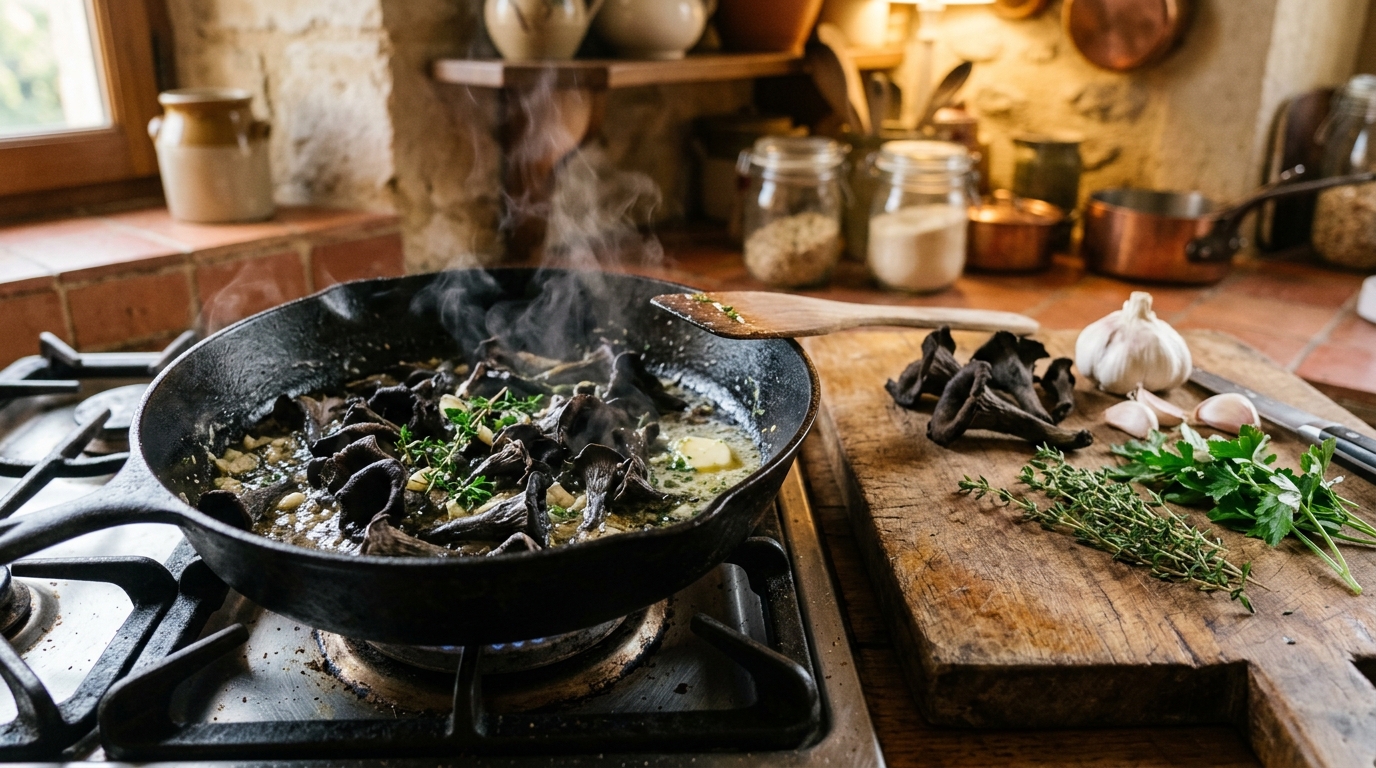
- In a pan : sauté them over high heat in butter or olive oil for 5 to 8 minutes, until the liquid has evaporated. Add garlic, parsley, and salt.
- In a sauce : incorporated into a cream, they richly flavor a pasta dish or poultry.
- Dried and then rehydrated : soak them in lukewarm water for 20 minutes before use. The soaking water can be used as a base for sauces.
- When incorporated into an omelet or risotto : their dark color provides a visual contrast and their taste holds up well to heat.
As with freezing other mushrooms, it's perfectly possible to preserve black trumpet mushrooms this way, after sautéing them for a few minutes in a pan. They will keep for several months without losing their flavor!
One last thing: always cook them before eating them. Raw, they can cause minor digestive upset. Cooked, they are perfectly digestible and delicious.
For those who want to go further, there are many techniques for preserving vegetables and saving time in the kitchen, and dried or frozen mushrooms fit into this same practical logic.
- Edible and non-toxic
- Intense aromatic flavor, highly valued in cooking
- Low in calories and fat
- They can be easily preserved dried or frozen
- Versatile in the kitchen (sauces, stir-fries, risottos…)
- Difficult to spot in the forest (dark color, camouflage)
- Must always be cooked before consumption
- Cleaning takes a long time due to their hollow shape
- Risk of confusion for inexperienced pickers
- Limited availability in the fall when fresh
🍄 Are you an expert on black trumpet mushrooms?
5 questions to find out if you can safely pick and cook them.
1. Are black trumpet mushrooms dangerous to eat?
2. What is the main visual characteristic that allows the black trumpet to be recognized?
3. Which mushroom is most likely to be confused with the black trumpet mushroom?
4. What precaution is essential when picking black trumpet mushrooms?
5. If suspicious symptoms occur after consuming mushrooms, what is the right thing to do first?
Answers to your questions
Are black trumpet mushrooms really edible and safe?
Yes, black trumpet mushrooms are edible, non-toxic, and have been eaten for centuries. Their name refers to their dark appearance and autumn season, not to any toxicity. They simply need to be properly identified and cooked before eating.
How to identify a black trumpet mushroom in the forest?
The black trumpet mushroom is recognizable by its hollow, funnel-shaped cap, its dark grey to black colour, and especially the absence of gills under the cap. Its outer surface is smooth or slightly wrinkled. It grows in groups in deciduous forests in the fall, often hidden under dead leaves.
Can the black trumpet mushroom be confused with a poisonous mushroom?
The risk of confusion with a deadly poisonous mushroom is very low if the mushroom is observed correctly. The main mistakes involve species like the holvella lacosa, which is suspicious but not deadly. No deadly mushroom truly resembles the black trumpet to a careful observer.
What are the symptoms of poisoning after eating black mushrooms?
Symptoms of mushroom poisoning include nausea, vomiting, diarrhea, and abdominal pain within the first 6 hours. If symptoms do not appear for more than 6 hours, it is more concerning and requires urgent medical attention. If in doubt, call 15 (in France) or your local poison control center.
What is the best way to prepare and store black trumpet mushrooms?
Black trumpet mushrooms must be thoroughly cleaned and always cooked before eating. Whether sautéed, in a sauce, or dried, they lend themselves to many preparations. To preserve them, simply sauté them for a few minutes and then freeze them: they will retain their flavor for several months.