
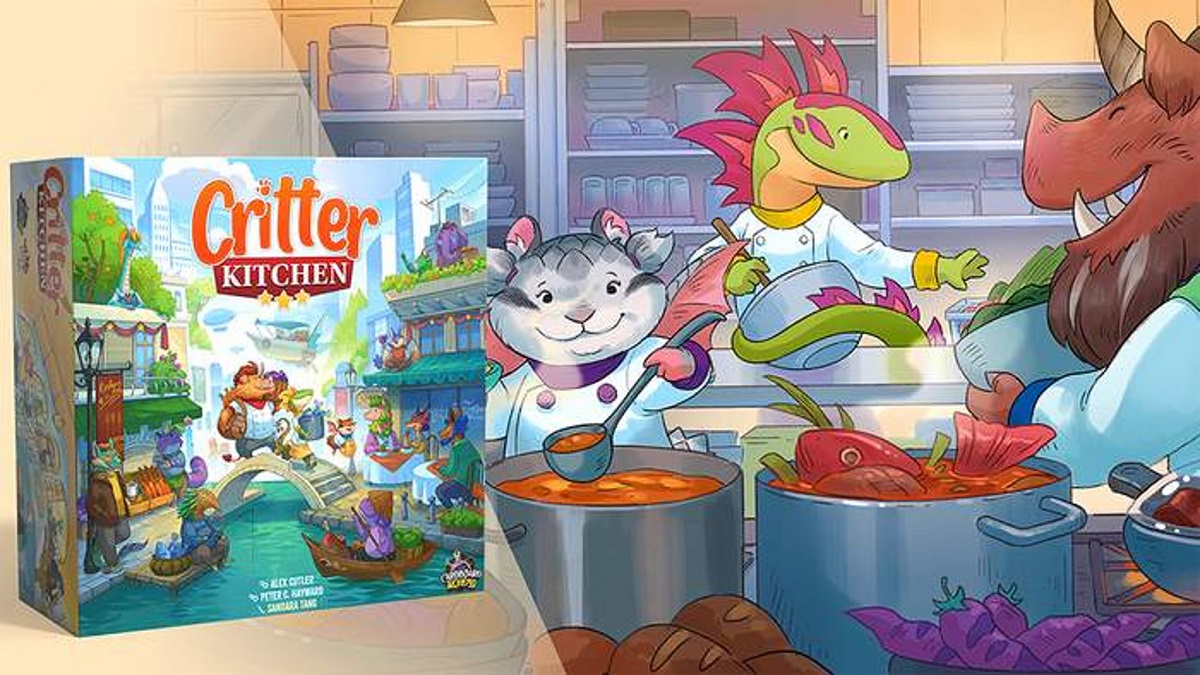
In just a few minutes, LUDOCHRONO 's format lets you know if a board game deserves a place on your table.
With Critter Kitchen, this promise is kept: anthropomorphic creatures at the stove, a cooking game full of mischief and tactical moves, generous components and innovative gameplay designed for players who love to optimize as much as they love to tell stories.
The show, produced by LudoVox, offers a nine-minute immersive dive into this captivating world, where each turn resembles a service in a neighborhood restaurant… except that the customers are animals and the competition rages behind the scenes!
In this article, we will compare the pedagogical approach of LUDOCHRONO and the deep workings of the Critter Kitchen game.
You will discover how a short format can make quite subtle game strategy mechanics crystal clear, why this title published by Lucky Duck Games appeals to both expert gamers and curious passersby, and how the author of these captivating videos fits into a wider trend combining interactive experience and visual storytelling similar to video games.
In short
Let's follow Louise and Marc, an imaginary gamer couple who stumble upon the LUDOCHRONO video, hesitate to get started, then end up organizing a "creatures bistro" evening which changes their way of seeing modern board games.
- Express format : LUDOCHRONO presents Critter Kitchen in about five minutes, with an overview of the equipment and gameplay.
- Animal restaurant atmosphere : you lead a brigade of culinary creatures, each with their own talents, in a competitive restaurant.
- Accessible strategy : Critter Kitchen offers a rich but affordable game strategy, ideal for moving from family-friendly to "almost expert".
- A captivating universe : the illustration and staging are reminiscent of certain restaurant management video games, but around a table.
- A complete interactive experience : resource management, anticipation, reading opponents and simultaneous choices create innovative gameplay.
LUDOCHRONO presents Critter Kitchen: an express format for a captivating world
When Louise stumbled upon the LUDOCHRONO – Critter Kitchen, she had no more than five minutes to devote to her screen.
This reduced time corresponds exactly to LudoVox's promise: to offer a neutral, clear and rhythmic presentation, capable of conveying at a glance whether a board game is likely to appeal or not.
In the case of Critter Kitchen, the challenge is significant, because behind its cooking game lies a real strategic depth.
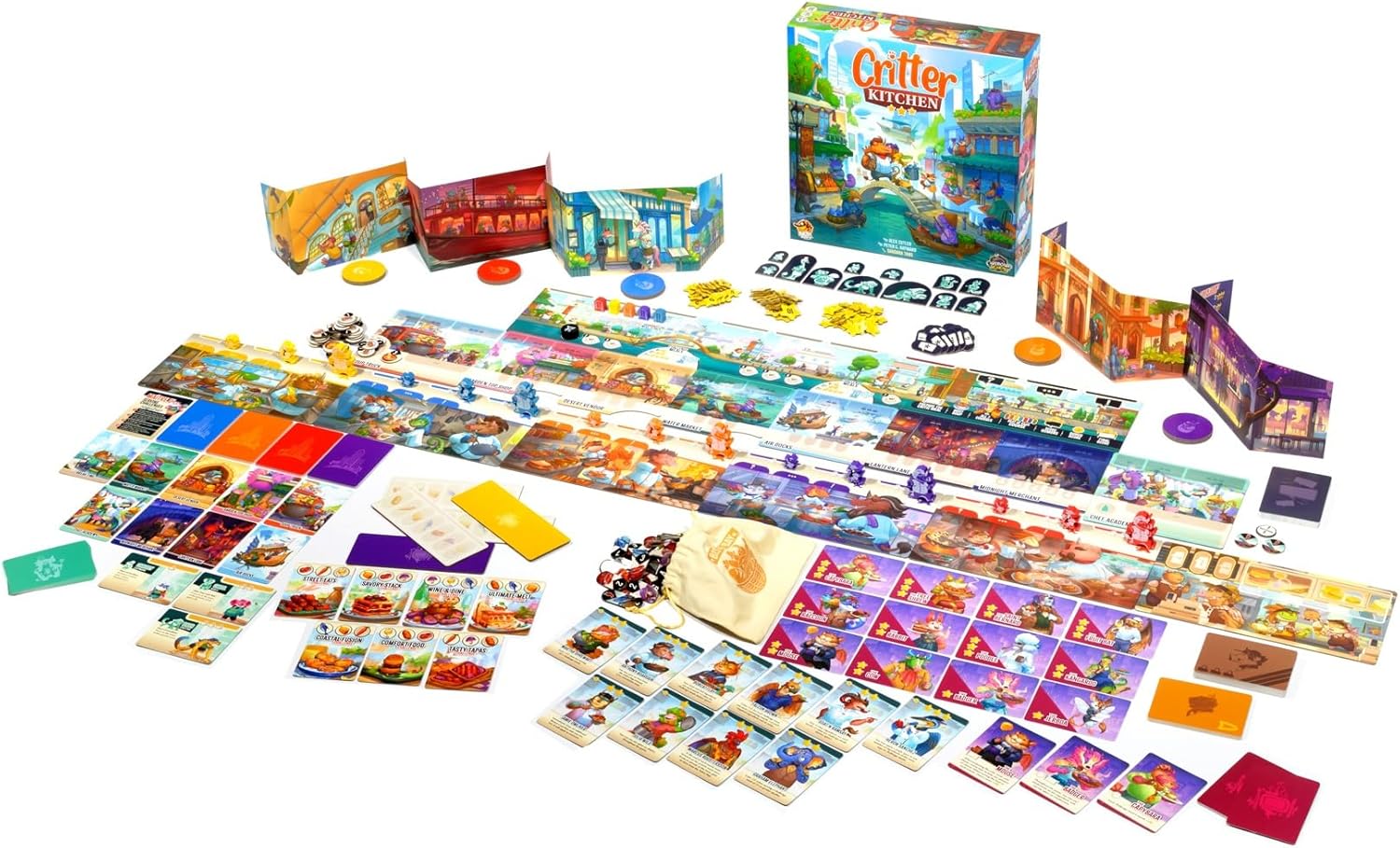
Throughout the video, the presenter unfolds the contents of the box: individual kitchen-shaped trays, creature , ingredient tokens, dish tiles, and illustrated pawns.
This detailed look at the components immediately shows that this is not just a simple party game, but a truly interactive experience where each element serves a specific purpose.
The audience sees how the different components fit together, which then makes it easier to get to grips with around a table.
This video format is part of a broader trend: in a thriving gaming landscape, where each month brings its share of new releases, players need tools to sort, evaluate and compare.
Like trailers in video games, LUDOCHRONO serves as a "playable trailer": it does not replace a complete rulebook, but provides enough information to know if you want to invest time and money in this title.
This approach is particularly beneficial for a game like Critter Kitchen, which lies on the border between sophisticated family game and light strategy game.
LudoVox's self-proclaimed independence also plays an important role. The commentary isn't there to sell at all costs, but to describe: average game length, number of players, overall feel of the pace…
For Critter Kitchen, the video emphasizes the fluid nature of the rounds, the pleasure of the "ramping up" of your brigade and the satisfaction of optimizing your actions, without hiding the fact that unfortunate tactical choices can cost you dearly.
This franchise reassures players like Marc, who always fears encountering a title that is too simple or, conversely, unnecessarily complex.
Implicitly, the Critter Kitchen video also illustrates the evolution of the discourse on modern board games.
We no longer simply say "it's fun", we talk about game strategy, interaction, learning curve, and even comparisons with existing game references.
For a universe as rich as that of a creature restaurant, this analytical framework allows us to go beyond the simple aesthetic layer to understand what is really at stake in each game.
It is this marriage between compact form and dense content that makes LUDOCHRONO a particularly suitable platform for a game like Critter Kitchen.
By closing the YouTube tab, Louise already knows whether or not she will suggest this title for the next game night.
That's the real strength of this format: transforming a five-minute overview into the first step of a truly immersive dive into a game with enormous potential.
Critter Kitchen: Cooking game mechanics and gameplay strategy in detail
Behind its charming illustrations, Critter Kitchen is based on a set of rules that combine management, action programming, and interaction.
Each participant leads a brigade of creatures and tries to manage their restaurant as best as possible to attract as many customers as possible and score reputation points.
Far from being anecdotal, this culinary theme actually structures the way you will play.
The basic gameplay is often compared to classic restaurant management video games : you have to collect the right ingredients, prepare the requested dishes and serve at the right time
In Critter Kitchen, these tasks translate into character cards sent to different locations: market, kitchen, hall, or even clever little corners allowing you to steal an opportunity from your opponents.
Each person secretly plans their actions, then they resolve themselves in a precise order, creating a delicious mix of planning and reading the opponent's intentions.
This structure enhances the feeling of immersive immersion.
When Marc sends his rat chef creature to the market hoping to collect the last mushrooms needed for his signature dish, he feels a tension similar to that of a kitchen service: will he manage to be faster than the other brigades?
These are not just anonymous cubes that are moved, but characters with special abilities, often depicted with humor and expressiveness on the cards.
Critter Kitchen's game strategy unfolds along several lines. In the short term, it's about optimizing each round: which cards to play, in what order, which resources to target? In the medium term, you need to build an efficient engine: certain cards or combinations of dishes boost your production or service capacity, creating very satisfying synergies.
Finally, in the long term, you monitor the tempo of the game, assessing when to accelerate to close before your competitors catch up.
The game is designed to be affordable, but it remains challenging for those who wish to master all its subtleties.
LUDOCHRONO highlights this duality: accessible for casual players, but deep enough to last over many games.
Louise, used to classic family games, quickly finds her feet, while Marc, a fan of big management games, immediately spots more sophisticated tactical lines, particularly related to market control and timing of cooking actions.
The key to Critter Kitchen's success lies in its innovative gameplay , which never sacrifices clarity. Turns flow smoothly, with everyone playing simultaneously during programming, minimizing downtime. Interaction isn't limited to punishing blocks; it relies primarily on anticipation and initiative.
For example, you might choose to abandon a very lucrative but risky recipe, to focus on more modest but safer dishes, depending on what the choices of the other participants suggest.
This constant tension between greed and caution creates a unique dynamic, very different from simple point-based racing or majority games.
When they leave the table, many players feel like they have actually orchestrated a service in the kitchen, with its strokes of genius, its failures and its urgent adjustments.
It's this feeling of experiencing a little story with each game that makes Critter Kitchen much more than just a simple culinary-themed management game!
An example here with the "Bistros and Livestock" version:
This first video often serves as a trigger: after seeing it, many people look for filmed games or detailed feedback to further explore the mechanics and refine their desires.
An interactive experience somewhere between a board game and a culinary video game
Critter Kitchen is part of a notable evolution in modern board games: the growing influence of video games, not as a competitor, but as a source of inspiration.
In recent years, restaurant management titles – from Cook, Serve, Delicious! to Overcooked – have popularized a nervous and comical way of portraying professional kitchens.
Critter Kitchen translates this energy onto a stage, building a truly interactive experience where the physical manipulation of elements reinforces the tension felt.
When you move your creature tokens to different locations, stack the cards of dishes made or adjust your ingredient stocks, you reproduce management actions found in some digital games, but with a reassuring materiality.
For Louise, a veteran of digital experiences, this transposition gives a different flavor to the gaming session. She rediscovers the pleasure of optimizing a sequence of actions like in a console management game, while enjoying the warmth of an evening around the table.
LUDOCHRONO particularly well highlights this hybrid dimension. The presentation films close-ups of the components, shows the game boards, and follows the sequences of actions with a finger.
This creation is reminiscent of certain video game tutorials on the Internet, but it remains focused on tabletop practice: no unnecessary effects, no excessive sound, simply the pleasure of seeing a game system unfold.
Viewers recognize in Critter Kitchen mechanics they may have encountered on screen, while also perceiving the potential for added conviviality.
This immersive experience also stems from the care taken with the game's rather amusing culinary art style . The creatures aren't simply vaguely drawn animals; each has its own role, attitude, and sometimes even a little implicit backstory.
We can imagine, for example, the old chief owl, calm and methodical, or the young apprentice fox, fiery but sometimes clumsy.
These characterization touches give the impression of controlling a real brigade. They play a similar role to the charismatic characters in a captivating video game universe , capable of generating player attachment.
For many groups, Critter Kitchen thus becomes a gateway. Friends very keen on digital technology are seduced by this offering which respects their gaming conventions, while board game enthusiasts discover that they can recapture some of the sensations of a "management game" without a screen.
LUDOCHRONO, by presenting the game as a coherent whole and not as a simple assembly of rules, facilitates this encounter between two gaming cultures.
As they play more games, Louise and Marc realize that Critter Kitchen doesn't just mimic video game mechanics. The physical presence of the others around the table makes every decision more tangible.
The pointed look from an opponent when you hesitate over an ingredient, the amused sigh when a plan fails, the comments on the illustrations: all of this contributes to a form of interactive experience that the screen sometimes struggles to reproduce.
The game becomes a pretext for telling anecdotes, imagining the lives of these creatures and verbally reenacting the most outlandish services.
This alliance between game systems inspired by digital technology and the relational richness of board games is undoubtedly one of Critter Kitchen's main strengths.
LUDOCHRONO, by showing it from both a technical and sensitive angle, helps to make this promise understandable to players in search of new sensations.
Materials, ergonomics, and visual appeal: why Critter Kitchen captivates at first glance
Even before explaining any rules, the LUDOCHRONO video dedicated to Critter Kitchen emphasizes one point: the equipment is abundant and well-made.
This first impression is not only aesthetic, it also conditions the readability of the game and the ease with which you can bring new participants into your creature restaurant.
In an era where gaming tables are regularly flooded with titles, an immediately attractive visual is often what prompts one to stop at one box rather than another.
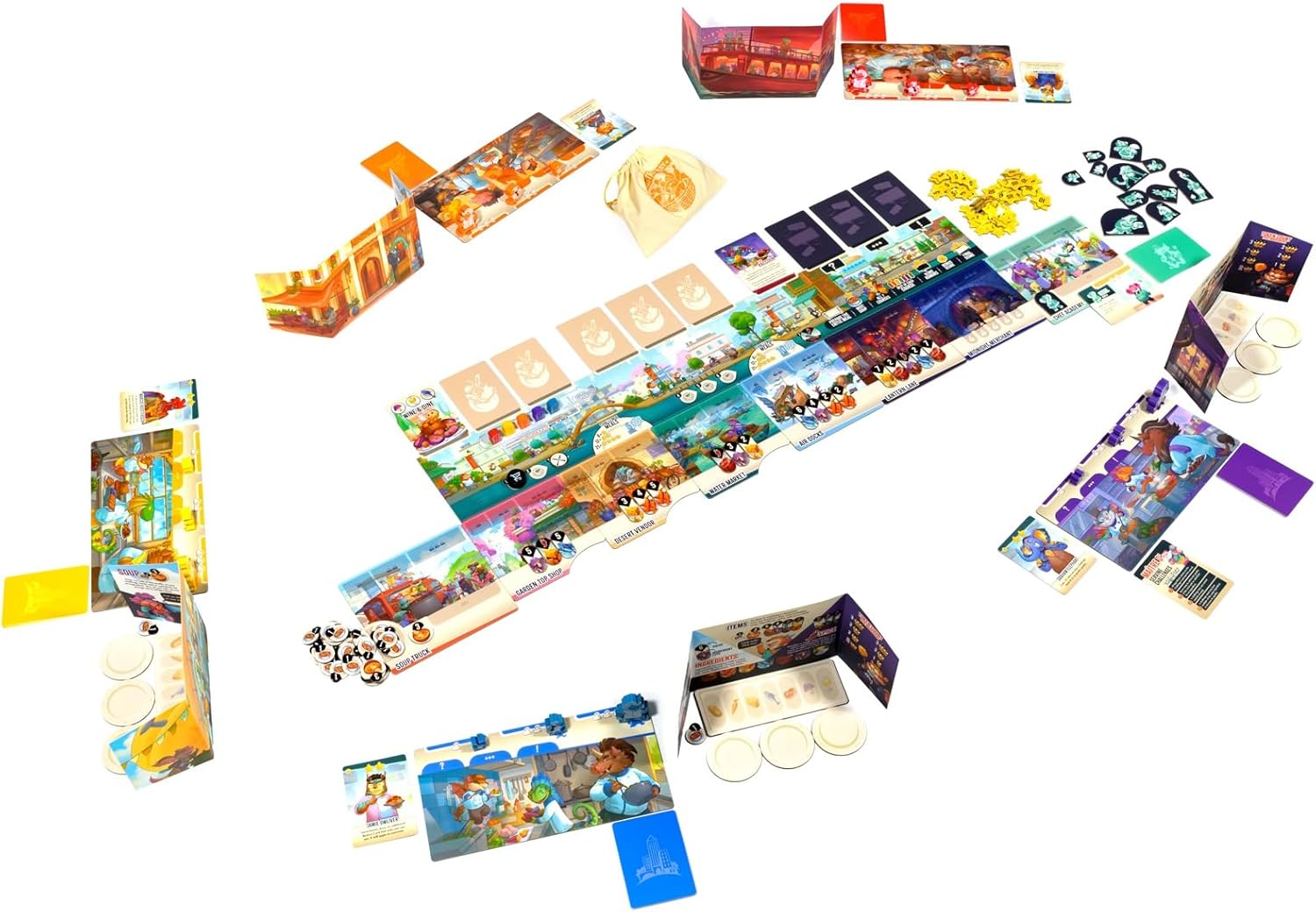
From the moment you open it, the individual trays evoke real kitchen worktops, with clear spaces for ingredients, dishes in progress, and available actions.
The creature cards are large enough to allow space for the artwork, without sacrificing symbols useful for understanding the effects.
The pawns, tokens and tiles use a consistent graphic design, making it intuitive to locate resources or types of dishes.
LudoVox takes the time to manipulate these elements on screen, allowing the viewer to concretely judge the ergonomics.
This attention to detail is evident in the way the publisher, Lucky Duck Games, has designed the colors and contrasts. For a cooking game where you juggle numerous elements, a clear visual style is essential.
The ingredients have distinct colors, the types of cards are easily distinguishable, and each participant's playing area is clearly marked on the table.
This reduces the mental load during the game, leaving more room for strategic thinking rather than simply reading icons.
In a recent article in a specialist magazine, an illustrator discussed the challenge of creating a captivating world around cooking animals: how to avoid easy clichés while remaining immediately legible? Critter Kitchen answers this question by playing on expressions, postures and accessories.
Each character seems to be in the middle of an action: a badger focused on his chopping board, a rabbit carrying a pile of dishes at arm's length, a cat watching the competition with a mischievous eye.
This implicit animation enhances the immersive experience and makes you want to see these little chefs at work.
To help you compare Critter Kitchen with other titles in the same genre, here is a summary table of the aspects most often noted by players after a few games:
| Key element | Critter Kitchen | Players' Perceptions |
|---|---|---|
| Theme | Restaurant of cooking creatures | Original, warm, conducive to storytelling |
| Complexity | Strategic but accessible | A good bridge between family-friendly and "light expert" games |
| Game duration | Approximately 60 minutes | The pace was considered smooth, with few lulls |
| Interaction | Strong, through the market and simultaneous choices | A lot of tension without overt aggression |
| Replayability | Brigades, objectives, and varied maps | Regular desire to test new strategies |
Louise, who likes to carefully plan her game nights, particularly appreciates the fact that Critter Kitchen looks "nice" on the table.
The bright colors, the well-filled trays, and the silhouettes of animals in aprons immediately catch the eye of guests, even those who do not play often.
This visual aspect serves as an entry point: explaining the rules seems less intimidating when the material makes you want to handle it.
By filming these elements with precision, LUDOCHRONO allows viewers to visualize what the game will look like at home. They can imagine the space required, judge the clarity of the symbols, and get a sense of the tactile pleasure associated with manipulating the game.
You can see it in this other LUDOCHRONO video about a children's game called Cubosaurs
These details, often overlooked in a simple presentation text, take on decisive importance here: for a title where you regularly move pieces and ingredients, the material quality can make the difference between a game that is appreciated and one that will be forgotten on a shelf.
At the end of these visual discoveries, most players who recognize themselves in this animal and culinary aesthetic will have already taken a step forward: they project themselves into their future games, which prepares the ground to take a closer look at the subtleties of the game strategy offered by Critter Kitchen.
You can see it, for example, in this other video about cubosaurs
These supplementary videos, alongside LUDOCHRONO, provide a complete overview: a quick glance to decide, then a more detailed dive for those who want to further analyze the possible choices.
Critter Kitchen at the table: group dynamics, player profiles, and winning strategies
Once the box is opened and the first rules are learned thanks to the booklet + LUDOCHRONO, Critter Kitchen reveals all its richness around the table.
The group dynamics are immediately apparent: some players adopt a conductor-like posture, methodically planning each action, while others prefer a more instinctive approach, relying on flexibility.
The game rewards both styles, but not in the same way, which makes each game different.
Marc, for example, especially likes games that involve long planning.
As the games progressed, he developed a strategy centered on a few highly profitable dishes, securing the ingredients for which he did so from the very first rounds.
He closely monitors the market, anticipates opposing needs and does not hesitate to sometimes take an ingredient that he will not use simply to undercut a competitor.
This approach, inspired by some demanding management games, works well, but requires constant attention and a good understanding of others.
Louise, on the other hand, prefers a more opportunistic style!
She takes advantage of opportunities that arise, readily changes her strategy along the way if an opportunity appears, and does not hesitate to play "last minute" moves when a creature card allows her to chain two unexpected actions together.
For her, Critter Kitchen is almost like a dynamic puzzle: you have to constantly reorganize your plan according to the resources available and the actions resolved by the neighbors at the table.
The game remains welcoming to a variety of profiles, provided that some balances are respected.
To help identify those who will be most comfortable, here is a short list of audiences for whom Critter Kitchen is particularly suitable:
- Curious family groups who want to go beyond the classics without getting lost in overly thick rulebooks.
- Strategic players who appreciate simultaneous choices, reading opponents, and tight resource management.
- Fans of culinary themes or animal worlds who are looking for a captivating and coherent universe
- Fans of management video games who want to experience similar sensations, but with direct interaction with others around a table.
By observing several groups play, one often notices a rapid learning curve. The first few rounds are mainly used to get a feel for the rhythm of the rounds, the order in which actions are resolved, and the actual impact of each creature.
Then, very quickly, the discussions shift: less focus on rules and more on intentions. "Are you going to the market this round?" "If you leave me these ingredients, I promise not to mess up your strategy in the next service."
These implicit negotiations show how Critter Kitchen stimulates communication, even without a formalized diplomatic mechanism.
Gradually, some players develop what could be called "strategic cooking schools".
Some specialize in fast food, relying on the volume of orders to succeed. Others invest in complex but lucrative recipes, risking seeing their plans collapse if competitors cut off their access to a key ingredient.
Still others explore more indirect paths, making the most of their creatures' powers to compensate for a lack of resources.
This diversity of gameplay contributes to the game's high replayability. It's rare for two games to be truly alike, if only because the composition of the brigades, the order in which cards appear, or the way each group implicitly negotiates board space changes considerably.
LUDOCHRONO, by giving an overview of this richness without overwhelming it with details, plays a valuable role: it reassures groups that Critter Kitchen will be able to live a long time in their game library, without drowning them in information from the moment of discovery.
Ultimately, whether you approach Critter Kitchen as a gourmet puzzle, a lively restaurant simulator, or a hushed battleground between animal brigades, the game offers enough depth for everyone to find a space for expression.
It is this ability to adapt to groups, while maintaining a strong identity, that makes it a particularly relevant choice for those seeking an experience that is both warm and stimulating!
Answers to your questions
Is Critter Kitchen suitable for players who are not used to strategy games?
Yes, provided someone takes the time to calmly explain the first part, perhaps using a LUDOCHRONO video. The rules are structured and logical, and the cooking theme greatly helps in understanding the actions. New players are quickly up and running after one or two rounds.
What is the ideal length for a game of Critter Kitchen?
A standard game lasts around an hour, including setup and cleanup if the group is already familiar with the game. For a first-timer, allow a little more time to answer questions and let everyone familiarize themselves with the mechanics at their own pace.
How does Critter Kitchen differ from other cooking games?
While many cooking games focus primarily on atmosphere or speed, Critter Kitchen combines a solid foundation of strategic gameplay with strong indirect interaction. Ingredient management, secret action programming, and the creatures' varied abilities create a depth akin to some management games, all while maintaining a strong thematic focus.
Is Critter Kitchen equipment suitable for heavy use?
The game features thick boards, good quality cards, and sturdy tokens designed for frequent handling. As with any board game, it's advisable to protect the cards if you plan on playing very often, especially in public places or board game cafes.
Is LUDOCHRONO enough to learn how to play Critter Kitchen?
The LUDOCHRONO video offers a very useful overview and helps you determine if the game is right for you. To play, it's recommended to combine it with a quick read of the rulebook to check certain details and specific cases. The two resources complement each other perfectly for a smooth introduction.
Source: ludovox.fr
