
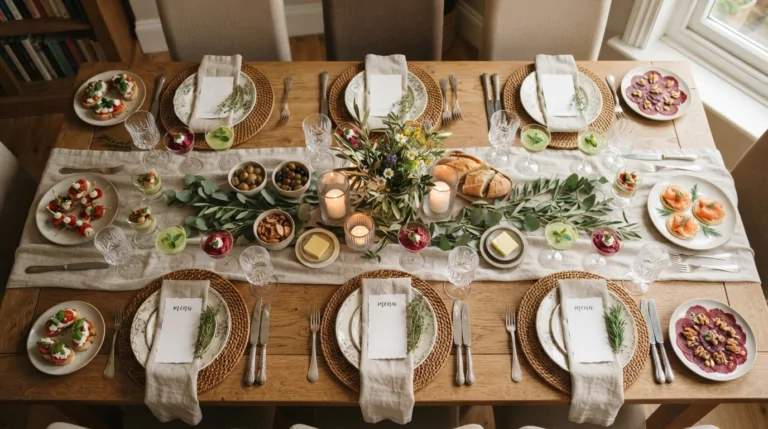
A simple and impressive starter focuses on the contrast of textures, the visible freshness of the product and a careful presentation, not on technical difficulty: the five ideas below can be put together in 10 to 20 minutes, including plating.
What truly makes an entrance is its complexity
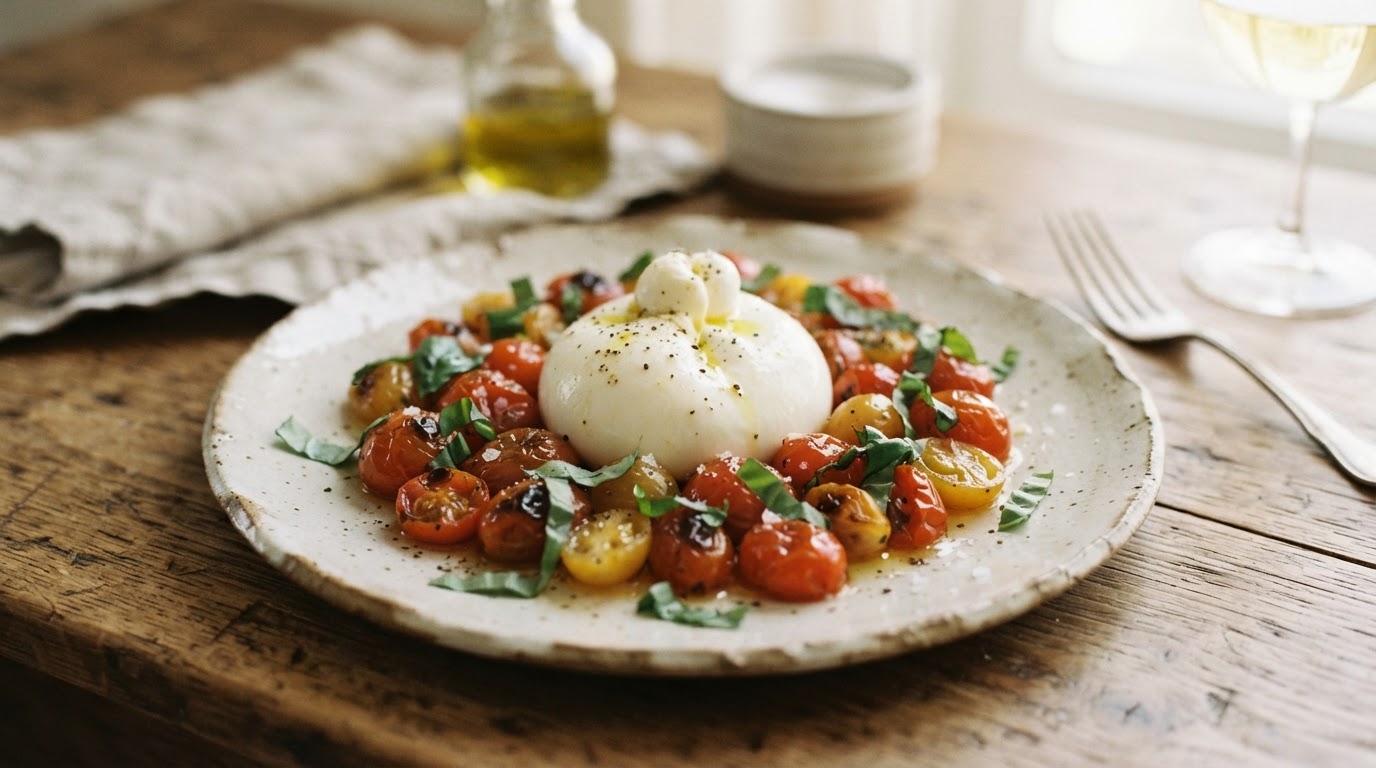
The recipes that most often "impress" in the kitchen rely on three simple elements: a contrast of textures (crunchy versus melting, hot versus cold), a vibrant color on the plate, and a high-quality ingredient that is evident to the naked eye. None of the three requires complicated techniques.
Professional chefs apply the same logic on a larger scale: height in the presentation, playing with the colors of vegetables or sauces, and neat finishes around the edge of the plate. These basic principles, detailed in this professional plating guide, translate very well to everyday meals, without complicated equipment or cutting techniques.
ℹ Good to know: the visual effect often depends more on the container than the contents. A transparent glass or a plain white plate highlights simple ingredients, while a plate with a busy pattern dilutes the result, even with an elaborate recipe.
Five tickets that can be set up in less than 20 minutes
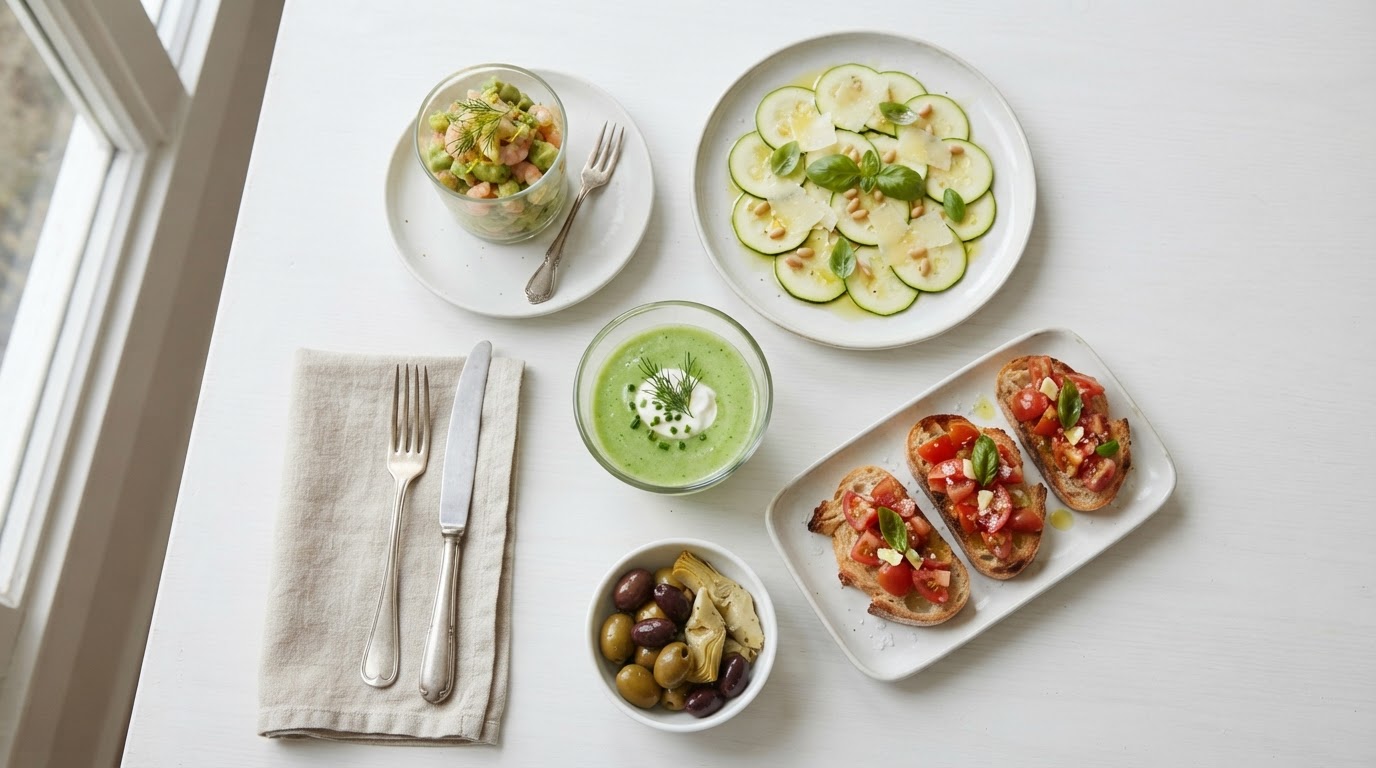
For a last-minute weeknight dinner, the ideal choice is a starter that requires no cooking or special equipment. For a festive meal with more guests, it's best to choose a recipe that can be prepared in advance and assembled at the last minute.
Burrata, minute-dried tomatoes and basil
Halve the cherry tomatoes and sauté them in a pan with a drizzle of olive oil and a pinch of salt for 5 minutes, until they release their juices. Let them cool slightly while you prepare the rest.
Remove the burrata from the refrigerator 20 to 30 minutes before serving: when cold, the fat firms up and loses the creamy texture that makes it so appealing, as detailed in this burrata tasting guide. Place it whole in the center of the plate, surround it with warm tomatoes, add a few fresh basil , and drizzle with olive oil.
Real time, including preparation: approximately 10 minutes excluding time to remove from the refrigerator.
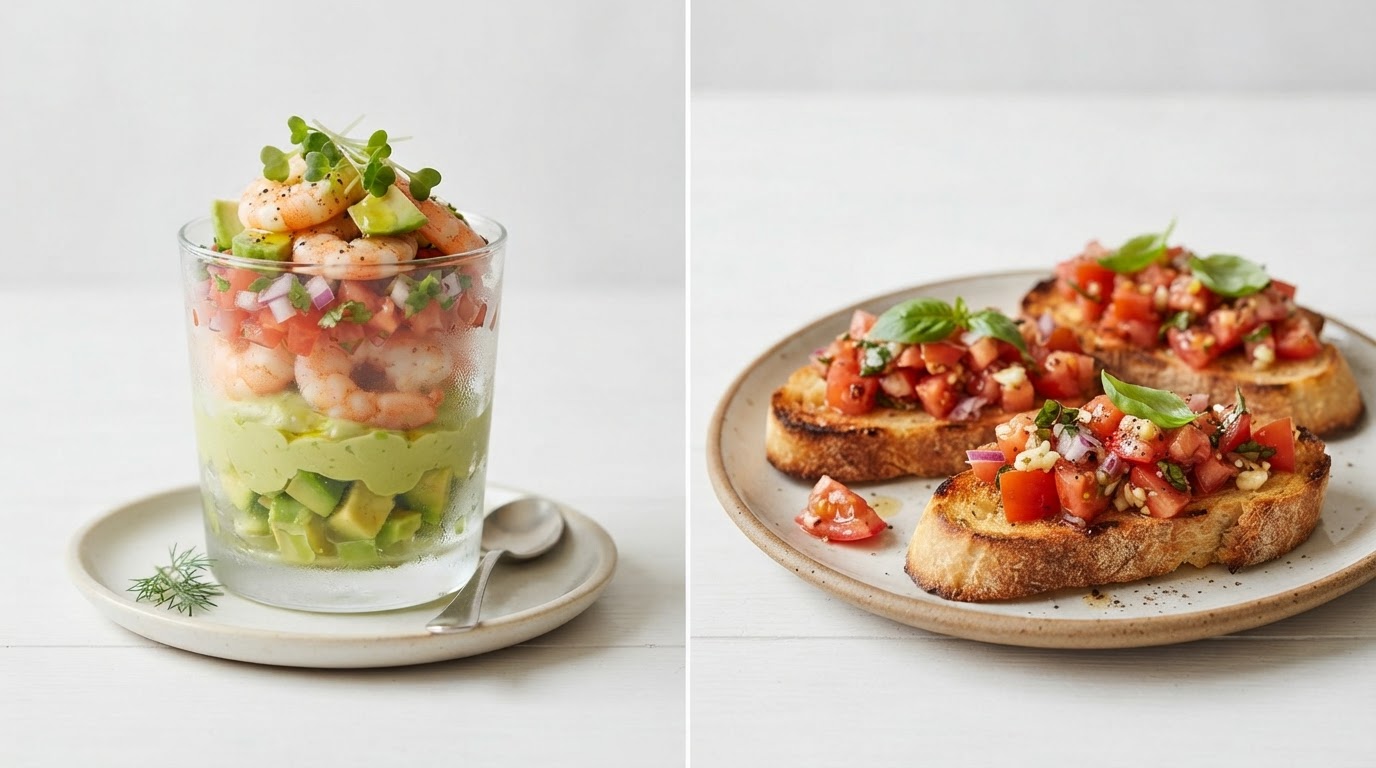
Avocado and shrimp tartare in a glass
Cut the flesh of a ripe avocado into small cubes, then immediately drizzle with lime juice to prevent browning. Mix with chopped, peeled shrimp, a drizzle of olive oil, and chopped chives.
Layer the ingredients in a clear glass: the avocado and shrimp combination creates a visually striking effect, requiring no special presentation techniques. Allow 12 to 15 minutes, including cutting and assembly.
Carpaccio of raw zucchini, parmesan and lemon
Choose small, firm courgettes, wash them, and slice them into thin strips using a vegetable peeler or mandoline. Arrange them in a fan shape on the plate, season lightly with salt, add a squeeze of lemon juice, and a grind of pepper.
Finish with parmesan shavings made with a vegetable peeler just before serving, so they stay neat. Approximately 10 minutes of preparation.
Chilled cucumber and yogurt soup
Blend a peeled and seeded cucumber with Greek yogurt, half a garlic clove, a few mint leaves, and a drizzle of olive oil until smooth. Adjust the seasoning, then chill in the refrigerator for at least 30 minutes before serving in small glasses to allow the flavors to meld.
This is the only one of the five recipes that really benefits from being prepared in advance: allow 10 minutes of active preparation, plus resting time.
Tomato, garlic and basil bruschettas
Toast slices of country bread, then rub them while still warm with a halved garlic clove: the heat of the bread releases the garlic's aroma without it overpowering. Top with diced fresh tomatoes, drained of excess juice, chopped basil, and a drizzle of olive oil.
Prepare at the very last moment so that the bread remains crispy: about 10 minutes.
Calculate the quantities according to your number of guests
Cold starter prepared in advance or hot starter plated at the last minute?
Both approaches have their merits, but they are not suited to the same type of event. Here are the strengths and limitations of each to help you choose based on your specific situation.
Cold appetizer prepared in advance
- Free up time when receiving
- Prepare the day before for the cream soup or tartare
- Allows you to easily adjust the seasoning
Hot appetizer prepared to order
- Request to be available just before sitting down to eat
- It loses its crispness if it waits (as with bruschetta)
- In return, it gives a more spectacular effect upon arrival
⚠ Warning: A cold appetizer prepared too far in advance loses its visual freshness, even if it still tastes good. Only assemble the avocado and shrimp tartare or the bruschetta just before serving, even if it means preparing the chopped ingredients in advance and assembling them at the last minute.
The time required beyond the recipe
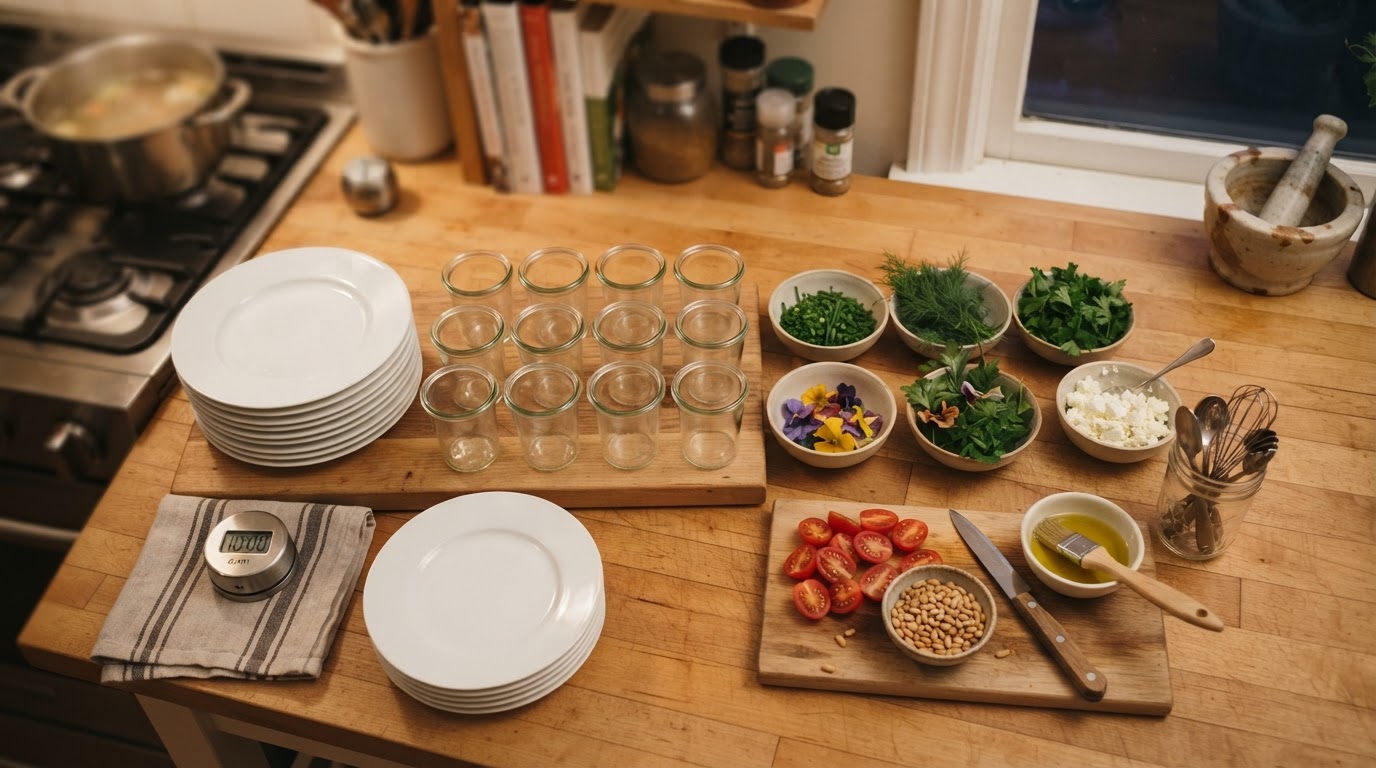
Most preparation times listed online only include chopping and cooking, not plating or setup (taking out ingredients, washing serving dishes, arranging verrines). For the five recipes above, often allow a few extra minutes beyond the stated preparation time when you're serving several guests, to allow time to plate each dish individually rather than preparing a single dish to share.
✓ In practice: prepare all the ingredients, chop them, and store them in the refrigerator before your guests arrive, leaving only the final plating for the last minute. This is what distinguishes a starter that looks improvised from one that looks expertly prepared.
How to create a successful presentation without buying new tableware
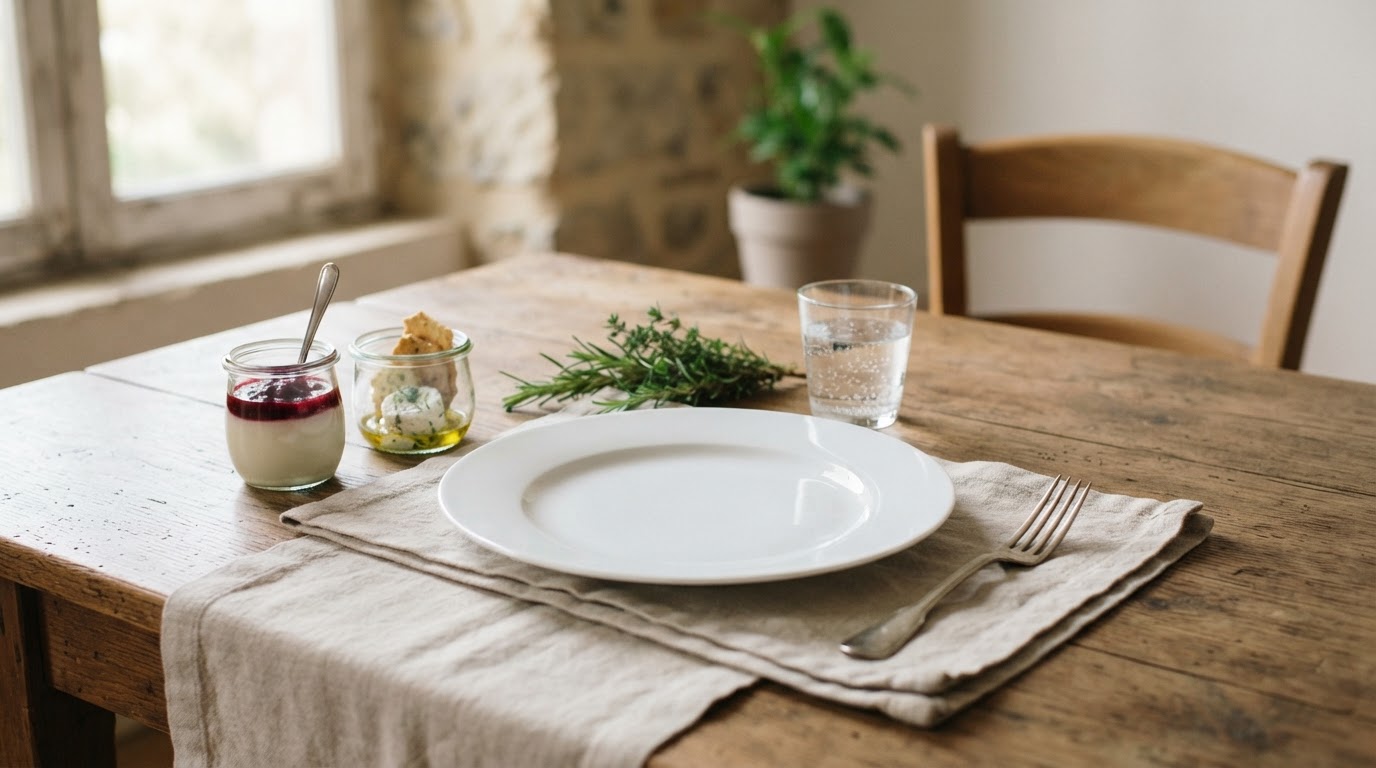
A plain white plate, without any pattern, remains the best way to showcase bold colors like tomato red or basil green. If you don't have one, a simple, wide-rimmed, undecorated plate works almost as well: just avoid a busy pattern that visually competes with the food.
For serving in glasses, reuse small glass jars you already have in your kitchen rather than investing in disposable tableware. A clean cloth placed under the plate, or a few sprigs of fresh herbs placed beside it without being on the plate itself, is often enough to create a more elegant presentation.
In summary
A simple and impressive starter relies on the contrast of textures and colors, not on a complicated technique: burrata and warm tomatoes, avocado-prawn tartare in a glass, courgette carpaccio, cold velouté or bruschetta can all be assembled in 10 to 20 minutes.
The real time to allow includes plating, not just cutting: prepare the ingredients in advance and reserve the last minute for assembling on the plate, for a result that looks controlled without having spent the evening in the kitchen.
Practical questions
How far in advance can a cold starter be prepared?
The cucumber soup can easily be prepared the day before and kept in the refrigerator, well covered. The avocado and shrimp tartare, however, should be assembled no more than 2 to 3 hours before serving: the avocado starts to turn brown despite the lemon juice, and the shrimp release water if they are left to mix for too long.
How much should I allow per person for an appetizer?
Allow approximately 80 to 100g per person for a starter preceding a main course, and more, around 150g, if it's a light meal. For a multi-course dinner, keep the portion small so as not to spoil the appetite before the next course.
Do you need a rare ingredient to impress with a starter?
No: the five recipes in this article use common products (tomatoes, avocado, zucchini, cucumber, bread). It is the combination of textures and colors, not the rarity of an ingredient, that creates the desired effect.
