
In short
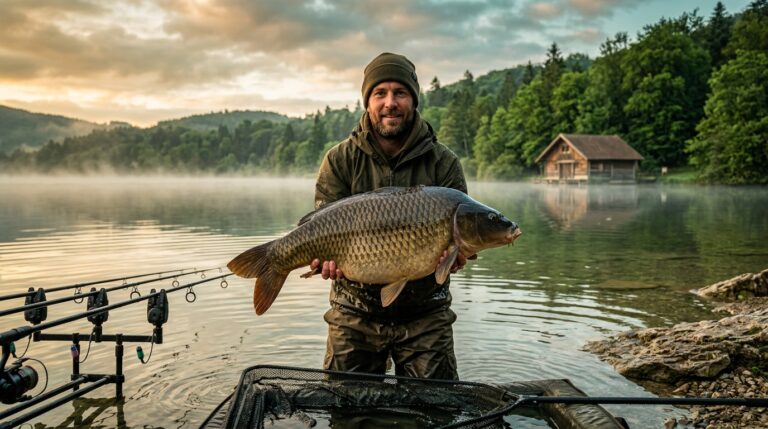
Europe is one of the best-endowed continents in the world for carp fishing, and from French gravel pits to wild Romanian deltas, via specimen lakes in Hungary, the continent is full of bodies of water capable of producing carp of more than 20 kg, or even much more.
But you still need to know where to go, at what time of year, and with what equipment!
This short practical article is designed for anglers who want to go beyond generalities and organize a truly ambitious fishing trip, whether it's a road trip between renowned spots or an all-inclusive carp fishing trip to a well-targeted destination.
The best carp fishing destinations in Western Europe
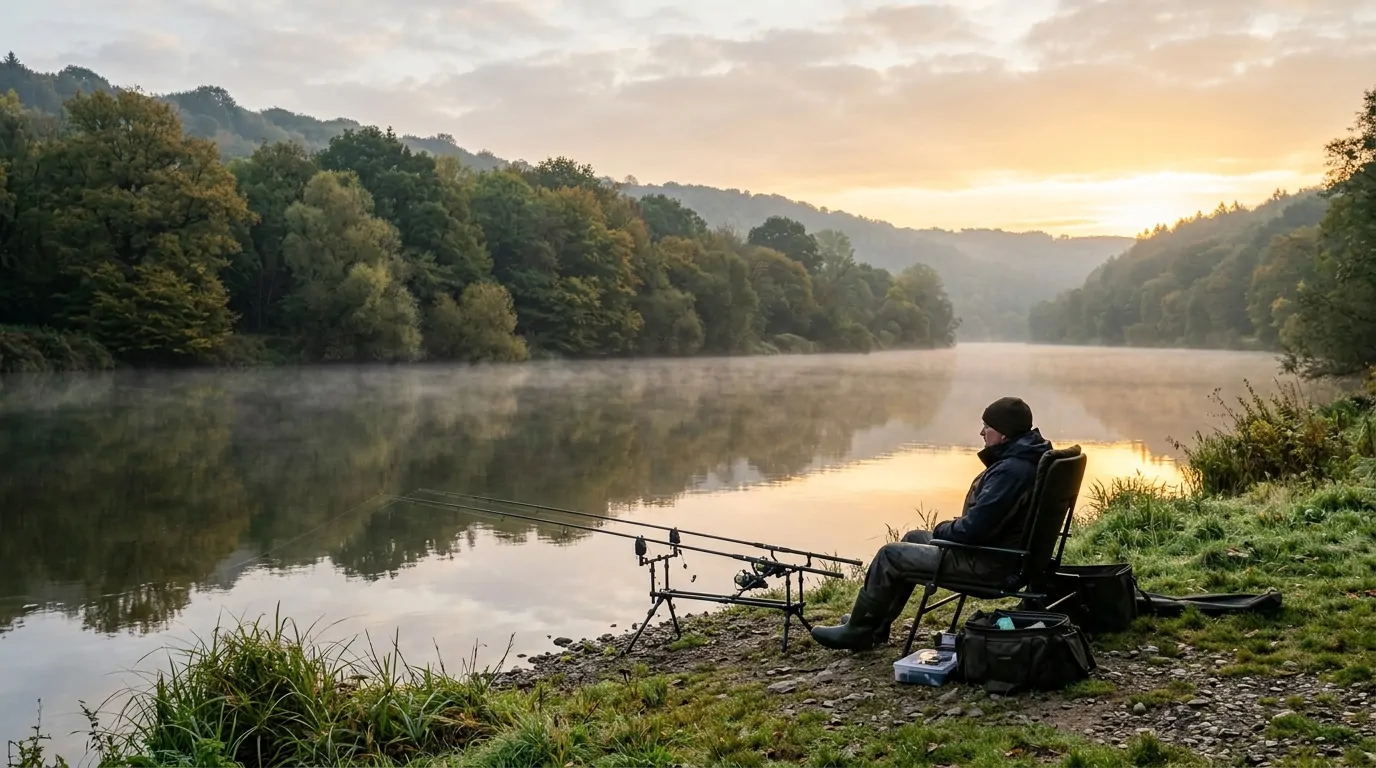
Western Europe is home to historic carp fishing sites, supported by decades of no-kill practice and careful management of water bodies.
Fish density there is often remarkable, and average sizes regularly exceed 15 kg in the best spots.
It is also the most logistically accessible area for French-speaking fishermen, with suitable infrastructure, professional guides and a solid network of associations.
France: its iconic lakes and giant carp
France remains the world reference in carp fishing, as the country has built its reputation on decades of no-kill practice, which has allowed some specimens to reach extraordinary sizes.
Lake Raduta in France has long been cited as one of the bodies of water that have produced the largest managed farmed carp on the continent, but it is also on natural gravel pits, such as those of the Saône or the Isle, that the most memorable sessions take place.
Among the spots with high potential:
- Lake Saint-Cassien (Var): a public body of water of 430 hectares, famous for its mirror carp weighing over 25 kg.
- Lake Madine (Lorraine): large reservoir with a dense population of common carp.
- The gravel pits of the Saône and Garonne rivers : for carp fishing enthusiasts in gravel pits and in wild environments.
- Lake Orient (Aube): accessible, well managed, frequented by large specimens.
France requires a national fishing permit, available from departmental federations, and no-kill fishing is widespread but not always mandatory, depending on the body of water.
Lake Saint-Cassien is one of the few French public bodies of water to have produced carp exceeding 30 kg on a regular basis, making it a must-visit on the European circuit.
For enthusiasts who wish to compare destinations to visit in Europe beyond just fishing, resources like our selection of destinations to visit in Europe can help you combine fishing holidays and sightseeing.
Italy and Spain: warm, fish-filled waters
Carp fishing in Italy is practiced mainly in the Po Valley, with lakes and reservoirs that are little fished by foreign anglers. Lake Como, Lake Garda, and especially the irrigation canals of Lombardy are home to large common carp.
In Spain, the Mequinenza reservoir, on the Ebro in Aragon, is a reference destination, as its warm and deep waters are home to common carp that can exceed 25 kg.
The season extends almost all year round thanks to the Mediterranean climate, and among the many spots, here are the most renowned:
- Mequinenza (Aragon, Spain) : 7,000 hectare reservoir, high fish density, organized access.
- Lake Varano (Apulia, Italy) : an atypical, little-known coastal lagoon that is productive in summer.
- Reservoirs of the Meseta (central Spain) : less frequented, but wild carp of good size.
Regulations vary greatly from region to region in Italy and Spain, and a regional permit is often required, separate from the national permit.
Eastern Europe: Paradise for record-breaking carp
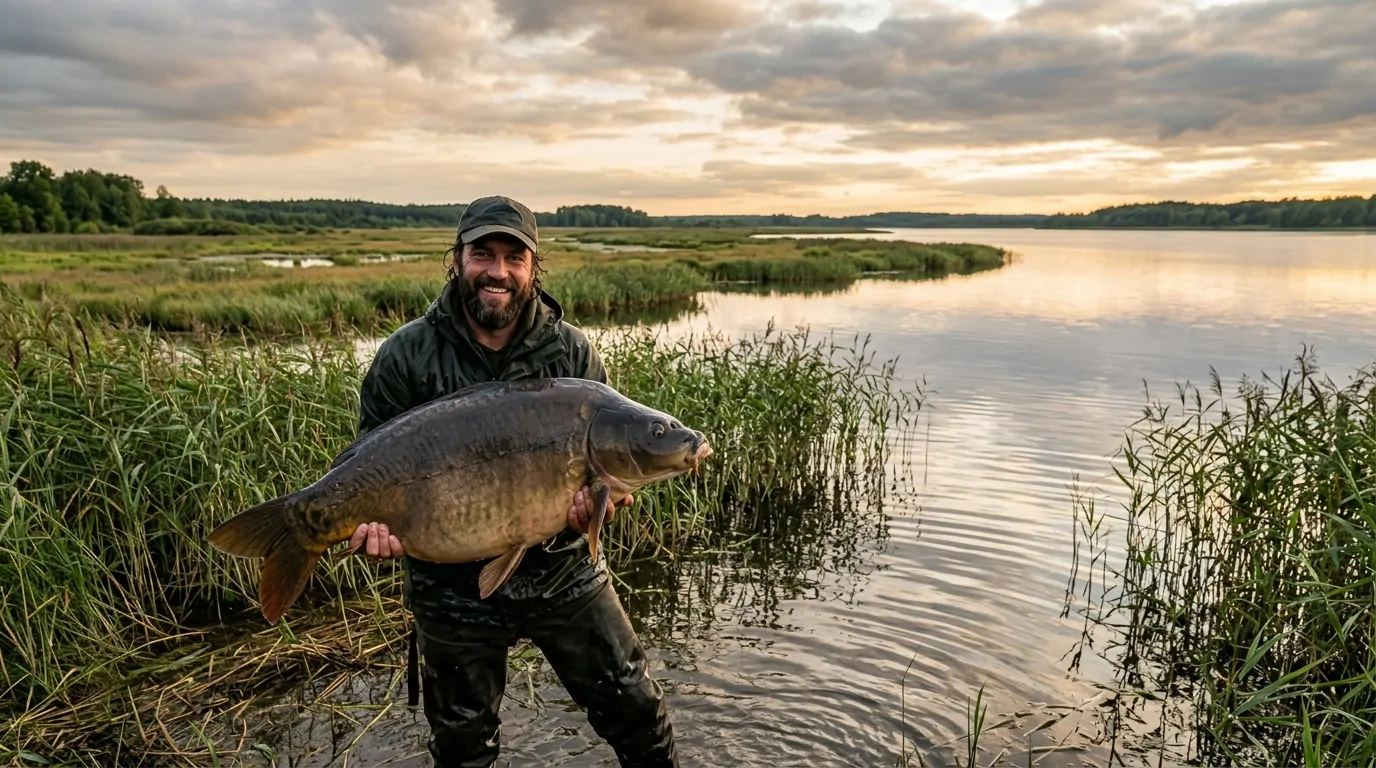
While Western Europe produces some fine specimens, it's in the East that you'll find Europe's lakes with the most formidable record-breaking carp. Less fishing pressure, waters often less known to the general public, and carp populations sometimes untouched for generations!
Experts in the field agree that the density and average size of carp in Eastern Europe often surpass what is observed in the West, mainly due to different restocking and management policies.
🎣 Which European country corresponds to your ideal spot?
Answer 4 questions to get your personalized destination with practical advice.
Hungary and its lakes with specimens weighing over 20 kg
Hungary is one of the top destinations for European carp over 20 kg, as the country has hundreds of managed bodies of water, some of which are specially designed for sport fishing.
Among the most renowned spots:
- Lake Balaton : the largest lake in Central Europe, 596 km², with abundant common carp and specimens regularly exceeding 20 kg.
- Lake Tisza : an artificial reservoir on the Tisza River, known for its productive night sessions.
- The private ponds of the Puszta : paid access, exceptional density, ideal for short sessions.
Hungary widely practices no-kill fishing in its clubs and managed waters, and a national permit (Horgászjegy) is mandatory, available online or from local clubs.
The price remains affordable, around 10 to 15 euros per year for European residents.
Romania: the Danube delta and its wild waters
For fishing for wild carp in a truly exceptional setting, the Danube Delta is the obvious choice, as this labyrinth of arms, canals and lakes covers more than 5,000 km² and constitutes one of the best preserved natural environments in Europe.
The carp here reach impressive sizes, nourished by an exceptional abundance of natural food. Fishing sessions by boat, amidst the reeds, are truly an experience in themselves!
Among the must-see spots are places like:
- Lake Razim-Sinoe : lagoon complex, common and mirror carp in abundance.
- The Sulina Canal : a navigable branch of the Danube, large carp in flowing water.
- The Moldovan lowland lakes : less well known but very productive, especially in spring.
Romanian regulations require a national fishing permit and there are sometimes restrictions in the protected areas of the delta, which are UNESCO World Heritage sites.
Some areas are even completely closed to fishing.
Poland and the Czech Republic: hidden gems
Poland and the Czech Republic are two destinations that are still underestimated for renowned carp fishing spots in Europe, but their waters hold real potential!
In Poland, the Masurian lakes form a network of more than 2,000 interconnected bodies of water, and common carp there regularly exceed 15 to 18 kg.
In the Czech Republic, the tradition of fish farming is ancient: the ponds of South Bohemia (Třeboň region) have been managed for centuries and are home to well-formed carp.
Here are some gems to discover:
- Lake Śniardwy (Poland) : largest lake in the country, wild carp not heavily fished.
- Třeboň ponds (Czech Republic) : ancestral fish farming management, fish in excellent physical condition.
- Nechranice reservoir (Czech Republic) : 1,300 hectare body of water, productive night sessions.
These two countries are easily accessible from Germany or Austria, making them ideal stops on a Central European fishing road trip.
The best bodies of water for catching a record carp
Not all bodies of water are created equal, and the difference in results between a poorly managed public lake and a private domain monitored by professionals can be considerable!
Understanding the differences between these types of spots is the first step towards aiming for a personal record.
Privately managed lakes: near-guaranteed density and trophies
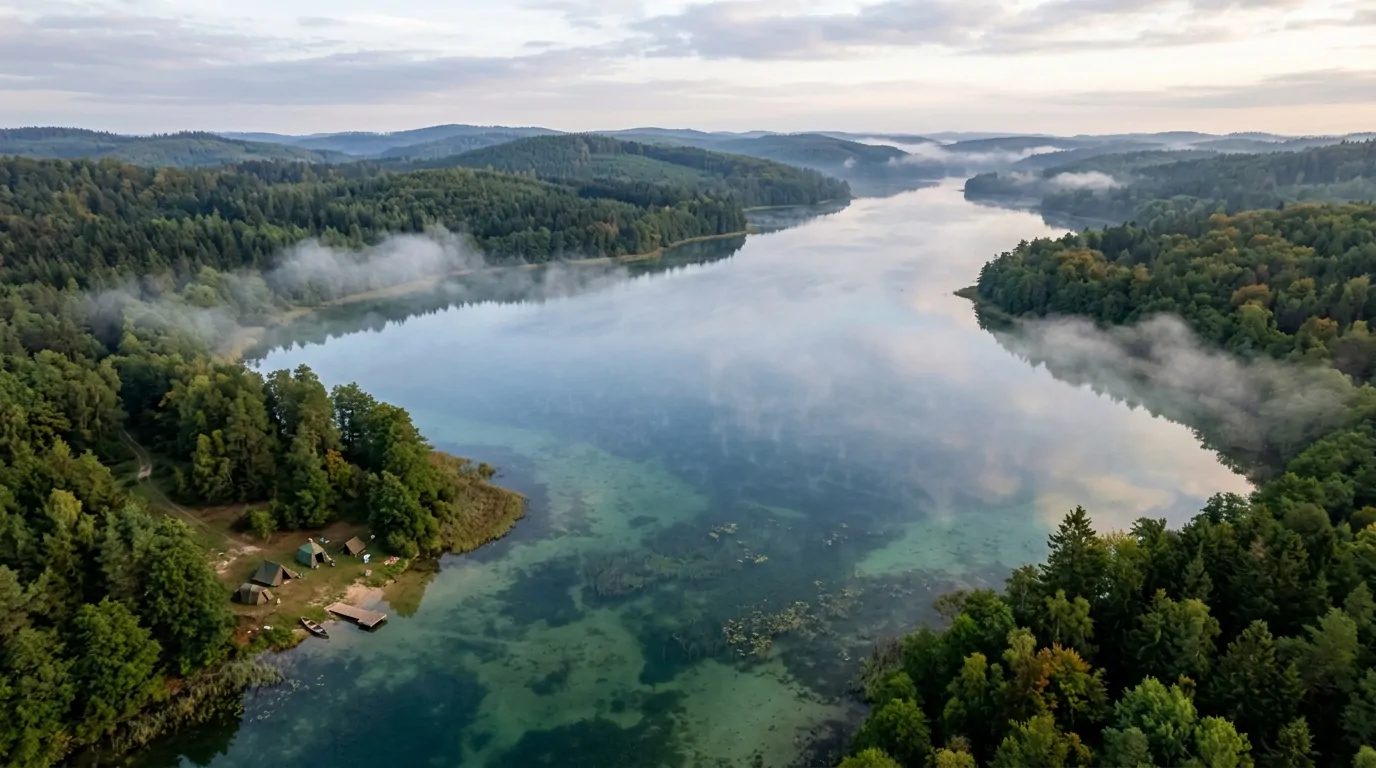
The bodies of water in Europe with giant carp are often rigorously managed private lakes.
The principle is simple: limited access, strict no-kill, regular biological monitoring and supplementary feeding if necessary.
These properties operate on a reservation basis, sometimes several months in advance for the most prestigious ones. This model is generally found mainly in France, the United Kingdom, Belgium, and the Netherlands.
- High and known fish density
- Specimens identified and tracked
- Often well-maintained setting, on-site accommodation
- No-kill respected by all fishermen
- Ideal for aiming for a personal best
- High cost (100 to 400 € per night depending on the site)
- Reservations made well in advance
- Less spontaneity
- Fish can sometimes become wary from being fished so often
- A less "wild" experience
Specialized websites like extreme-carpe.com (which I particularly like) list a wide selection of private estates in France and Europe. You can also find tutorials, detailed information sheets on stock density, average weight, and access conditions there…
The large reservoirs and rivers with wild carp
In contrast to private lakes, large reservoirs and rivers offer fishing that is more uncertain but infinitely more exciting.
The wild carp that live in these environments have rarely seen a hook, and their fighting spirit and wariness make them formidable adversaries!
The Danube, the Loire, the Rhône, the Ebro, and even the Vistula in Poland regularly produce carp weighing over 20 kg in their least frequented sections. The challenge is locating them!
According to feedback from carp anglers who fish the big rivers, the key is patience: these environments often require two or three scouting sessions before finding the right spot.
Gravel pits represent a third type of environment, intermediate between the managed lake and the wild river, so a gravel pit for carp fishing can hold remarkable surprises, especially if it is little exploited locally.
How to identify a high-potential location in Europe?
Finding a good spot is a real investigation! Professionals recommend consulting several sources before setting up camp and using tools like:
- Specialist forums and groups : recent feedback from other anglers is often the most reliable source.
- Google Earth and bathymetry : the shape of the seabed, seagrass beds and trenches are visible with a little practice.
- Local clubs : in Eastern Europe in particular, local fishing clubs know their bodies of water better than anyone else.
- Historical fishing data : some federations publish catch records which allow the potential of a body of water to be assessed.
- Visual recognition : bubbling on the surface, stirred silt, dense aquatic vegetation… all signs of activity.
Before heading to an unfamiliar body of water in Eastern Europe, contact the local fishing club or regional federation. They often have up-to-date data on catches and current restrictions.
The best seasons for each European destination
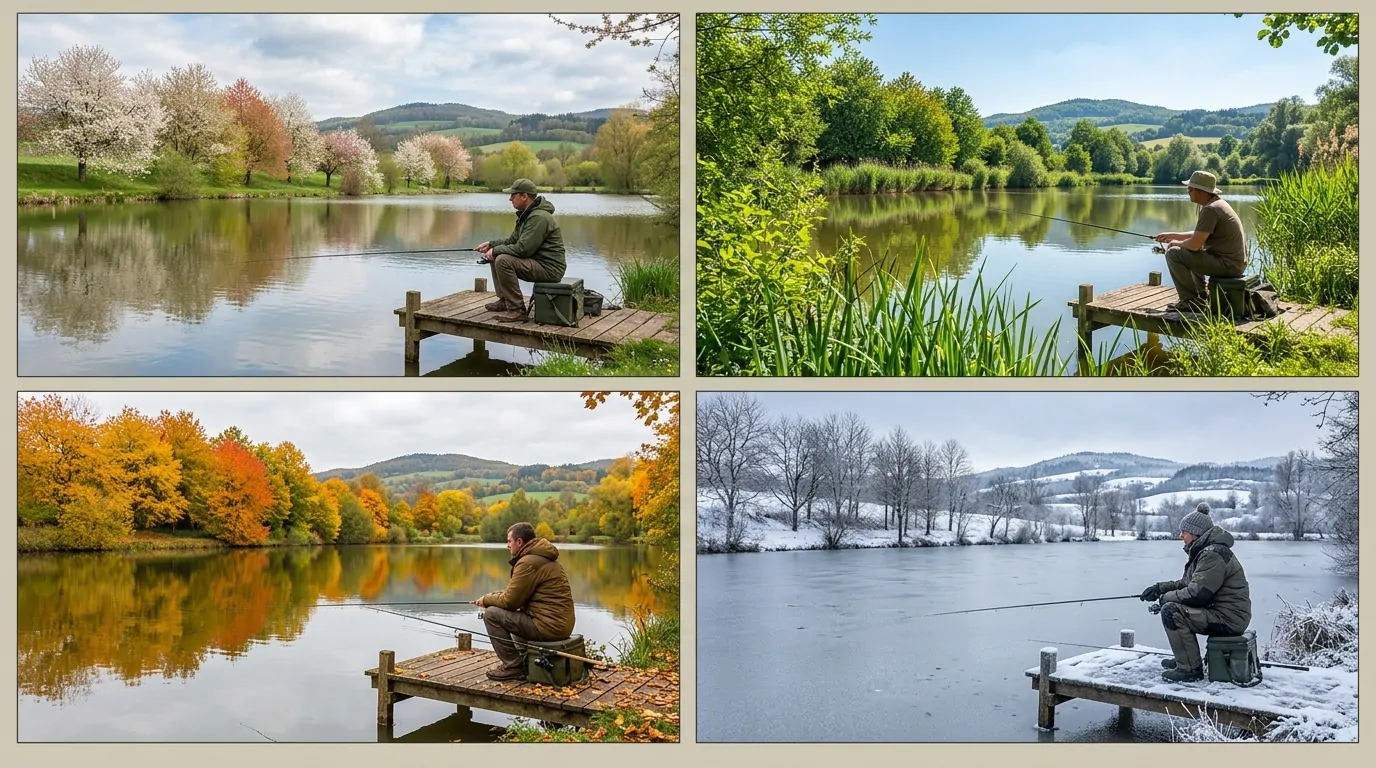
The carp is an ectothermic fish: its body temperature depends on that of the water, and in this context, its feeding activity, movements and receptiveness to bait therefore vary considerably according to the season and geographical area.
Adapting your schedule to your destination multiplies your chances of success without changing a single element of your technique!
Spring and autumn: key periods in Northern Europe
In Northern Europe, including France, Belgium, the Netherlands, Poland and the Czech Republic, the best carp fishing sessions take place in spring (April-May) and autumn (September-October).
In spring, carp emerge from their winter lethargy and feed actively to replenish their reserves, while in autumn they prepare for winter with the same intensity.
Water temperatures between 12°C and 20°C are considered the ideal range for their responsiveness.
Summer and the off-season: maximizing your chances in Southern Europe
In Spain, Italy, and the Balkans, summer fishing remains possible where water temperatures do not exceed 25°C. Night sessions and early mornings are best in July and August.
The off-season, from March to April and from the end of September to November, is the most productive window, since carp are still actively feeding before or after the great heat.
It should be noted that carp fishing destinations in Southern Europe are generally productive for almost nine months out of twelve!
Adapt your strategy according to the weather and temperature
Regardless of the destination, water temperature guides tactical decisions. Below 8°C, carp eat little and rarely. Above 28°C, they seek shade and oxygen, not food.
Experts emphasize the importance of monitoring weather fronts: an approaching depression often triggers sudden and intense activity, sometimes lasting only a few hours.
Regarding measurements, a surface thermometer and a barometer are tools that are sometimes as useful as a sophisticated bite detector.
Some fishing areas in Southern Europe close during spawning periods, usually between May and June. Always check local closure dates before planning your trip.
Fishing regulations and permits vary by country
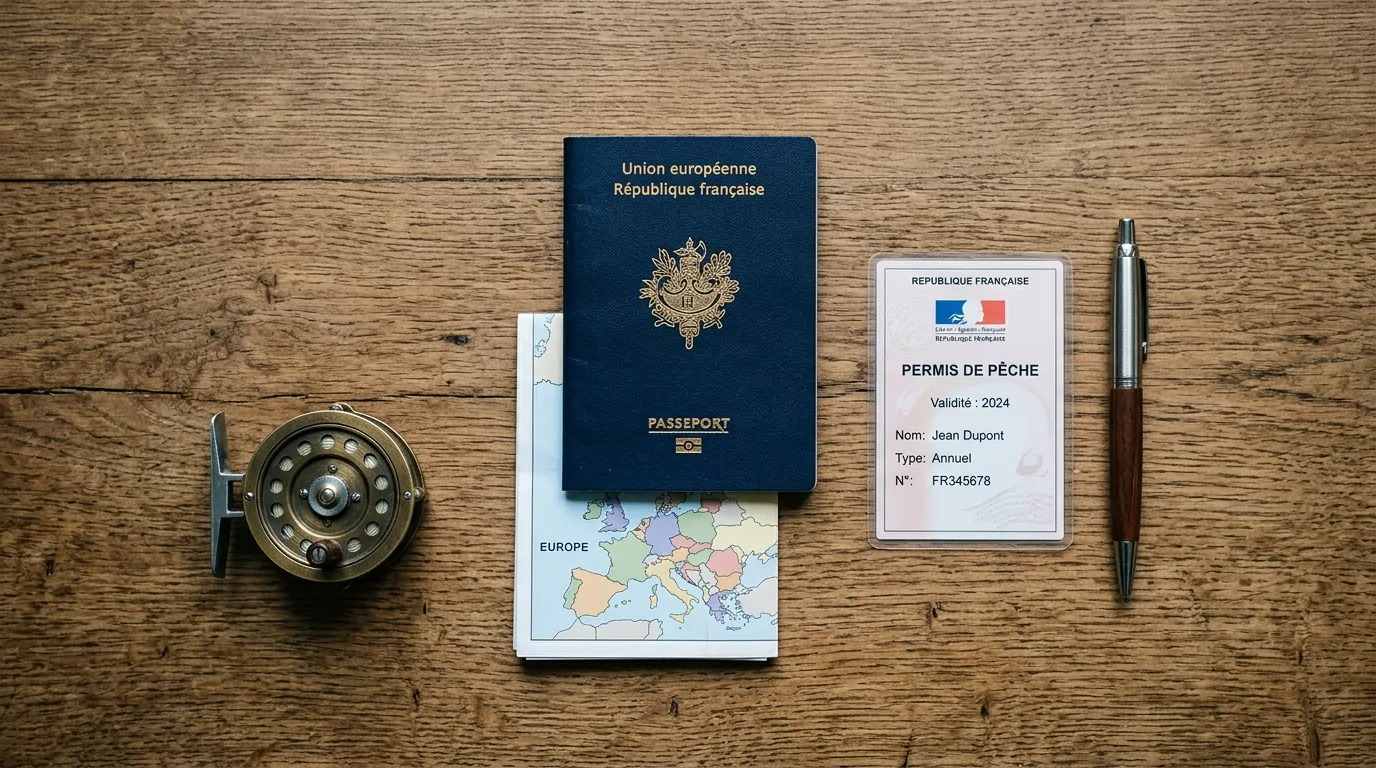
Regulations are probably the most overlooked aspect by fishermen travelling in Europe, and an infraction, even unintentional, can lead to severe fines or even confiscation of equipment.
Each country has its own rules, and within the same country, each region may have its own.
National permits and no-kill rules in Europe
To help you understand better, here is a comparative table of the main countries and their licensing systems:
| Country | Type of permit | Indicative price | No-kill mandatory? |
|---|---|---|---|
| France | National permit + local tax | ~€90 / year | Often yes, according to the website |
| Hungary | National license (Horgászjegy) | ~€10-15 / year | In clubs, yes |
| Romania | ANPA National Permit | ~€10 / year | No, except in protected areas |
| Poland | Federal Permit (PZW) | ~€20-30 / year | Variable depending on the body of water |
| Spain | Regional permit (autonomies) | ~€15-30 / year | No, it's common practice in clubs |
| Italy | Regional permit | ~€20-50 / year | Variable |
In France, the National Federation of Fishing in France (FNPF) centralizes information on permits, regulations and bodies of water accessible throughout the territory.
Some restrictions to be aware of before travelling abroad
Beyond the permit, several restrictions may surprise the unprepared foreign fisherman:
- The legal catch size : In Romania, carp must be at least 30 cm long to be kept. In France, there is no national legal size for carp, but some bodies of water impose local regulations.
- The number of rods allowed : in Poland, the number of rods per angler is limited (often 2). In France, private lakes may allow up to 4 or 5 rods.
- Fishing hours : In Hungary and Romania, some bodies of water prohibit night fishing without special authorization.
- Prohibited areas : spawning grounds, nature reserves, protection zones around water intakes. These areas can be difficult to identify in the field without an official map.
- Baits and hookbaits : some countries prohibit live baits or limit the use of milk boilies, or boilies in general, particularly in fish farming areas.
In the Czech Republic, carp fishing is traditionally linked to fish farming. Some bodies of water are private production ponds where recreational fishing is strictly prohibited. Always request written permission before accessing an unfamiliar body of water.
Official resources for information by country
Before you leave, check out these essential resources:
- France : federationpeche.fr, with an interactive map of bodies of water and local regulations.
- Hungary : the website of the Magyar Országos Horgász Szövetség (MOHOSZ), Hungarian national federation.
- Romania : anpa.ro, the National Agency for Fisheries and Aquaculture, which issues official permits.
- Poland : Polski Związek Wędkarski (PZW), national federation available in partial English version.
- Spain : websites of the autonomous councils (Juntas) according to the region concerned.
Preparing for your carp fishing trip in Europe
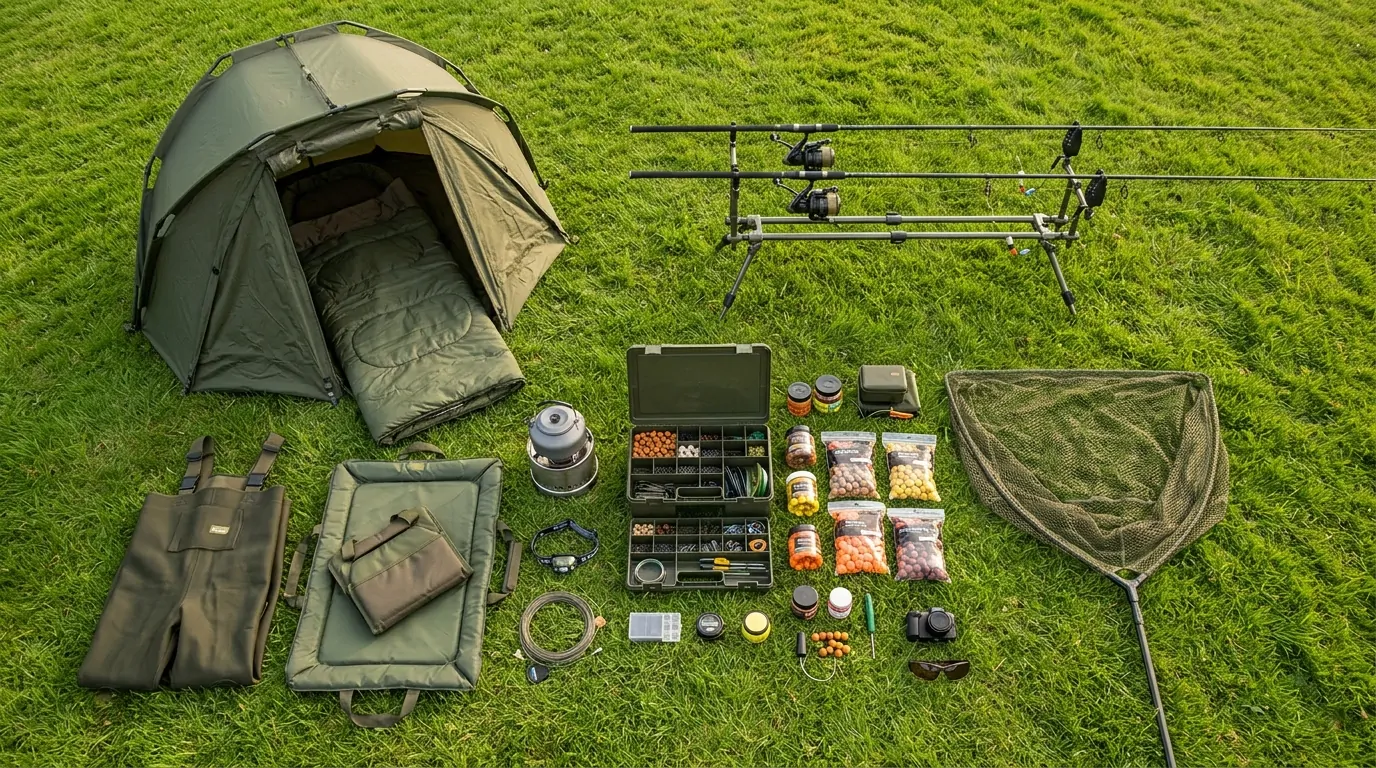
A carp fishing trip in Europe makes all the difference between a frustrating session and a trip that people will still be talking about years later.
Logistics, budget and the choice of local partners deserve as much attention as the choice of the location itself.
The budget, accommodations and all-inclusive packages
The budget for a carp fishing trip in a region of Europe varies considerably depending on the chosen package and also adapts to the cost of living in the country.
To help you plan ahead, here is an average price list:
| Type of stay | Price range | Suitable profile |
|---|---|---|
| Self-contained bivouac (public lake) | €50 to €150 per week (license + transport) | Experienced fisherman, adventurer |
| Privately managed lake, on-site bivouac | €150 to €400 / night | Record hunter, comfort desired |
| All-inclusive carp fishing trip | €800 to €2,500 / week | Fisherman who doesn't want to handle the logistics |
| multi-destination road trip | €500 to €1,500 per week (variable) | Curious fisherman, explorer |
All-inclusive packages generally include transport from the airport, accommodation on the estate (chalet, mobile home or luxury tent), basic fishing equipment, and sometimes meals.
Some specialist agencies also offer support from a local guide.
For families who want to combine fishing and exploration, our tips for stress-free family travel can be useful in organizing a trip that satisfies everyone!
Equipment and techniques adapted to European environments
The standard equipment for European carp anglers remains consistent from one country to another, but some adjustments will need to be adapted depending on the environment:
- Rods and reels : 3.25 to 3.75 lb test rods are sufficient in most cases. For large lakes like Balaton or Saint-Cassien, opt for long-distance rods with larger reels.
- Baits : boilies remain the standard throughout Europe. In Eastern Europe, corn, pellets, and hempseed are very effective on fish less exposed to commercial boilies.
- Overview : The zig rig is formidable on deep lakes like Lake Garda or Lake Mequinenza. The ronnie rig remains versatile on all types of seabeds.
- Bivouac : in countries where the nights are cool (Poland, Romania in autumn), a 4-season sleeping bag is not a luxury!
Comparative tests published in the specialist press indicate that simple, well-presented rigs often outperform complex rigs on heavily fished waters.
On heavily fished waters in Western Europe, reducing the size of boilies (10 mm instead of 20 mm) and using finer hooks significantly increases the strike rate on wary carp.
Hiring a local guide: advantages, but at what cost?
A local guide represents years of observation condensed into one session, as they know the fishing spots, the habits of the fish, the seasonal variations, and the subtle local regulations.
In Hungary or Romania, guides charge between 100 and 300 euros per day, sometimes with accommodation included.
In France, the daily rate for a certified guide is around 200 to 400 euros.
User feedback shows that using a guide for the first two or three sessions in an unfamiliar country significantly reduces discovery time and improves results from the outset!
To choose your service provider wisely, our selection of the best sites for planning a stay will allow you to compare offers and read verified reviews before booking.
To receive even better support, you can therefore contact:
- Independent guides : more flexible, often cheaper, but check their credentials (certifications, insurance).
- Specialized fishing agencies : clear legal framework, regulated service, but higher prices.
- Local clubs : In Eastern Europe, some clubs offer very high-quality informal support at reasonable prices.
According to specialists in the field, a local guide does not simply indicate a spot: he conveys an interpretation of the body of water that years of solitary fishing cannot always build up so quickly.
Answers to your questions
Which European country is the best for carp fishing?
There's no single answer, as the best country depends on the angler's preferences. France stands out for the quality of its water management and the size of its fish. Hungary is appealing for its abundance and affordability. Romania attracts anglers looking for wild carp in pristine natural environments. In practice, Eastern European destinations often offer better value for money for anglers targeting fish over 20 kg.
Do you need a foreign fishing license to fish in Europe outside of France?
Yes, in almost all European countries, a local national driving license is mandatory, regardless of your nationality. This license does not replace the one from your country of origin. In Hungary, Poland, and Romania, it can be easily obtained online or from local federations, often for less than €20 per year. The official websites of each country are the best source for information on the exact procedures.
How big can a carp reach in Europe?
European carp commonly reach 15 to 25 kg in well-managed bodies of water. Specimens of 30 kg and more have been documented in several countries, notably France and Hungary. By comparison, the officially recognized world carp record exceeds 50 kg, set in Lake Raduta, Romania, with a specimen approaching 51 kg. Grass carp and koi carp can exceed these weights under specific breeding conditions.
Is an all-inclusive carp fishing trip really worth the cost?
It depends on the level of organization you're willing to handle. An all-inclusive carp fishing trip costs between €800 and €2,500 per week, but it includes logistics, accommodation, sometimes guiding, and equipment. For a first trip to an unfamiliar country, this format helps avoid costly mistakes regarding regulations and access. For experienced anglers who already know the destination, a self-guided trip is often more economical.
How to find little-known carp fishing spots in Europe without going through an agency?
Specialized forums, fishing groups on social media, and local federations remain the best resources. Google Earth can help identify secluded bodies of water that traditional maps don't show. Contacting a local fishing club directly in Eastern Europe, even with a translator, often provides access to little-known spots inaccessible through commercial channels. A few weeks of careful preparation can lead to remarkable discoveries.
And you? What are your plans and experiences regarding these magnificent European fishing spots?
Feel free to let us know or ask any questions in the comments.
Happy fishing!
