
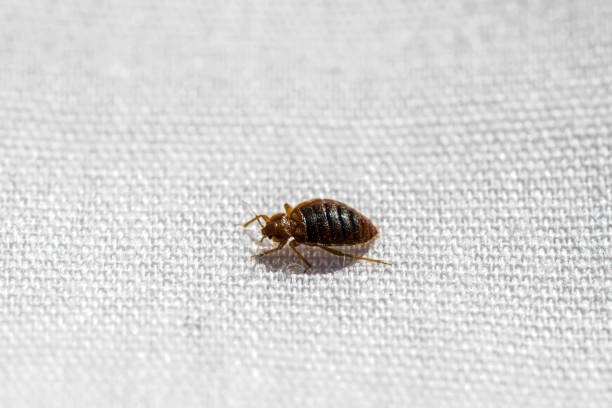
One bite upon waking, then two, then a row of small bumps on the forearm. When the words "bed bugs" are finally uttered, the first reflex is often to look for a home remedy: white vinegar, lavender essential oil, baking soda…
These remedies have the advantage of being readily available and free. The problem is that many of them do absolutely nothing to the insect, and some even worsen the situation by spreading the bedbugs throughout the home.
Experts don't dismiss home remedies entirely. Heat, cold, and suction remain the foundation of any effective pest control strategy, even among professionals. Here's how to distinguish between what works, what's useless, and what's best left alone.
Before any treatment, verify that it is indeed bed bugs
Stings alone are not enough to reach a conclusion.
Mosquitoes, fleas or chiggers leave fairly similar marks, and everyone reacts differently: some people show no bumps even though they share a bed with a partner covered in bites.
It is therefore better to look for physical clues before turning the house upside down:
- small black spots (excrement) on the seams of the mattress, the slats of the bed base, the headboard or along the baseboards;
- tiny traces of blood on the sheets, left by a bedbug crushed during the night;
- translucent molts, that is to say the "skins" abandoned by the larvae as they grow;
- The insect itself: reddish-brown, oval, very flat and wingless.
One last point, which is important: the presence of bedbugs has nothing to do with the cleanliness of the accommodation.
They travel in suitcases, second-hand furniture or clothes, and settle just as easily in an immaculate apartment as in a four-star hotel.
Grandma's tips that actually work
What kills bed bugs for sure is extreme temperatures. Above 55 to 60°C, or at -20°C maintained for a sufficient period, no stage survives, including the eggs.
All effective methods are based on this principle.
Machine wash at 60°C
This is the number one thing to do for sheets, pillowcases, washable duvets and clothes. A 60°C cycle destroys adults, larvae and eggs.
A tip that's often forgotten: carry laundry to the washing machine in a sealed bag to avoid spreading bedbugs along the way. Then, put the empty bag directly in the outdoor bin.
The tumble dryer on a hot cycle
For fabrics that cannot withstand 60°C, the tumble dryer takes over. A cycle of at least 30 minutes on the hottest setting is sufficient, even for clothes that are already dry.
It is also the fastest solution for processing the contents of a suitcase upon returning from vacation or a garment purchased from a thrift store.
The freezer: -20°C for 72 hours
Stuffed animals, shoes, books, small cushions: anything that can't go in the washing machine or dryer can go in the freezer, wrapped in an airtight bag.
The duration recommended by regional health agencies is a minimum of 72 hours at -20 °C.
A freezer combined with a refrigerator rarely goes that low, hence the advantage of extending the time a little and not filling the drawer too much: the cold must reach the core of the objects.
The vacuum cleaner, provided you empty the bag outside
A vacuum cleaner with a fine nozzle removes a good portion of the bed bugs and eggs lodged in the seams of the mattress, the bed frame, the baseboards and the corners of the room.
It doesn't necessarily kill them, hence the rule: close the bag (or empty the bin into a tied plastic bag) and throw it immediately into an outside bin.
Dry steam, passed slowly
For the mattress, the sofa or the nooks and crannies of the bed, steam works wonders… provided you use the right device.
A dry steam cleaner, which reaches around 180°C, creates a real thermal shock, while a conventional steam cleaner heats less and wets the fabrics, which doesn't help matters.
Speed is just as important as temperature: you have to move slowly, about 10 cm per second, or even less, so that the heat penetrates the gaps.
These devices can be rented from most DIY stores. Exercise caution near electrical outlets and appliances.
Sommières clay, the trick validated by science
Here's an unexpected old wives' remedy. This clay, used for generations to remove stains from fabrics and greasy wood, has proven remarkably effective against bed bugs.
A study published in 2024 in the scientific journal Parasite, conducted by parasitologists from the University Hospital of Nice and the IHU Méditerranée Infection in Marseille, compared several powders: Sommières clay showed an effectiveness of 75 to 100%, comparable to that of professional-grade diatomaceous earth.
It works by absorbing the insect's water, which then dies of dehydration.
It does not replace the rest of the protocol. It is used as a complement, after washing and steaming, in a thin layer in high-traffic areas: around the bed legs, along the baseboards, in the gaps in the bed base.
We vacuum, then repeat a few days later.
Remedies to forget (or almost)
White vinegar and household alcohol
Spraying white vinegar directly onto a bed bug can kill it. But it has no effect on eggs, leaves no lasting trace, and never reaches the individuals hiding in cracks and crevices—that is, the vast majority.
The same applies to household alcohol, with an added risk: methylated spirits sprayed on a mattress are flammable. Reserve them for cleaning surfaces, not for treatment.
Essential oils, lavender and cloves
Lavender, tea tree, peppermint, lemongrass: we read a lot about their benefits against bedbugs. Scientific studies have not demonstrated their effectiveness.
At best, their scent causes the insects to move… to another room, which spreads the infestation instead of solving it.
Bicarbonate, talc and coffee grounds
In the study cited above, baking soda, talcum powder, and green clay proved ineffective. Coffee grounds are more of a myth than a remedy.
As for bean leaves placed on the ground, they do trap some insects thanks to their hairs, but remain anecdotal in the face of an established infestation.
Diatomaceous earth bought in supermarkets
It appears in almost every article on natural remedies. The problem is: according to the same study, diatomaceous earth sold in supermarkets or as a bedding additive proved ineffective; only certain professional grades gave real results.
Most importantly, this highly volatile powder irritates the respiratory tract and eyes, and several public services advise against spreading it in a room.
If you do use it, wear a mask and limit it to inaccessible areas, such as behind baseboards.
Commercial insecticide bombs
It's not an old wives' tale, but it's often the second instinct.
Bed bugs have developed strong resistance to over-the-counter insecticides, which do not reach their eggs. These products irritate the insects and cause them to flee to neighboring rooms, or even to neighbors' homes.
Anses has also recorded more than a thousand cases of exposure to bed bug products between 2007 and 2021, including several serious poisonings.
The right order to act at home
Effective actions only yield results if they are performed methodically and then repeated. Here is the recommended order:
- Do not change rooms to sleep: going on the sofa or to a relative's house risks moving the bedbugs with you.
- Unmake the bed and place all the laundry in sealed bags, then put it in the washing machine at 60°C or in the dryer.
- Place small, non-washable items that were near the bed in the freezer.
- Vacuum the mattress, box spring, bed frame, baseboards and around the sockets, then throw the bag outside.
- Slowly apply dry steam to the mattress, bed base, nearby furniture and corners.
- The next day, apply a thin layer of Sommières clay to the passage areas.
- Equip the mattress with a full bed bug cover, closed with a zip, to trap any that might remain.
- Repeat the vacuuming and steaming process every week for at least three weeks: eggs that may have escaped treatment can hatch in the meantime.
When properly implemented, this protocol is often sufficient for an early-stage infestation. According to the Nouvelle-Aquitaine Regional Health Agency (ARS), two-thirds of affected households are eradicated in less than two months.
When home remedies are no longer enough
There are some signs that it's time to hand over the reins:
- the bites continue after three or four weeks of rigorous treatment;
- bedbugs appear in several rooms, or in the sofa in addition to the bed;
- You live in an apartment building and your neighbors are also affected;
- A vulnerable person lives at home (baby, elderly person, pregnant woman), which limits the solutions that can be used.
A professional begins with a precise diagnosis, sometimes with a detection dog capable of spotting foci invisible to the naked eye, then combines heat treatment and, if necessary, targeted products applied by technicians holding the Certibiocide.
In the Lyon region, for example, the Lyon Bed Bug Treatment Centre deals with this type of infestation and can tell you, after inspection, if treatment is really necessary.
Throughout France, the information number set up by the government, 0806 706 806, also directs the households concerned.
Frequently Asked Questions
Does white vinegar kill bed bugs?
It works only through direct contact and has no effect on the eggs. It cannot eliminate an infestation.
How long should you leave clothes in the freezer?
Minimum 72 hours at -20°C, in an airtight bag. If your freezer only goes down to -18°C, extend the time by one day.
Is the soil of Sommières dangerous?
It is much less irritating than diatomaceous earth and is sold as a simple household product. However, avoid stirring up clouds of it and keep it out of reach of young children and animals.
Can you get rid of bed bugs on your own?
Yes, if the infestation is caught early and confined to one room, provided that washing, cooling, vacuuming, and steam cleaning are rigorously applied for several weeks. Beyond that, professional help saves a lot of time.
