
In short
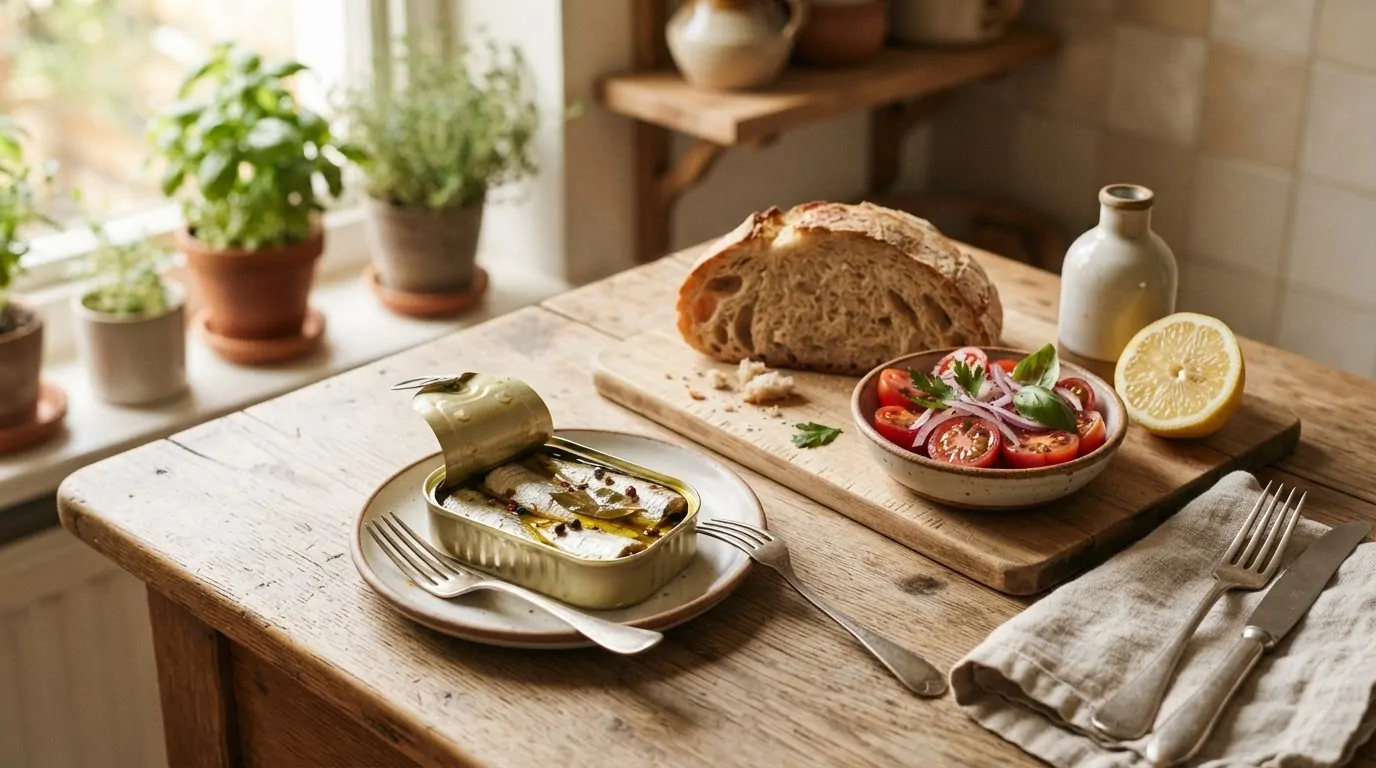
A can of sardines forgotten at the back of the cupboard, a half-empty fridge, and no idea what to make for dinner: it's a classic situation. Yet, it's one of the best starting points for a quick and inexpensive canned sardine recipe: a meal can be whipped up in minutes.
Not all tins are created equal: whole sardines in olive oil, fillets with lemon or sardines with tomato do not have the same use on a plate.
Here are four simple recipes, each paired with the box that best suits it. You'll also find a calculator to help you determine how many boxes to buy and what to do with leftovers.
Choosing the right can of sardines according to the recipe
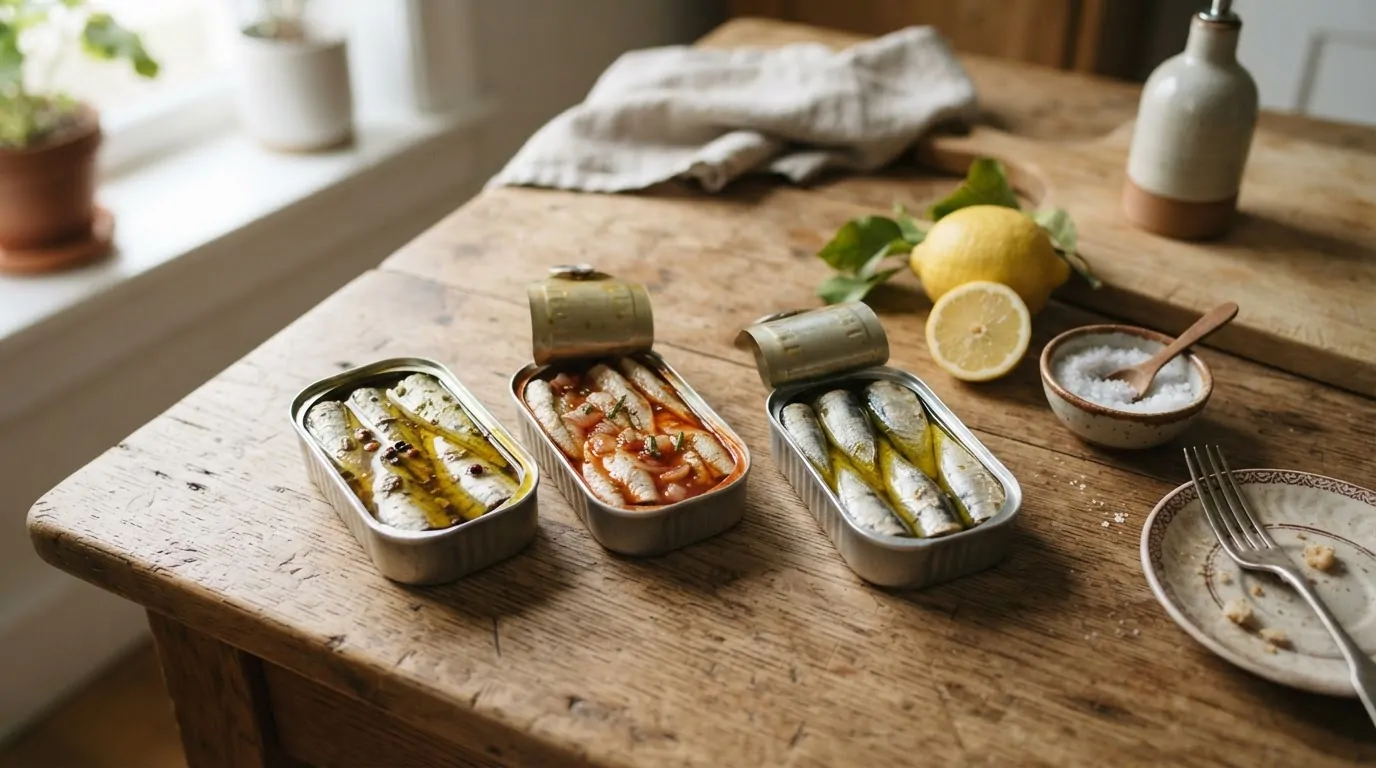
Before taking the pan out, check the label. The covering liquid (olive oil, sunflower oil, lemon, tomato, water) and the form of the fish (whole or filleted) determine what you can do with it.
Whole sardines in olive oil hold well on the fork: they are suitable for sandwiches and salads.
The fillets crumble more easily, making them practical for rillettes or pasta sauce.
| Box type | texture in the mouth | Recipes that suit him |
|---|---|---|
| Whole in olive oil | Firm flesh, clean taste | Open-faced sandwiches, warm salad |
| Fillets in oil | Soft flesh, crumbles easily | Rillettes, pasta sauce |
| With lemon or marinated | Acidic note, tender flesh | Open-faced sandwiches, salads |
| With tomato | Sauce included, melt-in-your-mouth texture | Pasta, gratins |
| Natural | Drier, neutral taste | Light rillettes with fresh cheese |
In terms of quality, the buying guide published by Allo Docteurs (accessed in October 2026) advises looking for the mention of steam cooking rather than pre-frying, and preferring a short composition, without added sugar and as little salt as possible.
Not all cans specify their cooking instructions. If this information is missing from the label, the ingredients and product name usually give a good idea of what you're buying, and a can with a long ingredient list requires extra attention to the salt content.
Our simple sardine recipe ideas
Sardine toast with avocado and lemon

This is the quickest recipe on the list: five minutes, no cooking required other than toasting the bread, and only one knife. It works with whole sardines, preferably in olive oil or with lemon.
- 1 can of sardines for 2 large slices of bread
- 1 ripe avocado
- 1/2 lemon
- 2 slices of toasted country bread
- Salt, pepper, a few fresh herbs
Mash the avocado with a fork and the lemon juice, season lightly with salt, then spread on the warm bread. Place the drained sardines on top, season with pepper, and add the herbs.
Let's have lunch for two: a box of food, an avocado, and some day-old bread toasted. It'll all be ready before the coffee even arrives.
Rub the toast with a clove of garlic or half a tomato before spreading the avocado: the aroma rises on contact with the heat and enhances the whole without adding anything to the shopping list.
Sardine rillettes with fresh cheese for an appetizer

Sardine rillettes can be prepared in ten minutes and spread on bread or crackers. Fillets, or sardines in their natural juices, give the most consistent texture.
- 2 cans of sardine fillets, well drained
- 100g of spreadable cream cheese or drained fromage blanc
- 1 small chopped shallot
- The juice of half a lemon
- 1 teaspoon of mustard, chives, pepper
Mash the sardines with a fork in a bowl, then stir in the cream cheese, shallot, lemon, and mustard. Taste before adding salt: the fish is already salty.
Imagine an appetizer for six people : two cans of fillets can be enough for a bowl of rillettes, served with a baguette cut into rounds.
Leave the rillettes in the fridge for an hour: they hold their shape better.
Pasta with sardines, lemon and breadcrumbs
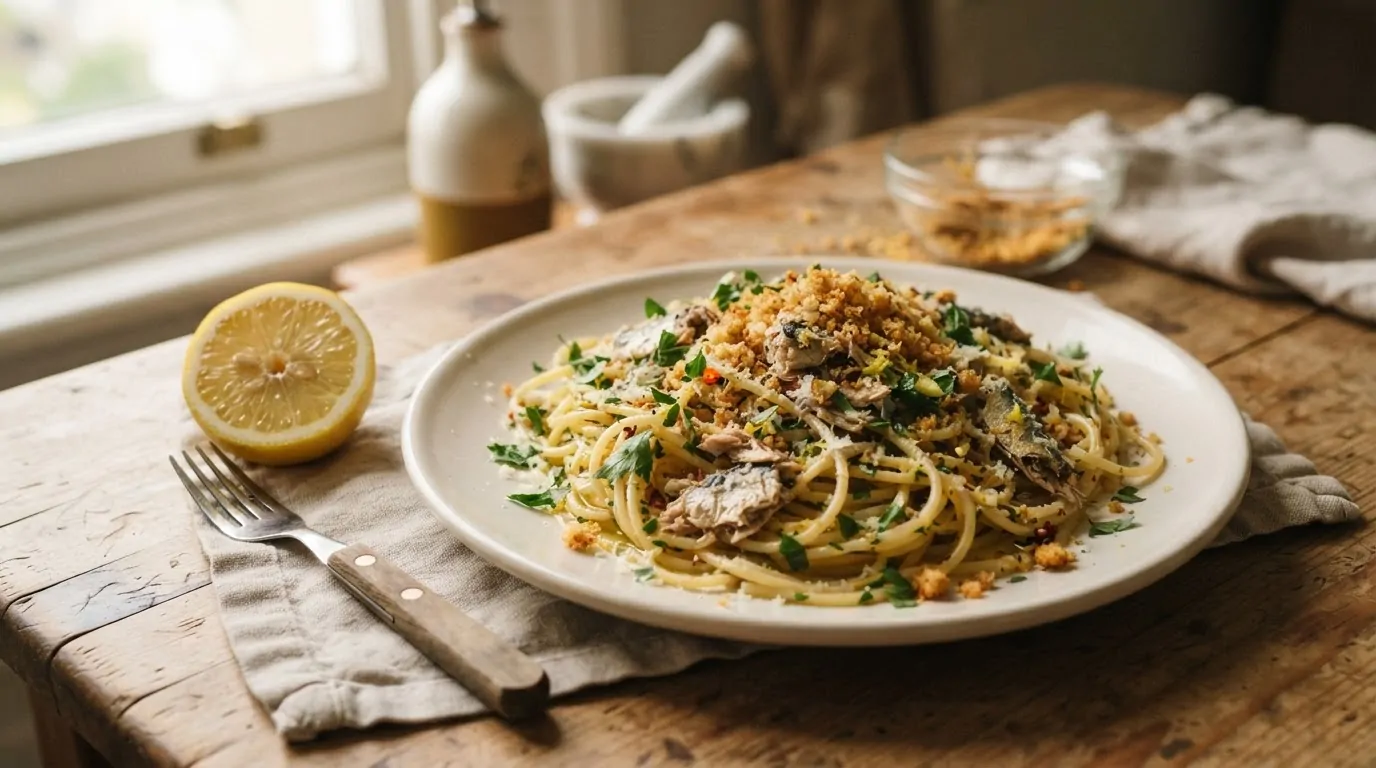
This recipe works with sardines in oil or tomato sauce. With canned sardines in oil, the canning oil forms the base of the sauce, eliminating the need to add more; with canned sardines in tomato sauce, the sauce from the can serves this purpose.
- Spaghetti (80 to 100 g per adult)
- 1 can of sardines in oil or tomato
- 1 clove of garlic and a pinch of chili pepper
- 1 lemon (zest and juice)
- 2 to 3 tablespoons of breadcrumbs
- Cook the spaghetti al dente.
- In a pan, fry garlic and a little chili in the oil from the can (or in a drizzle of olive oil if the can is tomato-based).
- Add the sardines, roughly crush them and let it heat for two minutes.
- Mix with the pasta along with a little cooking water, the zest and juice of one lemon.
- Finish with breadcrumbs browned in a dry pan.
To keep some whole pieces to crunch alongside the crushed base, you can add a few whole sardines just before serving.
Don't throw away the oil from the can: if it's olive oil, it will flavor sauces, salad dressings, or toast. Only oil that's too salty or has a strong flavor deserves to be discarded.
Warm potato and sardine salad
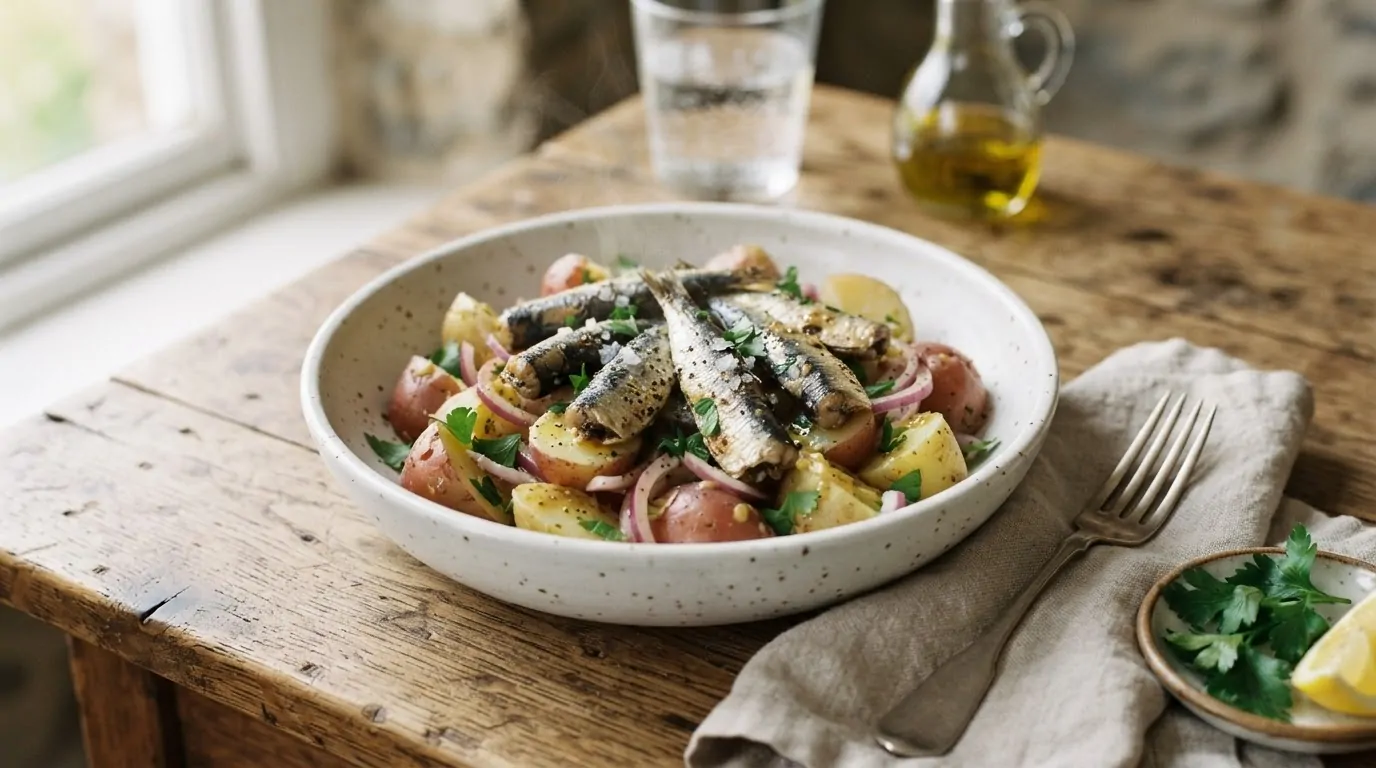
When the weather is cooler, this salad makes a great substitute for a hot dish without the need to cook fish. Warm potatoes absorb the dressing better than cold ones.
- 500g of firm-fleshed potatoes, boiled in water
- 1 can of whole sardines in olive oil
- 1 red onion or a few shallots
- Parsley, mustard, vinegar, a little oil from the can
Slice the potatoes while they are still warm, drizzle them with vinaigrette and let them soak for ten minutes. Add the onion, then place the sardines on top at the last minute so they keep their shape.
A weeknight dinner for two, for example: potatoes cooked the day before and reheated for a few minutes, and half the work is already done.
How many boxes should I plan for and how should I store the leftovers?
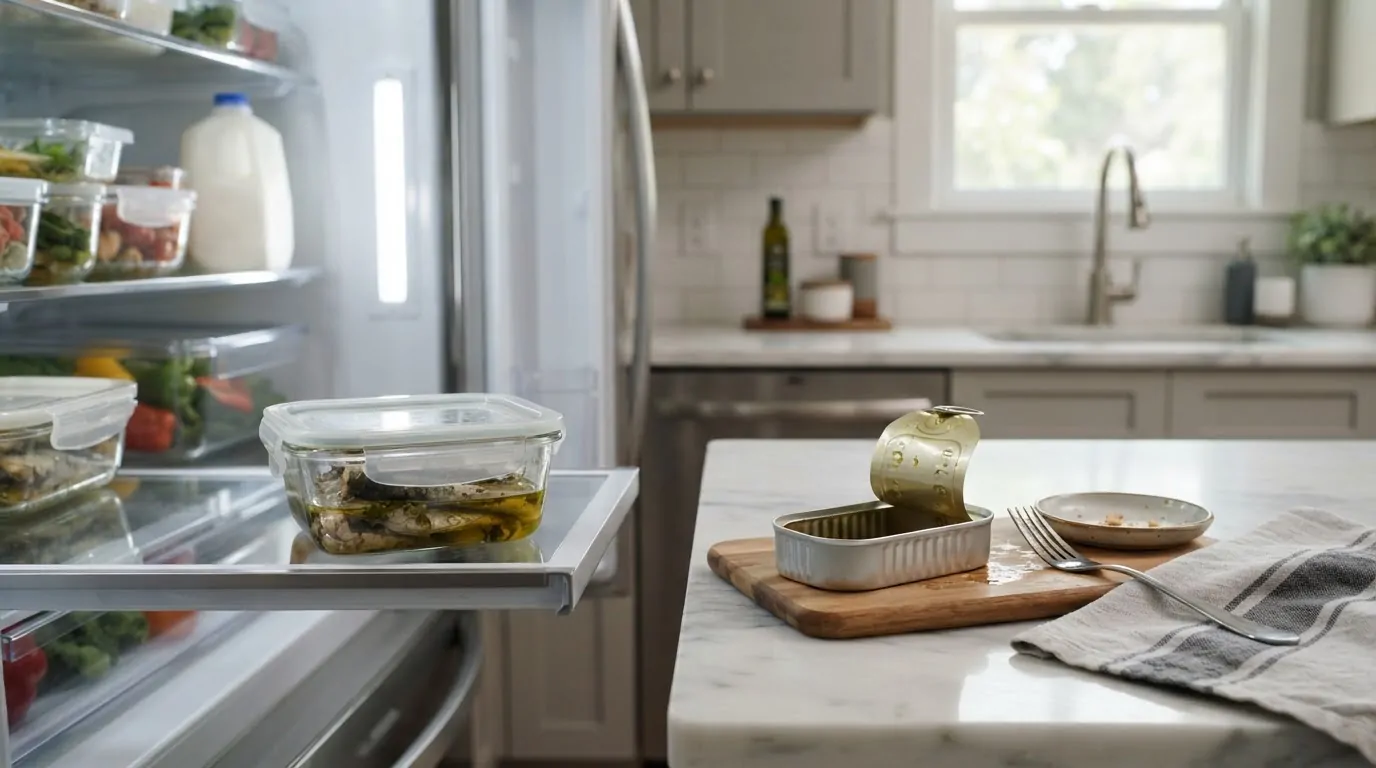
Depending on the recipe, the amount of fish per person can vary significantly. A bowl of rillettes to share requires much less than a pasta dish served as a main meal.
Estimate the number of boxes to buy
This calculator uses guidelines from the editorial team (grams of drained sardines per person) and the drained weight indicated on your can. It doesn't replace your appetite, but it helps prevent you from buying too many or too few.
As for leftovers, the margin is short. An opened can doesn't keep for long.
A study from the University of Porto published in 2022 in the journal Foods, relayed by the International Institute of Refrigeration (page consulted in October 2026), concludes that sardines in tomato sauce can be kept in the refrigerator for up to 3 days at 4°C, and sardines in oil or brine for up to 1 day.
The study authors specify that their measurements were taken under controlled hygiene conditions, which do not necessarily reflect home cooking. In practice, consume the can as quickly as possible, and transfer any leftovers to a sealed container rather than leaving the metal can in the refrigerator.
In summary
A can of sardines can make a complete meal provided you choose them according to the use: whole for sandwiches and salads, filleted for rillettes and sauces, in tomato sauce for pasta.
The four recipes above can be prepared in about 15 minutes, excluding cooking time for pasta and potatoes, using pantry staples.
Keep the olive oil from the can for seasoning, and remember to transfer what's left.
Practical questions
Can you eat the bones of canned sardines?
Yes. In canned sardines, the bones are softened by sterilization and being preserved in oil, and are easy to eat. They provide calcium, and you can mash them with a fork in rillettes or sauces if you find them unpleasant.
How many times a week can you eat canned sardines?
The French National Nutrition and Health Program (PNNS) recommends two portions of fish per week, including one portion of oily fish such as sardines. Since canned fish can be salty, vary the types you eat and read the label, especially if you are watching your salt intake.
How to limit the smell of sardines on your hands and in the kitchen?
First, rinse your hands with cold water, then wash them with soap and rub them with half a lemon. Ventilate the kitchen while preparing the product and dispose of the empty container promptly, as it retains the odor.
