
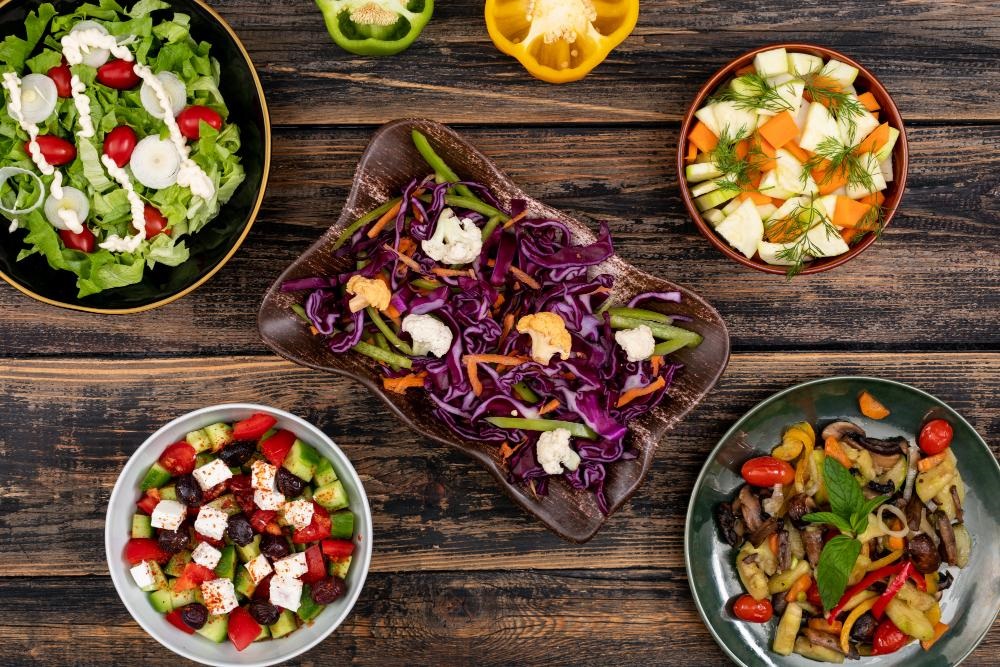
The composed salad is a bit like the Swiss Army knife of everyday cooking. Quick to prepare, easy to adapt depending on what you have in the fridge, and capable of going from a quick lunch to a summer dinner with friends without losing a single bit of flavor.
And yet, we quickly fall into a routine: tomato-mozzarella in summer, endive-walnut in winter, and that's all there is to it.
What if we looked at things differently? A successful composed salad is above all a game of associations: textures that respond to each other, flavors that balance each other, crunchiness, melt-in-your-mouth textures, a little acidity and a touch of indulgence.
Here are our best ideas for each season, with complete recipes to try tonight.
The principles of a balanced mixed salad
Before diving into the recipes, a quick reminder of the basics.
A good composed salad rests on five pillars: a green base (lettuce, rocket, lamb's lettuce, spinach…), a source of protein (egg, chicken, fish, cheese, legumes), a crunchy element (nuts, seeds, croutons, radishes), a gourmet ingredient that brings character (avocado, mature cheese, dried fruit, olive) and a homemade vinaigrette that binds everything together.
The other secret is the cutting. Finely and evenly cut vegetables completely change the texture and the taste of a salad.
This is where a good knife makes all the difference: clean slices, even dice, precise julienne.
For those who appreciate fine craftsmanship, these original knives, handcrafted in France from Morta, a fossilized oak tree thousands of years old, combine remarkable sharpness with a unique aesthetic. The kind of tool that inspires you to cook!
Spring salad: roasted asparagus, soft-boiled egg and parmesan
When the first warm days arrive and asparagus appears on the market stalls, this salad is a must. It's fresh, spring-like, and incredibly tasty.
Ingredients (for 2 people)
- 1 bunch of green asparagus (approximately 250g)
- 2 eggs
- 80g of rocket
- 40g of parmesan shavings
- 2 tablespoons of pine nuts
- 1 tablespoon of olive oil (for the asparagus)
- Salt, pepper
For the lemon vinaigrette
- 3 tablespoons of olive oil
- 1 tablespoon of fresh lemon juice
- 1 teaspoon of wholegrain mustard
- 1 small pinch of salt
- Freshly ground pepper
Preparation
Preheat the oven to 200°C (400°F). Trim the woody ends of the asparagus (about 2 cm/¾ inch). Arrange them on a baking sheet, drizzle with olive oil, season with salt, and bake for 12 minutes. They should be tender but still slightly crisp.
Meanwhile, cook the soft-boiled eggs: plunge them into boiling water for exactly 6 minutes, then immediately cool them in ice water. Peel them gently.
Dry-roast the pine nuts in a pan for 2 minutes, stirring regularly (be careful, they burn very quickly).
Prepare the vinaigrette by whisking together all the ingredients.
Arrange the arugula on plates, top with the asparagus , and add the Parmesan shavings and toasted pine nuts. Halve the soft-boiled eggs and place them in the center. Drizzle with vinaigrette and serve immediately.
Summer salad: grilled peaches, burrata and prosciutto
It's the star combination of the summer, and for good reason: the sweetness of caramelized peaches, the creamy smoothness of burrata and the saltiness of prosciutto create an absolutely perfect balance.
Ingredients (for 2 people)
- 2 ripe but firm yellow peaches, cut into quarters
- 1 burrata (125 g)
- 4 thin slices of cured ham (Bayonne, Parma or San Daniele)
- A handful of fresh basil leaves
- 60g of mesclun
- 1 tablespoon of olive oil (for cooking)
For the honey and balsamic vinegar vinaigrette
- 2 tablespoons of olive oil
- 1 tablespoon of balsamic vinegar
- 1 teaspoon of honey
- Salt, pepper
Preparation
Heat a skillet or grill pan over high heat with a drizzle of olive oil. Place the peach wedges cut-side down and grill for 2 minutes on each side without moving them. You want nice caramelization marks. Set aside.
Prepare the vinaigrette by emulsifying all the ingredients.
Arrange the mixed greens on a serving platter. Add the warm grilled peaches, tear the burrata into pieces with your hands and scatter the creamy chunks over the top. Arrange the crumpled slices of prosciutto on top and scatter the basil leaves over the salad. Drizzle with vinaigrette and serve immediately.
Autumn salad: figs, warm goat cheese and caramelized walnuts
When figs arrive in the markets in September, it signals that it's time to switch to richer, more comforting salads. The contrast between the warm, melting goat cheese and the crunchy walnuts is simply addictive.
Ingredients (for 2 people)
- 4 fresh figs, cut into quarters
- 2 goat cheeses (Chavignol type), cut in half lengthwise
- 100g of lamb's lettuce or young spinach leaves
- 50g of walnut kernels
- 1 tablespoon of honey
- 2 slices of country bread
For the honey and walnut vinaigrette
- 2 tablespoons of walnut oil
- 1 tablespoon of sherry vinegar
- 1 teaspoon of honey
- Salt, pepper
Preparation
Preheat the oven grill. Place the goat cheese halves on the bread slices and bake for 5-6 minutes, until the cheese is golden brown and melted.
Meanwhile, heat the honey in a small pan, add the walnuts and stir for 2 minutes to coat them. Be careful, honey burns easily: stay nearby and lower the heat if necessary.
Prepare the vinaigrette. Arrange the lamb's lettuce on plates, top with the fig wedges and caramelized walnuts, and place the warm goat cheese toasts in the center. Drizzle with vinaigrette and enjoy immediately, while the goat cheese is still melted.
Winter salad: warm lentils, roasted beets and feta
In winter, we need hearty salads. Lentils provide protein and texture, roasted beetroot adds a touch of sweetness, and feta cheese provides a salty contrast that brightens the whole dish.
Ingredients (for 2 people)
- 150g of Puy green lentils
- 2 medium raw beets (or 200g of vacuum-packed cooked beets)
- 80g of crumbled feta cheese
- 1 small red onion, finely chopped
- 2 tablespoons of chopped flat-leaf parsley
- 1 tablespoon of olive oil (if using raw beets)
- Salt, pepper
For the mustard vinaigrette
- 3 tablespoons of olive oil
- 1 tablespoon of red wine vinegar
- 1 teaspoon of Dijon mustard
- 1 small clove of garlic, grated
- Salt, pepper
Preparation
If using raw beets: preheat the oven to 190°C (375°F), wrap them individually in aluminum foil with a drizzle of olive oil, and bake for 45 minutes to 1 hour (they are cooked when a knife inserted into them meets no resistance). Let them cool slightly, then peel and dice.
Cook the lentils in a saucepan of unsalted water for 20-25 minutes. They should be tender but not mushy. Drain and immediately dress with the vinaigrette while they are still hot; this is the secret to them absorbing the flavors well.
In a bowl, combine the warm, seasoned lentils with the diced beets, sliced red onion, and parsley. Crumble the feta cheese over the top and grind some black pepper over the mixture. Serve warm for maximum flavor.
The art of homemade salad dressing
If we had to give just one piece of advice to transform your salads, it would be this: make your own dressing.
Commercially available ready-made sauces are often too sweet, too salty, or full of additives that mask the taste of good ingredients.
The basic formula is simple: one part acid (vinegar or citrus juice) to three parts oil, plus an emulsifier (mustard, honey, tahini) and a seasoning (salt, pepper, herbs).
From there, the variations are endless. Walnut oil and sherry vinegar for autumn salads. Olive oil and lemon for spring. Balsamic vinegar and honey for summer. Mustard and garlic for winter, and so on…
Prepare your salad dressing in a small glass jar with a lid: shake, and it's ready! Plus, you can keep it in the fridge for several days!
