
In short
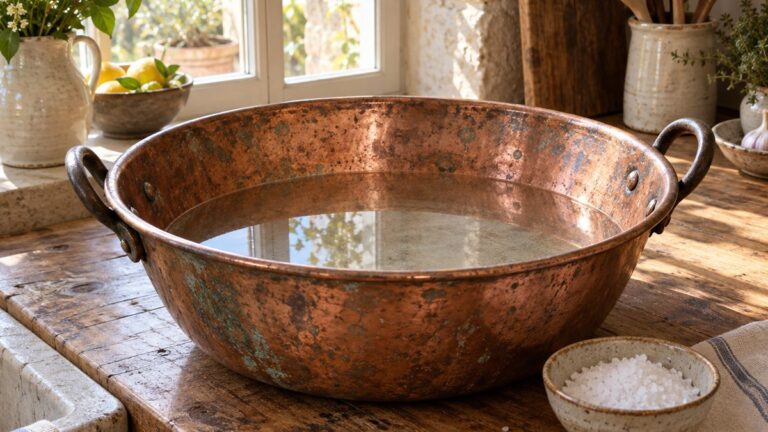
A copper pot or basin that is losing its shine does not need a long scrubbing with an abrasive sponge.
Copper is a relatively soft metal: the harder you rub it, the more the surface scratches and the faster it tarnishes afterwards.
The right approach is to let a bath or paste dissolve the oxidation for you, then rinse.
This guide details the reference method, its variations depending on the condition of the copper, and an often forgotten point: the precautions to take when the object is used for cooking.
Why does copper tarnish, and why should you avoid rubbing it?
When exposed to air and moisture, copper naturally forms a thin layer of oxide on its surface.
It is this that gives it that dull, brownish, sometimes almost black appearance on the most exposed areas.
On an old, poorly maintained piece, this oxidation can develop into verdigris, a characteristic green deposit that forms mainly outdoors or in humid atmospheres.
Steel wool, abrasive sponges, and metal scrapers scratch copper deeply. These micro-scratches then attract dust and moisture, accelerating the reappearance of tarnish.
This is why the most effective methods rely on a chemical rather than a mechanical principle: a mild acid (vinegar, lemon) combined with a slight abrasive (fine salt) dissolves the oxide layer without damaging the metal.
The go-to method without scrubbing: a white vinegar and salt bath
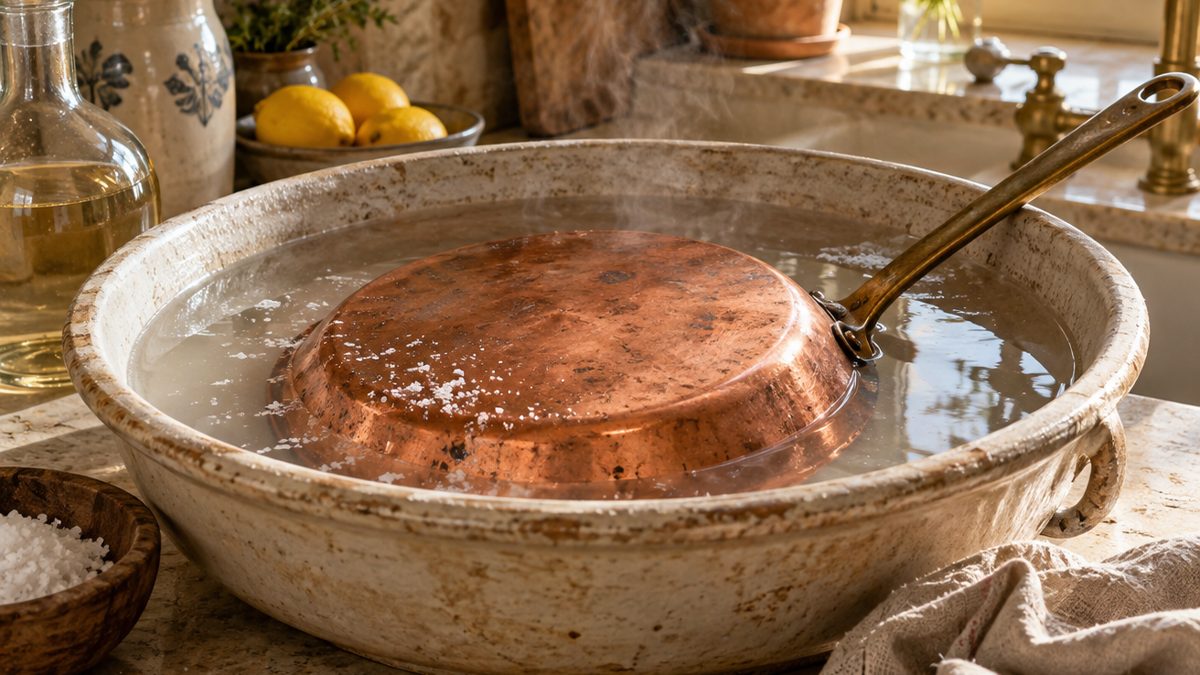
This method works for the vast majority of tarnished objects : basins, pans, molds, candlesticks, taps.
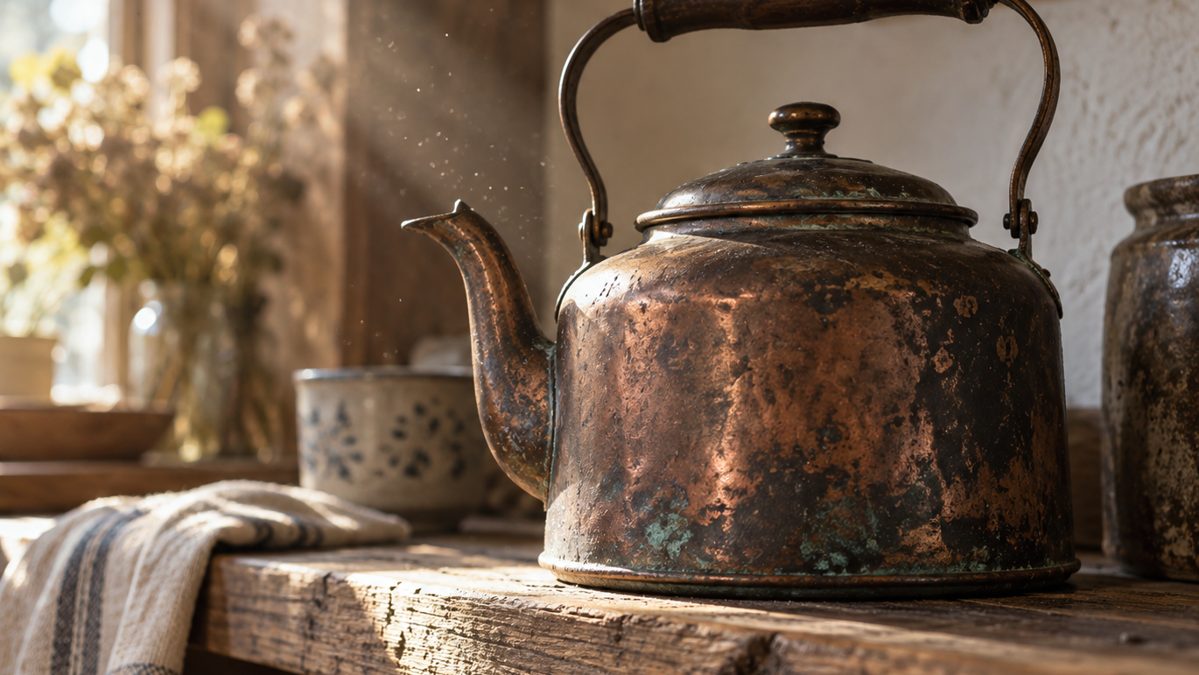
- Mix 500 ml of white vinegar with 2 tablespoons of coarse salt in a basin large enough to immerse the object.
- Heat the mixture slightly (around 40°C, without boiling) to accelerate the dissolution of the oxide.
- Immerse the object completely for 10 to 15 minutes. For an item too large for a bath, soak a soft cloth and lay it flat on the surface.
- Wipe the surface with a soft cloth: the oxidation will come off without needing to press.
- Rinse thoroughly with clean water and dry immediately with a dry cloth.
For a small item (jewelry, handle, small candle holder), replace the bath with half a lemon soaked in fine salt. Gently rub the surface with the pulp, then rinse with warm water: the citric acid acts in the same way as vinegar.
Adjust the cleaning method according to the condition of the copper
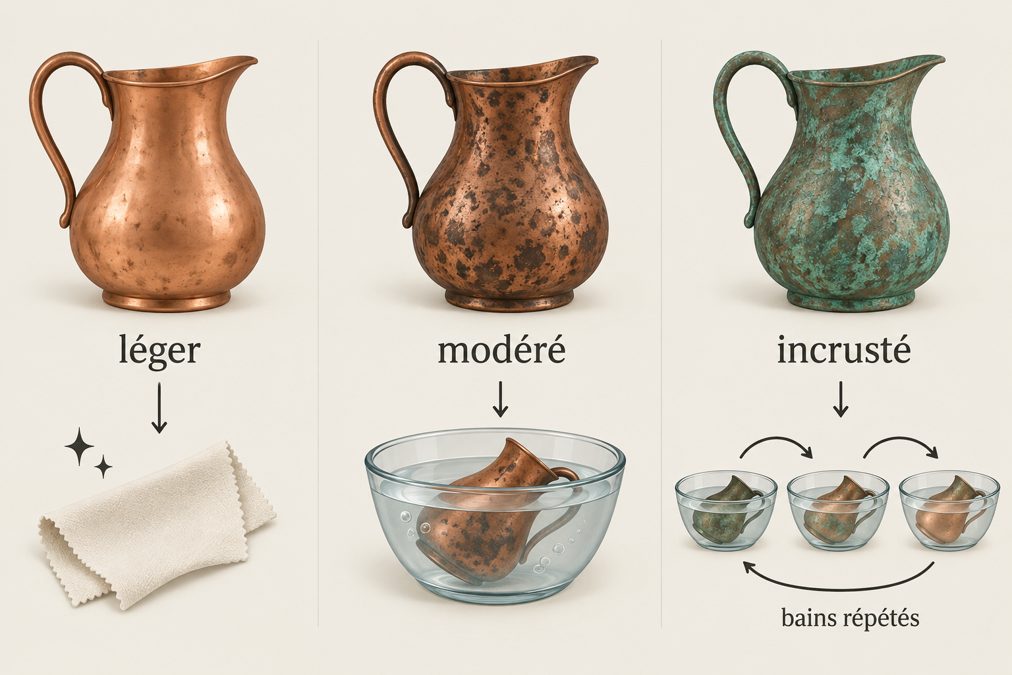
A simple tarnishing and verdigris that has been ingrained for years do not require the same treatment.
Forcing the same method on both cases often leads to disappointment: too weak for one, too aggressive for the other.
| State of copper | Recommended method | Exposure time |
|---|---|---|
| Slight tarnishing, matte appearance | Cloth soaked in vinegar diluted in equal parts with water | 2 to 3 minutes |
| Black spots, moderate oxidation | White vinegar and coarse salt bath described above | 10 to 15 minutes |
| Inlaid verdigris | Repeat the vinegar-salt bath 2 to 3 times, never a single soak of several hours | 15 minutes per visit |
Never mix white vinegar and baking soda on copper: vinegar (pH close to 2.5) and baking soda (pH close to 8.4) neutralize each other in a few seconds, resulting in essentially salt water, which is much less effective than each product used alone (source: Comment-Economiser.fr, 2026).
Soaking for several hours, or even overnight, does not accelerate the result: beyond 15-20 minutes per application, the vinegar begins to attack the surface unevenly, resulting in a dull and striated appearance rather than a uniform copper.
Which cleaning method should I choose for my copper?
1. What is the purpose of the copper object?
2. What is the state of the copper?
Food-grade copper and tin-plated copper: what's the difference?
In the kitchen, a copper pan is almost never bare on the inside.
It is tinned: a thin layer of tin acts as a barrier between food and copper, whose ions are toxic in case of prolonged contact with acidic or salty foods.
This distinction changes what is reasonable to apply to the surface.
- Vinegar-salt bath without restriction
- Lemon and coarse salt for the finishing touches
- Protective wax can be applied after drying
- Never use bleach, as it attacks tin
- Never use an abrasive sponge or steel wool
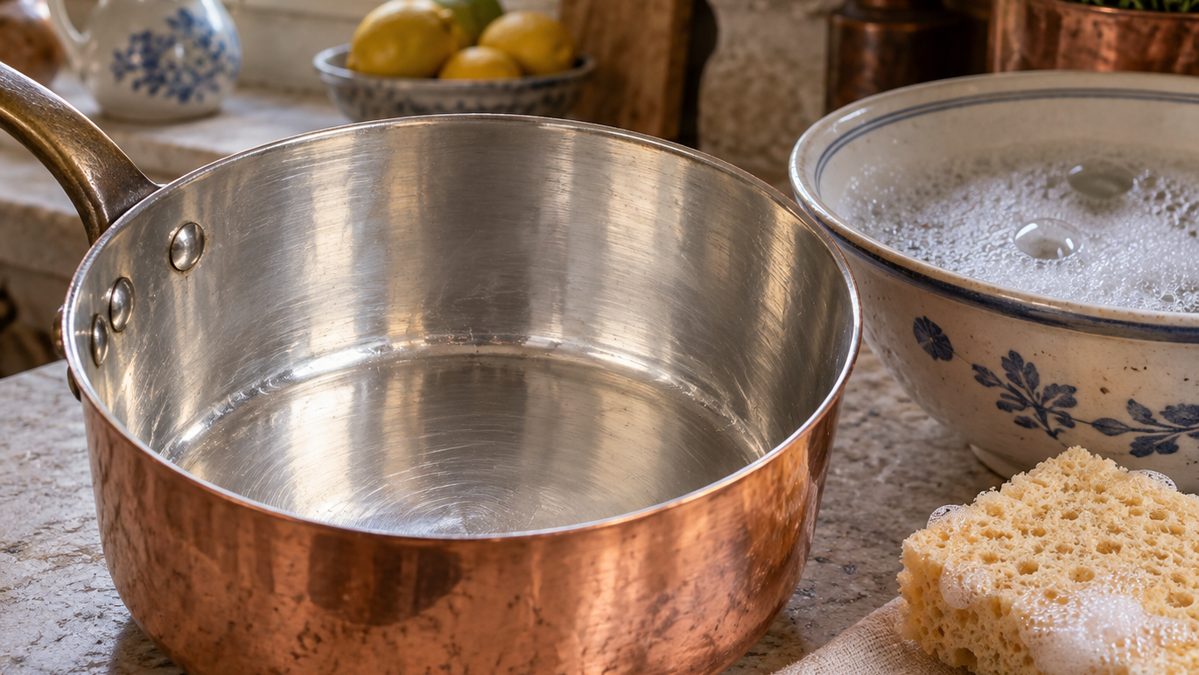
- Soaking in warm soapy water is recommended
As the manufacturer Mauviel reminds us in its maintenance documentation: for the tinned interior, soaking in very hot soapy water is enough to remove food residue, without resorting to acid or rubbing.
Regularly inspect the tinned interior of your pans. As soon as the copper clearly reappears under the tin layer, usually after 2 to 5 years of regular use depending on the tinning, have the piece re-tinned before continuing to cook with it.
Rinse, dry and protect to slow down future oxidation
Cleaning does not stop at rinsing: what follows determines the speed at which the copper will tarnish again.
On an engraved or chiseled object (candlestick, antique tray), dry it completely by hand within minutes of rinsing, rather than leaving it exposed to the air. Moisture trapped in crevices and raised areas restarts oxidation almost immediately, often before the rest of the surface.
When it comes to an antique decorative object, the question also arises beforehand: is it really necessary to polish ?
A brown or slightly irregular patina can be desirable, as it gives this type of piece a distinctive character that new copper lacks. In this case, simple weekly dusting with a dry cloth is sufficient, without the need for soaking or acid.
"The older the utensil, the more beautiful it becomes," Mauviel reminds us in its care advice: the patina is part of the charm of copper, not always a flaw to correct.
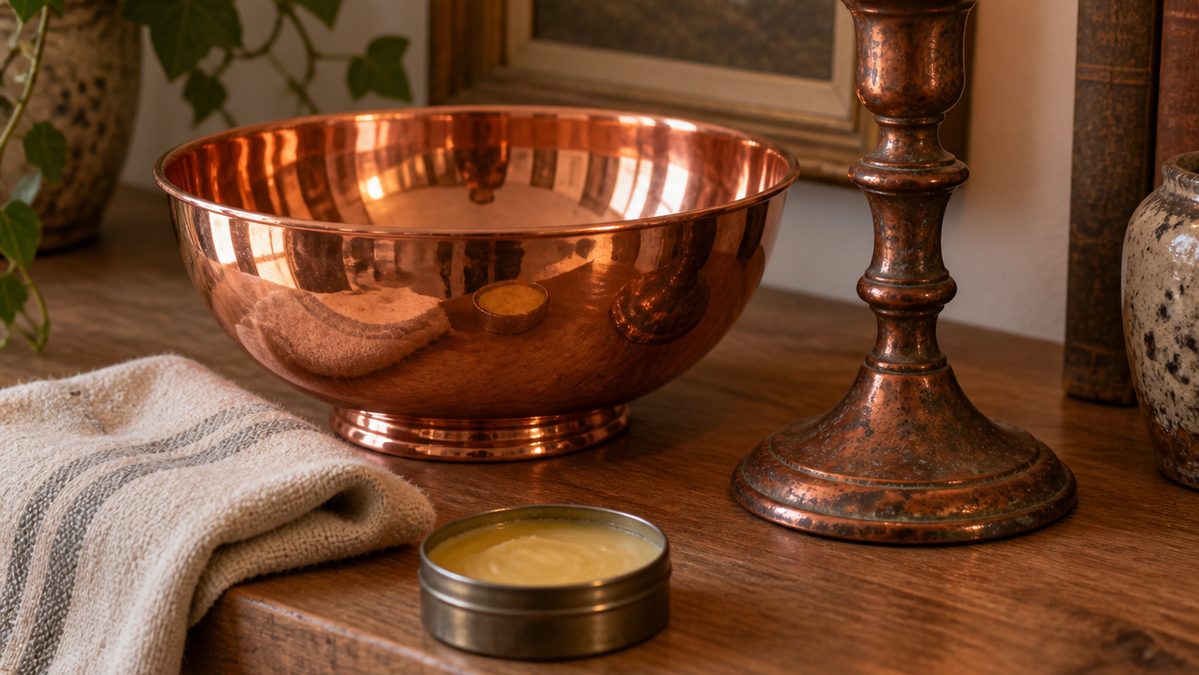
For an object you wish to keep shiny (decorative basin, faucets), apply a thin coat of protective wax after it has dried, about once a month. This slows down direct contact with the air and significantly reduces the frequency of subsequent cleanings.
In summary
A bath of white vinegar and coarse salt remains the most reliable method for cleaning copper without scrubbing, provided that the soaking time is respected and it is never mixed with bicarbonate.
The level of oxidation guides the choice between a simple damp cloth and repeated soaking, while tinned kitchen copper requires a gentler approach, centered on soapy water.
Rinsing, immediate drying and, for decorative pieces, a monthly protective wax significantly extend the time between cleanings.
Practical questions
How to clean heavily soiled copper?
For heavily soiled items, repeat the vinegar-salt soak 2 to 3 times rather than soaking for hours on end. Between soaks, rinse and dry to monitor progress, then repeat the soak if any areas remain stubbornly clean.
What is the best cleaner for copper?
There is no single best product for every situation: white vinegar and salt is convincing for everyday use thanks to its cost and effectiveness, while hot soapy water remains preferable on a fragile tin interior.
Is there a miracle product to make copper shine?
No: ketchup, cola, and lemon all work on the same principle—a mild acid that dissolves the oxide. None of them work faster than a properly measured vinegar and salt bath, despite what some tips might suggest.
How to restore the natural color of copper?
The original orange color returns as soon as the oxide layer is dissolved by the acid bath and then rinsed. On very old copper, it may reappear slightly paler: a light polishing with a soft, non-abrasive cloth is enough to restore the shine without needing to re-soak it completely.
