
In short
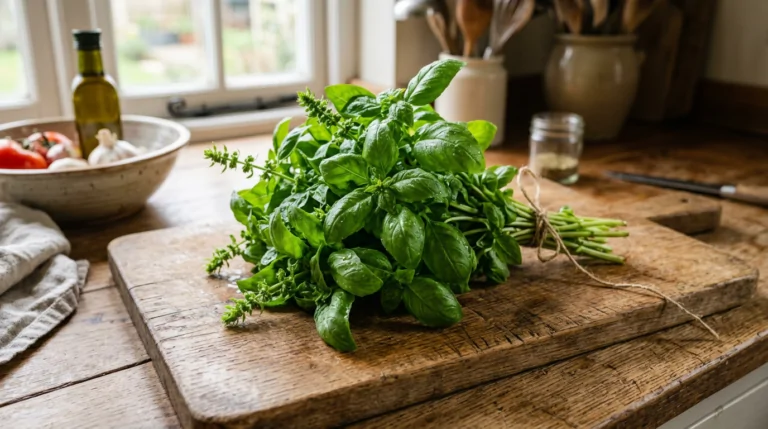
Every summer, the same problem arises for those who grow basil in pots or in the garden.
The leaves grow faster than they are consumed, and the first cool weather of September threatens to wither everything at once.
Freezing basil is a simple solution to avoid wasting any of this harvest.
When done incorrectly, this freezing process results in black and soggy leaves, far from the fragrant basil one would expect.
This article details the methods that actually work, the storage time to respect for each one, and the mistakes that ruin the result.
Can fresh basil be frozen without losing its flavor?
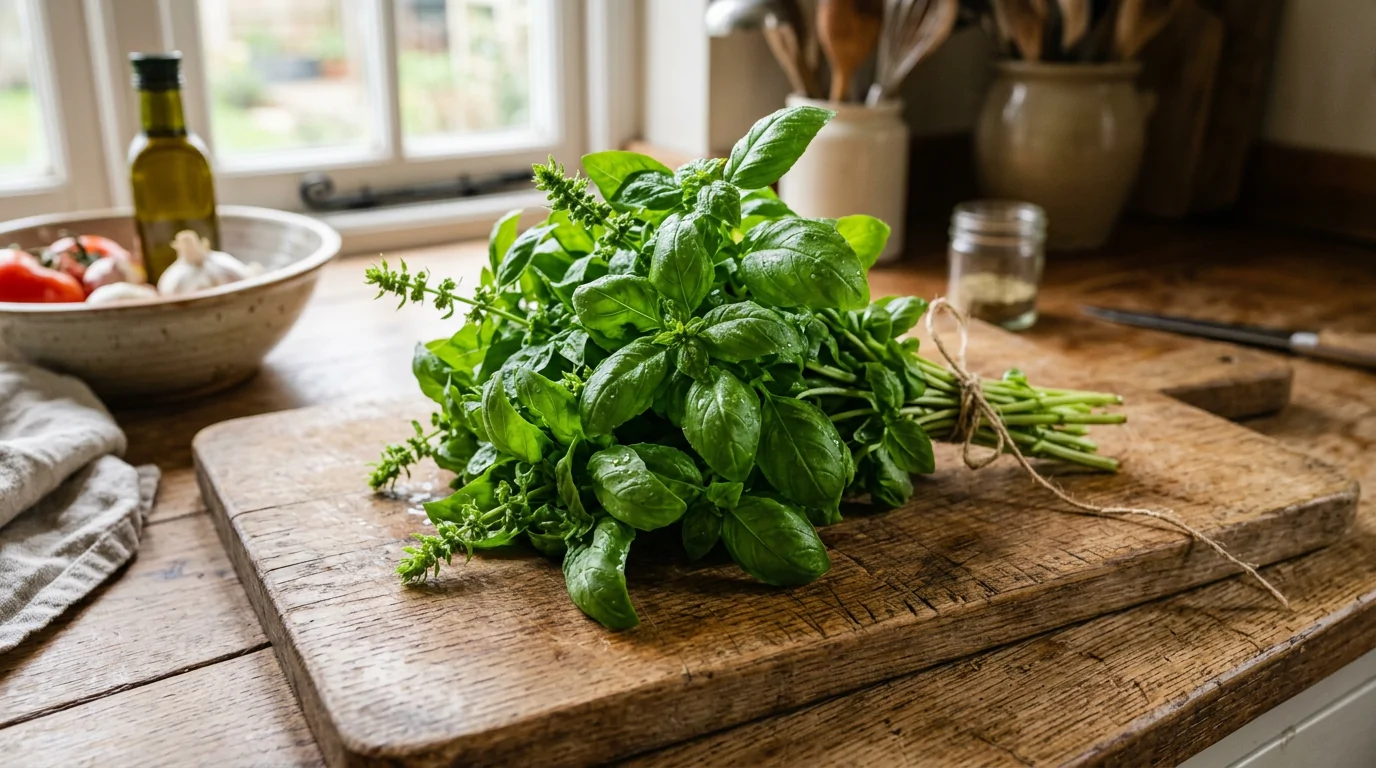
Yes, basil can be frozen, but not just any way.
Once thawed, the leaves never regain their original firmness: they remain usable in cooking, but lose all interest for decorative use on a plate.
This change in texture is explained by a precise mechanism: as soon as a leaf is cut, its enzymes come into contact with oxygen and trigger a progressive blackening.
If the leaves are frozen while still damp, the residual water forms ice crystals that rupture the cell walls. The result: upon thawing, the basil becomes limp, soggy, and black.
Basil's aroma holds up quite well to freezing, unlike its texture. That's why frozen basil is perfectly usable in a sauce or stew, but it can never replace a fresh leaf on a plate.
A gardener who harvests 200 to 300 grams of basil in late summer, just before the first frosts, often finds themselves with far more leaves than they can eat fresh in a few days. Freezing then becomes the only option to avoid throwing it all away.
In terms of food safety, the standard remains the same as for any food frozen at home: a temperature of -18°C, the regulatory standard in France and Europe to stop bacterial growth. A properly adjusted domestic freezer is perfectly adequate for basil.
What method should I choose to freeze basil?
Three methods are regularly used by people who freeze their basil every year. Each has a preferred use.
Freeze the whole leaves
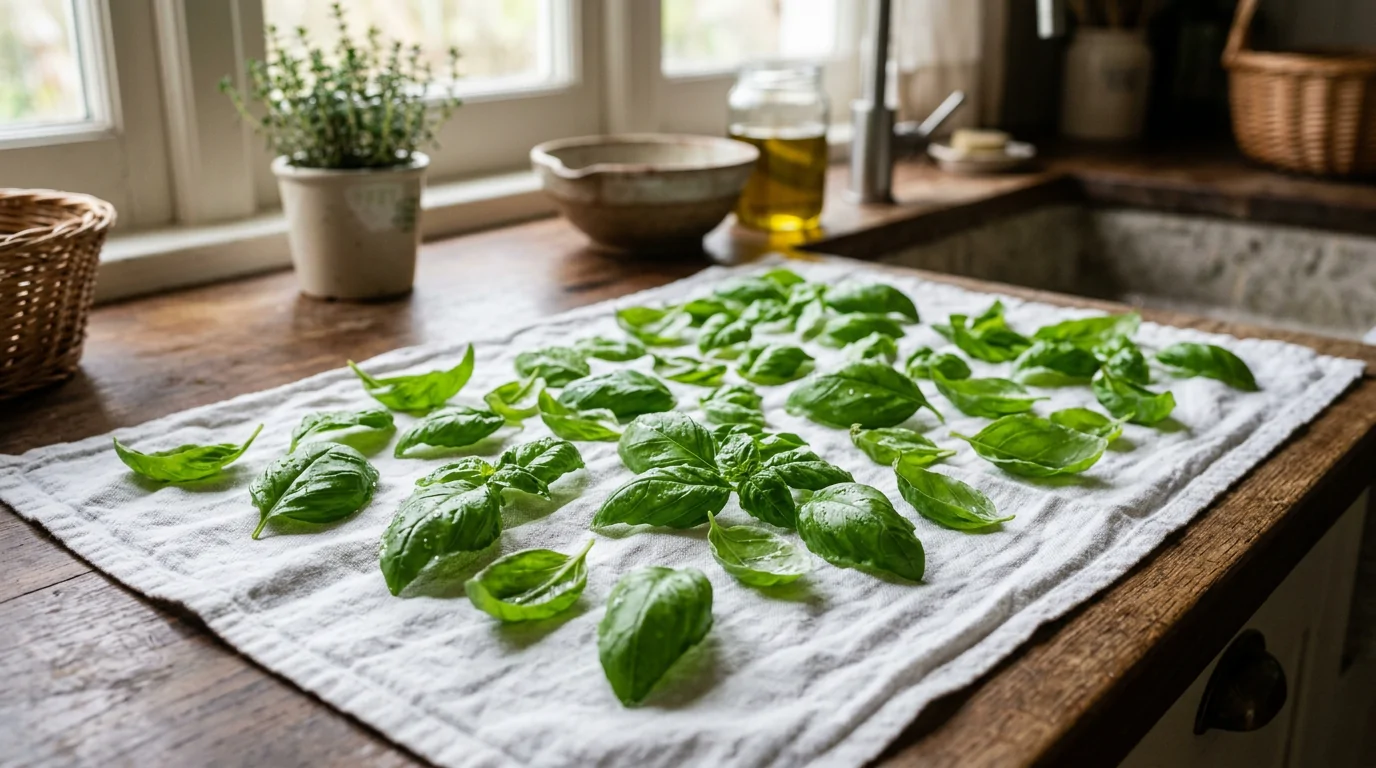
Gently wash the leaves in cold water to remove dirt and dust, then dry them thoroughly with a cloth or paper towel. This step is crucial: residual moisture creates frost that damages the texture and flavor.
Arrange them flat on a baking sheet, without them touching, then place the sheet in the freezer for about 2 hours. Once frozen solid, transfer them to a freezer bag.
The advantage: the leaves remain separate, and you only take the amount needed for each use.
To limit the browning of whole leaves, plunge them for a few seconds into boiling water, then immediately into a bowl of ice water before drying and freezing them. This thermal shock inactivates some of the enzymes responsible for browning.
Freeze in cubes with olive oil
Chop the basil, place it in a large-compartment ice cube tray if possible, then add a drizzle of olive oil before freezing.
The oil acts as a protective barrier against air and significantly limits oxidation. Each cube provides the ideal amount for a sauce, soup, or stew.
- Precise dosage, one cube = one portion
- Good protection against oxidation thanks to the oil
- Convenient to take directly into a hot pan
- Slightly diluted by the added oil
- Unsuitable for decorative use
- Takes up more space than a simple bag
Freeze as pesto
Pesto freezes very well, using the same technique as oil cubes: pour it into an ice cube tray, freeze, then unmold the cubes into an airtight bag once frozen.
A helpful tip: do not add the grated Parmesan before freezing. It's best to incorporate it after defrosting, as its flavor and texture do not withstand freezing well.
Here is a summary of the three methods to choose the one best suited to your needs:
| Method | Shelf life | Best use |
|---|---|---|
| Whole leaves | approximately 6 months | Sauces, stews, infusions |
| Cubes in olive oil | 8 to 10 months | Pasta, soups, stir-fries |
| Pesto | 3 to 4 months for better quality | Pasta, open-faced sandwiches, cold sauces |
Simulator: How many servings can you get from your basil harvest?
How long does frozen basil keep?
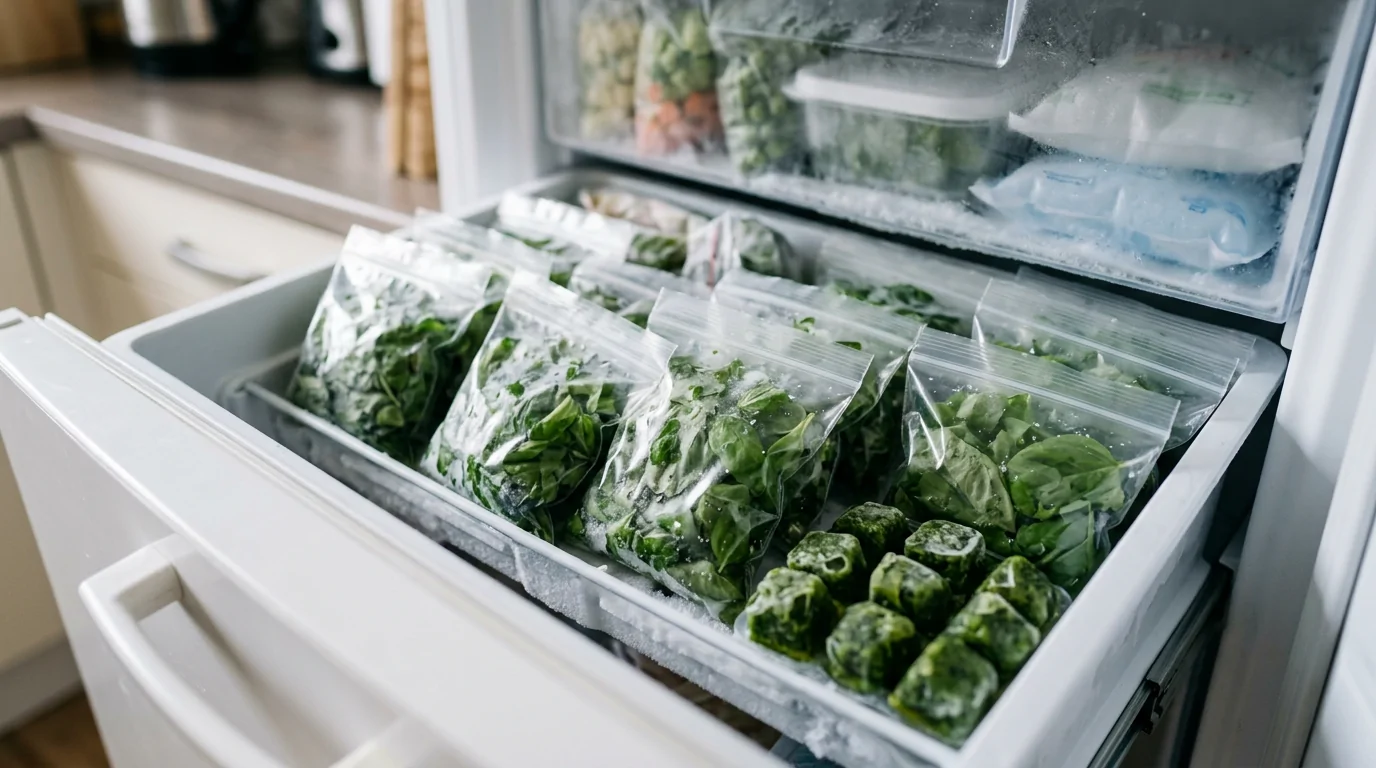
The duration depends mainly on the actual temperature of your freezer, more than on the method used.
At -18°C, the standard temperature of a domestic freezer, basil will keep for about 8 months. At -25°C, some higher-performance freezers can keep it for up to 16 months without significant loss.
For pesto, allow 3 to 4 months for better colour and aroma quality, although reasonable consumption is still possible up to 6 months.
After this time, frozen basil is perfectly safe to eat. It simply loses some of its aromatic intensity, making it less suitable for recipes where it needs to be the dominant flavor.
How to defrost and use frozen basil without making a mistake?
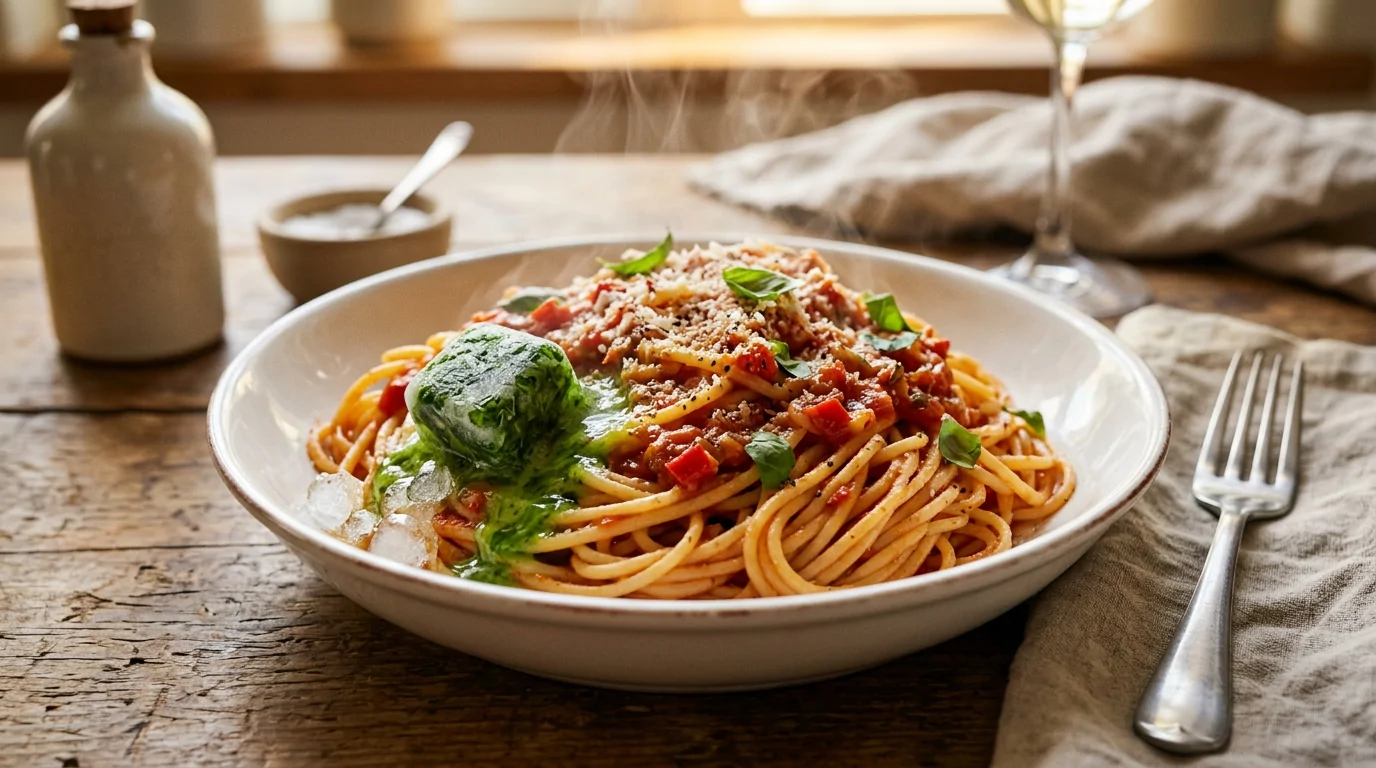
Frozen basil is almost never thawed in advance: it is most often used directly, while still frozen, in a hot dish.
A cook in a hurry preparing a pasta dish on a weeknight can place a cube of pesto or basil in oil directly on top, once the pasta is drained and still hot. The cube melts in seconds and coats the dish without any additional steps.
For whole leaves, the most common use remains incorporation at the end of cooking into a tomato sauce, soup or stew, without prior defrosting.
Take out only the amount needed for each use rather than defrosting the whole bag: once defrosted, basil cannot be refrozen without further loss of texture and taste.
Also avoid letting basil thaw at room temperature before using it: the leaves soften even more and release water, unnecessarily diluting a sauce or dish.
In summary
Frozen basil never has the texture of fresh basil, but it retains what matters: its aroma, provided it is properly prepared before freezing.
Between whole leaves, cubes in oil and pesto, the choice depends mainly on the intended use: a simmered sauce does not have the same needs as an evening pasta dish.
Carefully drying the leaves, choosing the right method according to the use, and respecting storage times remains the best way to enjoy a basil harvest well beyond the summer.
Practical questions
Does basil lose its flavor once frozen?
No, not immediately. Basil's aroma holds up quite well to cold for several months, especially when frozen in cubes with oil, which protects it from oxidation. It's mainly the texture that changes, not the flavor.
Should you wash basil before freezing it?
Yes, to remove dirt and dust, but then it must be dried very carefully. Residual moisture forms ice crystals that damage the texture of the leaves when they thaw.
Can dried basil be frozen?
This isn't necessary: dried basil keeps very well at room temperature in an airtight container away from light. Freezing is mainly for fresh basil, which has a short natural shelf life.
Is frozen basil as good as fresh basil in cooking?
For a sauce, soup, or stew, the difference is barely noticeable. For a salad or as a garnish, however, frozen basil loses too much of its firmness to be suitable.
Can you refreeze basil that has already thawed?
This is not recommended. Each freeze-thaw cycle further damages the cell walls of the leaves, which increases softening and oxidation. It's best to only take out the amount needed for each use.
