

By 2026, environmental concerns had definitively entered the holiday conversation. Many French people had come to terms with the significant carbon footprint of transportation, without, however, giving up on the idea of going away.
According to ADEME, transport accounts for about a quarter of the total carbon footprint of households, ahead of food and housing.
In detail, air travel remains one of the most emitting modes, especially over long distances, but it continues to embody the promise of a quick change of scenery.
Surveys also reveal a significant gap between concerns and actions. A survey by ADEME indicates that over 80% of young French people say they are worried about the consequences of climate change, a level considerably higher than that of older generations.
At the same time, studies on sustainable tourism remind us that train travel remains a minority choice for holidaymakers, despite its very positive image. It is in this middle ground, between the desire to act and very real constraints, that " eco-friendly travel without being perfect " is taking shape.
Why is it so difficult to travel in a truly eco-friendly way?
On paper, it all seems simple: limit air travel, favor trains, extend trips to compensate for the distance, and choose simple accommodations. In reality, the choices are much more complex!
An Ipsos poll for the Alliance France Tourisme shows that the desire to travel remains extremely strong, even in a context of purchasing power under pressure.
Not travelling is often seen as an additional injustice, especially by low-income households who already travel less often.
Psychology also plays a role! A survey by the Pegasus Chair, clearly cited by Le Monde, highlights that 67% of respondents say they are not ashamed to fly, even when aware of its climate impact.
This is what sociologists call an "attitude-behaviour gap": people intellectually agree with the diagnosis, but daily practices evolve slowly.
Among young people, this paradox is even more pronounced, with high eco-anxiety and a strong appetite for city breaks abroad.
Train, car, plane: how much do transport choices really weigh?
The orders of magnitude are clear. According to data from SNCF and ADEME, a TGV passenger emits on average a few grams of CO2 per kilometer, whereas an airplane passenger emits around 250 to 260 grams of CO2 per kilometer on short or medium journeys.
Over a route of several hundred kilometers, the difference quickly translates into tens of kilograms of CO2 avoided.
However, behavior does not always follow this logic. A 2025 barometer on sustainable tourism indicates that 31% of French people plan to fly for their holidays, up 9 points compared to 2024, while 76% will continue to use the car for stays in France and 65% the plane for departures abroad.
In another survey reported by Routard.com, 63% of respondents consider the mode of transport to be the number one lever for sustainable tourism, but only 13% say they want to use the train to get to their holiday destination.
Several factors explain this paradox: often higher cost of train travel over long distances, still limited night train service, complexity of international ticketing.
Greenpeace Europe has shown that on almost 60% of major European journeys, flying remains cheaper than taking the train, sometimes by considerable amounts.
What concrete compromises will the French adopt in 2026?
Faced with these constraints, many travellers shift from a logic of giving up to a logic of compromise.
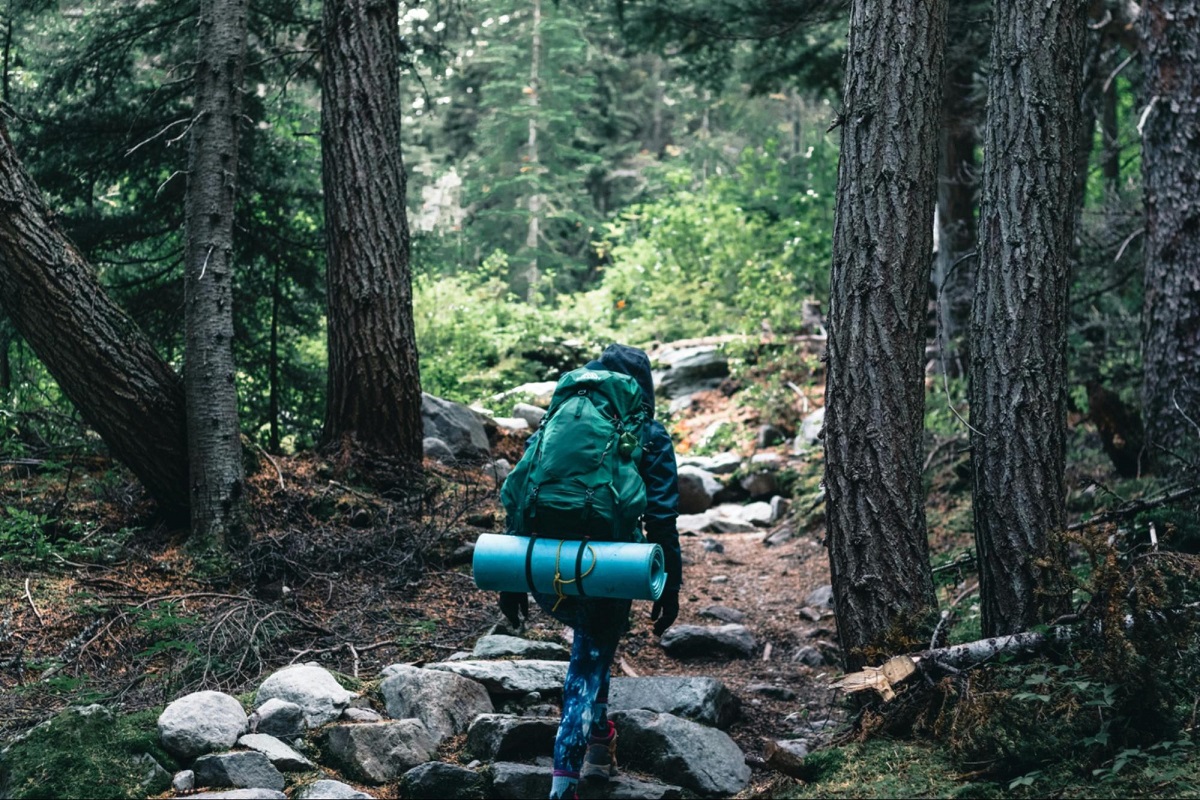
Several recurring strategies emerge in market research and testimonies gathered by the press:
- fly less often, but for longer periods, for example by combining one big trip every three years with closer holidays the rest of the time;
- replace some domestic flights with trains, especially when the alternative is less than 4 hours;
- choose European destinations accessible by night train, accepting a little discomfort in exchange for a better carbon footprint;
- reduce the overall distance by prioritizing the discovery of French or border regions rather than systematic long-haul flights.
Studies on household carbon footprints also remind us that it is the frequent journeys of the highest income earners that weigh the heaviest, sometimes up to 39% of their total footprint for the transport item, with air travel playing a central role.
Without stigmatizing, these figures support the idea of a graduated ecology: for a household that only flies once every two or three years, the issue may lie more in reducing car journeys or the length of stay than in permanent guilt.
How to reduce the digital footprint of your travels?
It's something we don't often think about, but travelling in 2026 also means producing a lot of data. Reservations, digital tickets, photos, videos, online travel diaries: all of this passes through servers that consume electricity.
Several analyses estimate that storing one terabyte of data in the cloud represents approximately 40 to 70 kWh of electricity per year, equivalent to the consumption of a modern refrigerator for about one month.
Given the explosion in the number of photos taken during the holidays, this impact is no longer anecdotal!
To maintain control, a first step is to list the truly useful uses and organize your files before leaving.
Rather than allowing duplicates to accumulate in multiple clouds, it is more consistent to plan a simple structure and compress all administrative scans or ticket copies needed on multiple devices into jpg format , in order to limit the overall size to be synchronized
Regular digital "cleaning" can then rely on a few simple habits:
- delete blurry or redundant photos over the course of days rather than once a year;
- disable automatic backup of certain applications that are not very useful when traveling;
- archive offline on a hard drive anything that is not intended to be accessed everywhere, all the time;
- choose the "standard" definition rather than "original" for certain photo synchronizations.
Finally, for travellers who produce a lot of images, for example during a safari or a long road trip, it may be relevant to prepare a "best of" folder to share with loved ones or community.
The idea is to compress the jpg files only for this selection rather than the entire catalogue, in order to reduce the volume sent and stored on multiple platforms.
Some people use an online service for this purpose which allows you to crop, rename and compress jpg in a few clicks, for example Adobe Express, without embarking on heavy retouching.
Is it really possible to travel more simply without being perfect?
 The most honest answer is yes, provided we accept the principle of "better rather than perfect".
Energy efficiency experts often distinguish three levels of action: efficiency (doing better with the same technology), substitution (changing technology or mode of transport) and sufficiency (rethinking the need itself).

Applied to holidays, this provides a range of options where everyone can find their place.
For some, the most acceptable step will be to go from two medium-haul flights per year to just one, while strengthening train travel or carpooling for other journeys.
For others, who already use little air transport, the core of the effort will focus on reducing car kilometers or choosing truly energy-efficient housing.
The important thing is to make these compromises visible and accepted, rather than remaining stuck in the sterile alternative between "all or nothing".
Current debates about holidays with friends, where the choice of mode of transport sometimes becomes a subject of tension, clearly show that these decisions are also social and emotional.
Learning to explain one's constraints, proposing alternative scenarios and recognizing the efforts of others is undoubtedly one of the conditions for eco-friendly travel to remain desirable, and not just guilt-inducing!
In summary
Traveling eco-friendly without being perfect in 2026means accepting to deal with economic, technical and social constraints that will not disappear overnight.
The figures clearly show that transport, and in particular air travel, remains the main lever for reducing the carbon footprint of holidays, but also the most difficult to activate in a context where the train is often more expensive and less convenient.
Rather than expecting heroic behavior, the challenge is to encourage trajectories of progress: a little less far, a little less often, a little longer on site, a little more train travel when the offer allows, a little more consistency between what we advertise and what we do.
In addition to this, there is a digital layer, often forgotten, which also deserves to be lightened by sorting and rationalizing our uses.
The important thing, ultimately, is to place the pleasure of travel in a more conscious framework, without placing the responsibility for transforming a mobility system that remains largely organized around cheap oil solely on individuals.
Public policies, transport options, and tourism stakeholders all have a crucial role to play. But even the imperfect daily choices of travelers can already shape a different way of getting around and experiencing the world!
Some answers to your questions
Is flying once a year necessarily incompatible with an "eco-friendly" trip?
It all depends on the rest of your lifestyle and your other travel. Air travel remains a major source of emissions, but an occasional flight can be partially offset by fewer car journeys, more train travel, and an overall focus on your carbon footprint.
Is the train enough to make my vacation sustainable?
Not necessarily. The train is by far more environmentally friendly than the plane or the individual car, but the overall impact also depends on the distance, the frequency of stays, the type of accommodation and the activities on site.
Is carbon offsetting a good solution for guilt-free travel?
Offsetting can fund useful projects, but it does not replace emissions reduction at the source. Most experts recommend using it in conjunction with concrete efforts to reduce flight distance and frequency.
What simple actions have the most impact on the average French traveler?
Limiting long-haul flights, favouring trains when possible, lengthening stays to reduce the number of trips and avoiding car dependency are generally the most effective levers.
Does reducing my digital pollution really change anything in the equation?
On an individual level, the effect is modest, but accumulated across millions of travelers, sorting photos, limiting unnecessary backups, and better cloud management help to curb the growth of energy consumption in data centers.
