
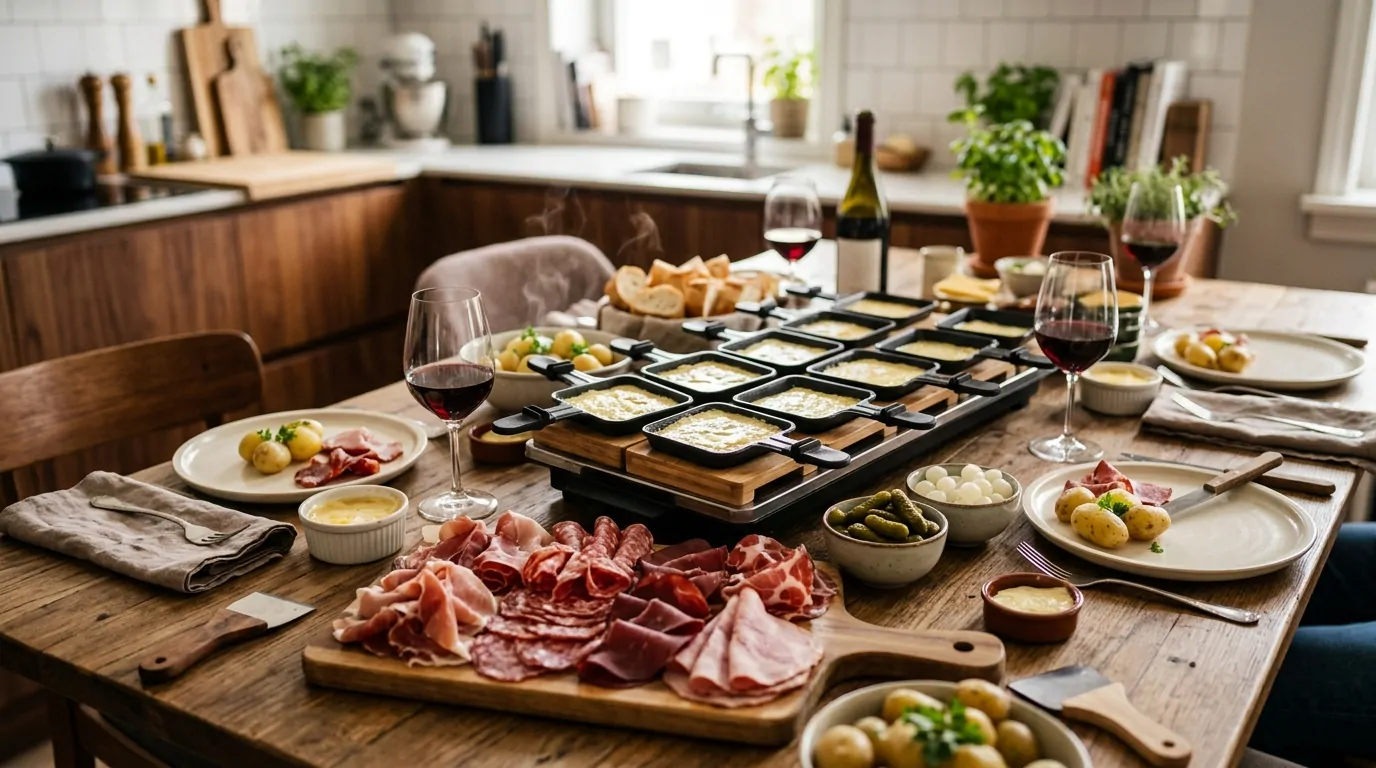
You're planning a raclette party, and the same question always comes up: how much charcuterie should you buy? Too little, and some guests will leave hungry. Too much, and you'll spend the week using up the leftovers…
Between adults who eat a lot, children who nibble, and appetites that are difficult to predict, the calculation can quickly become a puzzle.
This guide gives you concrete guidelines for dosing correctly, without stress!
In short
How much cured meat is needed for a raclette?
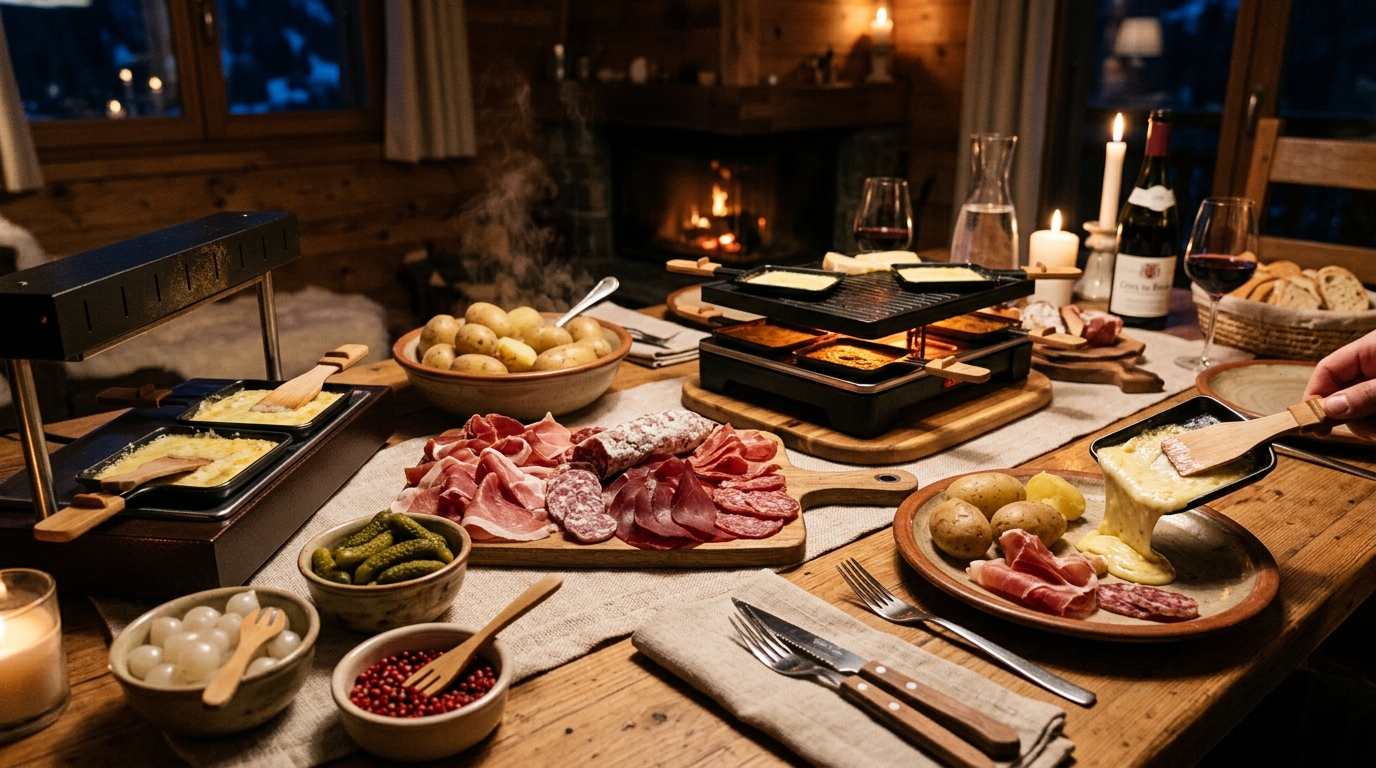
The most common reference is between 150 and 200 grams of charcuterie per adult , and this is the working basis that most butchers and caterers use to establish their platters.
Below 150g, the table looks empty by the second batch. Above 220g, slices often remain on the tray at the end of the evening.
This range should then be adjusted according to the profile of the guests and the structure of the meal.
How much deli meat per adult?
For an adult with a normal appetite, 175 to 180 g is a reliable value. This represents approximately 4 to 5 slices of cooked ham, 3 slices of dry sausage and a few strips of bacon — a varied platter that will last throughout the meal.
This estimate assumes that cheese and potatoes are served in standard quantities, and that there is no starter on the menu.
Simple guideline: 180g per adult = a balanced meal without excess.
What is a child's portion size for a raclette?
For a child, allow between 80 and 120g depending on age and appetite. A 6-8 year old child mainly eats melted cheese and potatoes; cold cuts are often a secondary food.
A 14-16 year old adolescent, on the other hand, can easily reach 150g, or even more.
It is better to observe each child's habits rather than applying a single rule, especially if you are mixing several age groups at the table.
How many grams depending on appetite?
Appetite is probably the most important variable.
Here is a simple grid that can be adapted according to the profiles of your guests:
- Small appetite or diet: 120 to 140 g
- Normal appetite: 160 to 180 g
- For big eaters or athletes: 200 to 250 g
If you have a homogeneous group (all sporty adults, or all elderly people with small appetites), adjust the whole thing up or down.
If the group is mixed, take a weighted average and plan a small safety stock of cheese rather than cold cuts: cheese keeps better.
🧮 Raclette meat quantity calculator
Adjust the portion size according to the type of meal
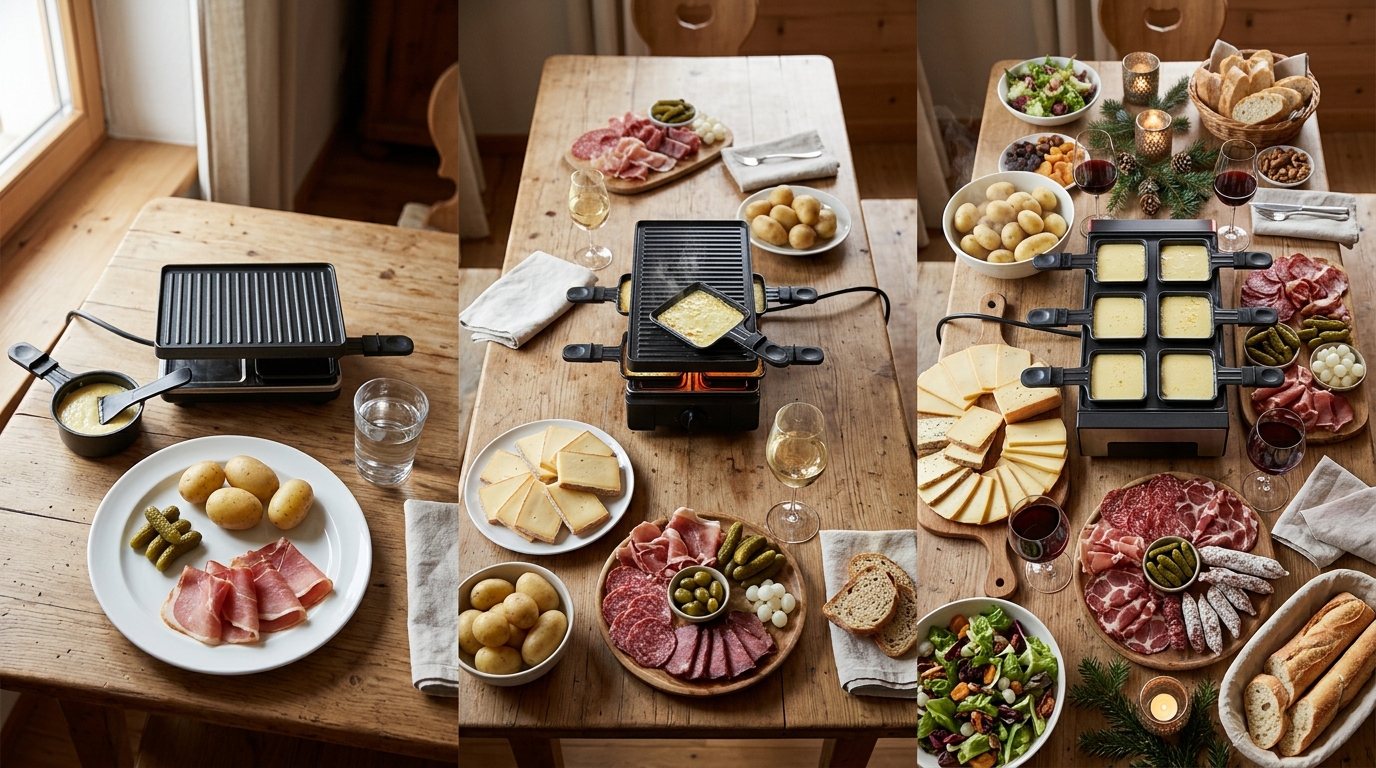
The same quantity isn't suitable for every situation. A raclette served as a main course on a weeknight isn't the same as a festive meal preceded by a lavish aperitif and followed by a Yule log..
A single meal or one preceded by a starter?
When raclette is the only dish of the meal, without a starter or appetizer, stick to 180 to 200 g per adult because your guests will arrive at the table with empty stomachs and will eat more during the first few courses.
On the other hand, if a generous aperitif has preceded it — cheese platter, verrines, fine charcuterie — or if a starter is on the menu, you can go down to 140 to 160 g per person without problems.
There's no need to overload a tray when stomachs are already half full.
The same reasoning applies to a meal that ends with a large dessert: guests eat faster and stop sooner.
Festive evening with friends: plan a little more
A large gathering of friends often follows a different rhythm than a quiet family dinner. People talk, they go back and forth, they bake more food.
In this context, portion sizes naturally increase: allow 200 to 220g per adult. This avoids having to return to the kitchen in the middle of the meal, and the abundance on the table contributes to the atmosphere.
For a buffet or a lighter raclette, for example at Sunday lunch, 150g is generally sufficient. Lunches are naturally less substantial than dinners.
Carefully calculate the total quantity to buy
To obtain the total quantity, the calculation is simple:
- Number of adults × chosen weight
- Number of children × appropriate portion (80 to 120 g)
- Add a 10% margin if the group contains known high-volume buyers
If you also want to better manage your time in the kitchen, prepare the trays in advance with the quantities weighed and arranged.
This avoids the last-minute stress when everyone is demanding their first batch at the same time.
Putting together an ideal charcuterie assortment
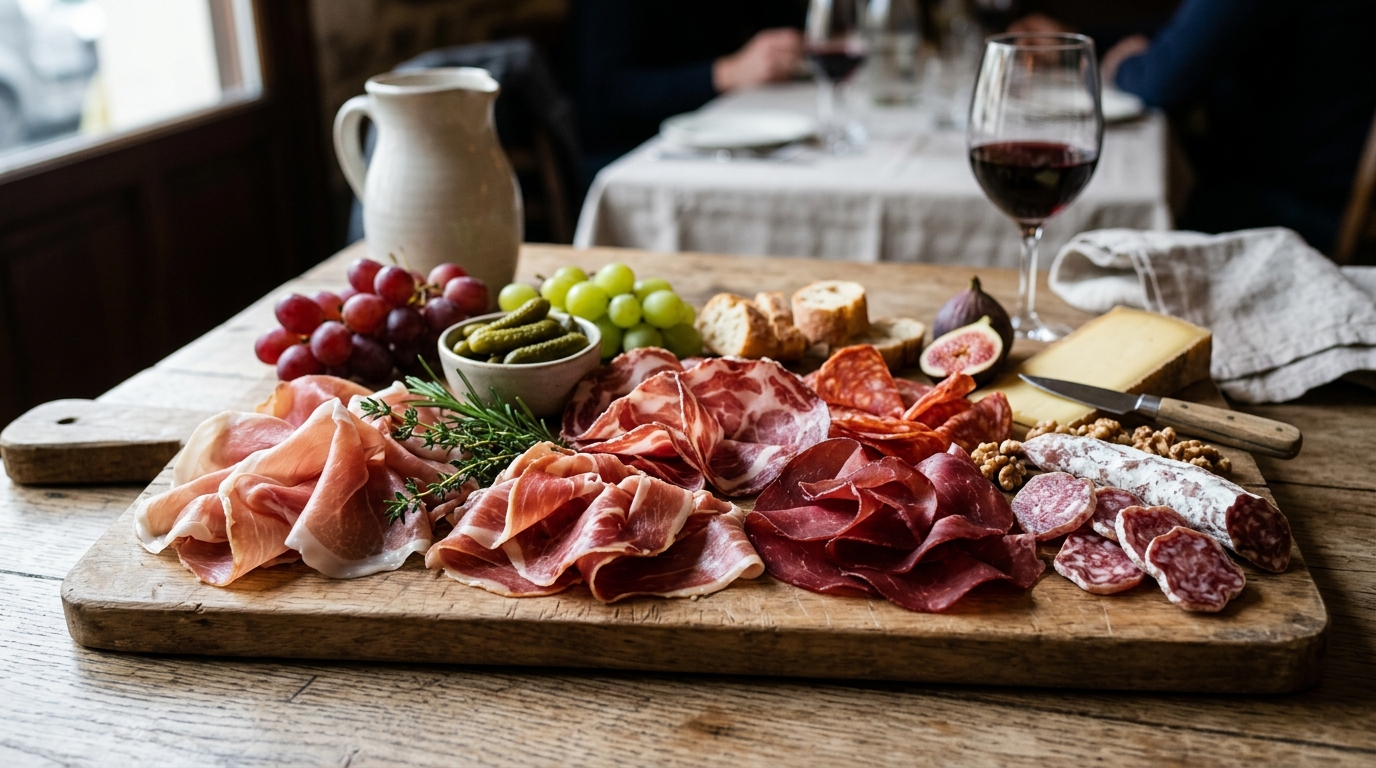
Quantity isn't enough: the variety of charcuterie on the platter is just as important. A platter composed solely of cooked ham lacks character, even if it's generous.
The ideal is to mix different textures — thin slices, thick slices, smoked products — and varied flavors.
Distribution of varieties on the plateau
For a balanced assortment, aim for 3 to 4 different items.
Here's a basic approach that works well:
- Cooked ham or cured ham (approximately 40% of the platter)
- Rosette, dry sausage or coppa (approximately 30%)
- Bacon or smoked pork belly (approximately 20%)
- Regional specialties as a finishing touch: Grisons meat, bresaola, chistorra… (10%)
Before buying in a supermarket, take the time to assess the quality of the deli meats you are going to serve.
A product of average quality, with thick slices and full of water, is less satisfying and leaves more leftovers than a well-dried artisanal charcuterie.
The cheese/cured meat ratio for a balanced raclette
Cured meats are just one of the three pillars of a raclette.
To avoid the meal being too heavy or unbalanced, here are the proportions usually recommended per person:
- Raclette cheese: 200 to 250 g
- Cured meats: 150 to 200 g
- Potatoes: 250 to 300 g
If you are serving a particularly fatty or strong cheese (smoked raclette, aged mountain cheese), slightly reduce the amount of charcuterie.
The two elements complement each other: when one is dominant, the other must recede. The goal is for guests to finish their meal neatly, without feeling overwhelmed.
What role for support services?
Support is often underestimated, yet it truly makes a difference.
Gherkins, pickled onions, crisp green salad, capers or homemade pickles: all these elements bring acidity and freshness, which cuts through the richness of the melted cheese and charcuterie.
As a result, guests eat more slowly, take fewer seconds, and the meal is perceived as more balanced.
In practice, the more varied and generous the side dishes are, the more you can adjust the portions of cold cuts downwards without anyone noticing.
- Less food waste
- Better budget control
- A harmonious table with varied flavors
- Approximate calculation if appetites are poorly estimated
- There's a risk of missing out for very large eaters if you aim too small
Quantity charts for 4 to 10 people
These concrete guidelines help avoid the most common calculation errors. The figures are based on an adult portion of 180g and a child portion of 100g, without a starter.
Quantity of cured meats for a raclette for 4 people
| Profile | Total quantity |
|---|---|
| 4 adults (180 g) | 720 g |
| 2 adults + 2 children | 520 to 600 g |
| 4 adults with aperitif | 560 to 640 g |
Quantity of cured meats for a raclette for 6 people
| Profile | Total quantity |
|---|---|
| 6 adults (180 g) | 1.08 kg |
| 4 adults + 2 children | 880 to 960 g |
| 6 adults, festive evening | 1.2 to 1.3 kg |
What should I plan for 8 to 10 guests?
| Number of people | Average quantity | festive evening |
|---|---|---|
| 8 adults | 1.4 to 1.6 kg | 1.7 kg |
| 10 adults | 1.8 to 2 kg | 2.1 to 2.2 kg |
To vary the pleasures and discover new charcuterie flavors, integrate one or two original references without increasing the total weight: slightly reduce a classic reference to make room for a new one.
Avoid waste and manage leftovers
How much should I budget without going overboard?
To limit losses, stay close to 180g per adult and only increase if you are certain about appetites.
It is better to slightly underestimate the cold cuts and supplement with extra cheese or potatoes: these two ingredients are easier to use up in the kitchen after the meal.
Also consider when you buy: thinly sliced deli meats dry out faster and spoil in a few hours if left in the open air.
Take the trays out of the refrigerator 15 minutes before the meal, no more.
Preserve and recycle leftover deli meats
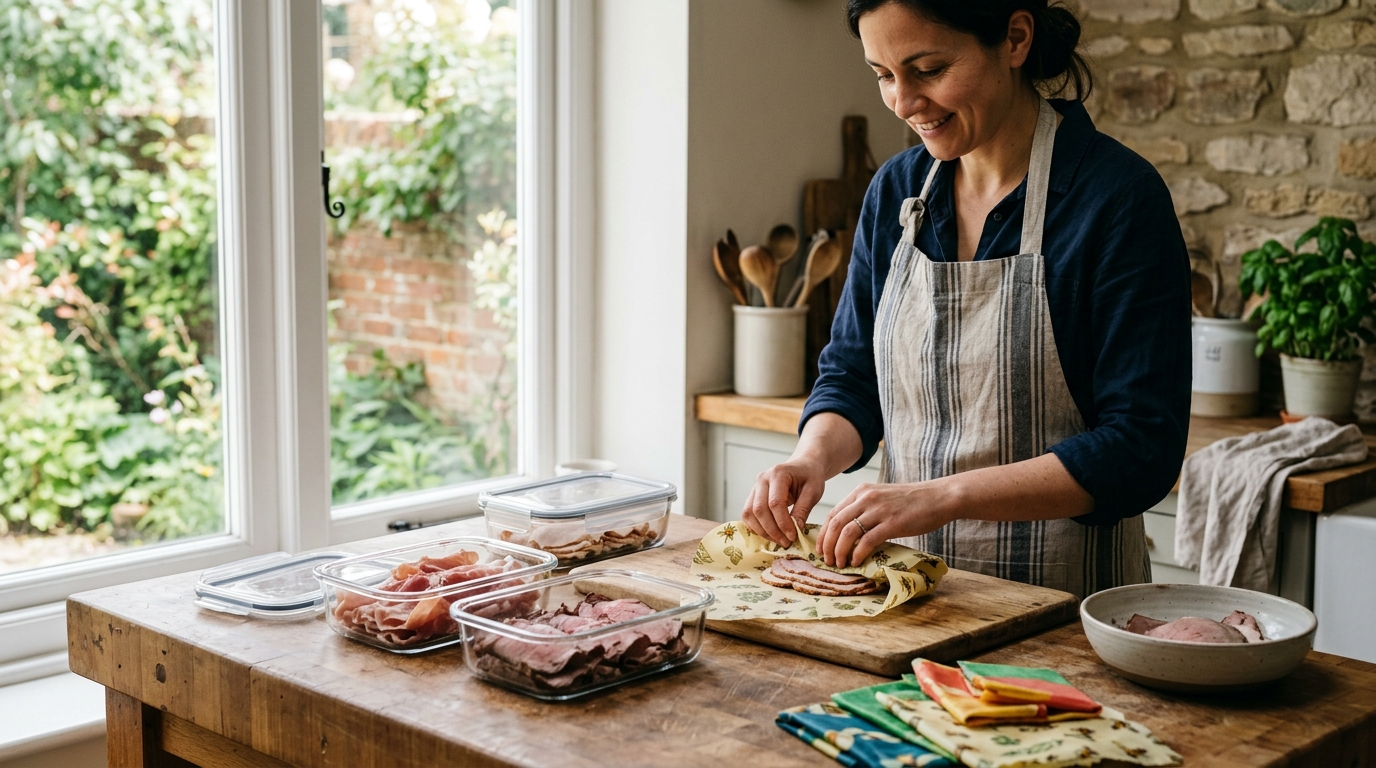
If there are a few slices left at the end of the evening, wrap them tightly in cling film or a closed container, and consume them within two to three days.
Cooked charcuterie (white ham, cold roast) does not keep as well as dry charcuterie (sausage, coppa); eat it first.
To make the most of it rather than throwing it away, incorporate it into a quiche lorraine, a morning omelet or a vegetable stir-fry.
You can also revisit a soft pork galantine in a homemade version if the remaining quantities are larger.
For larger leftovers, consider organizing your freezer : dry sausage freezes very well sliced, unlike cooked ham which loses its texture.
A small label with the date prevents finding mystery bags three months later.
Practical questions
What is the shopping list for a raclette for 6 people?
For 6 adults, allow approximately 1 kg of raclette cheese, 1.1 kg of assorted cured meats, 1.8 kg of firm potatoes, gherkins, and onions. If an aperitif precedes the meal, reduce the amount of cured meats to 900 g. Adjust the quantities accordingly if children are present.
How many grams of cured meats per person are needed for a raclette?
The recommended serving size is 150 to 200 g per adult and 80 to 120 g per child. In practice, 175 to 180 g per adult is the most balanced amount for a meal without a starter.
How to adjust the portion size for a very convivial evening?
Increase the portion to 210-220g per adult if it's a festive occasion and there's no starter. In the evening, people tend to eat more and for longer than at a typical family meal. Reduce the portion to 150g if a substantial aperitif has preceded it.
Why balance cheese and cured meats in a raclette?
Cheese and cured meats are both rich and filling. If one dominates too much, the meal becomes heavy and diners stop before finishing the platter. A good balance—around 200g of cheese to 170g of cured meats—makes for a satisfying meal without excess.
