
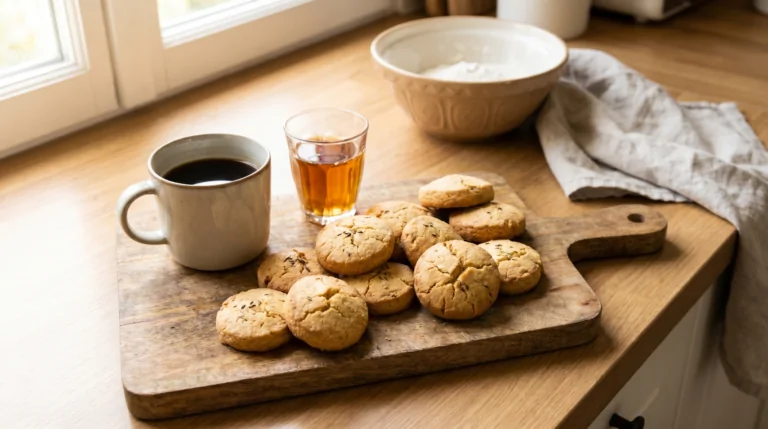
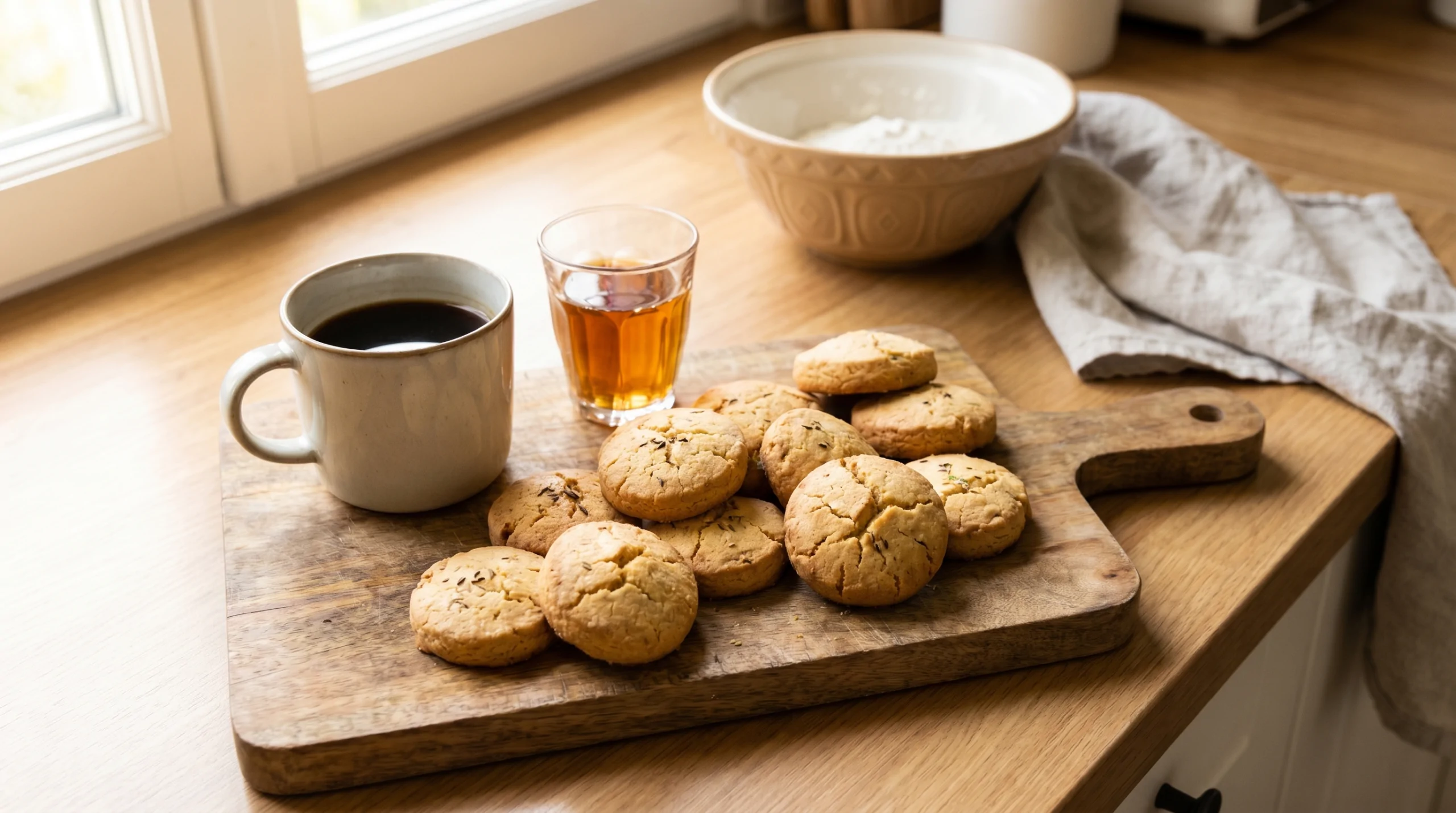
I have a weakness for canistrelli: these slightly rustic, very crunchy Corsican biscuits that you nibble on without thinking about it with a coffee or a glass of sweet wine.
The first time I made this recipe, I understood that everything hinged on two very simple details: not overworking the dough (otherwise they harden like pebbles) and respecting the double baking which gives that typical dry crispness.
In my “classic” version, I stick to the traditional base: flour, sugar, olive oil, dry white wine and anise (seeds and/or liqueur).
The white wine brings a light, crumbly texture, the olive oil adds chewiness and a Mediterranean aroma. And the anise is what makes it so charming: it evokes the garrigue and late summer afternoons.
Technically speaking, it's really easy: you mix the ingredients, shape them into logs, bake them once, slice them, then put them back in the oven to dry and brown. It's more about timing than difficulty.
You can keep them for several days (or even longer) in a tightly sealed container: they stay crunchy. And if you like a strong anise flavor, you can adjust the amount of seeds without changing the other ingredients, so the biscuit's structure remains the same.
Crunchy Corsican Canistrelli with Anise
4
people17
minutes35
minutes515
kcal52
minutesDry, crispy Corsican biscuits with aniseed aroma, just the way we like them with coffee. Canistrelli are made with a simple dough and double-baked to achieve that subtle Mediterranean flavor that lingers on the palate.
Keep your device's screen on
Ingredients
350 g of wheat flour (T55 or T65)
140 g of caster sugar
10 g of baking powder
1 pinch of salt
2 teaspoons of green anise seeds
1 tablespoon of anise liqueur (optional but traditional)
12 cl of dry white wine
10 cl of mild olive oil
Equipment that may be useful to you


Preparation steps
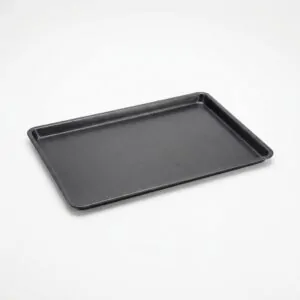
- Preheat the oven to 180°C (fan oven). Line a baking tray with baking paper.
- In a large bowl, mix together the flour, sugar, yeast, salt and anise seeds.
- Pour in the white wine, olive oil, and, if using, the anise liqueur. Mix with a spoon, then by hand, just enough to form a smooth dough. Don't knead for long: stop as soon as it holds together.
- Divide the dough into 2 or 3 pieces. Roll each piece into a log about 3 to 4 cm in diameter. Flatten the top very lightly with the palm of your hand for a more even shape.
- Place the sausages on the baking sheet, spacing them apart. Bake for 18 minutes: they should be set and just golden.
- Remove the tray and let it cool for 6 minutes (so you can slice it without breaking it). Lower the oven temperature to 160°C.
- Cut the sausages into slices 1.5 to 2 cm thick (on the bias, it looks nicer). Place the slices back on the baking sheet.
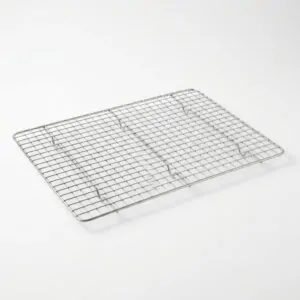
- Return to the oven for 17 minutes, turning the cookies over halfway through. They should be completely dry and golden brown. Let them cool completely on a wire rack; they will harden as they cool.
📊 Nutritional Information
1 serving (approx. 115g, or 5 to 7 biscuits depending on size)
| Nutrient | Value |
|---|---|
| Calories | 515 kcal |
| Proteins | 7.7g |
| Carbohydrates | 75.4g |
| including sugars | 23.4g |
| Lipids | 17.6g |
| including saturated fatty acids | 2.6g |
| Fibers | 2.9g |
| Sodium | 176mg |
| Vitamins | |
| Vitamin E | 18% AJR |
| Vitamin K | 7% AJR |
| Vitamin B1 | 10% AJR |
| Minerals | |
| Phosphorus | 17% AJR |
| Magnesium | 12% AJR |
| Iron | 14% AJR |
* RDA = Recommended Daily Allowance
📝 Notes
Storing canistrelli: in a metal tin or airtight jar at room temperature. If they soften slightly after a few days, bake them for 6 to 8 minutes at 150°C (300°F), then let them cool, and they will dry out again.
💡 Chef's Tips
For perfectly crisp (and not hard) canistrelli, the secret is not to overwork the dough. And for the double baking: aim for gradual drying at 160°C rather than intense browning.
🔄 Variations
- Canistrelli more aniseed: increase to 3 tbsp. of green anise seeds without changing the liquids.
- For a more rustic recipe: replace 50g of flour with chestnut flour (very classic Corsican taste).
