
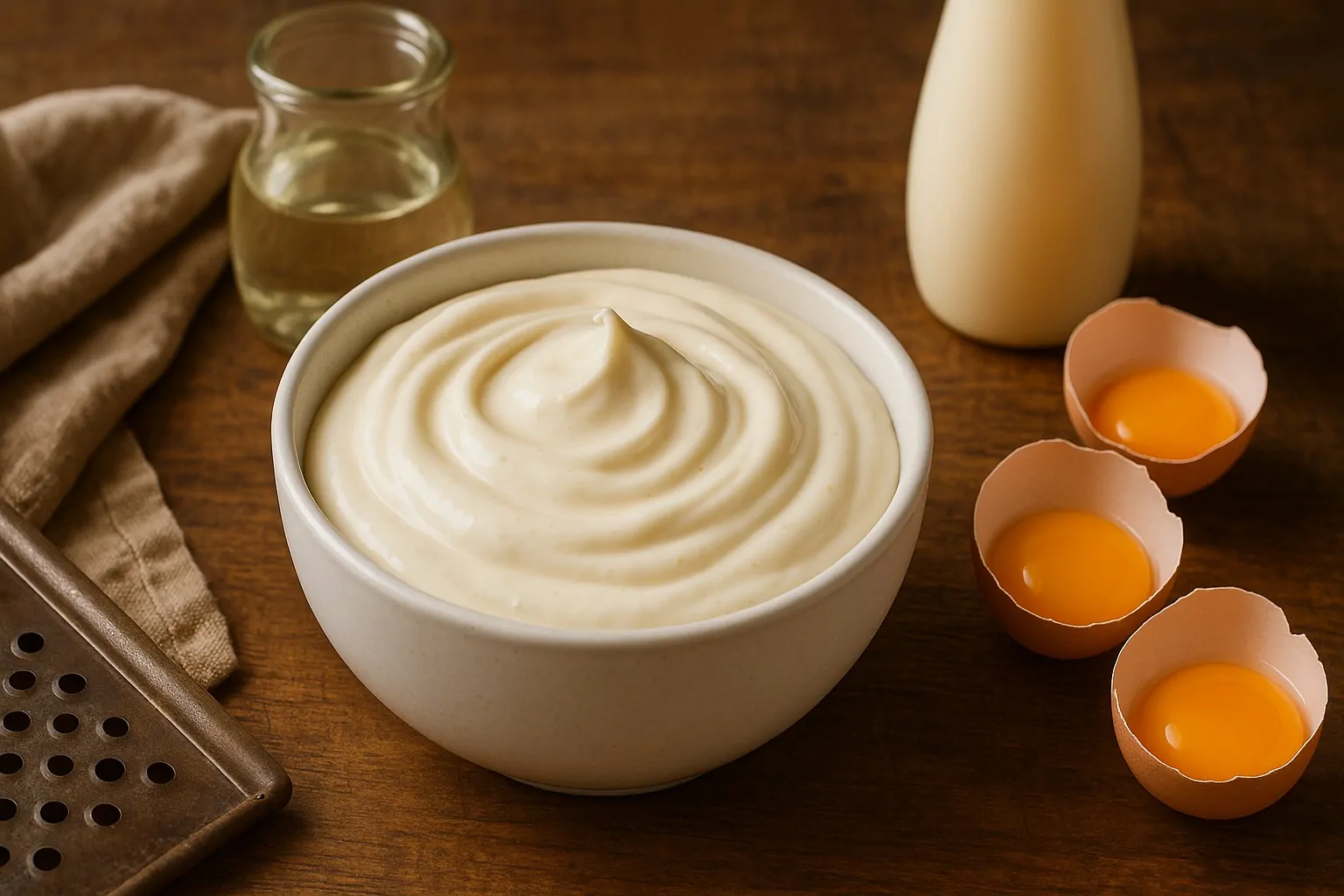
Kewpie Japanese mayonnaise is that famous creamy sauce found in all Japanese restaurants and which is instantly addictive.
Smoother than our French mayonnaise — with that unique little taste of umami — it can easily bring that authentic Japanese touch to many of your dishes.
You will discover that the original homemade Japanese recipe is very simple to prepare at home, by following these few practical tips!
What makes Japanese mayonnaise so special?
Kewpie mayonnaise first appeared in Japan in 1925 — imported by Toichiro Nakashima who discovered this condiment in the United States.
Since then, it has become a staple in Japanese homes, but with its own specific features that clearly distinguish it from our European versions.
The main differences that make the Kewpie so charming:
The high egg yolk makes all the difference!
Whereas a French industrial mayonnaise contains about 5% egg yolk — Kewpie contains almost 14%!
This concentration gives it its characteristic golden color and incomparably creamy texture. It's a bit like comparing homemade mayonnaise to a store-bought version.
Rice vinegar replaces our traditional white vinegar. Less acidic (more delicate), it brings that typically Japanese sweetness.
Some versions blend rice, apple and malt vinegar for added complexity.
Umami, that famous fifth taste so dear to the Japanese, is enhanced by the addition of monosodium glutamate (MSG) — and sometimes powdered dashi.
This is what gives it that deep and addictive flavor that you won't find anywhere else.
Texture and taste: a unique experience
Your first spoonful of homemade Japanese mayonnaise will be a real discovery.
Creamier and thicker than classic mayonnaise, it has a smoothness that coats food perfectly without ever being heavy.
In terms of taste, you'll be surprised by its subtle balance between sweetness and acidity. Less vinegary than our French mayonnaise, it reveals slightly sweet notes that harmonize perfectly with that famous umami flavor.
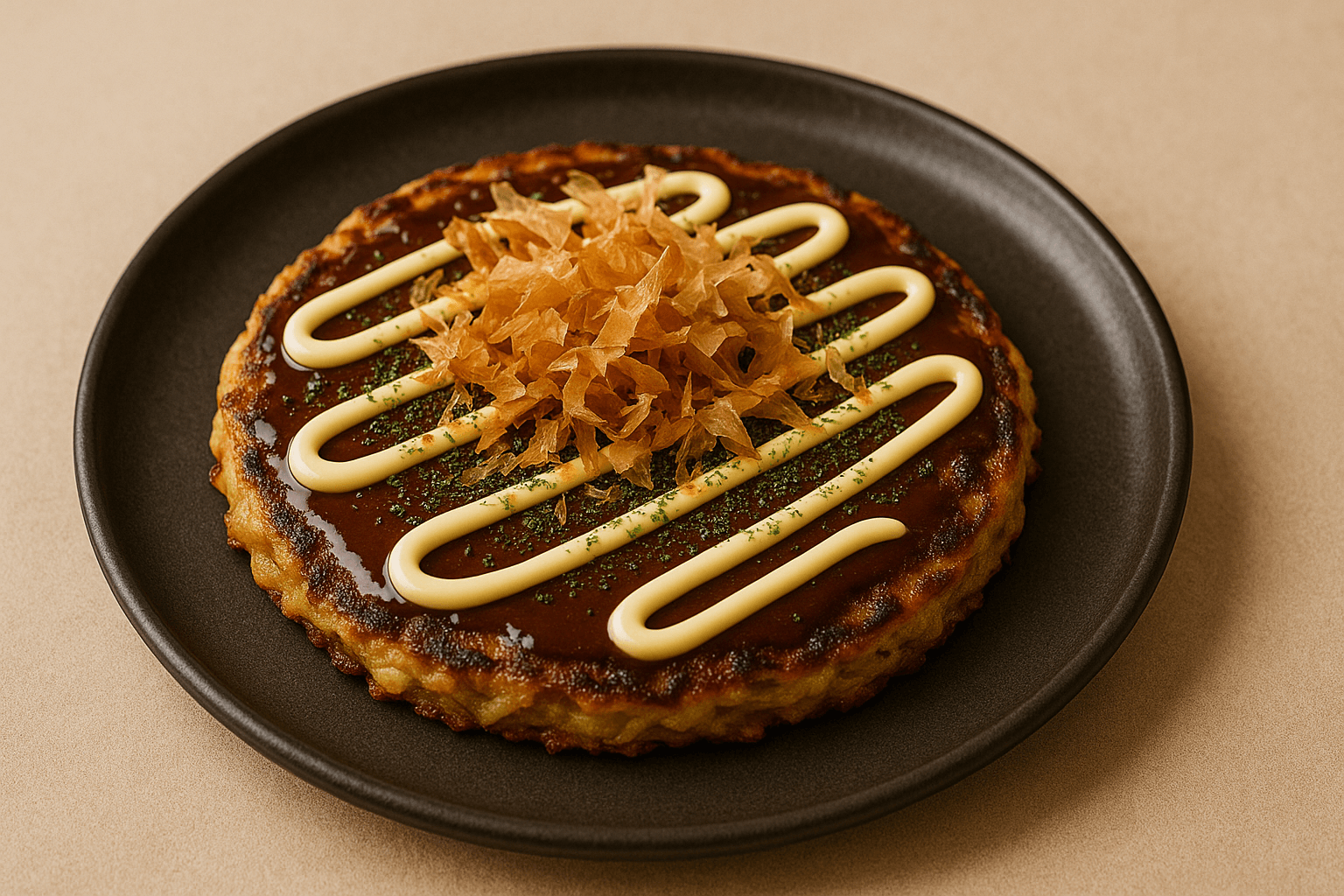
This very particular taste explains why it goes so well with sushi as well as okonomiyaki — or even a simple potato salad.
The essential ingredients for a successful homemade Kewpie recipe
For approximately 250g of mayonnaise:
| Ingredient | Quantity | Role in the recipe |
|---|---|---|
| Egg yolks (room temperature) | 3 units | Creamy base and main emulsifier |
| Neutral oil (sunflower or rapeseed) | 200ml | Body of mayonnaise |
| Rice vinegar | 2 tablespoons | Characteristic mild acidity |
| Dijon Mustard | 1 teaspoon | Stabilizes the emulsion |
| Powdered sugar | 1 teaspoon | Typical sweet note |
| Fine salt | 1/2 teaspoon | Flavor enhancer |
| MSG (optional) | 1 pinch | Enhances authentic umami |
| Dashi powder (optional) | 1/2 teaspoon | Traditional Japanese umami |
The foolproof technique for a perfect emulsion
⏱️ Preparation time: 15 minutes
👥 Servings: 250g (8-10 servings)
💰 Cost: ~€2 (vs. €7 for the store-bought equivalent)
🥄 Difficulty: Easy
Step 1: Prepare the base
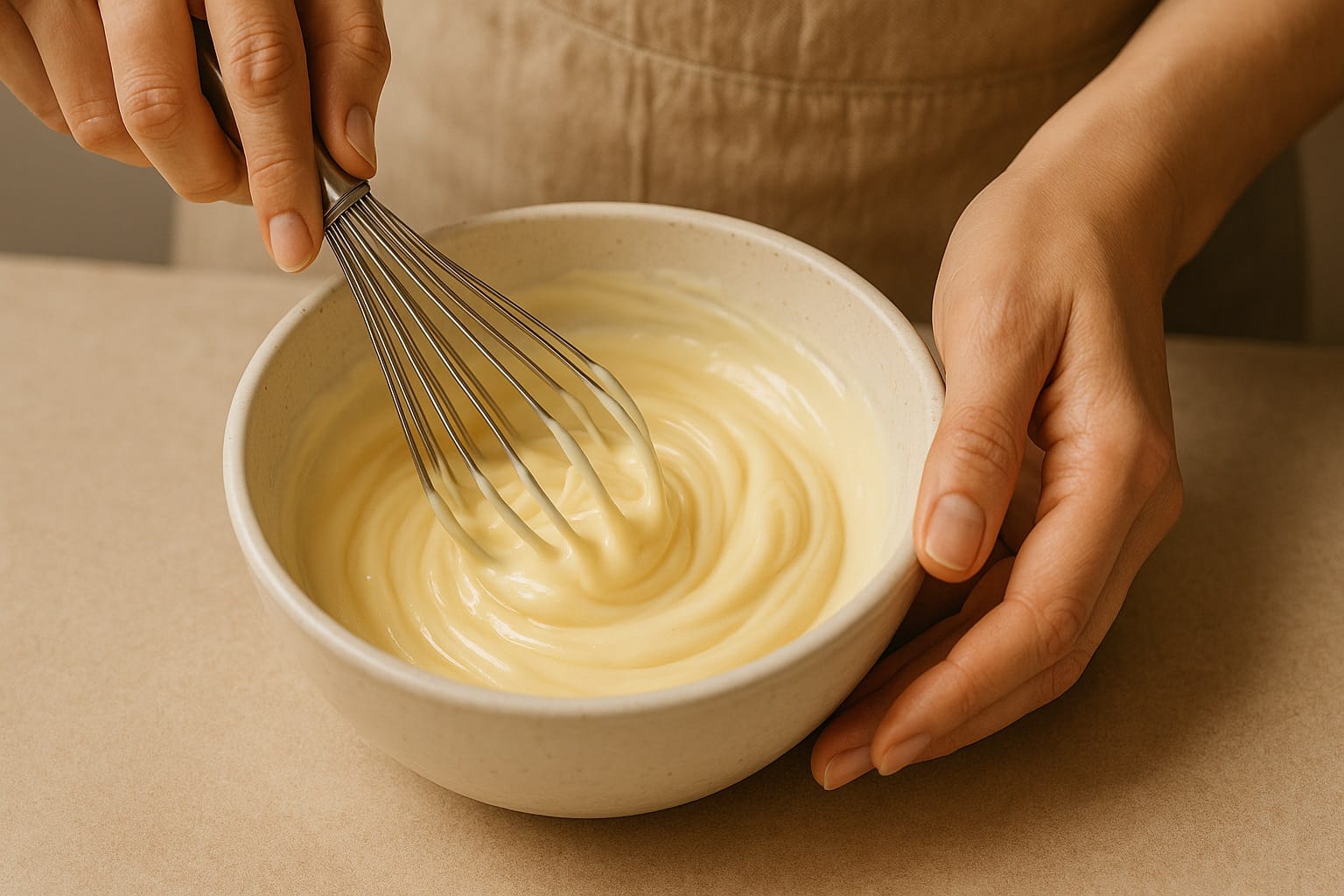
Take your eggs out of the refrigerator 30 minutes before you begin. In a tall, narrow bowl, whisk the egg yolks vigorously with the mustard for 1 minute. This step creates the base of your emulsion.
Step 2: Dissolve the seasonings
Add the salt, sugar, and optionally the MSG and dashi powder. Whisk until completely dissolved. No greasy bits!
Step 3: The Art of Emulsification
Here's the crucial moment: pour the oil drop by drop, whisking constantly. The first 50 milliliters are critical. Once you see the mixture whiten and thicken, you can slightly increase the flow of oil, but always in a thin, continuous stream.
Step 4: Finish with acidity
Whisk in the rice vinegar. Taste and adjust the seasoning to your liking. Your mayonnaise should have that characteristic smooth texture, neither too thick nor too runny.
Chef's tips to avoid failures
- Use an immersion blender to simplify your life.
- Place all ingredients except the oil in a narrow container.
- Pour the oil over it all at once, then plunge your blender to the bottom and blend without moving for 10 seconds.
- Then slowly raise the mixture while continuing to mix.
This technique works every time!
The importance of temperature: Eggs that are too cold prevent proper emulsification. If you forgot to take them out in advance, soak them in lukewarm water for 2 minutes.
The choice of oil matters: Avoid extra virgin olive oil, which is too strong in flavor. Sunflower or rapeseed oil offers the necessary neutrality to allow other flavors to shine through.
What to do if your mayonnaise goes wrong? The troubleshooting guide
My mayonnaise isn't thickening
- Main cause: Oil added too quickly or eggs that are too cold
- Immediate solution: In a new bowl, beat 1 egg yolk at room temperature, then incorporate your failed mayonnaise one spoonful at a time, whisking vigorously.
My mayonnaise has gone bad (it has a grainy appearance)
- Quick fix: Add 1 tablespoon of very hot water and whisk vigorously. The emulsion should reform in 30 seconds!
My mayonnaise is too runny
- Adjustment: Whisk in 1 extra egg yolk, then a drizzle of oil to thicken.
My mayonnaise is too thick
- Easy fix: Add a few drops of rice vinegar or warm water, whisking until you reach the desired consistency.
It lacks taste
- First, check the salt and sugar levels
- Add a pinch of MSG or dashi to enhance the umami
- A few extra drops of rice vinegar can revive the whole thing
Storing and using your Japanese mayonnaise
Optimal storage to preserve all the flavors
Your homemade mayonnaise will keep for a maximum of 48 hours in the refrigerator in an airtight container. Unlike commercial versions, it contains no preservatives, hence this limited shelf life.
Detailed storage advice:
- Use a sterilized glass jar if possible
- Place a piece of plastic wrap directly on the surface of the mayonnaise to prevent oxidation
- Store in the coldest part of the refrigerator (2-4°C)
- Never leave at room temperature for more than 30 minutes
- If it changes in appearance or smell, don't take any risks and throw it away
Economic comparison: house vs. industrial
| Criteria | Homemade mayonnaise | Kewpie Industrial |
|---|---|---|
| Price per kilo | ~8€ | ~28€ |
| Per 250g | ~2€ | ~7€ |
| Savings achieved | 70% cheaper | – |
| Freshness | Optimal (fresh eggs) | Varies by batch |
| Customization | Total | Impossible |
| Conservation | 48 hours | 6 months (preservatives) |
The calculation is simple: by preparing 1kg of Japanese mayonnaise yourself per month, you save approximately €240 per year while having complete control over the quality of your ingredients.
Use cases that change everything
Elevate your cold potato or pasta salads with this incomparable texture. Use it as a base for your sushi sauces by adding a touch of wasabi.
It will completely transform a simple tuna sandwich or perfectly complement a homemade chicken karaage
For fusion cuisine lovers, try it on your homemade burgers or as a dipping sauce for your sweet potato fries.
Its unique taste will bring that touch of originality that will pleasantly surprise!
The express version when you're in a hurry
No time to make mayonnaise from scratch? Here's the lifesaver!
Mix 200g of good quality industrial mayonnaise (choose one rich in eggs) with 2 tablespoons of rice vinegar and 1 teaspoon of sugar.
Add a pinch of MSG if you have some. You'll get amazing results in 2 minutes!
Delicious variations to personalize your recipe
Garlic version → Add a finely grated garlic clove to accompany your summer barbecues.
Spicy version → A few drops of sriracha sauce transform your mayonnaise into a spicy condiment perfect for Tex-Mex dishes.
Herb version → Chopped chives, dill or fresh parsley bring freshness and color to your mixed salads.
Homemade Kewpie mayonnaise : your new favorite recipe!
Kewpie homemade Japanese mayonnaise guarantees you'll rediscover your favorite dishes in a new light.
This velvety texture and unique umami taste transform the simplest side dish into a little gourmet moment.
Once you've tasted this authentic version, you won't be able to live without it!
Frequently asked questions about homemade Japanese mayonnaise
Can whole eggs be used instead of just the yolks?
You can, but you'll lose that characteristic richness of Kewpie. Only the yolks provide that golden color and incomparable creaminess that make all the difference.
Is MSG really essential?
No, but it does provide that authentic umami flavor that characterizes real Japanese mayonnaise. If you don't have any, a pinch of dashi powder can partially replace it.
Can I substitute white vinegar for rice vinegar?
It's possible, but use half as much because it's more acidic. Rice vinegar provides that typically Japanese sweetness that you don't get with white vinegar.
How long can it really be kept?
Maximum 48 hours in the refrigerator with very fresh eggs. Beyond that, there are real health risks because it contains no preservatives.
My mayonnaise is less creamy than store-bought mayonnaise, is that normal?
Absolutely! Manufacturers use emulsifiers and thickeners that we don't have at home. Your version will be more natural, even if slightly less firm.
Can homemade Japanese mayonnaise be frozen?
No, freezing causes the emulsion to curdle. It would completely separate upon thawing and be unrecoverable.
I would like to have the complete recipe for Japanese mayonnaise, thank you
Hello, the basic Kewpie mayonnaise recipe and ingredients are in the article after the section "The foolproof technique for a perfect emulsion." It's not a detailed, definitive recipe, but you should have everything you need. What exactly were you looking for?