
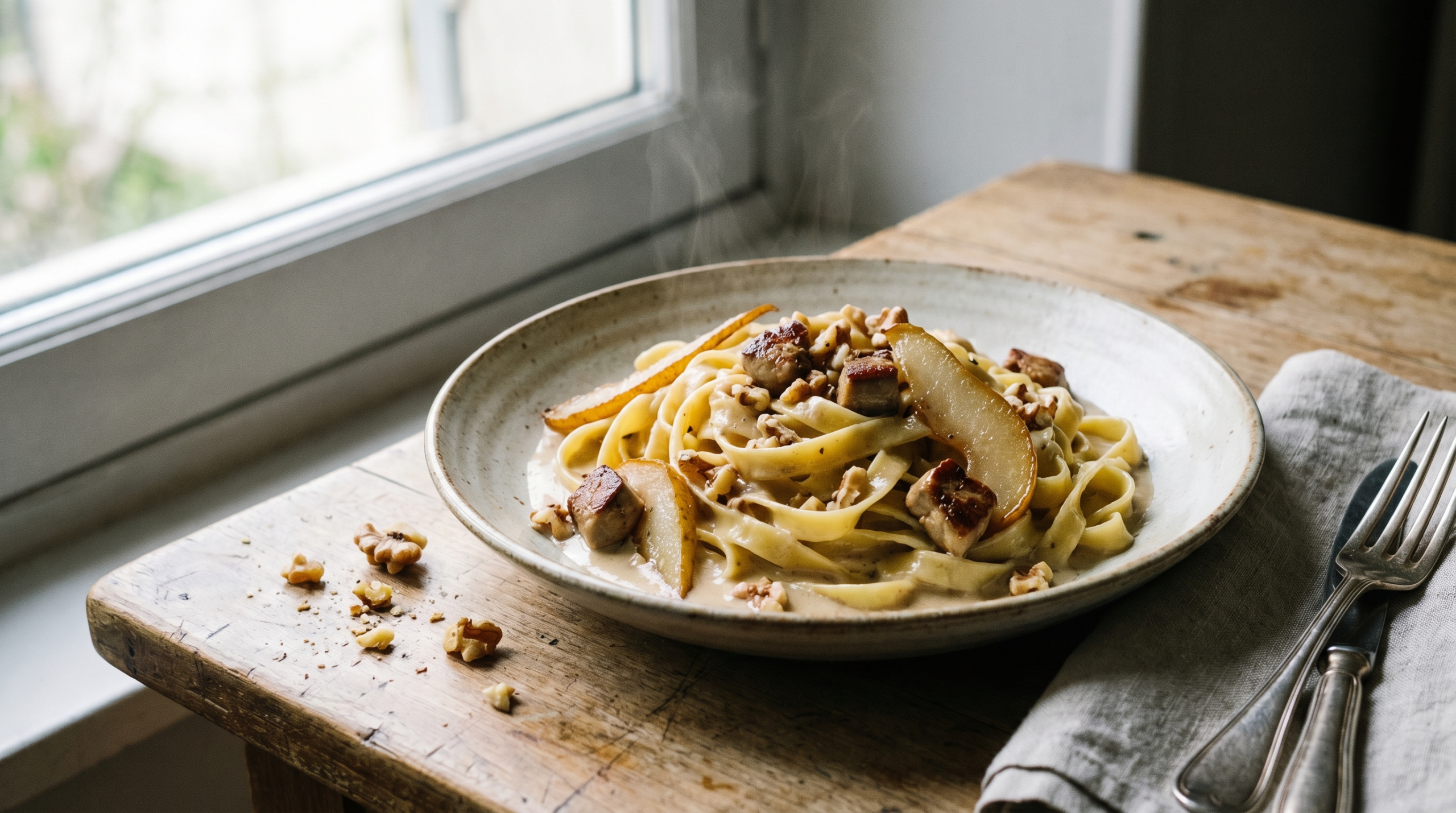
I have a weakness for dishes that make a "big night" without requiring you to spend two hours in the kitchen, and these pasta with foie gras are one of them.
The first time I really nailed this recipe was after a celebratory meal: leftover foie gras, an open bottle of white wine, and a craving for a simple yet very French dish. Since then, I make it whenever I want something both comforting and elegant.
The principle is very classic: you make a base of shallots and white wine, reduce it, add a little stock and cream, then melt the foie gras off the heat to retain its velvety texture (if you boil it, it can curdle and become greasy). The pasta is then bound together with a ladleful of the cooking water: this is what gives it the "sticky sauce" texture.
For a personal touch (while still respecting the traditional style), I add pear and walnuts. It's a duo that works naturally with foie gras: the pear brings a gentle freshness, the walnut a toasty crunch. And it helps prevent the dish from being simply "rich," but rather well-rounded and harmonious.
As for adaptation: you can adjust the strength of the foie gras according to what you have (semi-cooked or raw), choose tagliatelle or long pasta, and play with the pepper (a good black pepper, freshly ground, makes all the difference).
And if you like it when it tingles a little, a tiny pinch of nutmeg in the cream is quite discreet but formidable!
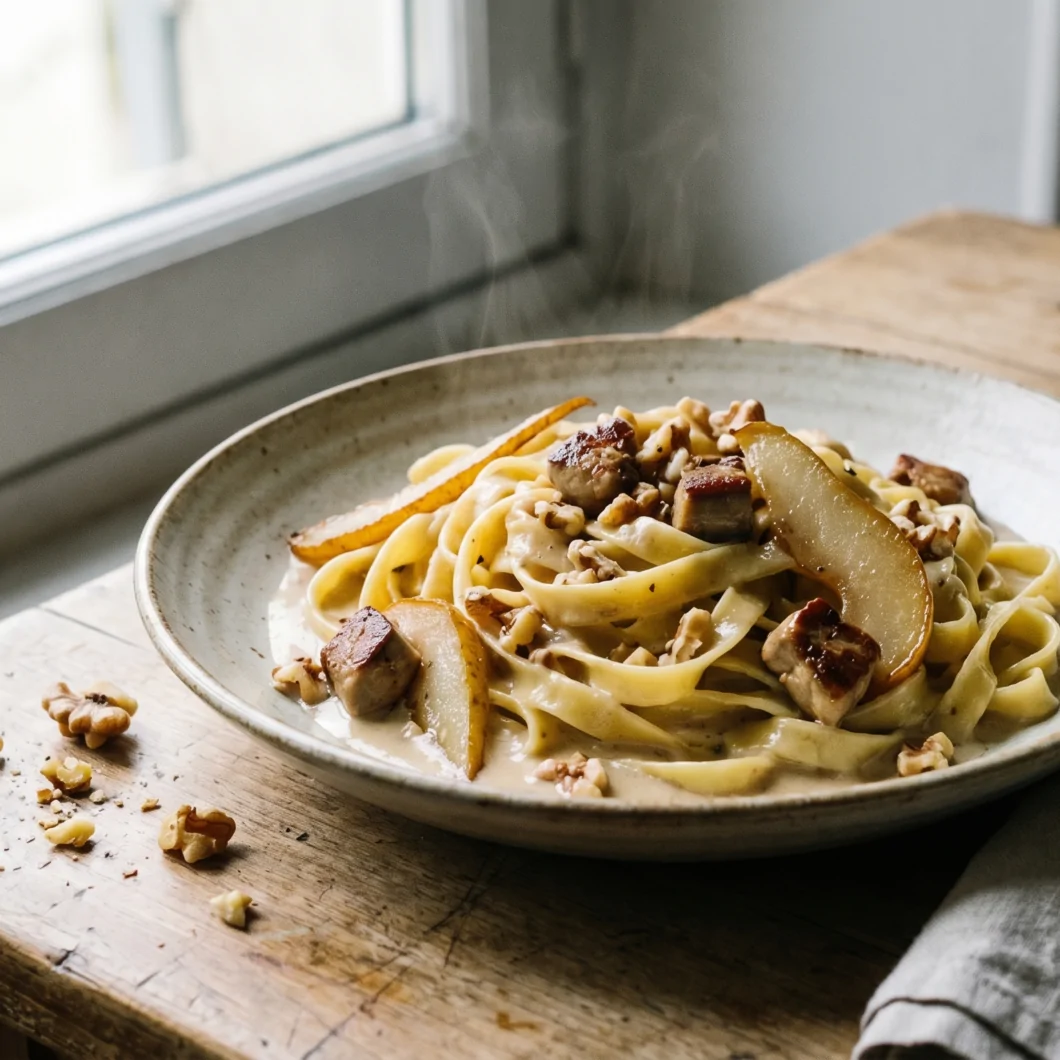

Pasta with foie gras
4
people21
minutes38
minutes886
kcal59
minutesTagliatelle topped with a creamy foie gras sauce, thickened with white wine and stock, with a touch of pear and walnut for added depth. A rich dish, yet balanced in textures: meltingly tender, crunchy, and with just the right amount of acidity.
Keep your device's screen on
Ingredients
400g tagliatelle (dried)
180g semi -cooked foie gras
2 shallots
1 garlic clove
15 cl of dry white wine
12 cl of chicken stock
18 cl of liquid whole cream
1 pear (Conference type), firm
40 g of walnut kernels
20g of butter
1 tablespoon of neutral oil
1 teaspoon of lemon juice
Fine salt
Freshly ground black pepper
Preparation steps
- Take the foie gras out of the refrigerator 10 minutes before starting, so that it is easier to work with. Cut it into pieces (2-3 cm).
- Peel and finely chop the shallots. Crush the garlic (or mince it very finely).
- Cut the pear into small dice (without pureeing it). Sprinkle it with lemon juice and mix; this prevents it from browning.
- Toast the nuts for 3 to 4 minutes in a dry pan, just to bring them to life. Set aside.
- In a large sauté pan, melt the butter with the oil over medium heat. Add the shallots and a pinch of salt, then sweat for 4 to 5 minutes: they should become translucent, not brown.
- Add the garlic for 30 seconds, then deglaze with the white wine. Scrape the bottom of the pan and let it reduce significantly for 6 to 8 minutes, until only about 2 to 3 tablespoons of liquid remain.
- Add the stock, simmer for 2 minutes, then stir in the cream. Season generously with pepper and reduce gently for 4 to 6 minutes: the sauce should coat the back of a spoon.
- While the sauce reduces, bring a large pot of salted water to a boil. Cook the tagliatelle al dente according to the package directions. Reserve 200ml of the cooking water before draining.
- Lower the heat under the sauté pan to the lowest setting, and even turn it off completely if it's simmering too much. Add the pieces of foie gras to the hot sauce and stir gently: it should melt and thicken the sauce without boiling.
- Add the tagliatelle to the pan. Mix for 30 to 45 seconds, adding a little cooking water gradually until you obtain a glossy sauce that coats the pasta well.
- Add the diced pears and mix very briefly (just to warm them through). Taste and adjust the seasoning: often, a turn of the pepper mill is enough, with salt added later.
- Serve immediately, topped with toasted walnuts and a little more pepper.
📊 Nutritional Information
1 serving (approx. 430g)
| Nutrient | Value |
|---|---|
| Calories | 886 kcal |
| Proteins | 26g |
| Carbohydrates | 80g |
| including sugars | 8g |
| Lipids | 50g |
| including saturated fatty acids | 24g |
| Fibers | 4g |
| Sodium | 780mg |
| Vitamins | |
| Vitamin A | 85% of the recommended daily allowance (RDA) |
| Vitamin B12 | 110% RDA |
| Vitamin B2 | 22% AJR |
| Minerals | |
| Phosphorus | 38% AJR |
| Selenium | 46% AJR |
| Zinc | 24% AJR |
* RDA = Recommended Daily Allowance
📝 Notes
If you are using a very salty foie gras (some semi-cooked ones are), salt the pasta water a little less and adjust only at the end of the recipe.
For an even neater presentation, serve in warm plates: the sauce will set less quickly.
💡 Chef's Tips
The key is temperature: the foie gras melts in a hot but not boiling sauce. If you see a separation between the fat and the sauce, remove from the heat, add 1 to 2 tablespoons of pasta cooking water, and whisk quickly to re-emulsify.
🔄 Variations
- For a more traditional foie gras pasta: replace the pear with a pinch of nutmeg and serve simply with walnuts.
- Recipe with a sweeter wine: use a sweet white wine, reducing the quantity to 10cl, to maintain the balance with the foie gras.
