
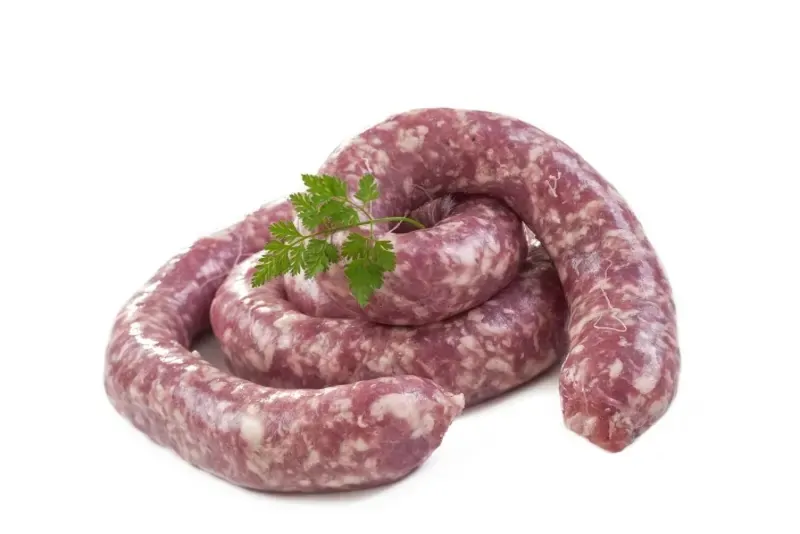
You've probably experienced this before? You bite into your sausage and it's as dry as cardboard, or worse, it's still pink in the middle, or it's burst in the pan, letting out all its juices!
In short, successfully cooking a proper Toulouse sausage is not always a given…
But in practice, it's not that complicated either. You just need to know a few tricks and, above all, make sure to carefully follow the cooking times for the different methods you choose.
In this guide, I'm going to show you how to prepare your Toulouse sausages in several ways, so they're super juicy every time! And that's perfect, because I'm from the region!
What is a true Toulouse sausage?
Toulouse sausage is THE iconic charcuterie of the Southwest. It is made only from coarsely minced pork, without any frills: just salt, pepper, and sometimes a touch of garlic.
Its defining characteristic? A fat content of around 25%, which gives it its legendary moistness. It's also this fat that makes cooking it a little tricky. If it's not done right, it becomes dry and tasteless. If it's done right, it's a melt-in-your-mouth delight that will more than reward all your efforts 🙂
How to buy good Toulouse sausage?
Before talking about cooking, you first need to buy a quality sausage. At the butcher's or the supermarket, a few telltale signs will tell.
The flesh should be pale pink, never grey or too dark. If it's greyish, it's no longer very fresh. You should see the fat and meat well mixed, with visible chunks of coarsely ground meat. This is normal; it's even desirable!
When touched (through the packaging), the sausage should be firm but not hard as a rock. If it's soft or if you see any water pooling inside, move on. The smell should be pleasant, slightly spicy. A strong or rancid odor is a very bad sign.
The Label Rouge designation or purchasing from a local butcher remains your best guarantee. These sausages generally contain more meat and fewer additives.
In the supermarket, read the ingredients list: it should be short. Pork, salt, pepper, possibly garlic. If you see a long list of ingredients, it's not a real Toulouse sausage!
A good sausage costs a little more, but the difference in taste and texture after cooking makes it well worth the price.
Why does cooking Toulouse sausage require attention?
Unlike other cured meats, Toulouse sausage contains a fair amount of fat. It is precisely this fat that gives it its tenderness and flavor.
The problem is that if you cook it too quickly or too hot, the fat melts all at once, escapes, and you end up with dry, uninteresting meat.
The secret lies in raising the temperature slowly so that the fat melts gently without drying out the meat.
Recently, I spoke with Marie, a local cook, who told me:
For years I messed up my sausages, pricking them all over before putting them in the pan. One day my butcher told me to stop doing that. Honestly, it makes all the difference; they stay nice and juicy. You do have to keep a closer eye on them though, because sometimes they swell up and it can splatter a bit.
The golden rule: never pierce before cooking
Here is THE rule that really changes the game: never prick your Toulouse sausage before cooking it.
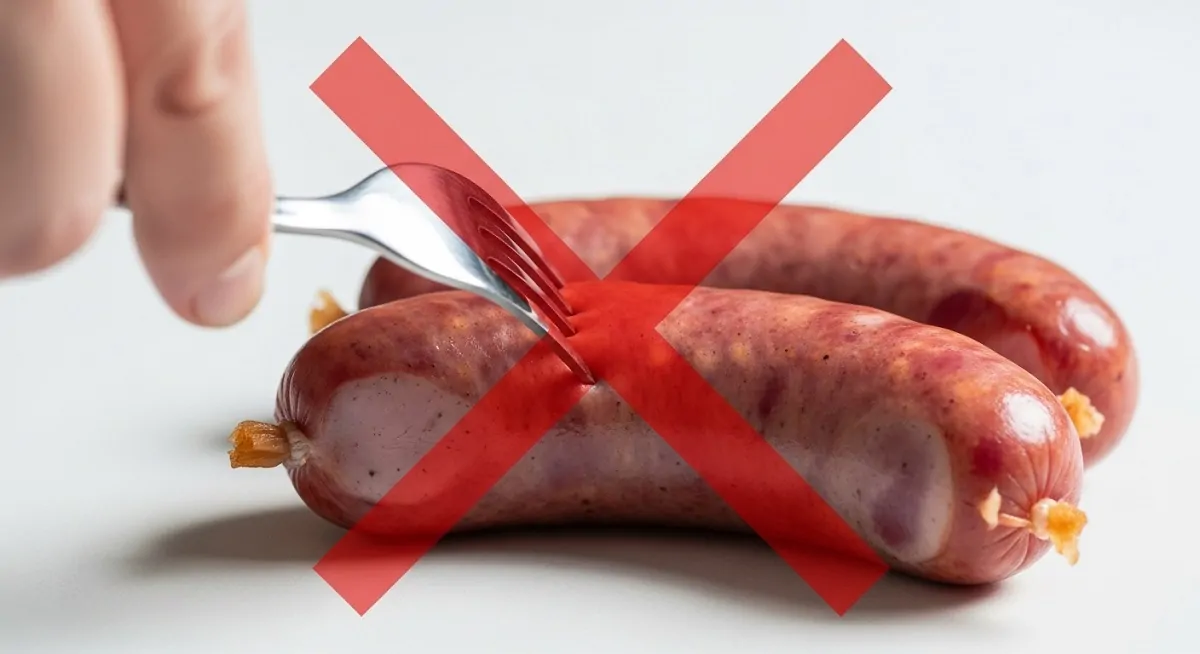
I know, many people still do it. The problem is simple: when you pierce the skin, the juices and fat escape during cooking.
As a result, you lose all the tenderness and the sausage becomes dry!
The skin is a natural protection that keeps everything inside. So leave it alone until the end of cooking.
The different cooking methods explained
Pan-frying: the classic and quick method
Pan-frying Toulouse sausage is the method most people use. It's quick, simple, and gives it a beautiful golden color.
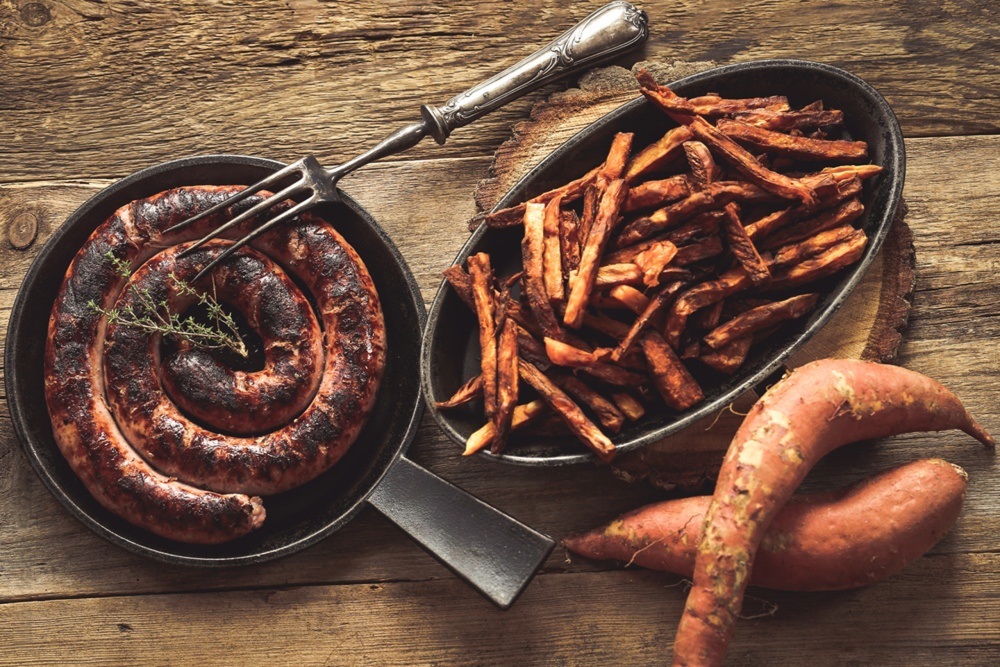
Here is my step-by-step technique:
Take a frying pan and heat it over medium heat. No need to add oil or butter, the sausage will release its own fat as it cooks.
Place your sausages on the grill and leave them untouched for 3 to 4 minutes. They will then begin to brown on the first side.
Turn them over with tongs (definitely not a fork which would pierce the skin). Continue to turn them every 3 minutes or so so that they brown evenly.
The cooking time for a Toulouse sausage in a pan is around 12 to 15 minutes depending on its thickness.
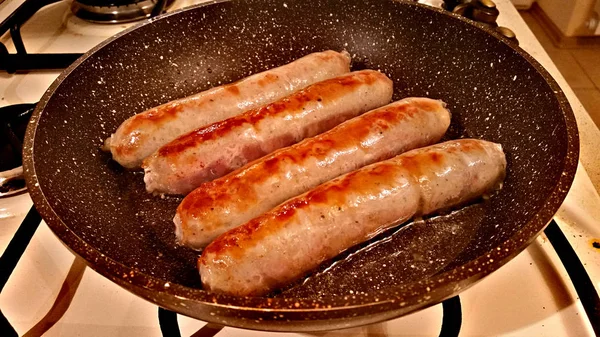
I've tested this method dozens of times. The mistake I made at the beginning was using too high a flame. The result: black outside, raw inside.
Since I've been keeping the heat on a medium setting and turning them regularly, it's been perfect.
However, you have to stay in the area, you can't be away for too long or it will burn quickly!
Pan-frying step by step
| Stage | Action | Time | Temperature |
|---|---|---|---|
| 1 | Preheat the pan empty | 2 min | Medium heat |
| 2 | Place the sausages | – | Medium heat |
| 3 | First side without moving | 3-4 min | Medium heat |
| 4 | Turn over and cook while rotating | 8-11 min | Medium-low heat |
| 5 | Check the cooking | – | – |
Oven baking: for larger quantities
Baking Toulouse sausage in the ovenis really practical when you need to cook several at once. Much less monitoring, less stress…
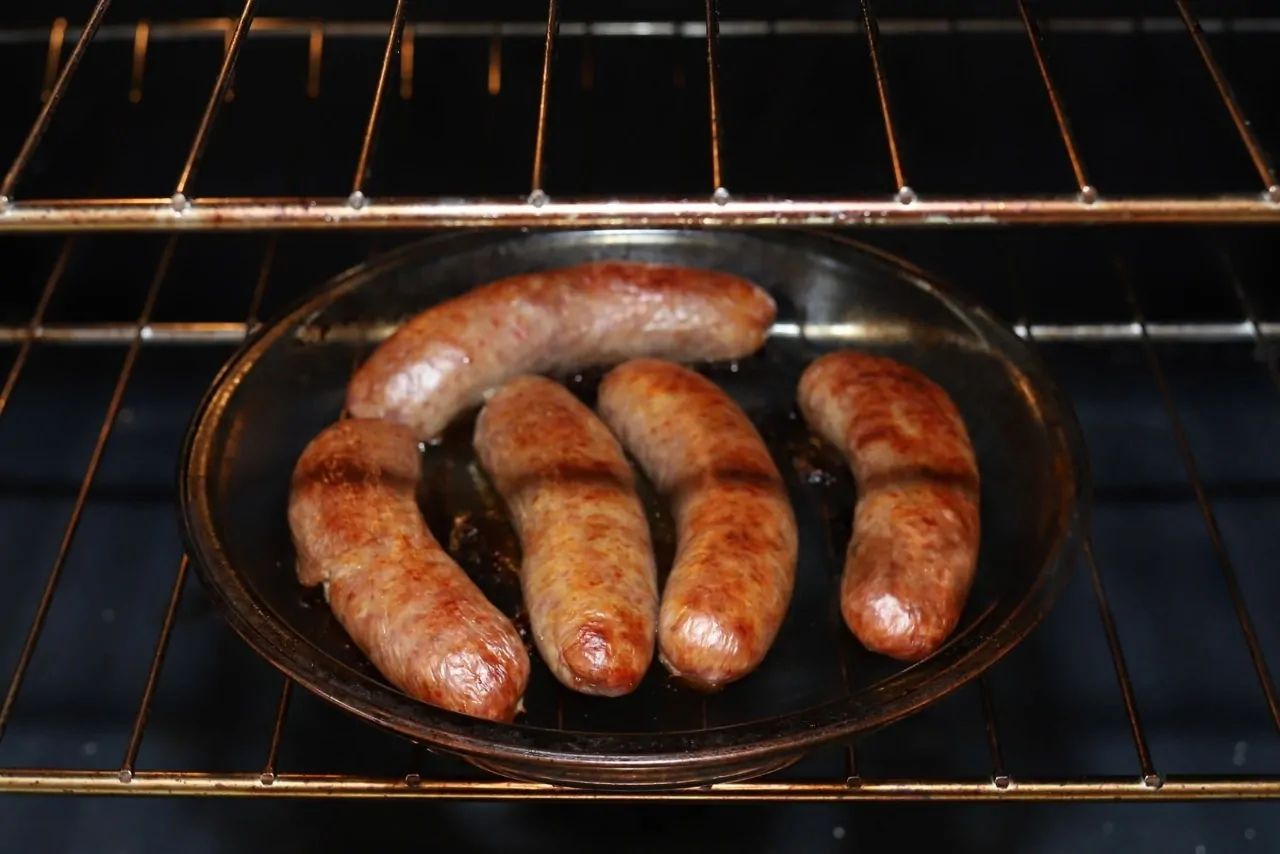
To do this, preheat your oven to 180°C (gas mark 6). Place your sausages on a baking sheet lined with parchment paper, spacing them well apart.
Bake for 25 to 30 minutes and remember to turn them over halfway through cooking.
If you have fan-assisted heating, that's even better because the temperature is the same everywhere.
The other day, I invited some friends over for cassoulet. Instead of blocking my stovetop with the sausages, I put everything in the oven. Meanwhile, I could prepare the rest.
The sausages were cooked through and nicely browned. The only thing is, they won't be as crispy as if they were pan-fried.
But hey, for a cassoulet where they'll simmer afterwards, it's perfect!
Barbecue cooking: the incomparable smoky taste
In summer, grilling Toulouse sausage on the barbecue is a must. The subtle smoky flavor it imparts is simply fantastic! In a sandwich, it's pure magic!
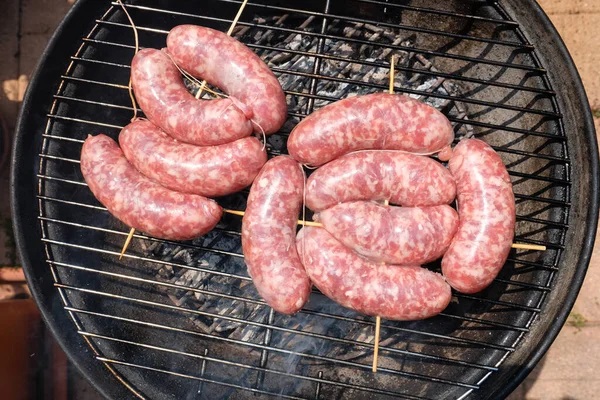
Wait until your coals are glowing red with a thin layer of white ash on top. Place the sausages on the grill about 15 cm from the coals.
If you put them too close together, the outside will burn before the inside is cooked.
Allow 15 to 20 minutes, turning them every 4 to 5 minutes. The goal is to have a nice golden, slightly caramelized skin, without it burning.
Poaching: the little-known gentle cooking technique
This method isn't widely known, but it works incredibly well. You're guaranteed to cook the sausage thoroughly without any risk of burning it.
Place your sausages in a saucepan of cold water. Bring to a simmer, not a rolling boil. Leave them like this for 15 to 20 minutes. The cooking is gentle and gradual.
Afterwards, you can cook them for 2 to 3 minutes in a hot pan to give them a nice color. This way, you combine safe cooking with an appetizing appearance.
Comparative table of cooking methods
| Method | Time | Benefits | Disadvantages | Best use |
|---|---|---|---|---|
| Stove | 12-15 min | Quick, beautiful color, crispy texture | Constant surveillance | Daily meals, individual portions |
| Oven | 25-30 min | Large capacity, little monitoring | Less crispy, longer cooking time | Family meal, cassoulet |
| Barbecue | 15-20 min | Smoky flavor, conviviality | Depends on the weather, delicate control | Summer, barbecues with friends |
| Poaching | 15-20 min + 2-3 min | Safe cooking, zero risk of burning | Less flavor on its own | Front base of stove finish |
How can you tell if your sausage is perfectly cooked?
Cooking it thoroughly is the tricky part. Too raw, it's not good for digestion. Overcooked, it becomes dry and tasteless.
Core temperatures to be respected
For those who have a kitchen thermometer, here are the cooking temperatures to aim for. It's the surest way to never make a mistake.
Table of different cooking temperatures
| Cooking state | Core temperature | Appearance of the flesh | Food security |
|---|---|---|---|
| Flood | Less than 60°C | Bright pink | ❌ Dangerous |
| Half-cooked | 60-70°C | Pink | ❌ To be avoided |
| Perfectly cooked | 71-75°C | uniform grey-beige | ✅ Safe and juicy |
| Overcooked | Over 80°C | Dark Grey | ⚠️ Dry but safe |
The safe zone is really between 71 and 75°C. Below that, you risk bacterial growth. Above 80°C, the sausage loses its tenderness.
If you don't have a thermometer, don't panic, visual tests work very well too.
Reliable visual signs
First look at the color: it should be a deep golden color, with some slightly caramelized areas, but no black parts.
The skin should be slightly wrinkled and shiny. This means that the fat has melted away properly.
The final sting test
Once you think it's cooked (and only then), you can pierce it with the tip of a knife. The juice that comes out should be clear.
If it's pink or red, cook for another 3 to 4 minutes.
The flesh you see should be grey-beige all over, without any pink traces.
The touch test for experts
With practice, you'll be able to recognize a cooked sausage simply by pressing it lightly with tongs. It should be firm but still slightly flexible.
If it's too soft, it's not cooked enough. If it's hard, it's overcooked.
Common mistakes to avoid
After messing up quite a few sausages and talking with other cooks, here are the mistakes that keep coming up.
Too high a fire: This is the number one mistake everyone makes. You turn the fire up full blast, the outside burns in 5 minutes, but the inside is still raw. Always keep the fire at a medium temperature, even if it seems slow.
Forgetting to turn regularly: If you let your sausage cook on the same side all the time, one side will burn while the other remains pale. You must turn it every 3 to 4 minutes; that's the basic rule.
Adding water during cooking: I've seen people do this to "speed up the cooking." Bad idea. You end up with a boiled, gray, tasteless sausage. Patience really pays off in the kitchen.
Stack the sausages: Whether in a pan or in the oven, leave space between each sausage. They need air to cook properly. If they are stuck together, they cook unevenly and sit in their own fat.
How many sausages should I allow per person?
When you have guests, the question always comes up: how many should I buy? It depends on how you serve them.
As an appetizer or starter: Allow 1 to 2 sausages per person. Cut into slices with toothpicks, they disappear quickly.
For a main course: Allow 2 to 3 sausages per person if serving them with mashed potatoes or lentils. Those with a big appetite can easily eat 3.
In a cassoulet: One sausage per person is more than enough. Cassoulet is already very rich with the beans and other meats.
For a barbecue: Allow plenty of food, 2 to 3 per person, because people tend to snack more at barbecues.
A Toulouse sausage typically weighs between 100 and 150g. For 6 people as a main course, buy 12 to 18 sausages, or about 1.5 to 2kg.
Some simple and tasty side dishes
A good Toulouse sausage goes very well with generous side dishes.
Homemade mashed potatoes or even a milk-free mousselineare classics that always work. Green lentils, simmered with a little onion and bay leaf, are also a perfect winter dish.
For a more festive meal, add your sausages to a cassoulet. They will bring all their richness to this dish from the Southwest.
In summer, a warm white bean salad with fresh herbs goes well with barbecued sausages.
And above all, don't forget the mustard. Dijon mustard or old-fashioned mustard is essential to give the dish a nice kick!
Solutions to common problems
Did you mess up your sausages? Here's how to identify the problem and fix it for next time.
Cooking problems encountered and solutions to adopt
| Problem encountered | Probable cause | Solution for next time |
|---|---|---|
| The sausage burst | Too high a heat or sausage pricked before cooking | Cook over medium heat and never pierce before |
| Dry, hard flesh | Cooking time too long or heat too high | Reduce the time by 2-3 minutes and lower the heat |
| Flood in the center | Fire too intense, exterior burned too quickly | Lower the heat and continue cooking for 5 minutes |
| No golden coloring | Too low a heat or too short a cooking time | Increase the heat slightly towards the end of cooking |
| Bland, grey sausage | Cooked in water or with too much water added | Never add water, let it cook dry |
The most common problem remains cooking at too high a temperature. If you master just this point, you'll already succeed in 80% of your cooking.
Your questions about cooking Toulouse sausage
Should Toulouse sausages be pricked before cooking?
No, absolutely not. Piercing the sausage before cooking causes the fat and juices to escape, which dries out the meat. You can only pierce it after cooking to check that the juices run clear.
How long does it take to cook a Toulouse sausage in a pan?
Cook for 12 to 15 minutes over medium heat, turning regularly every 3 to 4 minutes. Cooking time will vary slightly depending on the thickness of the sausage.
Can Toulouse sausages be cooked directly from frozen?
It's best to defrost them in the refrigerator for 4 to 6 hours before cooking. A frozen sausage doesn't cook well: the outside burns before the center is defrosted and cooked.
How can I prevent sausages from bursting during cooking?
Use medium rather than high heat, don't pierce them before cooking, and turn them gently with tongs rather than a fork. These three rules will guarantee intact skin.
What is the ideal oven temperature for cooking Toulouse sausages?
Set your oven to 180°C (gas mark 6) and bake for 25 to 30 minutes. This temperature allows for gradual cooking without burning the outside.
In summary
Mastering the cooking of Toulouse sausageis actually quite simple: patience, a not-too-high heat, turning regularly, and above all, never piercing before the end.
Whether you choose the pan for speed, the oven to cook several, the barbecue for smoky flavor or poaching for safety, respect the given times and always check that they are cooked through.
A well-cooked sausage has a beautiful, uniform golden color, firm but juicy flesh, and clear juices when you pierce it after cooking.
With these tips, you can now treat your family to sausages worthy of a good bistro. In the kitchen, it's mostly common sense: give your sausages the attention they deserve, and the result will be there on the plate!
