
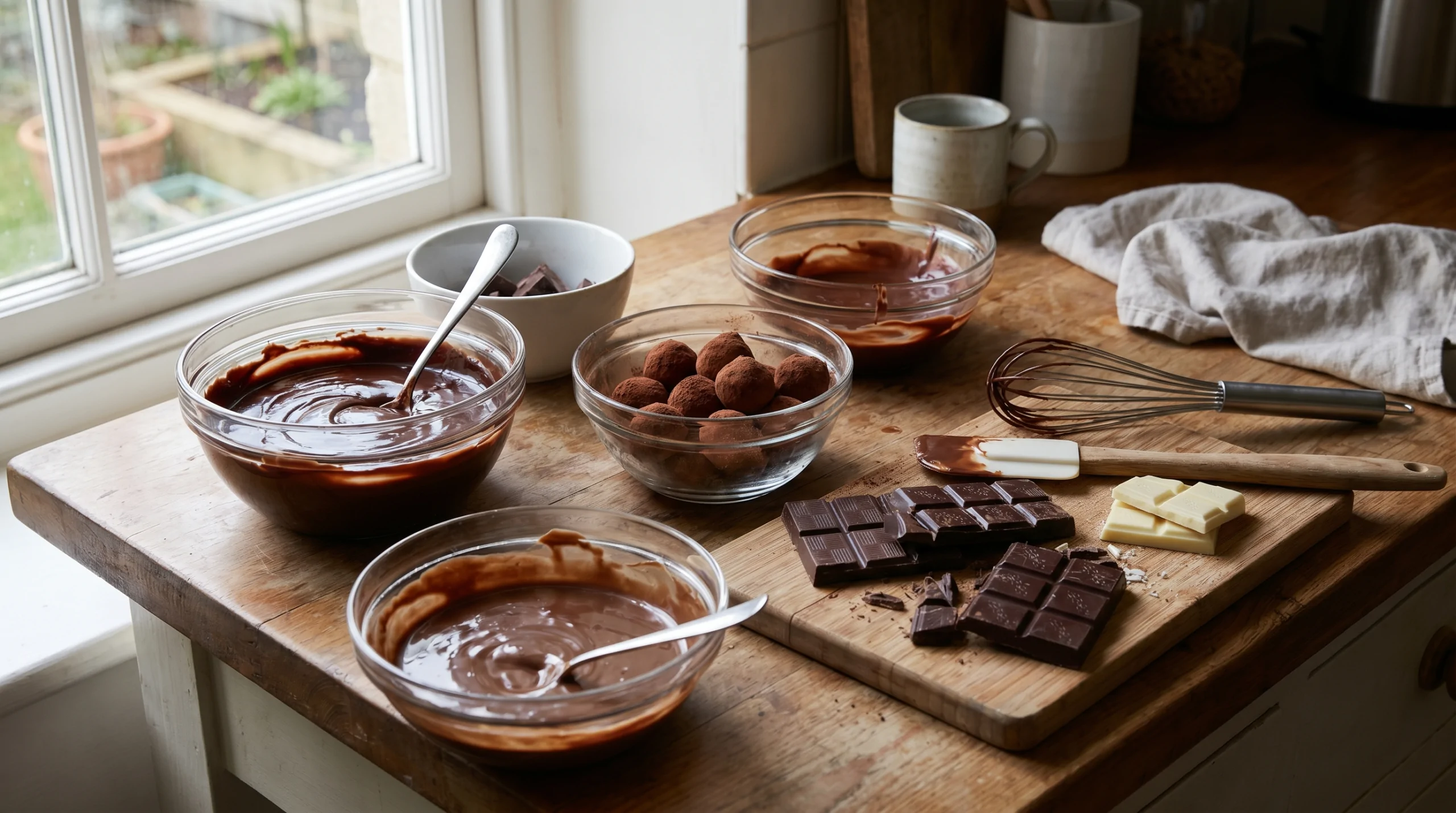
Which chocolate will make your ganaches, icings and truffles IRRESISTIBLE?
When it comes to baking, choosing the right chocolate really makes all the difference! Whether it's for a ganache, a glaze or a coating, your pastry creations can go from ordinary to unforgettable, simply by choosing the best chocolate bar to make them.
Forget about tedious tempering! We have selected suitable chocolates for you that will really simplify the task, such as ready-to-melt pistoles, powerful varieties (between 70 and 80% cocoa) and couverture perfect for all your moldings.
A few basic tips—a good bain-marie, the right tempering techniques—and you're all set. Ready? Let's discover them together!
Our Top 5: Buy the best chocolate bars for baking


Discover each baking chocolate in more detail
The Simple & Bon team has tested and studied in detail the customer reviews of each of these chocolate baking tablets and gives you its verdict product by product.
Lindt Pastry Pistoles 500g

Benefits
- Convenient and economical 500g format
- Easy-to-dose and easy-to-melt guns
- Consistent taste and Lindt quality
Disadvantages
- Price higher than some generic brands
- Resealable bag essential to maintain freshness
Presentation
Lindt chocolate pistoles are a format designed to simplify your baking life. With 500g, you have enough to make several batches of biscuits, ganaches, and coatings without the hassle of cutting a bar.
Concrete advantages
These small discs melt quickly and blend well into creams and hot preparations. This reduces the risk of overheating or grainy chocolate.
- Precise dosage (easy for small quantities)
- Quick and even melting
- Excellent for ganaches and coatings
Disadvantages and usage tips
If you bake infrequently, the open time should be carefully managed: store the bag in a cool, dry place. The price is justified by the quality but may seem high for occasional use.
- Tip: Weigh your pistoles to avoid waste
- Tip: Store in an airtight container after opening to preserve the aromas
Lindt 70% Dessert Chocolate Bar 2x200g

Benefits
- Intense and balanced flavor
- Holds its shape well during baking and in ganache
- Convenient 2x200g format
- Reputable brand and meticulous manufacturing
Disadvantages
- It requires gentle melting (double boiler)
- May be slightly powdery depending on individual tastes
Presentation
Looking for a dark chocolate that's both powerful and reliable for baking? This 2x200g pack offers 70% cocoa chocolate designed for desserts with character. You can use it for ganaches, brownies, or fondant cakes where the intensity of the cocoa flavor is key.
Strengths and features
This chocolate stands out for its quality and consistency in baking. It gives preparations a good structure and an intense flavor without becoming excessively bitter.
- Smooth and even texture when melted
- Toasted aromas and pronounced notes of dried fruit
- Convenient packaging for measuring your recipes
Limitations and practical advice
There's nothing wrong with eating it, but to get great results, you need to handle it with care. Avoid microwaving it at full power and opt for a double boiler or slow melting.
- Tip: Temper or allow to cool gently for optimal shine and bite
- Tip: For ganaches, heat the cream and then stir in the chocolate off the heat to preserve the flavors
For whom and when to use it
If you're preparing desserts for adults or recipes where the chocolate flavor needs to shine, this product is a great choice. You'll achieve professional results without excessive complexity.
Nestlé Dessert 80% – 170g Tablet

Benefits
- High cocoa content (80%)
- Clean and homogeneous melting
- Suitable for rich truffles and ganaches
Disadvantages
- A pronounced bitterness for sensitive palates
- A fairly small size (170g) for some recipes
Presentation
This 80% chocolate is ideal for amateur and professional pastry chefs who want a very cocoa-rich result. It's best used when intense flavor is desired, such as for dark truffles or rich icings.
Main features
The high cocoa content makes the product dry and crisp on the palate. It melts cleanly, making it easy to coat or use in ganaches.
- 80% cocoa for a pronounced flavor
- Pure cocoa butter for a smooth melting texture
- Support for the Cocoa Plan for the sector (manufacturer information)
Disadvantages and usage tips
If you're making desserts for children or people sensitive to bitterness, consider sweetening it with a little cream, sugar, or a touch of vanilla. The 170g size may require you to buy several bars for larger recipes.
- Tip: For a smoother ganache, use 60–70% cream depending on the recipe
- Example: ideal for making mendiants, truffles and toppings where the cocoa flavor should stand out
Chef's Grocery Chocolate Discs 58% - 500g

Benefits
- Good value for money for 500g
- Melts quickly, good shine after tempering
- Convenient resealable bag for storage
Disadvantages
- Limited cocoa content (58%) for purists
- May contain traces of allergens (refer to the label)
Presentation
This bag of 58% chocolate discs is for those looking for an affordable and effective couverture chocolate. You can use it for molding, coating, and glazing with a beautiful glossy finish.
Technical points and benefits
The particle size and composition promote rapid melting and easy tempering. For chocolate pieces or shells, the results are satisfactory and consistent.
- Pallets designed for covering and encasing
- Adequate shine after tempering
- Resealable bag to limit oxidation
Disadvantages and recommendations
If you're aiming for a high cocoa intensity, this product may seem too mild. Also, check for traces of allergens before use if you're cooking for people with sensitivities.
- Tip: Adjust the recipe (more cocoa or less sugar) if you want more bitterness
- Tip: For clean molds, temper carefully and cool gradually. Don't hesitate to also consult our baking mold size guide for better reference!
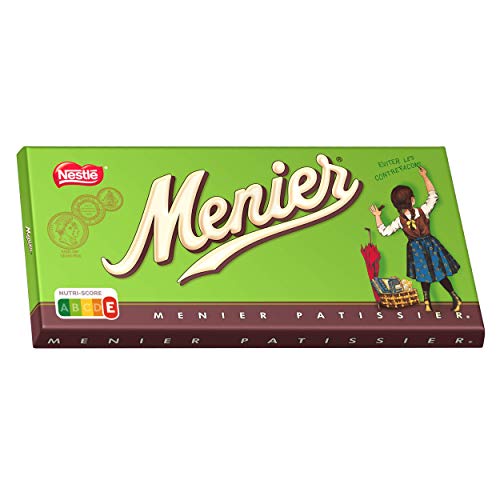
Menier Dark Chocolate 50% – 200g Bar

Benefits
- A familiar and beloved taste for the family
- Easy to work with for everyday recipes
- Affordable and available tablet
Disadvantages
- Cocoa content (50%) is limited for intense recipes
- Less suitable for very rich ganaches
Presentation
Menier is a traditional chocolate bar perfect for your everyday desserts. With approximately 50% cocoa, it is smooth and well-rounded, suitable for children and family recipes.
Practical advantages
The product melts easily and blends well into classic recipes like brownies, cookies, or baked goods. If you prefer a chocolate that isn't too bitter, you'll be happy.
- Ideal tablet for family snacks and desserts
- Mild taste and easy to enjoy
- Good for basic recipes
Limitations and practical tips
For technical preparations where the cocoa flavor should be dominant (intense tarts, very rich ganaches), you'll want a higher percentage. Also, check the amount of sugar in the recipe to balance the flavor.
- Tip: Combine with a darker chocolate if you want more depth of flavor
- Tip: Use primarily for snacks, simple toppings, and recipes intended for children
Simple & Bon's review
For your regular homemade pastries
Lindt Pastry Pistoles in a 500g pack are an excellent starting point. Their pistole shape makes measuring easy, and they melt evenly—perfect for ganaches, glazes, or coatings. Melt them in a bain-marie or in the microwave in short bursts for a smooth texture in just a few minutes.
For a pronounced chocolatey intensity
Lindt 70% Dessert Chocolate (2 x 200g pack) brings character and intensity. Its full-bodied aromatic profile, with toasted notes, holds up well to baking and gives a beautiful structure to truffles, mousses, and cakes. Melt it in a bain-marie, and if you want a glossy finish for molded chocolates, a light tempering will make all the difference.
An alternative for careful molding
The Chef's Grocery 58% Palets deserve your attention if you're looking for a professional finish. Once properly tempered, they produce a flawless glossy effect and provide excellent coverage.
Frequently asked questions about chocolate and pastry
What is the difference between couverture chocolate and baking chocolate?
Couverture chocolate contains more than 31% cocoa butter, while classic baking chocolate contains between 26 and 31%. This difference makes couverture chocolate more fluid, easier to temper, and shinier, which explains why professionals prefer it for ganaches, coatings, and moldings.
What percentage of cocoa should I choose for my cakes?
For baking, choose chocolate with a cocoa content between 50% and 70%. 50-60% chocolate is suitable for mousses and soft cakes, while 70% adds more intensity to truffles and brownies. Above 80%, chocolate risks burning during baking and developing a bitter taste.
Can supermarket chocolate be used for baking?
Supermarket chocolate typically contains twice as much sugar and half as much cocoa butter as couverture chocolate. While usable for simple recipes, it won't produce the smooth ganaches or glossy glazes you'd get with professional-grade chocolate.
Dark, milk or white chocolate: which to choose?
Dark chocolate offers intensity and rich aroma, milk chocolate brings sweetness and creamy notes, while white chocolate is suitable for light desserts like mousses. Your choice depends on the desired flavor profile and the recipe you're preparing.
What are chocolate pistoles?
Pistoles are small pieces of couverture chocolate that melt quickly and evenly.
This format makes dosing and melting easier, which is why professionals prefer it for all their preparations.
Is it absolutely necessary to temper chocolate?
Couverture chocolate requires tempering to achieve shine and hold its shape during molding. For ganaches and mousses, tempering isn't always essential, but it improves the final texture.
At a glance
Neutral opinion: it all depends on the use. For decorating, I use EDC; for melting into a cream, I use Lindt 70 or Nestlé if I want to cut the bitterness a bit.
A word of advice for beginners: don't only buy the cheapest options; it can cost you time fixing recipes.
For beginners, start with Menier to learn the basics, then move up the range.
Excellent summary, Paul. Investing in chocolate suited to the task often saves time and results in a more professional finish. And to save money, mix it up: inexpensive couverture chocolate with a quality chocolate bar for flavor.
I completely agree. I once tried to do everything on the cheapest basis… the result was disastrous 😂
And don't forget a good thermometer!
Technical question: I'm hesitating between Nestlé 80% and Lindt 70% for a chocolate mousse: I like the intensity but not the dry bitterness.
Any advice?
If you want to maintain intensity without it being too dry, I'd recommend Lindt 70% for the mousse. Nestlé 80% is very rich and can sometimes be too strong in mousse (especially if the cream is light). You can also soften the Nestlé with a little sugar or melted milk chocolate (10–15%).
Personally, I would have said: try both in small portions; your palate often adjusts quickly. 😉
I made a mousse with Nestlé 80% and added 10% milk chocolate, the result was great: intense but melting.
Has anyone tested how well these chocolate bars hold up in hot baking? For example, for icing a still-warm cake, do they adhere well? I'm worried some might run too quickly.
I always wait until the cake is lukewarm to cold before applying the glaze. And if I want a mirror effect, I chill the ganache before pouring it.
Good question. For glazing a warm cake, it's best to use a chocolate and cream-based glaze (mirror glaze or fluid ganache) rather than pure melted chocolate. Chocolate coatings (EDC discs) adhere better if they are tempered, but on a warm cake, untempered chocolate risks losing its shine and running.
You can also add a little cocoa butter to thin it out without making the icing too soft.
Fatal humor: I thought all chocolate bars melted the same way… wrong. 😂 I burned part of my Lindt in the microwave trying to be quick, result: grainy. Moral of the story: double boiler and patience.
Likewise, use short bursts of micro-microwave. And above all, don't exceed 45–50°C for black if you want to preserve the aromas.
Ouch, it happens! For microwaves, use short cycles (15–20 seconds), stirring between each. A double boiler is safer, especially for high-quality chocolate.
I'm surprised Nestlé 80% is on this list: it's potent, but it can overpower a recipe if you're not careful.
It's best reserved for truffles and recipes where the cocoa flavor should be prominent.
Personally, I put a little in an icing and the rest in milk chocolate to soften it.
That's right: Nestlé 80% is listed for those who like very strong notes. For a more delicate balance, Lindt 70% or blends are preferred.
I like to use it in small quantities to enhance the flavor of a chocolate cream, rather than as the sole base.
Menier is my everyday chocolate. Nothing fancy, but reliable for brownies and kids' snacks.
A huge advantage: it's affordable and available everywhere.
Without wanting to sound snobbish, the Menier does the job. However, I would avoid it for a professional entremet.
Yes, I use Menier for cookies, and sometimes I add 20% Lindt chocolate chips mixed in for flavor: a winning combo 😋
Absolutely, Menier is a practical classic for family recipes. If you want to enhance the flavor, add a pinch of fleur de sel or a hint of coffee extract to the batter.
Honestly, Lindt 70% dessert chocolate saved me for rich cake fillings. It holds its shape beautifully and melts perfectly in a bain-marie.
One small drawback, though: it's a bit pricey if you use it often.
It's true, the 70% Lindt is more expensive. A tip: buy the chocolate bars on sale or alternate them with the Chef's Grocery discs for large quantities (molding/coating), and save the Lindt for preparations where taste quality really matters.
Exactly, I alternate them too. EDC pellets are great for tempering and cost less per kilo.
Long post (sorry, I'm loooooong 😅):
I regularly buy these five products depending on the project:
– Lindt Pistoles: ganaches and small glazes, easy to measure.
– Lindt 70% chocolate bars: mousse, inserts, when I want something with character.
– Nestlé 80%: truffles and very chocolatey desserts.
– Chef's Grocery (palets): moldings and couverture chocolate, very practical for tempering.
– Menier: brownies, snacks, and recipes where chocolate is just one ingredient among many.
I should add that proper storage (dry place, stable temperature) makes all the difference. And sometimes I mix two chocolates to achieve the perfect balance.
Long but very informative, I learned a lot, thank you 😊
Very useful, thank you! I will try Lindt chocolate chips for my next ganaches.
Your advice on mixing chocolates resonates with me: I used 70% + 58% and it was perfect for a balanced glaze.
Great summary Lucie, your experience really shines through. Thanks for the note on storage, it's often overlooked yet essential for preserving the aromas and texture.
I do a lot of molding and I've noticed that tempering with the Chef's Grocery discs is faster. The result is shinier than with a regular baking sheet.
A little tip: dry the bowl thoroughly and use a metal spatula.
Good point. Humidity and grease are the enemies of tempering. To save time, work on a cool surface and use a thermometer to respect the temperature stages (e.g., melt, cool, reheat).
I also add cocoa butter to enhance the shine if I have some on hand.
I tried Lindt chocolate pistoles for making ganache over the weekend and I can confirm: the format is super convenient. They melt evenly and the flavor is just mild enough to please everyone.
However, I have a question: what percentage of cream to chocolate do you use to make whipped ganache?
Good question, Marie. For a classic whipped ganache, we often use 2 parts chocolate to 1 part cream (2:1) if it's chocolate around 55-65%. With 70% chocolate, you can try 1.5:1 to avoid bitterness while maintaining a smooth texture.
Thanks for the clarification! I often add a little glucose syrup to smooth out the ganache, especially if I'm refrigerating it.
Personally, I use a 2:1 ratio with Lindt chocolate chips and it's perfect. And yes, chocolate chips are a dream for measuring! 👌
The Chef's Grocery chocolate discs are really practical for molds and glazes. They temper well and have a great shine. However, I've noticed they have a slightly less pronounced flavor than Lindt, which is to be expected given the cocoa percentage.
That's perfectly normal, Julien: with 58% (minimum) you gain versatility and shine for coating, at the cost of less intense flavor. It's ideal for purely decorative coating, but for a flavored ganache, 70-80% is preferable.
I agree: I combine EDC for the molds and Lindt for the fillings. Best quality/cost combination in my opinion.