

Macaroni gratin is the dish you pull out when you need to feed a table without spending two hours in the kitchen: pasta, sauce, cheese, oven.
However, there is a trap: the dish that turns out dry or pasty even though everything seemed to be well measured.
Here is a recipe for 4 people, with the guideline to avoid a dry dish, approximately 20 cl of milk for 100 g of uncooked macaroni, the choice of cheese and the right way to keep the leftovers.
Ingredients for 4 people
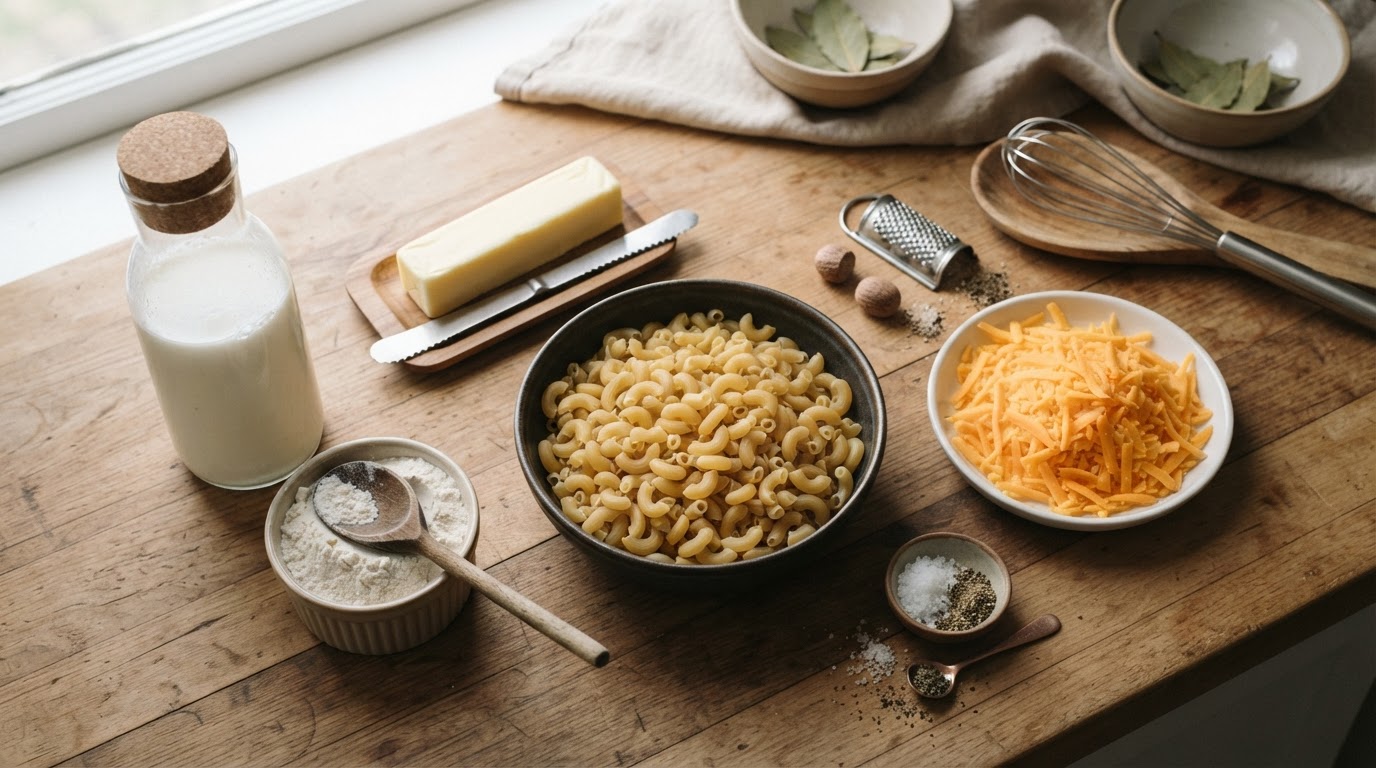
The basic recipe used here comes from Croq'Kilos (published on January 14, 2025): a béchamel sauce, grated cheese and macaroni cooked a little less than on the package.
- 250g of macaroni
- 50g of butter, plus a knob for the dish
- 50g of flour
- 50 cl of milk
- 150g of grated cheese (Emmental, Comté or Gruyère)
- 50g of grated Parmesan cheese, optional
- Salt, pepper and a pinch of nutmeg
Calculate your quantities according to the number of guests
This tool recalculates the ingredients of the basic recipe for 2, 4, 6 or 8 people, with or without parmesan.
Cook the macaroni and prepare the béchamel sauce
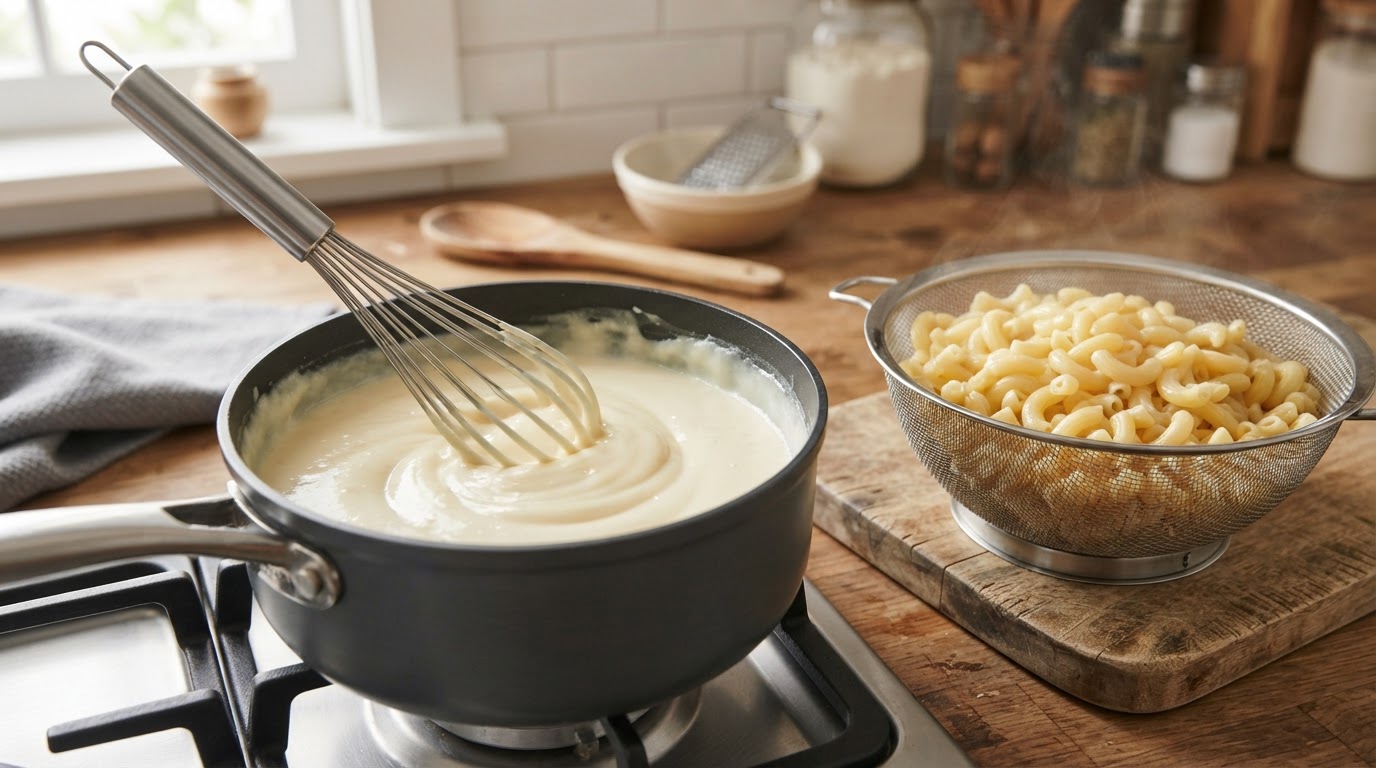
- Cook the macaroni in a large pan of boiling salted water, removing them 2 minutes before the end of the time indicated on the package, then drain them.
- Melt the butter in a saucepan and add the flour while stirring.
- Pour the milk in little by little while whisking, then let it simmer gently for about 5 minutes.
- Season with salt, pepper and nutmeg.
Those 2 minutes less are not a detail: the macaroni finishes cooking in the oven, in the sauce.
The same béchamel method is used in our cauliflower gratin with béchamel sauce.
From jar to plate (accessed in November 2026) also specifies to use pasta that cooks normally, not pasta that cooks quickly.
Only one of the sources consulted calls for rinsing the pasta in cold water: Nigella Lawson's recipe (published in September 2010), for mac and cheese. The two French-style gratin recipes consulted only call for draining the pasta and make no mention of rinsing.
What cheese should I choose for a macaroni gratin?
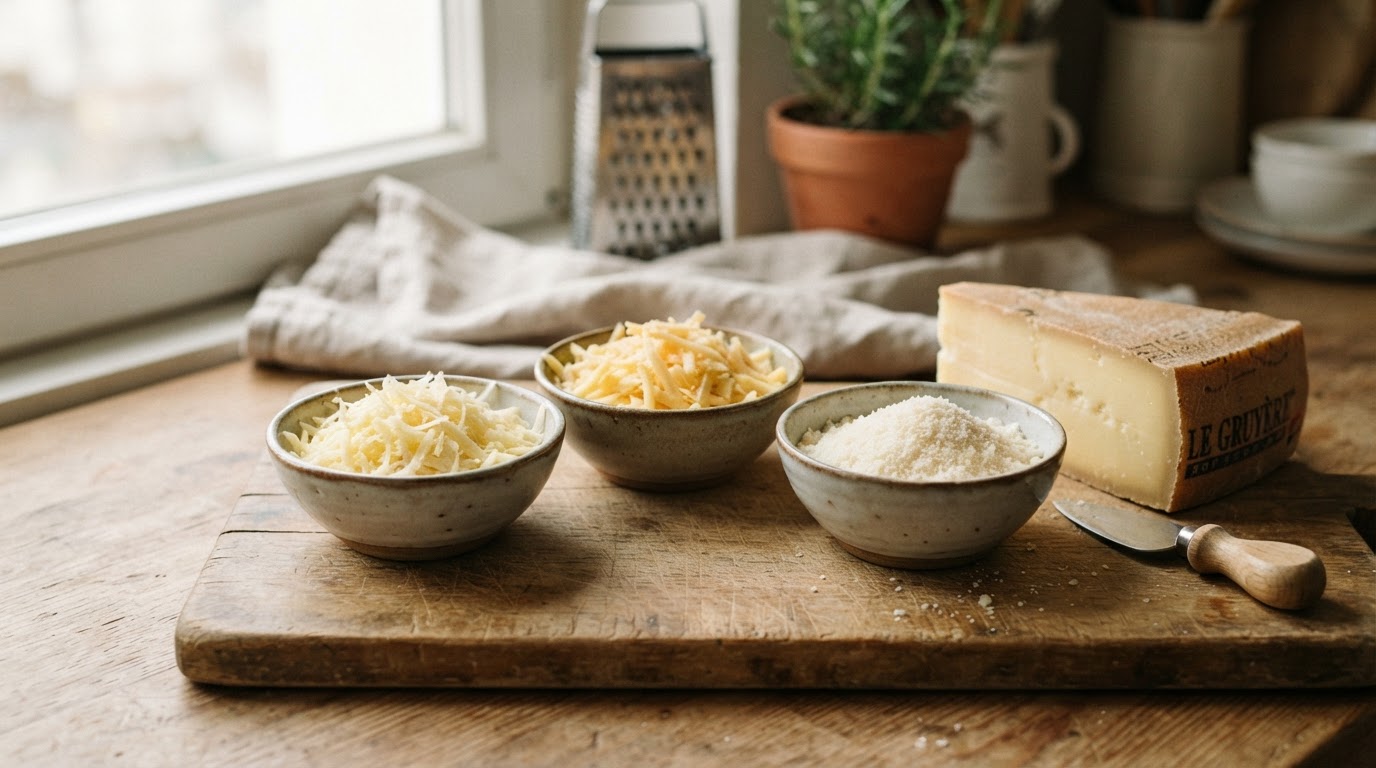
Both gratin recipes I read mention the same pressed or hard cheeses, which are easy to grate.
| Cheese | Quoted by | Key points to remember |
|---|---|---|
| Gruyère | Croq'Kilos and From Jar to Plate | Presented as the classic choice by From Jar to Plate |
| Emmental | Croq'Kilos and From Jar to Plate (Lignac version) | Classic base, alone or mixed |
| County | Croq'Kilos and From Jar to Plate | Stronger flavor than Emmental |
| Parmesan | Croq'Kilos (50 g, optional) and From Jar to Plate | Use sparingly, as it is drier and saltier |
As for the distribution, Croq'Kilos mixes 100g of cheese into the sauce and keeps the rest, i.e. 50g, for the top of the dish.
Assemble and broil
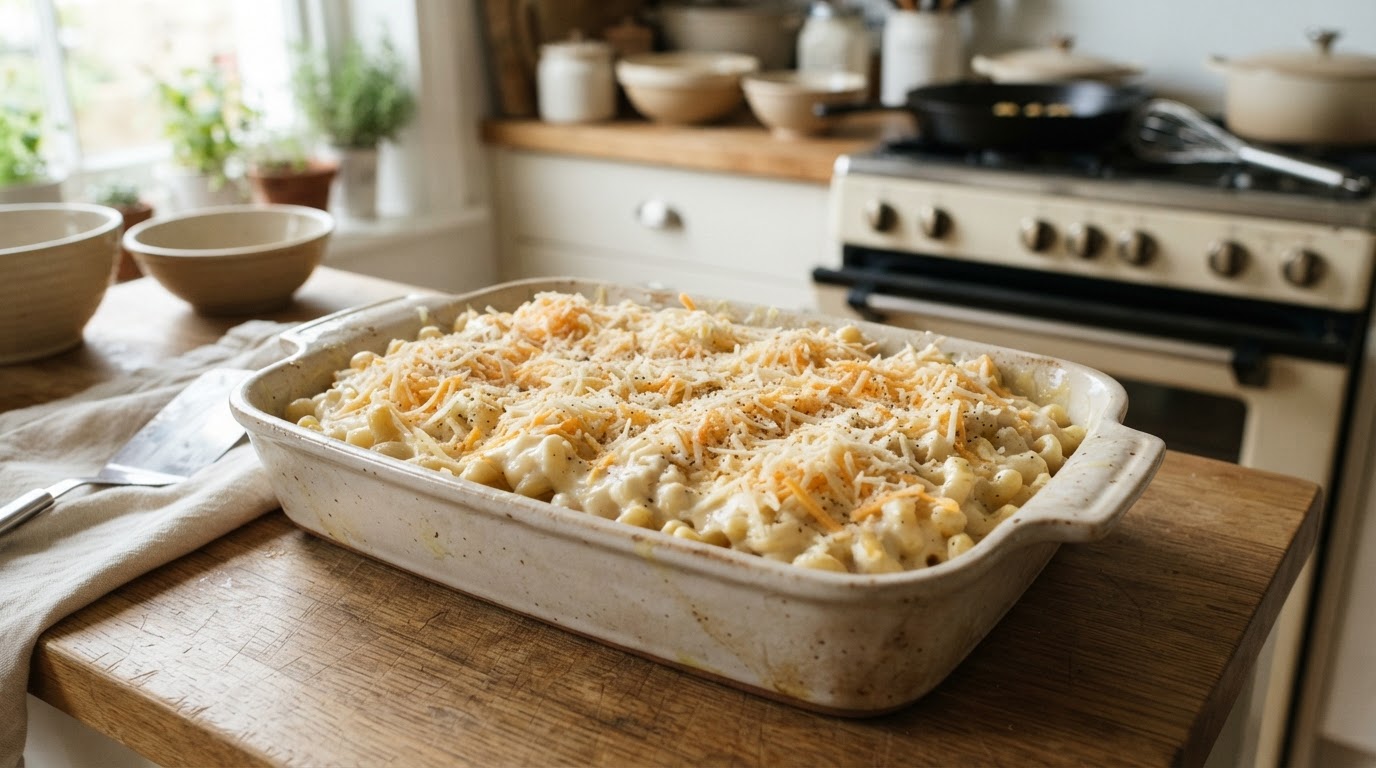
- Mix the drained macaroni with the béchamel sauce and 100g of grated cheese.
- Pour everything into a buttered gratin dish and sprinkle with the remaining cheese, including Parmesan if you are using it.
- Bake at 200°C for 20 to 25 minutes, until the top is golden brown.
- Let it rest for 5 minutes before serving.
In practical terms: serve the gratin with a light green salad, as suggested by Croq'Kilos, rather than with another rich dish.
These times are for the basic quantity. A deeper or fuller dish will require a little more time, adjusted by eye based on the color of the top.
Why a dry macaroni gratin, and how much sauce should I use?
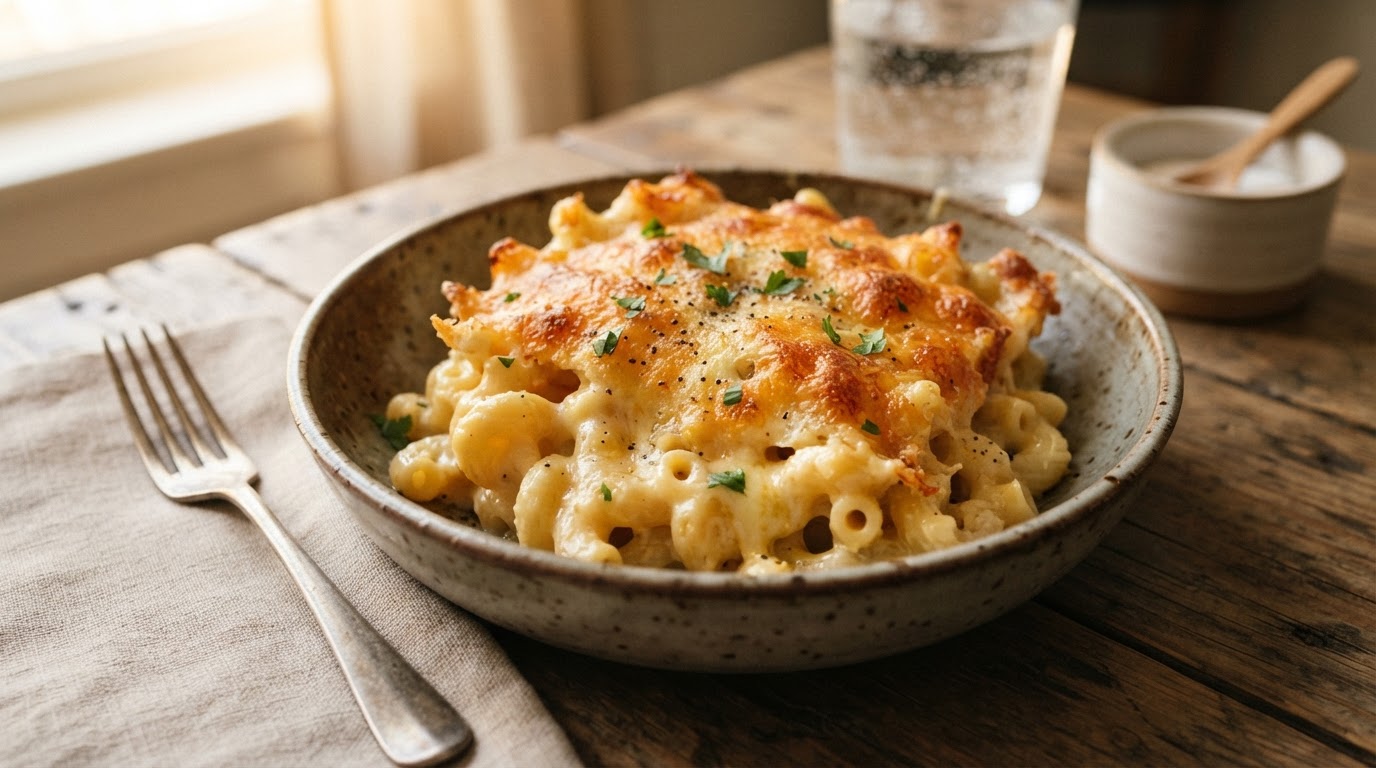
Cooked macaroni continues to absorb liquid while hot, and its hollow tube fills with sauce. During baking, some of the béchamel sauce therefore disappears inside the pasta.
The two recipes that yield complete quantities arrive at the same ratio:
| Source | Raw pasta | Milk | Milk per 100g of pasta |
|---|---|---|---|
| Croq'Kilos (January 14, 2025) | 250 g | 50 cl | 20 cl |
| Nigella Lawson (September 2010) | 500 g | 1 liter | 20 cl |
That is 20 cl of milk for 100 g of uncooked macaroni, or 2 ml per gram.
The flour follows the same logic in both cases, 10g for 100ml of milk.
Nigella Lawson adds that the sauce should not be too thick: it should lightly coat the back of a spoon, and the pasta should be barely covered by the sauce in the dish.
This report is based on only two recipes, without independent comparative testing. The recipe cards don't specify the size of the macaroni, which affects absorption, and the "From Jar to Plate" recipe doesn't give any pasta quantities. Use 20 cl per 100 g as a starting point, adjusting it for your next batch.
Typical example: 250g of macaroni with only 25cl of milk, or 10cl per 100g, half the recommended amount. The sauce is likely to disappear into the tubes before the end of the browning process, and the dish may come out dense.
Typical example: a package that says 10 minutes of cooking time. Macaroni drained for 10 minutes, then baked for 20 minutes, will end up too mushy: remove them after 8 minutes.
For coquillettes rather than macaroni, the reasoning is the same and is detailed in our recipe for soft coquillettes gratin.
Variations: ham, vegetables, or without béchamel sauce
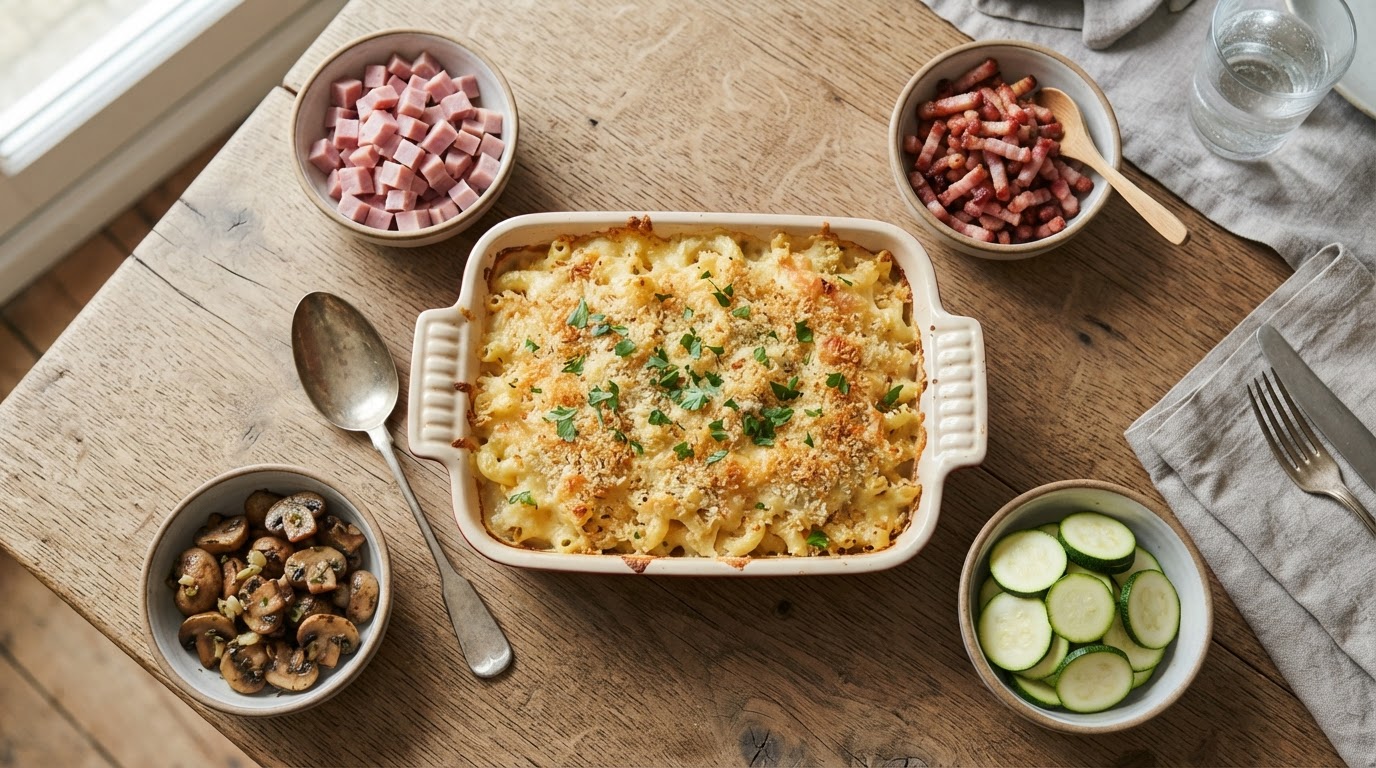
The basic recipe accepts toppings, provided that the same sauce ratio is maintained.
- Diced ham, bacon or sautéed mushrooms, offered by Croq'Kilos.
- Fresh cream instead of 100 ml of milk, for a creamier sauce (Croq'Kilos).
- Breadcrumbs mixed with melted butter on top, for extra crunch (Croq'Kilos).
- Blanched onions for 2 minutes, mixed with pasta (From jar to plate).
- Courgettes instead of ham for a meat-free version, according to Du bocal à l'assiette.
For a version without béchamel sauce, the "From Jar to Plate" page mentions, in its Cyril Lignac-style variation, 15 cl of heavy cream as an optional substitute for the béchamel, without specifying the quantity of pasta. The guideline of 20 cl per 100 g therefore remains the only numerical ratio to judge whether the sauce is sufficient.
With vegetables that release water, pre-cooking prevents a sauce that is too runny, as in our quick courgette gratin which does not release water.
Keep leftovers in the refrigerator
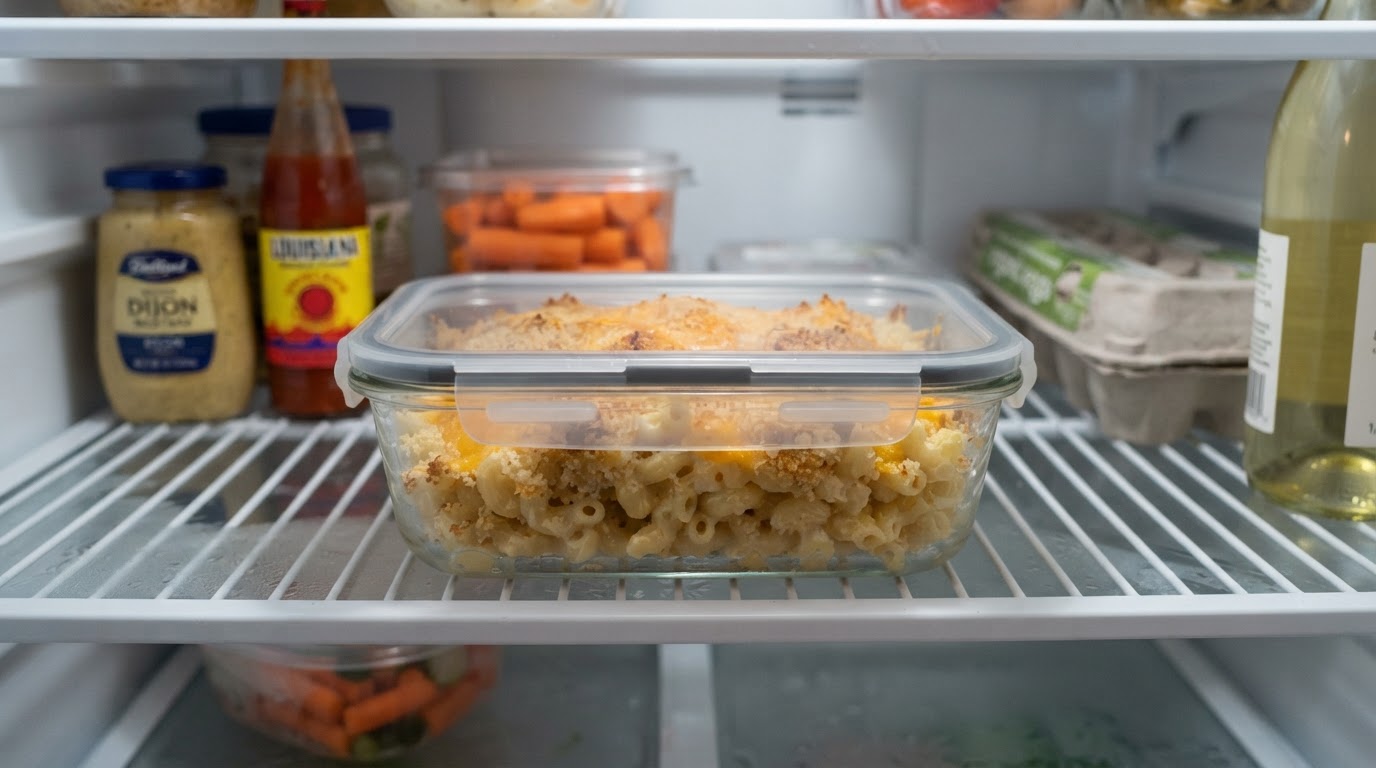
For leftover homemade meals, Santé.fr (guide published on April 21, 2022) recommends consuming them as quickly as possible, within 3 days.
The same guide advises against leaving a hot dish to cool for more than 2 hours at room temperature.
It also asks that the coldest zone of the refrigerator be set to a maximum of 4°C.
From jar to plate, which specifically discusses gratin, advises keeping it for 1 or 2 days in the fridge under cling film: it's better to aim for the shorter range.
The guide discusses homemade leftovers in general, without specifically mentioning pasta. A gratin left to cool on the counter throughout dinner exceeds the recommended two hours: it's best to put away leftovers as soon as the dish has cooled down.
In summary
A good macaroni gratin depends on a ratio: about 20 cl of milk for 100 g of uncooked pasta, macaroni removed 2 minutes before the end of the package time and an oven at 200 °C for 20 to 25 minutes.
Gruyère, Emmental, or Comté cheeses are all good choices. Leftovers should be refrigerated within 2 hours and eaten quickly: a maximum of 3 days according to Santé.fr, and 1 to 2 days according to Du bocal à l'assiette.
Practical questions
- Can you use pasta other than macaroni?
Yes, the method remains the same: only the cooking time follows the package instructions, minus 2 minutes. The guideline of 20 cl of milk per 100 g of uncooked pasta serves as a starting point, to be adjusted according to the result. - How to reheat leftover gratin without drying it out?
Add a little cream, milk or stock, cover the dish with foil and bake it in the oven at 160-180 °C for 10 to 15 minutes, according to Du bocal à l'assiette (accessed November 2026).
