
In short
Measuring spaghetti by eye is a classic recipe for ending up with either three times too much pasta or guests who are still hungry. The ideal quantity depends on several factors: the dish's role in the meal, the age of the guests, the type of sauce, and even the type of pasta.
This guide details the reference weights for a main dish as well as for a side dish, the difference between dried and fresh pasta, and tips for measuring correctly even without scales on hand.
How much spaghetti per person for a main course?
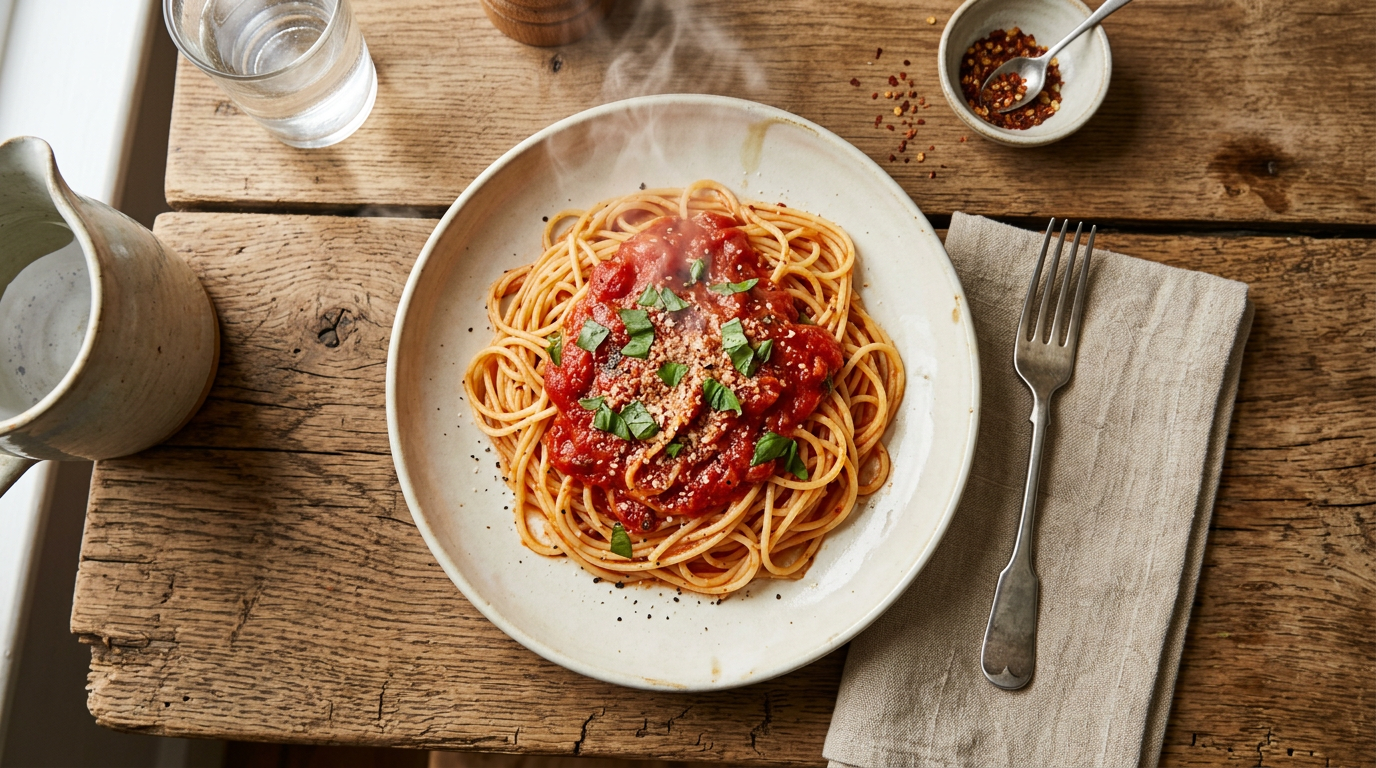
When spaghetti is the centerpiece of the meal, accompanied by tomato sauce, Bolognese sauce or simply a drizzle of olive oil, the reference portion for an adult is 100g of uncooked pasta, or about 250g once cooked.
This is the weight that most pasta manufacturers use on their packaging.
This figure remains a basis: a large appetite or intense physical activity during the day may justify going up to 120 g, while a meal that is already substantial as a starter suggests staying around 90 g.
| Context | Raw pasta / person | Cooked pasta / person |
|---|---|---|
| Main course, adult | 100 g | ≈ 250 g |
| Adult support | 60 to 70 g | ≈ 155 to 175 g |
| Child (6 to 10 years old) | 50 to 70 g | ≈ 125 to 175 g |
| Toddler (under 3 years old) | 30 to 40 g | ≈ 75 to 100 g |
| Fresh pasta, main course | 120 to 150 g | ≈ 200 to 250 g |
And as an accompaniment, the quantity changes completely
As soon as spaghetti is only served to accompany meat, fish or vegetables, the portion drops significantly: 60 to 70 g of uncooked pasta per adult, or about 155 to 175 g cooked.
The logic is reversed compared to a main course: pasta no longer fills the plate on its own, it complements an already satiating food.
This distinction between main course and side dish is also consistent with official nutritional guidelines: the national nutrition and health program recommends consuming starchy foods at every meal, varying their place on the plate depending on whether they form the base of the dish or accompany it.
Before you begin, ask yourself if the spaghetti will be the only dish or if it will be served alongside a protein. This simple question will prevent most portioning errors.
Adjust the dosage according to the age and appetite of the guests
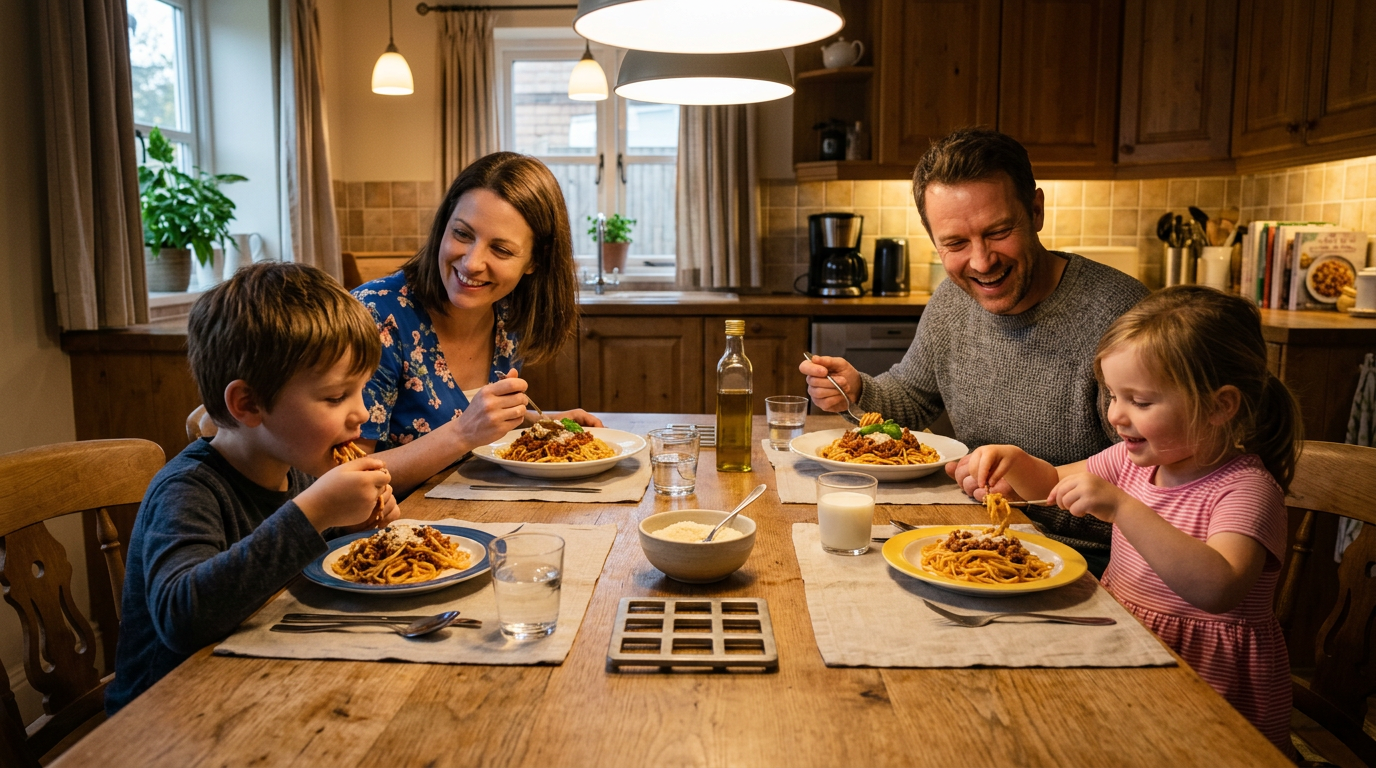
A dinner that brings together two adults and two children cannot be calculated by simply dividing an adult portion by four.
For a child aged 6 to 10, allow 50 to 70g of uncooked pasta. For a toddler under 3, do not exceed 30 to 40g, keeping in mind that it is better to offer a second helping to a child who asks for more than to overestimate their initial portion.
Let's take a concrete example: for a family meal with two adults and two children aged 7 and 9, a main course of spaghetti bolognese requires approximately 200g for the adults (100g each).
And 110 to 120 g for the children, making a total of 310 to 320 g of uncooked pasta for the whole table.
Another common situation: a meal alone on a weeknight.
A single person preparing spaghetti aglio e olio for themselves will generally be satisfied with 80 to 100g, a figure slightly less than the portion of a shared meal, where there is a tendency to serve oneself more.
For a child under 3 years old, avoid serving an adult portion reduced by half: the risk is not only waste, but also a quantity of starchy foods disproportionate to their actual energy needs for the meal.
Does the sauce really influence the amount of pasta?
Yes, and that's a factor that many recipes forget to mention.
A rich and fatty sauce, such as carbonara or cream sauce, satisfies more quickly: 80 to 90 g of uncooked pasta per adult is generally sufficient.
Conversely, a light sauce based on tomato or olive oil calls for a slightly more generous portion, around 100 to 110 g, because it provides less fat to satisfy the appetite.
This reflex of adjusting according to the sauce helps to avoid two pitfalls: a portion that is too small and leaves you wanting more, and a portion that is too large and will end up in the trash.
The weight on the package is an average, not an absolute rule: the sauce, the appetite of the day and the rest of the menu count just as much as the printed number.
Dried or fresh pasta: a completely different ratio
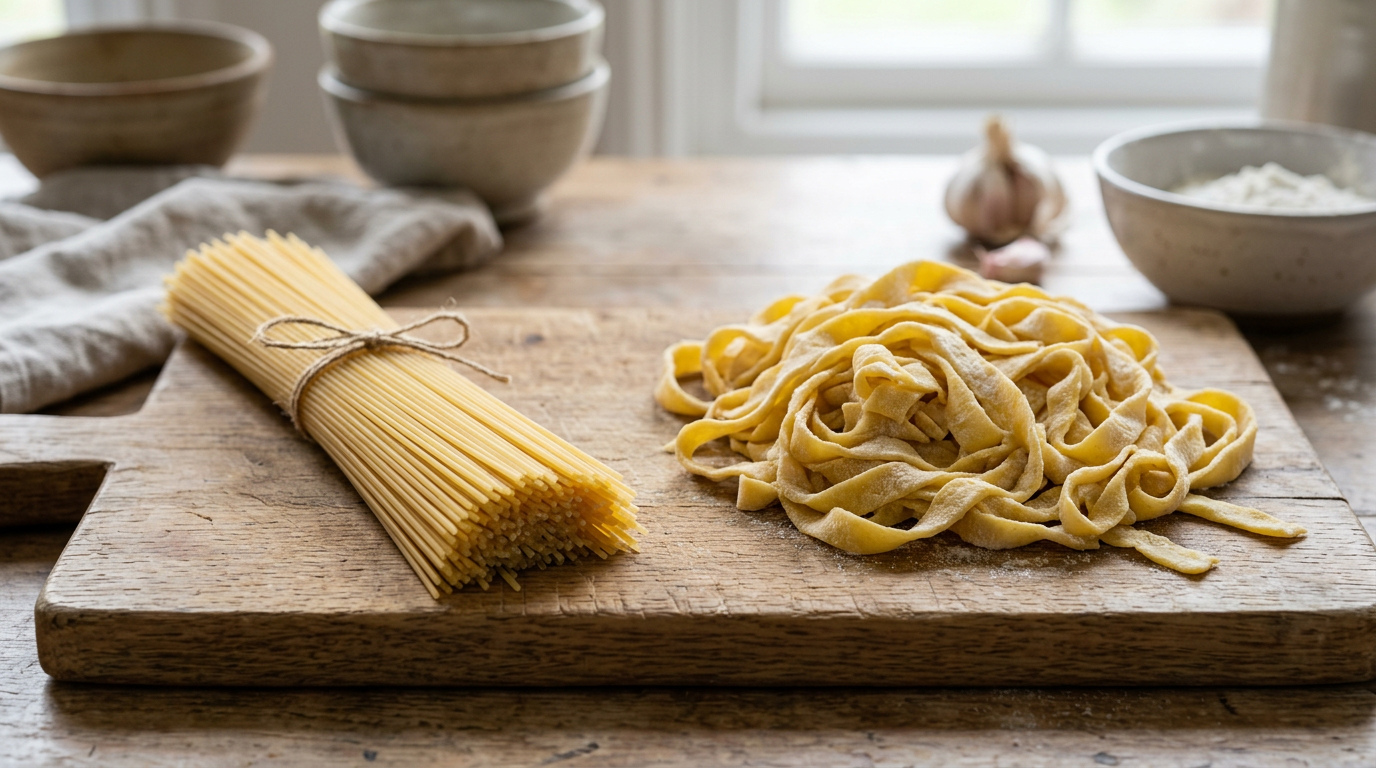
Fresh pasta contains more moisture than dried pasta by weight, but it also expands much less when cooked.
The result: you need more to begin with to obtain an equivalent cooked portion. Allow 120 to 150g of fresh, uncooked pasta per adult as a main course, compared to 100g for dried pasta.
This difference is explained by the absorption of water during cooking: dry spaghetti absorbs a lot and can see its weight double to two and a half times, while fresh pasta, already hydrated, only gains a little extra weight when cooked.
If you are hesitating between dried and fresh pasta for the same meal, keep in mind that fresh pasta fills the mouth more quickly: a slightly larger portion in raw weight does not necessarily translate into a more substantial plate when tasting.
Measuring without scales: tips that really work
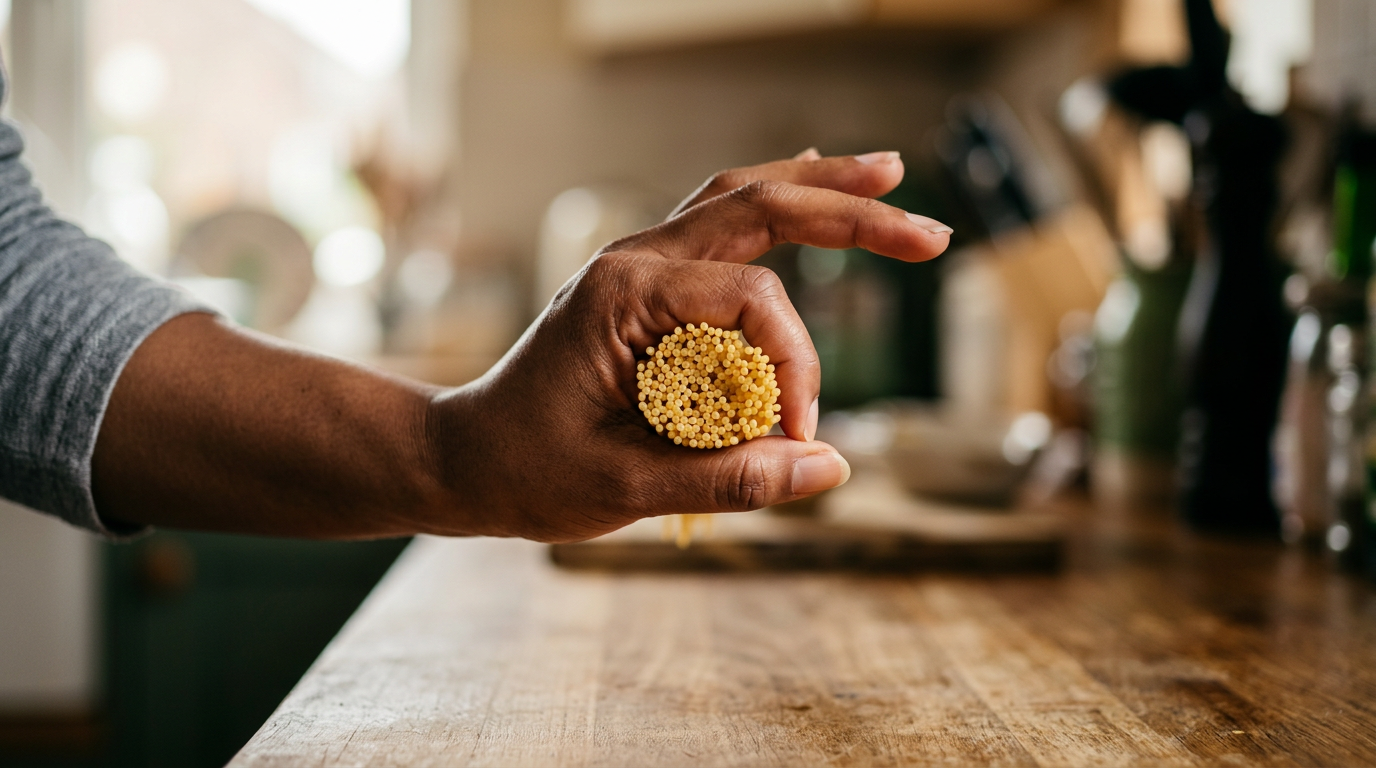
No scales handy? Two empirical methods work surprisingly well.
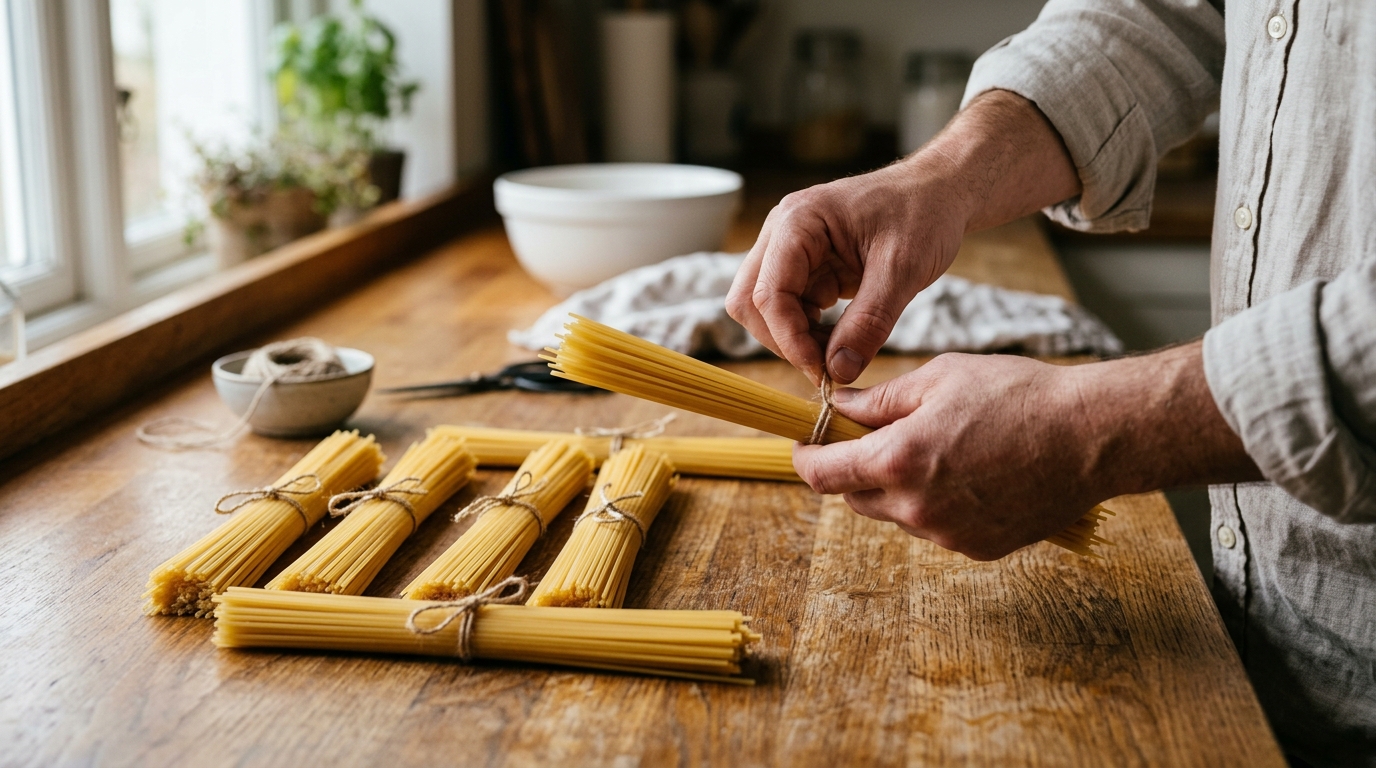
The first method involves forming a circle with your thumb and forefinger, approximately 2 cm in diameter for an adult, a size close to a 2 euro coin: the spaghetti filling this circle represents a 100g portion. For a child, reduce this circle to 1 cm in diameter.
The second trick, just as widespread, is to use the neck of a standard glass bottle as a template: a bundle of spaghetti that fills it also corresponds to an individual portion of about 100g. A calibrated spaghetti measuring cup, sold for a few euros, reproduces the same principle with several holes graduated according to the number of guests.
Which method should be used for multiple people?
For a dish intended for more than four people, these manual gestures become less precise to repeat one by one: it is then better to weigh the total calculated quantity (number of guests multiplied by the portion retained) in one go, rather than piling up the estimates by finger.
Simulator: Calculate the exact quantity for your table
How much spaghetti should I plan for my meal?
Managing cooking and leftovers effectively
Getting the quantity right from the start also makes cooking easier: too much pasta for too little boiling water, and the spaghetti will stick together or cook unevenly.
Allow approximately one liter of water for every 100g of pasta, salted once boiling.
If there are any leftover cooked spaghetti, a drizzle of olive oil mixed in before refrigerating prevents them from drying out or sticking together.
They are then reheated in a pan with a little water, or transformed into a base for a gratin or pasta tortilla the next day.
Avoid reheating pasta several times: beyond the first reheating, the texture deteriorates significantly and the risk of drying out increases with each reheating.
Practical questions
How many grams of spaghetti for 4 people?
For a main course serving 4 adults, allow 400g of uncooked spaghetti (100g per person). As a side dish, reduce this to 240-280g for the same four people.
How much spaghetti per person for a child?
Between 50 and 70 g of uncooked pasta for a child aged 6 to 10 years, and 30 to 40 g for a toddler under 3 years old.
Why are fresh pasta measured differently than dried pasta?
Fresh pasta is already hydrated and doesn't expand much when cooked, unlike dried pasta which absorbs a lot of water. Therefore, you need to prepare more at the start, 120 to 150g per adult compared to 100g for dried pasta.
How to measure spaghetti without scales?
Form a circle approximately 2 cm in diameter with your thumb and forefinger (a size close to a 2 euro coin): the spaghetti filling it represents a 100 g portion. The neck of a standard glass bottle also works as a template.
What to do with leftover spaghetti after cooking?
Mix them with a drizzle of olive oil before refrigerating to prevent them from sticking, then reheat them in a pan with a little water or reuse them in a gratin or pasta tortilla.
In summary
The right amount of spaghetti depends primarily on one question: will the dish be the basis of the meal or its accompaniment?
This choice results in very different weights, from 60g to 150g per person depending on the context, the age of the guests and the type of pasta used.
Manual dosing gestures (circle with fingers, bottle neck) make these guidelines usable on a daily basis without having to take out the scales for every meal.
The most important thing is to adjust according to your habits: a household that likes to have seconds will benefit from aiming for the higher end of the indicated quantities.
With these guidelines in mind, portioning a packet of spaghetti for any table becomes a quick calculation rather than a blind estimate.
