
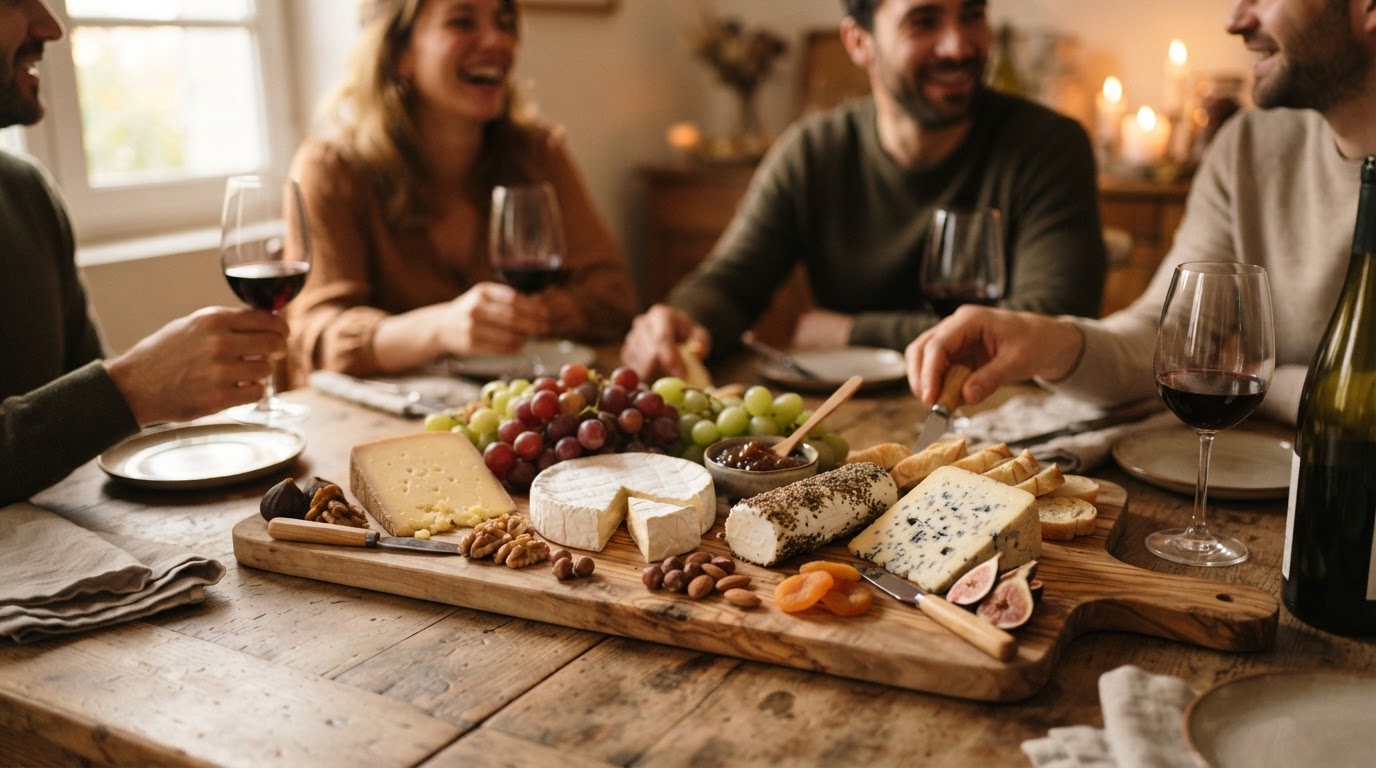
For successful aperitif cheeses, mix five or six references from different families (pressed cheese, soft cheese, goat cheese, blue cheese) and allow 40 to 140 g per person depending on what follows the aperitif.
A successful appetizer platter depends less on the number of cheeses than on their variety and the right quantity.
However, the guidelines vary greatly from one source to another, from 40 to 250 g per person depending on the occasion.
Another point worth noting: not all cheeses are suitable for a pregnant guest, and the cheese board can be prepared with this in mind.
Here's how to choose, measure, cut and serve without stress.
Cheese families to mix on a board
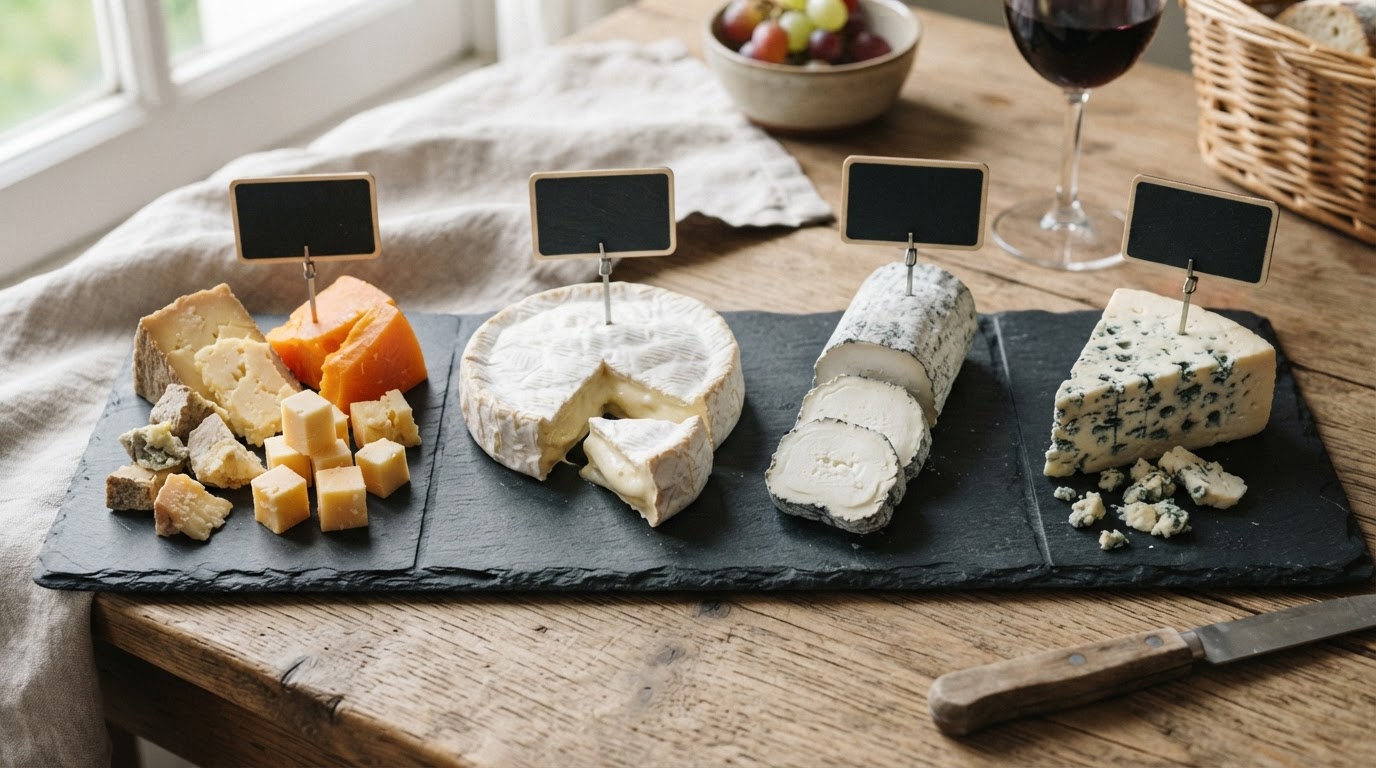
To vary the textures, the magazine Paris Match Belgium (September 14, 2026) recommends choosing from several families: fresh cheese, soft cheese, washed rind, pressed cheese and blue cheese.
The same article suggests that five or six references are generally sufficient.
For a small table of four people, three well-contrasting cheeses are better than six half-eaten pieces.
As for sure bets, the Fromages de la Mémée cheese shop (article of May 12, 2025) recommends Saint-Nectaire, Fourme d'Ambert, Cantal, a goat cheese and a blue cheese for a cheese board .
| Family | Examples | Role on the stage | Recommended bread |
|---|---|---|---|
| Pressed paste | Comté, Cantal, Mimolette | Reassuring base, cuts easily into cubes | Walnut bread |
| Soft cheese with a bloomy rind | Brie, Camembert | Creamy, smooth, appeals to almost everyone | Baguette |
| Goat | Log, manure, Rocamadour | Fresh and slightly tangy note | Seeded bread |
| Parsley | Fourme d'Ambert, Bleu d'Auvergne | The character, to be served in small quantities | Fig or raisin bread |
ℹ Note: the bread arrangements in the table are taken from Paris Match Belgium; the roles on the board are a practical reading, not a rule.
If you are also tempted by camembert in a hot version, the accompaniments for baked camembert are detailed in another guide.
How much cheese should I allow per person?
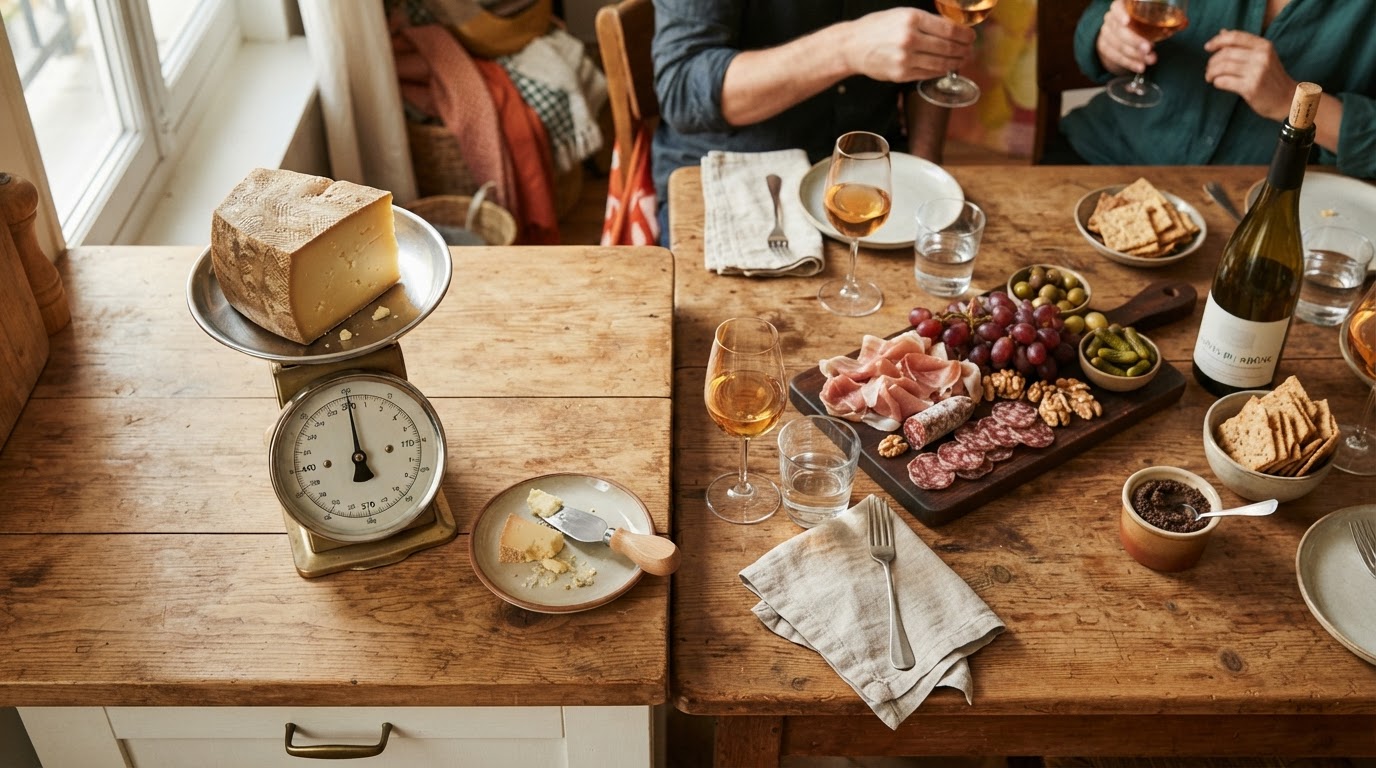
According to Paris Match Belgium, you should allow 70 to 90 g per person at the end of a meal, 80 to 120 g for an aperitif and 150 to 250 g for a "cheese and wine" evening.
The cheese board calculator from Miniwebtool (accessed in October 2026) gives lower figures: 40 to 70 g of cheese for an aperitif before a meal, and 85 to 140 g for a dinner aperitif.
The difference is explained by the following: an aperitif that precedes a dinner is not eaten in the same way as an aperitif that serves as a meal.
To calibrate the amount of cheese per person, first look at what is planned next and the other bites on the table.
The same calculator divides the total into approximately 40% hard pasta, 35% soft pasta and 25% blue cheese.
⚠ Note: these tools are not always consistent with each other, since the calculator's FAQ itself states 60 to 110 g for an aperitif, compared to 40 to 70 g in its table; consider these figures as ranges, not as exact values.
Typical example: for eight guests before a dinner, the lower end of the range of 40 to 70 g gives 320 to 560 g of cheese, to be divided into four varieties.
Calculate the weight of cheese to buy
This tool multiplies the number of guests by the ranges mentioned above, according to the type of occasion, then distributes the total between hard, soft and blue cheeses.
Cut and arrange cheeses that can be eaten standing up
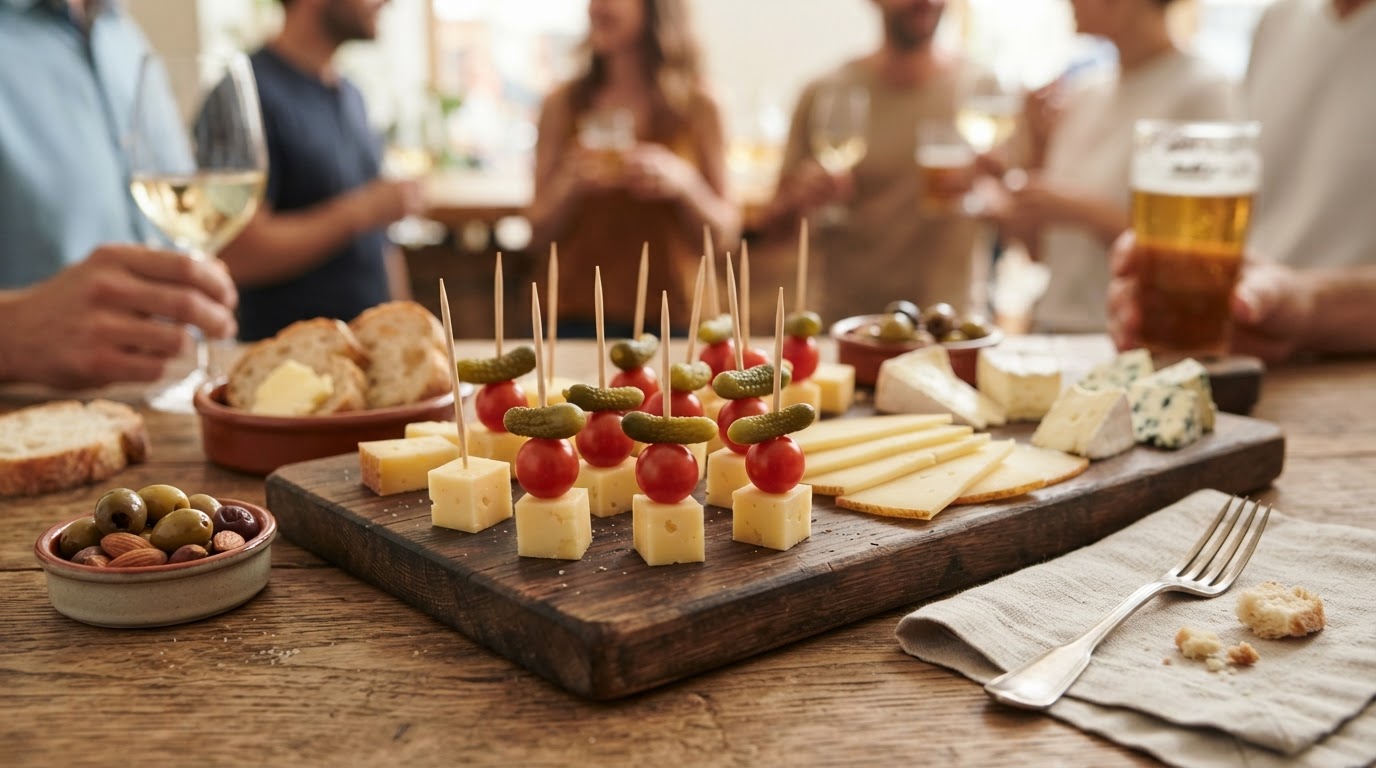
An aperitif often takes place standing up, with a glass in hand: cheeses should be eaten without a knife or plate.
Pressed pasta is cut into cubes skewered on a pick or into thin strips.
Soft pasta is served whole, with a dedicated knife, or in small triangles.
Place the cheeses from mildest to strongest, spacing them out so that the flavors do not mix.
Paris Match Belgium advises taking cheeses out of the refrigerator about an hour before serving them.
✓ In practical terms: cut the cubes shortly before the guests arrive rather than the day before, so that the slices do not dry out.
For the rest of the table, organizing a homemade aperitif without complicating things helps to distribute the preparations before the arrival of the guests.
Breads, fruits and drinks that bring out the best in each cheese
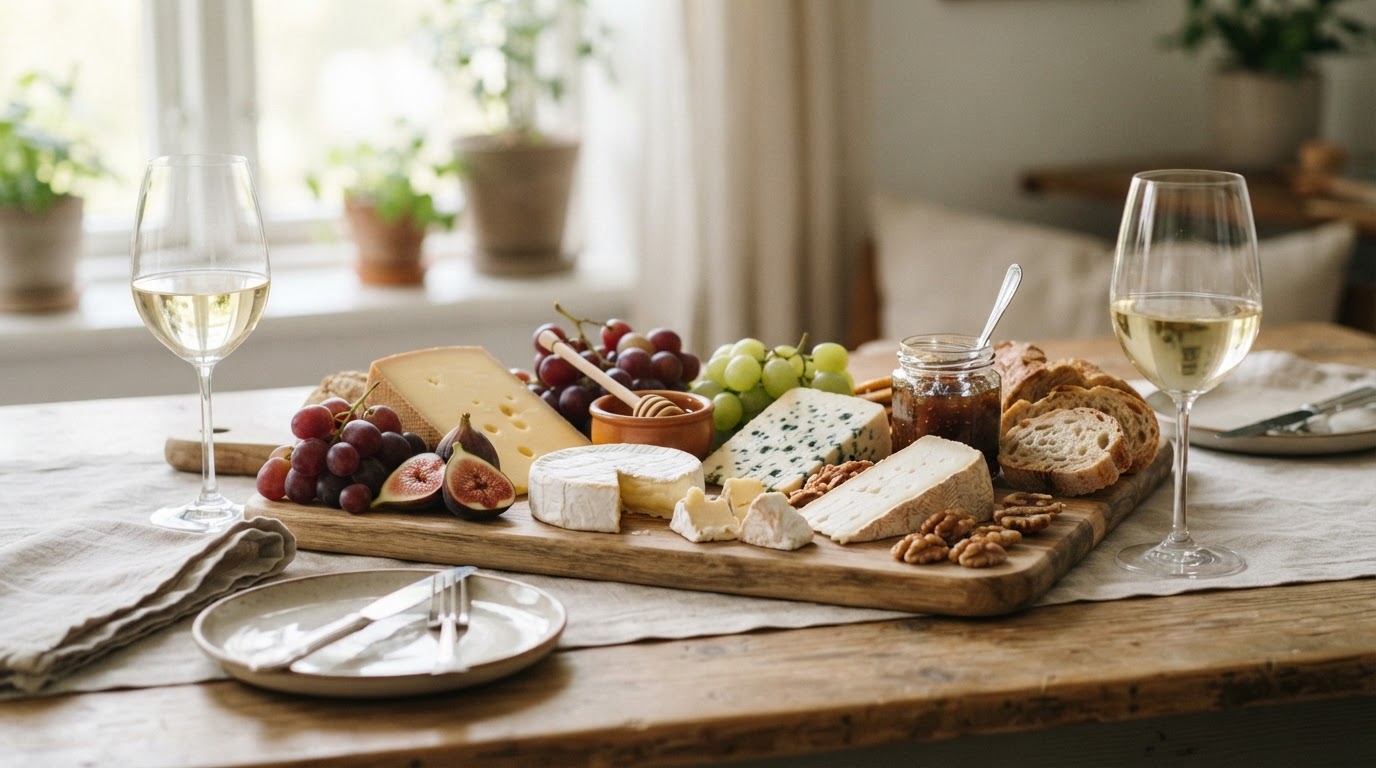
Beyond the bread in the picture, fresh fruit (grapes, figs, apples) and nuts bring freshness, according to Fromages de la Mémée (May 12, 2025).
The same cheese shop pairs Fourme d'Ambert with walnuts and honey, and also mentions fig or cherry jam among the accompaniments.
Homemade pear jelly goes very well with a piece of Comté cheese.
Regarding drinks, Paris Match Belgium reports the advice of Olivier Poussier: a white wine for a young Tomme de Savoie, a fruity red for a young Mimolette.
For a bloomy rind, he recommends removing the rind and then serving champagne.
If some of the guests do not drink alcohol, alcohol-free sparkling wine brings the same festive touch to a cheese board.
Pregnant guest: which cheeses should be kept on the board?
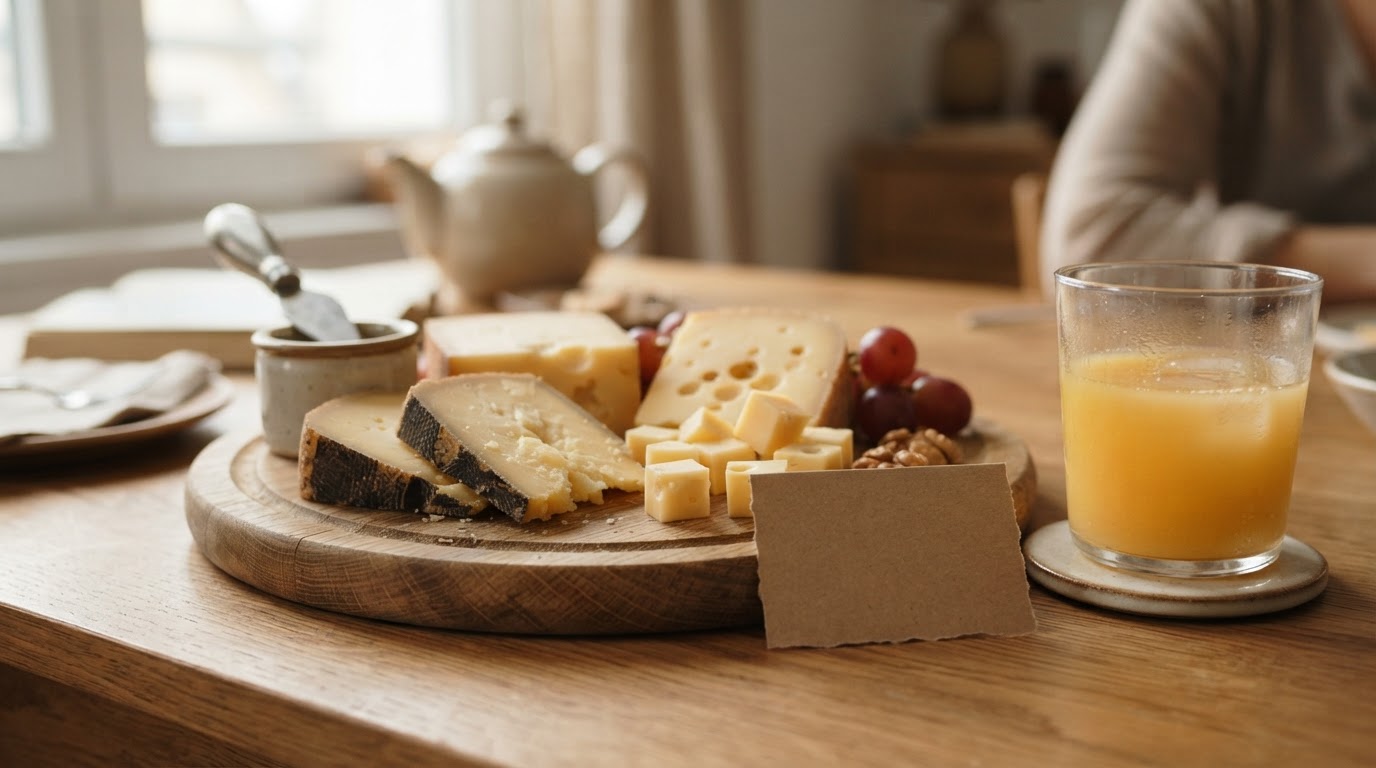
On this point, Anses (page of August 20, 2025) is clear for sensitive people, including pregnant women.
"Cheeses made with raw milk (with the exception of cooked pressed cheeses such as Gruyère or Comté)" should be avoided.
The page also lists soft cheeses with bloomy rinds (camembert, brie, crottin), washed rinds (munster, pont-l'évêque, livarot) and uncooked pressed cheeses with short ripening (morbier, reblochon, saint-nectaire) among the cheeses to avoid.
In other words, a classic cheese board contains several cheeses that a pregnant guest will leave aside.
Cooked pressed cheeses , such as Comté or Gruyère, remain a safe bet to offer.
Typical example: for six guests, including a pregnant woman, keep a Comté and a Gruyère cheese on the board, and put a few cubes on a small, clearly marked plate on the side, rather than having her sort through a common platter.
Anses also reminds people to keep their refrigerators at 4°C.
⚠ Limitation: this list comes from a general prevention page and does not replace the advice of a doctor or midwife, especially if you have doubts about a specific cheese.
In summary
A good cheese board mixes five or six cheeses from different families, served from the mildest to the strongest.
For quantity, look at what follows the aperitif: 40 to 70 g per person before a meal, and 85 to 140 g for a dinner aperitif.
For a pregnant guest, keep cooked pressed cheeses like Comté and Gruyère, and avoid raw milk cheeses, bloomy rind cheeses, washed rind cheeses and uncooked pressed cheeses like Saint-Nectaire.
Practical questions
What to do with the leftover cheese after the aperitif?
Put them back in the refrigerator, each wrapped in its own paper or film, to prevent the odors from mixing. ANSES (the French Agency for Food, Environmental and Occupational Health & Safety) recommends keeping leftovers for no more than three days and maintaining a refrigerator temperature of 4°C (39°F).
Can the board be prepared in advance?
The cheeses should be kept chilled until ready to serve, about an hour beforehand. Arrange them on the table shortly before your guests arrive, and use the time saved to prepare the rest of the table with a cold appetizer that can be made in advance.
