
In short
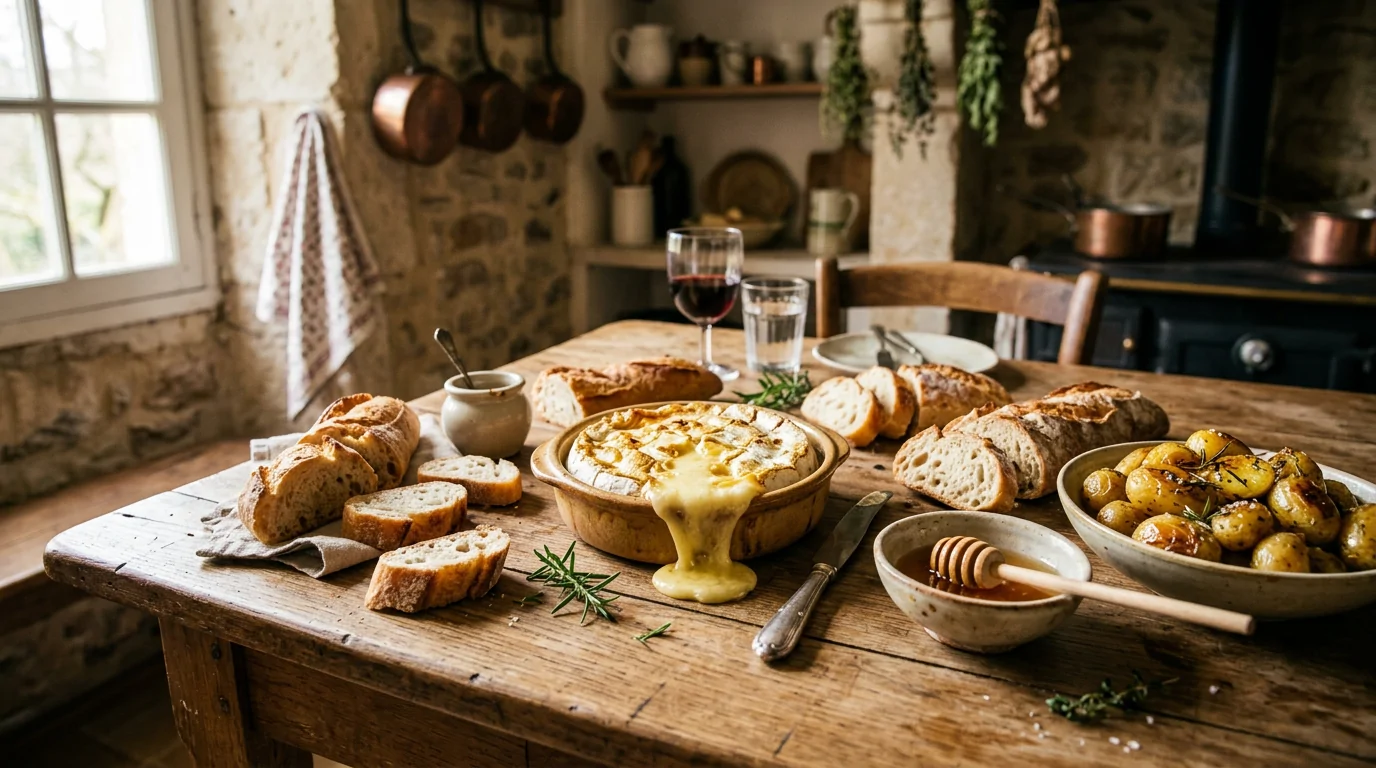
A baked Camembert, fresh from the oven with its taut rind and runny center, isn't always enough to make a complete meal. The choice of what surrounds it on the plate greatly changes the mouthfeel.
Some side dishes absorb the melted cheese, while others contrast with its richness through acidity or crunch. Understanding this logic avoids the common pitfall of a dish that is too heavy, saturated with fat, and lacking any depth of flavor.
This article details the types of side dishes that really work, with concrete examples for putting together a balanced platter, whatever the occasion: weekday meal, cocktail party or evening with friends.
Bread and starchy foods form the base that absorbs melted cheese
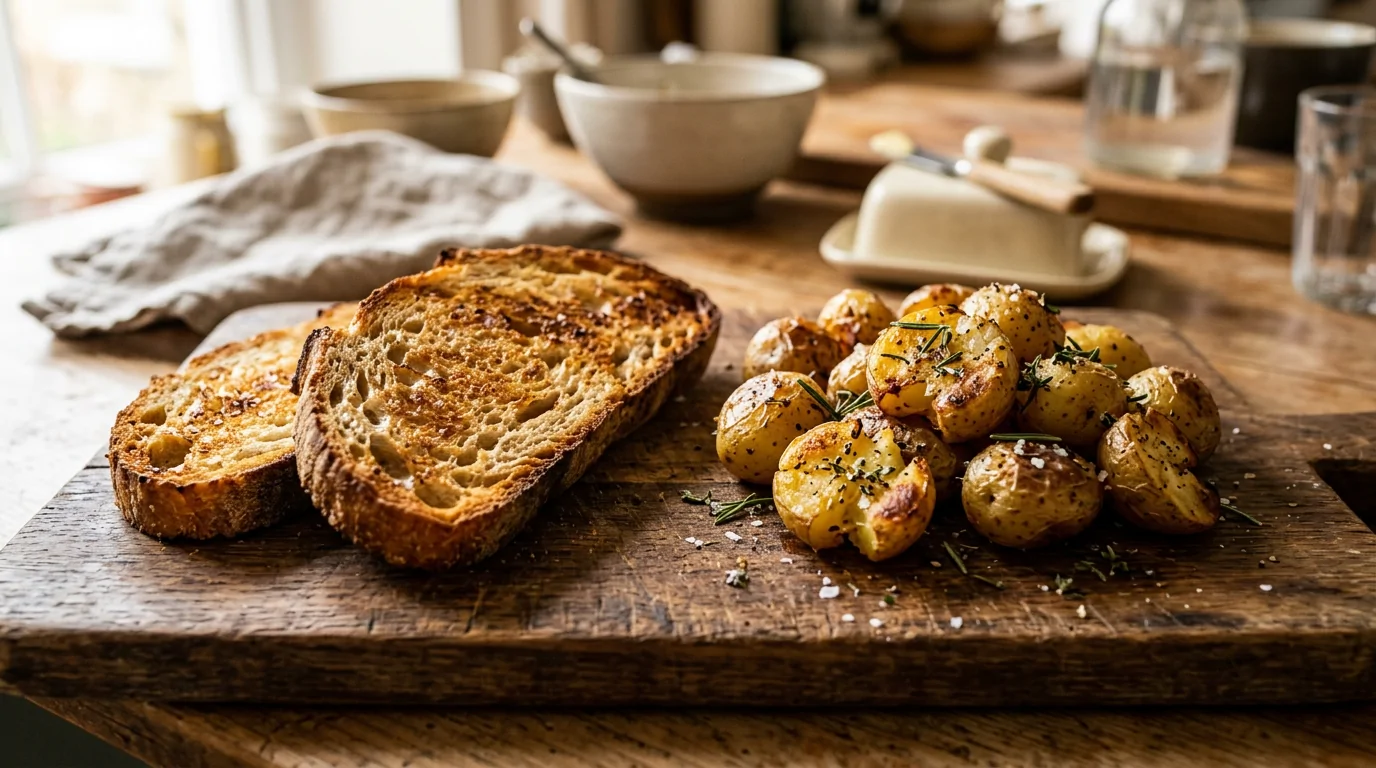
Toasted bread remains the most natural accompaniment to baked Camembert. A traditional baguette, cut into thick slices and lightly toasted so it holds up against the cheese without immediately becoming soggy, works nine times out of ten. Country bread, with its denser crumb, holds the dip even better than a classic baguette.
For a more substantial meal, potatoes are an excellent substitute for bread. New potatoes in their skins, steamed and then lightly mashed with a fork, absorb the melted cheese without diluting it.
A simple tip to know: an overcooked potato, which crumbles, absorbs the Camembert unevenly and leaves pockets of pure cheese at the end of the meal, whereas a firm potato, cut in half, retains its texture and distributes the melting evenly with each bite.
Toast the bread for 2 to 3 minutes under the grill just before serving the Camembert: still warm, it absorbs the cheese better than a chilled slice.
Fine charcuterie, to contrast with the melt-in-your-mouth texture
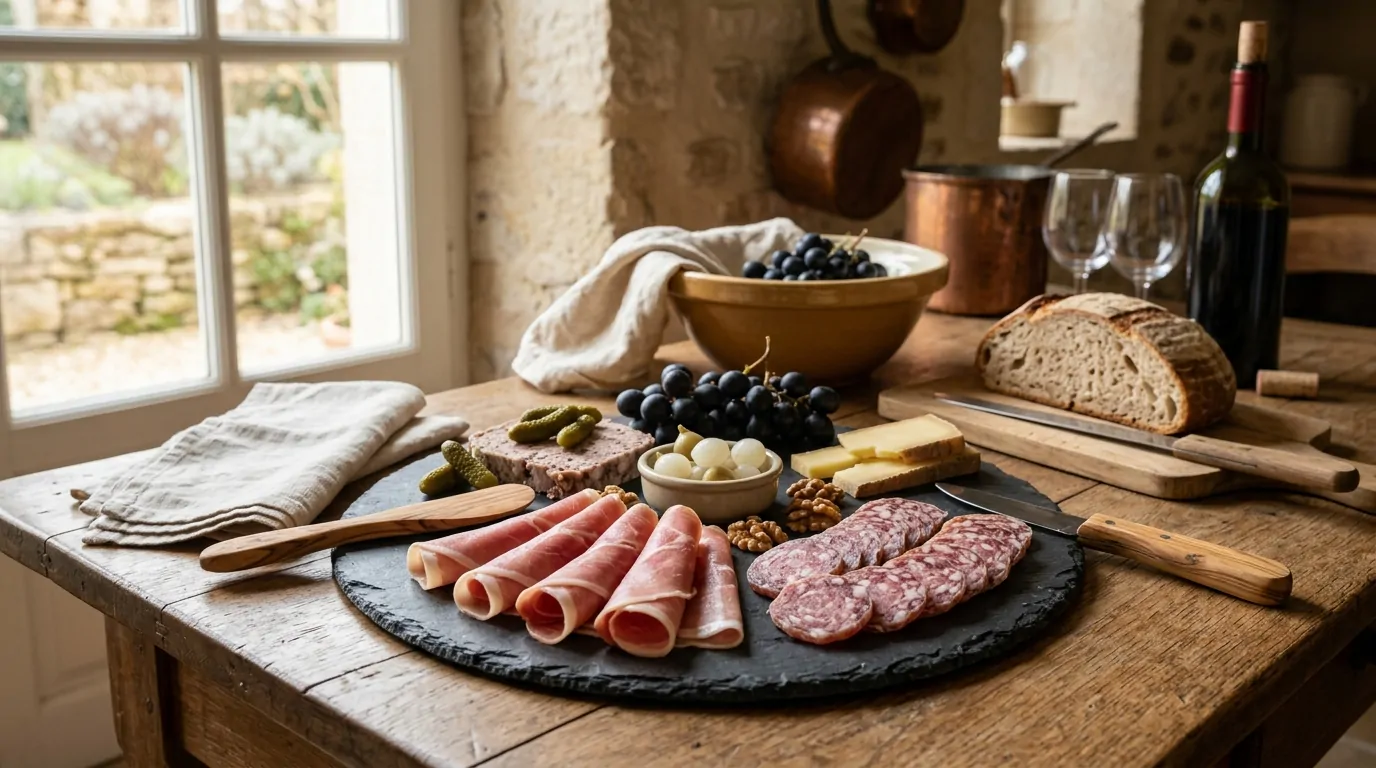
Cured ham and dry sausage provide a saltiness that contrasts with the sweetness of the cooked cheese. A platter composed of thin slices of country ham, rosette sausage, and a few cubes of mild chorizo covers a wide range of flavors without overwhelming the palate.
Let's take a concrete example: for a dinner between four people, a 250 gram camembert accompanied by 80 grams of very thinly sliced raw ham is more than enough, because the charcuterie serves as a counterpoint and not as the main course.
Beyond that point, the meal becomes unbalanced and the cheese takes a backseat.
Avoid overly fatty or smoky cured meats such as bacon or cooked pancetta: when combined with melted Camembert, they saturate the dish with fat and mask the taste of the cheese.
Roasted vegetables and green salad, a touch of freshness?
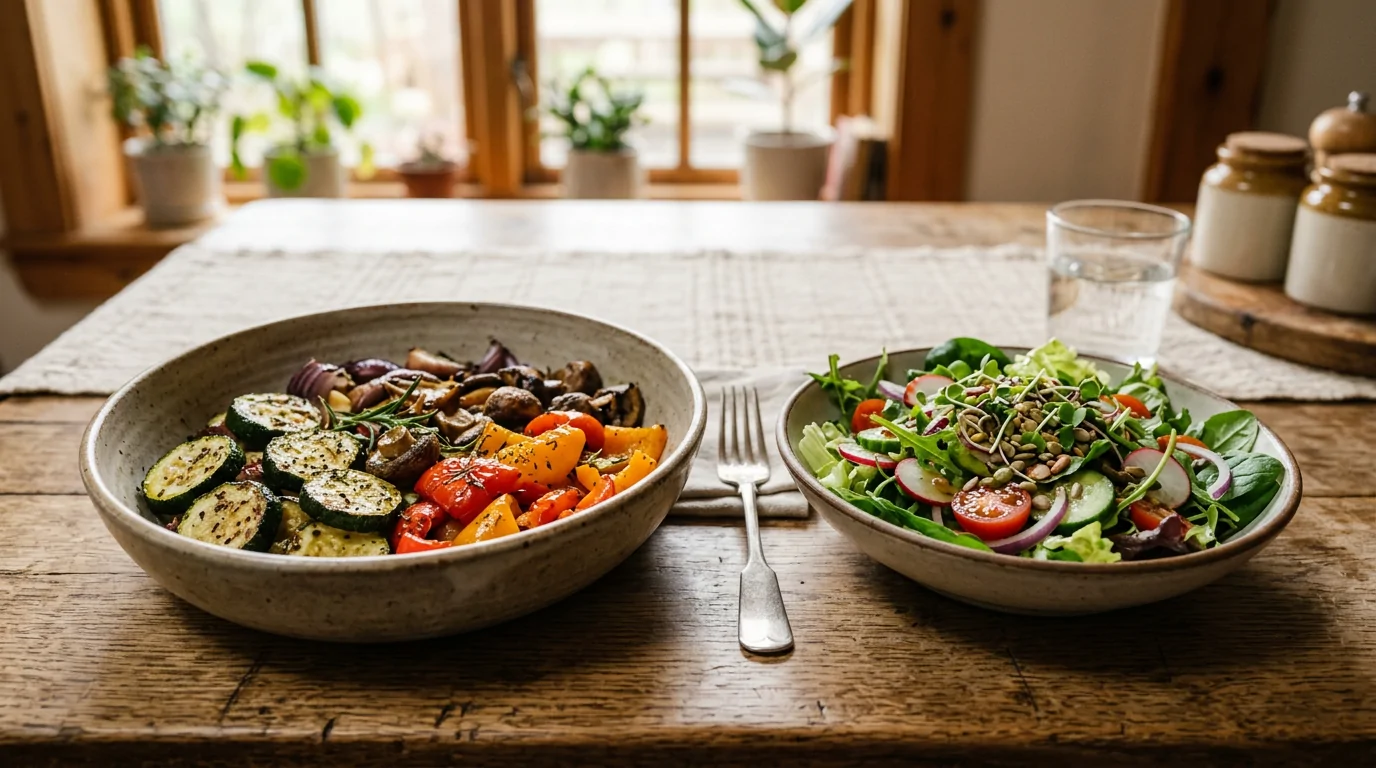
Vegetables provide the balance that cured meats cannot. Oven-roasted courgettes, peppers, and mushrooms, with a simple drizzle of olive oil and a few herbs de Provence, develop natural sugars that pair well with melted cheese, without adding extra fat.
A salad of baby greens or lamb's lettuce, dressed with a light cider vinegar vinaigrette, acts almost as a digestive aid: its acidity cleanses the palate between bites of cheese. It's the ideal accompaniment when Camembert is served as a main course rather than a starter.
| Family | Examples | Desired effect |
|---|---|---|
| Bread and starchy foods | Country bread, new potatoes | Absorb the melted cheese |
| Cold cuts | Raw ham, dry sausage | Add saltiness and character |
| Vegetables | Roasted courgettes, lamb's lettuce salad | Freshness and lightness |
| Sweet and savory | Honey, figs, walnuts | Sweet contrast and crunchy texture |
Dried and candied fruits: the sweet and savory combination
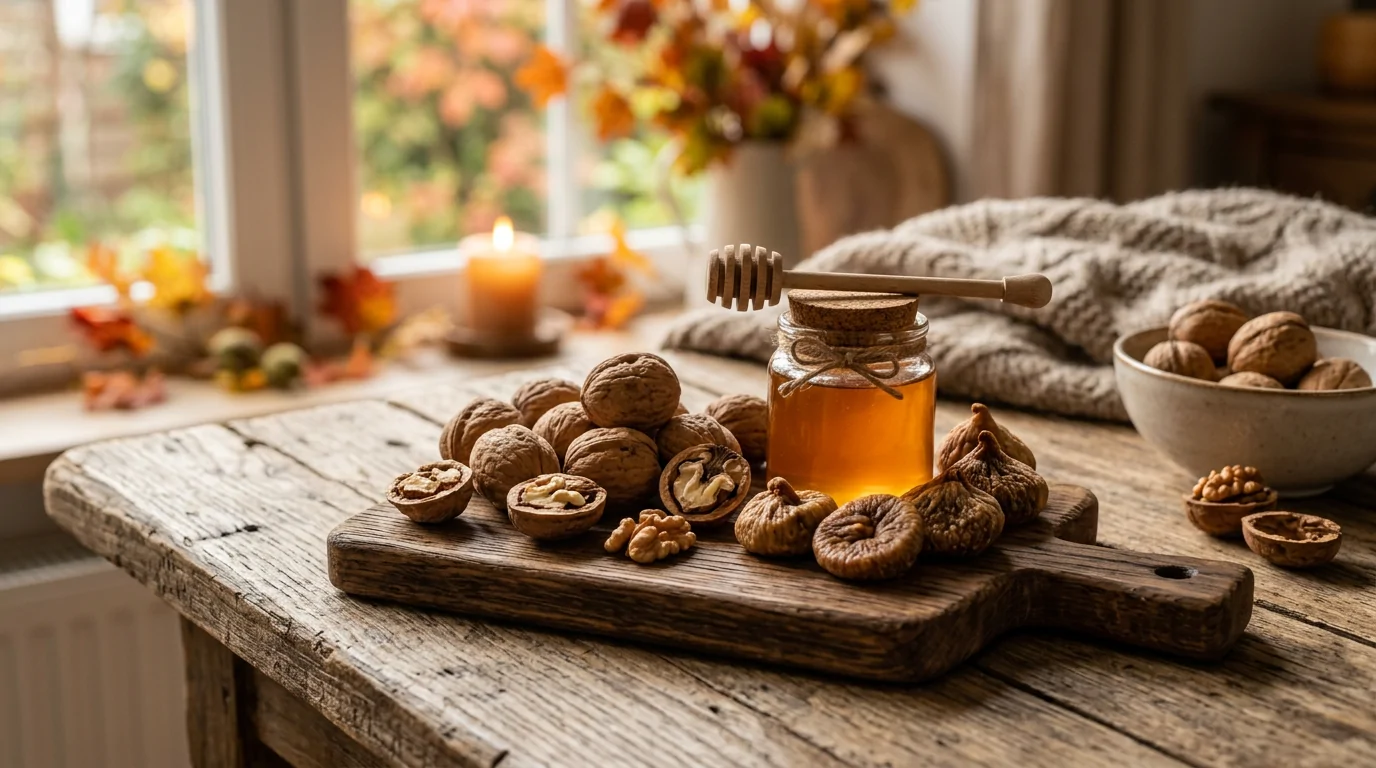
Walnuts, hazelnuts, and almonds add a crunch that melted Camembert naturally lacks. Combined with dried figs or candied apricots, they create a contrast that works particularly well at the end of a meal, almost like a cheese dessert.
Pouring honey directly onto the crust, just before or just after baking, remains a safe bet: its thick texture does not immediately flow into the cheese and allows time to savor each bite.
An onion jam, more surprising, brings the same sweet and savory logic with greater aromatic depth.
A baked Camembert accompanied by figs and walnuts is closer to a carefully prepared cheese board than a simple evening snack.
What wine or drink should I pair with baked Camembert?
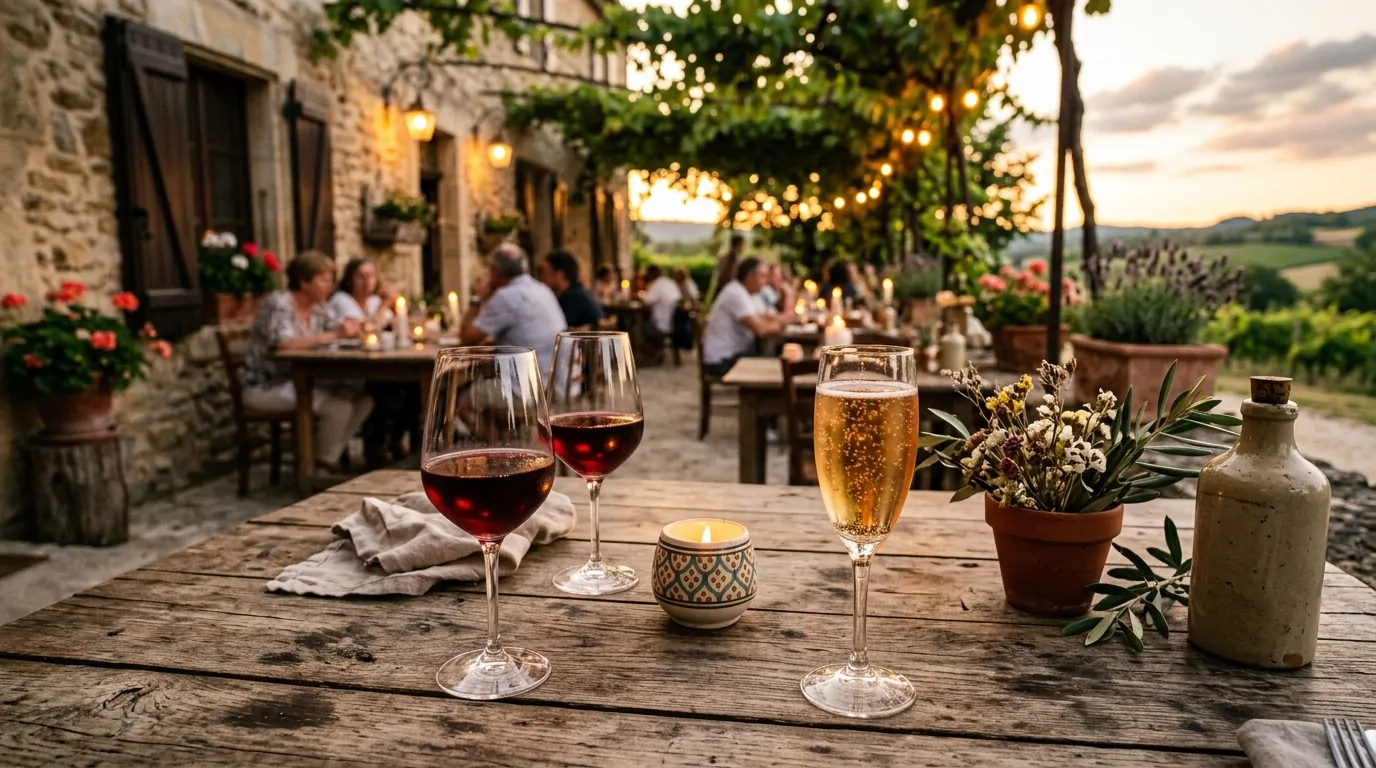
Contrary to popular belief, a crisp white wine is not the best choice with warm Camembert. The sharp acidity of a Sauvignon Blanc, for example, clashes with the rich, melting texture of the cooked cheese rather than complementing it.
A red wine , such as an Alsatian Pinot Noir or a Beaujolais Gamay, compares better thanks to its soft tannins which do not overpower the dish.
Dry Norman cider remains a frequently recommended option locally; its light acidity and fine bubbles lighten the richness on the palate without ever overpowering the taste of the cheese. For a more festive meal, a sparkling wine made from Chardonnay grapes, with a crisp attack, plays a similar role.
Serve the wine or cider slightly chilled, around 10 to 12°C, so that it retains its acidity against the heat of the cheese fresh from the oven.
How to cook successfully so that the side dishes complement each other well?
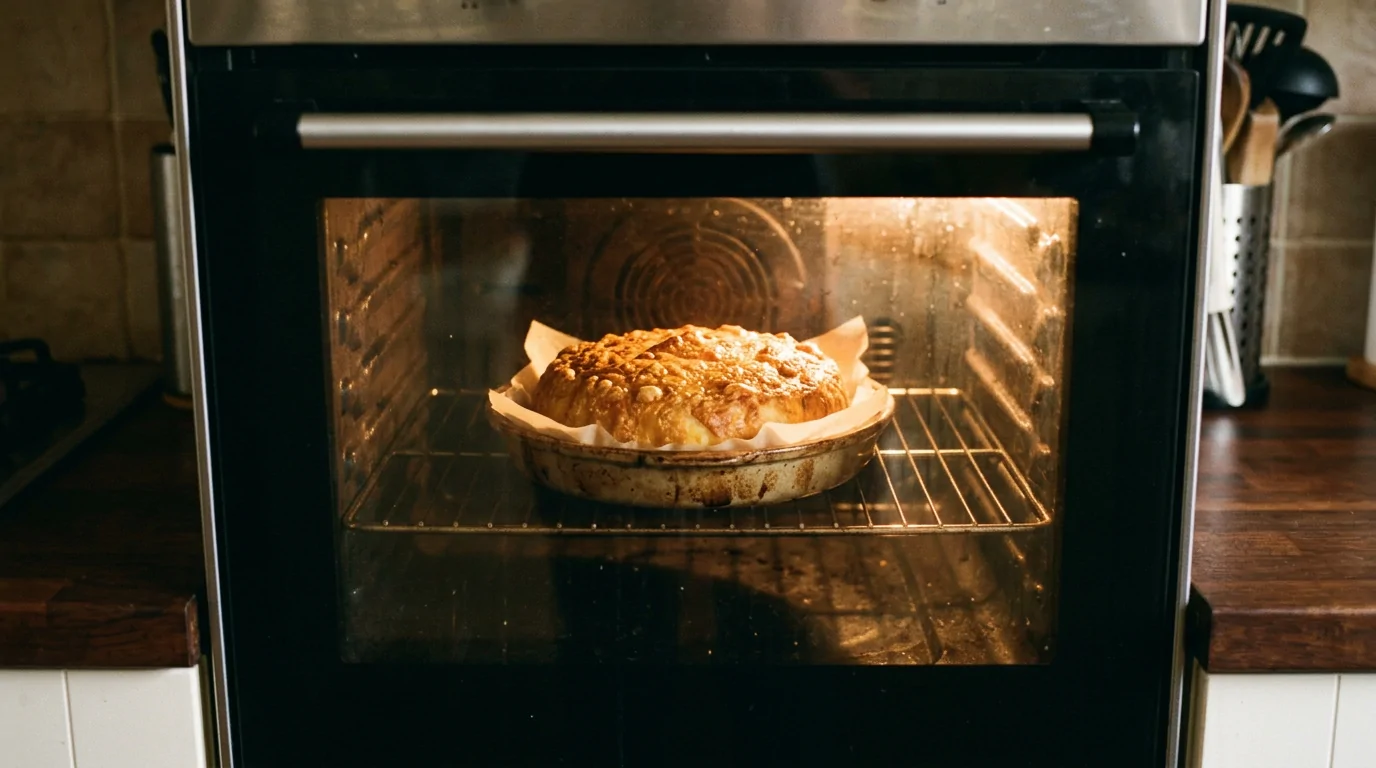
The success of the side dishes depends directly on the cooking of the Camembert itself.
A preheated oven at 180°C with fan-assisted cooking, for 15 to 20 minutes, gives a runny center without bursting the crust, unlike cooking too quickly which dries out the top before the inside has melted.
Taking the cheese out of the refrigerator about fifteen minutes before putting it in the oven avoids the thermal shock which sometimes causes a crack in the crust during cooking.
According to the specifications of the Camembert de Normandie appellation, the cheese should be stored between 4 and 8°C before use, which explains why a sudden change from cold to hot weakens the rind.
Do not exceed 20 minutes of cooking at 180°C for a standard 250 gram camembert: beyond that, the cheese loses its runny center and the rind becomes brittle, which complicates serving with bread or potatoes.
Practical questions
What type of bread should I choose for a baked Camembert?
Lightly toasted country bread or traditional baguettes hold up better against melted cheese than sandwich bread crumbs, which are too soft to absorb without getting soggy.
Can baked Camembert be served as a main course?
Yes, provided that it is accompanied by starchy foods and a green salad to balance a meal which remains by nature rich in fat.
What oven temperature is needed for a perfectly runny Camembert?
Baking at 180°C in a fan oven for 15 to 20 minutes generally results in a runny center without breaking the crust.
What wine should I drink with baked Camembert?
A light red wine such as an Alsatian Pinot Noir or a dry Norman cider goes better with hot cheese than an overly acidic white wine.
How can I prevent the rind of Camembert from bursting during cooking?
Taking the cheese out of the refrigerator 15 to 20 minutes before baking limits the thermal shock responsible for crust cracks.
In summary
Baked Camembert is first served with bread or potatoes to absorb the melted cheese, then with charcuterie or vegetables depending on whether you are looking for a salty character or freshness.
Dried fruit, honey or onion jam provide an interesting sweet and savory variation to change from classic combinations, while a light red wine or dry cider complements the meal better than a very crisp white.
Getting the cooking right is the foundation of everything else: an oven at 180°C for 15 to 20 minutes, with cheese that has been taken out of the fridge beforehand, guarantees a runny center that enhances each of these accompaniments.
