
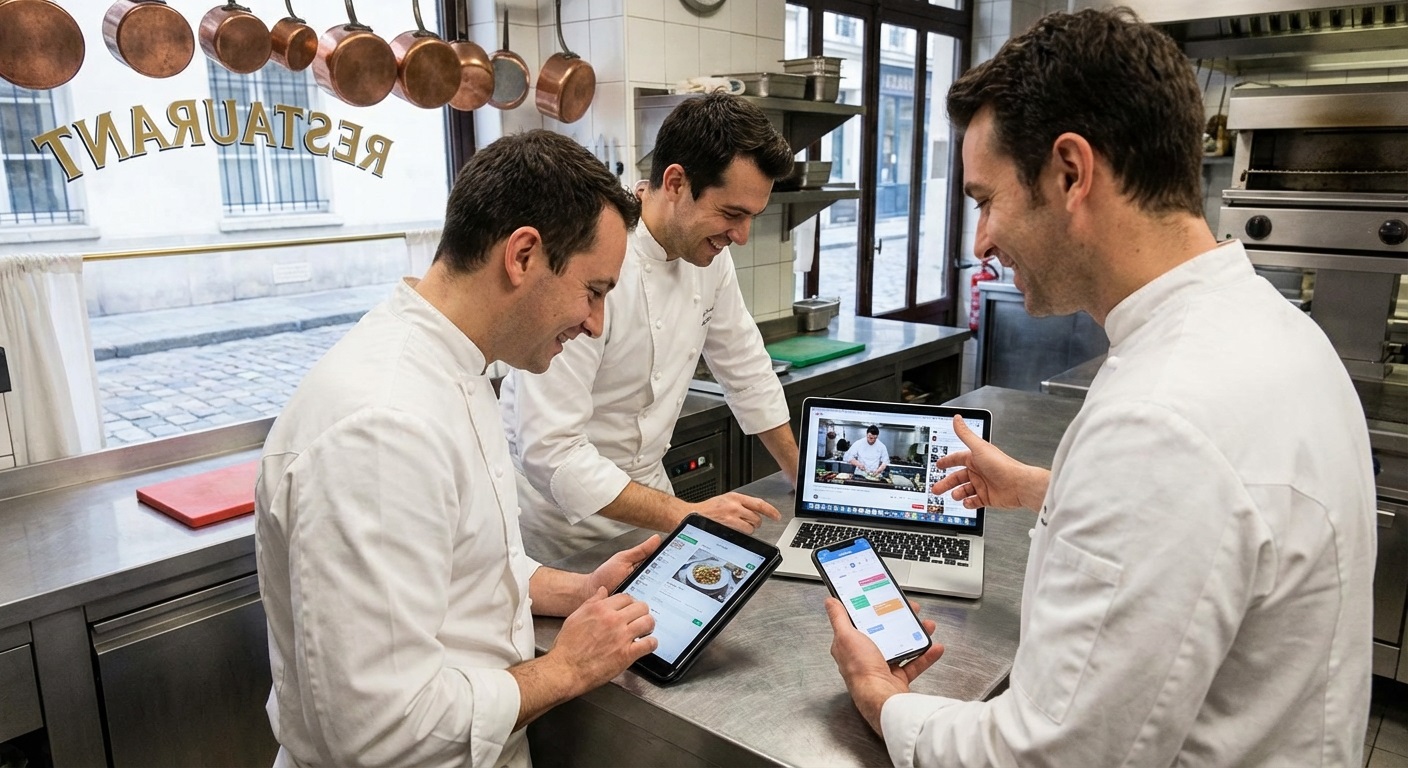
Why do French cooks use online resources? Because they save time, avoid measurement errors, inspire varied meals, and help with better planning according to the weather and schedule.
The result: simpler, more consistent cooking, and less waste, even when cooking “by feel”.
In many homes, cooking is all about the details. Oven temperature, precise measurements down to the gram, a dinner idea found in two minutes, or a menu adapted to the day.
And that's where online cooking tools become invaluable. They don't replace common sense or enjoyment, but they streamline everything: you can anticipate, adjust, and improvise better.
The basics of everyday life: cooking right and with confidence
When you cook often, you want to be quick and safe. Good habits include hygiene, proper storage, and controlled cooking.
This foundation of "security" frees the mind. Then, we can focus on what truly simplifies life: measuring, choosing, organizing.
Why have these tools become indispensable?
Because they address three very concrete problems. We rarely make mistakes in a recipe due to a lack of talent, but rather due to a lack of reference points, ideas, or context.
The most useful French culinary resources are often those that minimize minor inconveniences. A doubt about an equivalent, a lack of inspiration at 7 p.m., a change in the weather that disrupts the schedule.
1) Conversions: the little trick that avoids mistakes
Between family recipes measured in "glasses," blogs in "cups," and old notes in "spoons," the units quickly become mixed up. And baking, well, it's not always forgiving.
In this type of situation, a conversion calculator allows you to find a consistent measurement without having to recalculate everything in your head. You retain the intuition, but you ensure the result is accurate.
The benefit is also mental: less hesitation, less "test" washing up, and fewer dishes to start over. Cooking is more relaxed, especially when adapting a recipe to what you have on hand.
2) Reliable inspiration: recipes you can actually make again
Searching for “quick dinner ideas” yields all sorts of conflicting results. But on a daily basis, we want clear, doable, and repeatable recipes.
This is where a good recipe collection becomes a practical reference, because it brings together seasonal ideas and classic recipes that can be adapted. You can choose according to the time available, what's in the fridge, or your current craving.
The most useful thing isn't originality at all costs. It's structure: clear steps, understandable proportions, and simple variations. With this type of resource, you build a "personal library" of dishes that work.
How do these resources improve everyday cooking?
They transform the decision into a reflex. Instead of hesitating, one follows a simple path: check a measurement, choose a recipe, then adjust the plan.
For many amateur cooks, this changes their routine. They cook more often because it's less tiring to get started.
Choosing the right tool at the right time
| Current situation | What you need | Concrete effect in the kitchen |
| Recipe in mixed units | Clear equivalencies | More reliable dosing, fewer errors |
| Lack of ideas during the week | Structured inspiration | More varied menus, less repetition |
| Uncertain schedule | Weather context | More flexible organization, better-suited meals |
| "Based-in-the-cupboard" cooking | Quick adjustments | Less waste, more improvisation |
| Preparation in advance | Anticipation | Batch cooking made simpler |
This overview helps avoid relying on a single tool for everything. Each resource has its role, and it's their complementarity that saves time.
3) The context that changes everything: anticipating based on the weather
The weather doesn't just influence holidays. It also influences meals, shopping, and the organization of the day.
When it's very hot, we avoid long cooking times and opt for cool dishes. When it's raining, we think of stews, soups, or comforting gratins.
Following this logic, checking the local weather forecast helps to adjust the menu sensibly, without overloading the schedule. We cook differently if we know a storm is coming, or if an evening outdoors is planned.
What are the advantages for amateur cooks?
The first advantage is regularity. We cook more often because the effort required to make decisions decreases.
The second is confidence. Mistakes decrease, and we dare to adapt: portions, textures, seasonings, cooking times of dishes.
Finally, these practical cooking websites make it easier to manage unexpected situations. A last-minute guest, an almost empty fridge, or an overly busy day become easier to cope with.
A three-step routine for smarter cooking
There's no need to revolutionize your habits. A simple routine is enough, especially during the week.
- Check feasibility: time, equipment, ingredients.
- Adjust the measurements if the recipe changes scale.
- Plan according to the day: weather, schedule, leftovers to use.
This routine is short, but it avoids a lot of stress. And it leaves room for pleasure: tasting, correcting, sharing.
The real objective: to simplify, not to perform
These resources are not about doing “better than others”. They are about making cooking smoother, lighter, and more compatible with a busy life.
In practice, French cooks using online tools are mainly looking for one thing: consistency. To cook at home, even simply, even imperfectly, but more often.
When technique becomes accessible and inspiration remains within reach, the chef's daily life changes. Cooking becomes calmer, and eating is more satisfying.
