
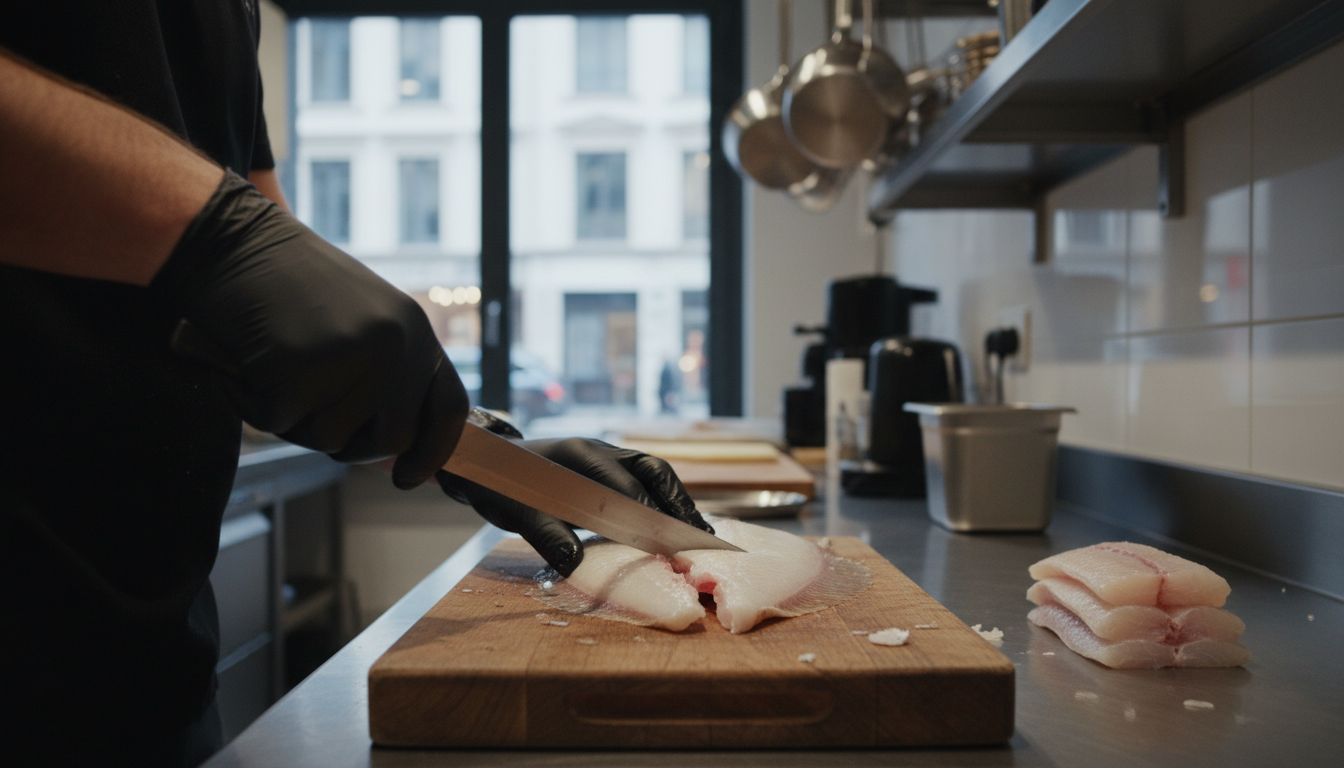
On the market stalls, sole has long set the tone for a French cuisine attentive to the correct cutting techniques.
At home, however, many people still improvise with a multi-purpose knife, at the risk of crushing the flesh, catching the bones and losing what makes a well-prepared fish so delicate.
The sole fillet knife quickly became essential for this specific step: to assist the hand when separating, without roughness, the skin, bones and fillet.
Its thin, long, and flexible blade is not just a catalog detail; it determines the precision of an excellent fillet and, often, the final appearance of the dish. In kitchens where fish recipes are prepared one after another, this small tool changes one thing above all: confidence!
Indeed, thanks to it, one can more easily lift a sea bream fillet without tearing it, remove the skin from a mackerel without wasting any, or cut a thin slice for a carpaccio.
And when the technique becomes reliable, food preparation becomes simpler: less retouching, less waste, more consistency…
This is the guiding principle followed here by Léa, a home cook in Nantes, who has made this kitchen utensil her asset as soon as a whole fish arrives on the board.
Sole fillet knife: what is the purpose of this kitchen utensil for preparing fish?
The sole fillet knife is designed to lift fillets and cut along a bone without tearing the flesh. Where a thick blade "pushes" the material, a flexible knife follows the structure of the fish or delicate meats and conforms to their curves.
A smooth, narrow, pointed blade of about 18 cm is generally found, long enough to follow a thread in a minimum number of passes.
In practice, Léa uses it right from the initial shaping stage: the point locates the dorsal ridge, then the blade glides along as close as possible, as if drawing a seam. This type of threading reduces saw strokes and jerky movements, which are often responsible for irregular threads.
The result: a fish that is better valued, and a feeling of control, even on fragile pieces.
The features that make the difference on the board
Its flexibility is key: it allows it to go around edges, follow ribs, and reach delicate areas near the head or tail.
The cutting edge, however, must remain very clean: on a sole, a turbot or a trout, a micro-resistance is enough to "pull" the flesh and damage it.
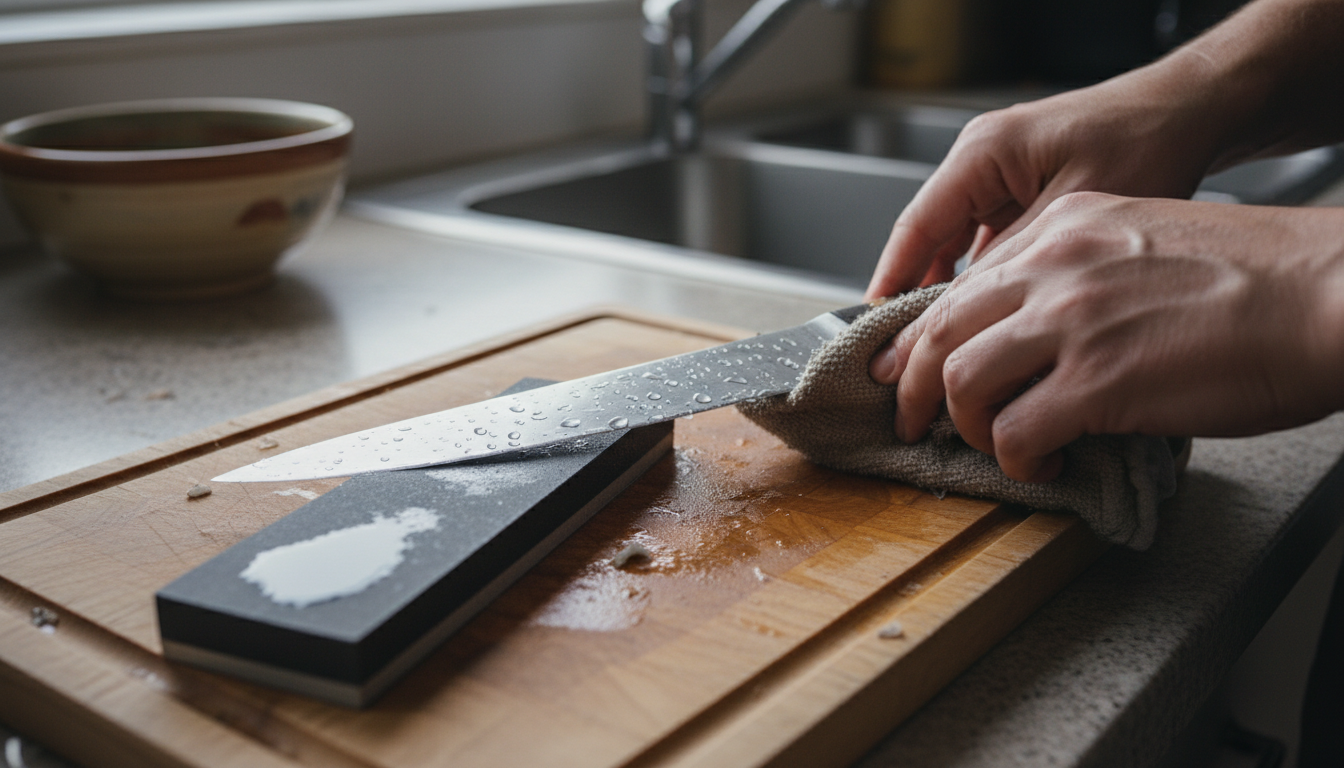
Many recent models favour stainless steel to resist corrosion, especially against iodine and humidity.
On the handle side, the easy-to-clean polymer versions meet the hygiene requirements of a busy kitchen, especially when alternating between several preparations.
Useful comparison with other knives
A chef's knife can do everything, but rarely with delicacy on a fillet. A boning knife is effective on poultry, but less suitable for flatfish.
As for the salmon knife, it excels in long slices, but it does not always offer the same maneuverability when working along thin bones.
To get a clearer picture, here are some simple guidelines that take into account most common uses.
| Tool | Key point | Limit on whole fish |
|---|---|---|
| Sole fillet knife | Precision right up to the edges, fine slicing | Less comfortable chopping or slicing vegetables |
| Chef's knife | Versatility, power | Risk of crushing delicate flesh, lack of finesse when filleting |
| Boner | Working close to bones (meat) | The blade is often too rigid to follow the curves of a flatfish |
| Salmon knife | Long, even slices | Less precise for lifting a fillet around small bones |
When aiming for a clean and consistent preparation, this utensil saves time as much as it improves quality, and that's often where French cuisine is all about: the precision of the gesture!
Why a flexible knife improves filleting accuracy and the success of fish recipes
The most visible benefit is sharpness!
With a flexible knife, the blade follows the carcass to the millimeter; less meat is left on the bone, there is less tearing, and more presentable portions are obtained.
This precision has a direct consequence: the texture remains intact, which is just as important for steaming as for a quick pan-fry.
Léa told me a rather telling detail: before, she always “fixed” her fillets at the time of cooking, by trimming the edges.
Since she started using a sharp sole fillet knife, she spends less time correcting and more time seasoning just right.
It's a subtle but decisive change in culinary preparation.
The tangible advantages compared to a classic knife
A multi-purpose knife often requires several passes for the same cut, which heats and weakens the flesh. Conversely, a flexible, long blade allows for a smoother, continuous cut.
On a sea bream, this helps to lift whole fillets; on a trout, the skin is removed with minimal waste; on a sea bass, the line of bones is more cleanly exposed…
Another advantage: a cleaner work surface. When the cut is clean, there are fewer "crumbs" of fish, fewer small pieces torn off, resulting in a neater and easier-to-plate dish.
For fish recipes intended to be served raw or partially cooked, this regularity quickly becomes non-negotiable!
Examples of dishes where it makes a difference
When preparing a sole meunière, removing identical fillets ensures even cooking and a neat presentation.
For sea bream ceviche, a thin cut into regular strips improves the marinade absorption and gives a more tender sensation in the mouth.
Even for smoked salmon, the flexible blade makes it easy to cut long slices without "steps", which are appreciated on a platter.
Here are some examples where this knife proves very useful:
- Pan-fried trout fillets: skin removed cleanly, less waste.
- Baked sea bream: clean fillet, portions easy to serve without crumbling.
- Sea bass carpaccio: thin slices for a delicate and even texture.
- Sole meunière: homogeneous fillets, perfectly cooked.
Ultimately, the gain is not only technical: it also relates to taste, because a fish that is treated with respect during the cutting process will better retain its tenderness and flavor.
To discover and experiment with basic techniques, a video demonstration often helps to understand the blade angle and the pressure to apply.
Using and maintaining your sole fillet knife correctly: safe techniques, mistakes to avoid, and longevity
The golden rule can be summed up in three words: guide, do not force.
The sole fillet knife works best when the hand follows the structure of the fish. You often start by making an incision behind the head, then follow the dorsal bone while keeping the blade almost flat.
Excessive pressure is the most common mistake: it causes the blade to slip and "digs" into the flesh.
The simple technique for a clean thread
Léa lays the fish flat, quickly wipes the skin to prevent it from slipping, then stabilizes it with her open palm. The tip of the knife serves as a guide, while the rest of the blade follows smoothly.
A good reflex is to make long movements, rather than short, jerky strokes.
The cutting direction also matters: you try to “stick” the blade to the edges, as if you wanted to caress them.
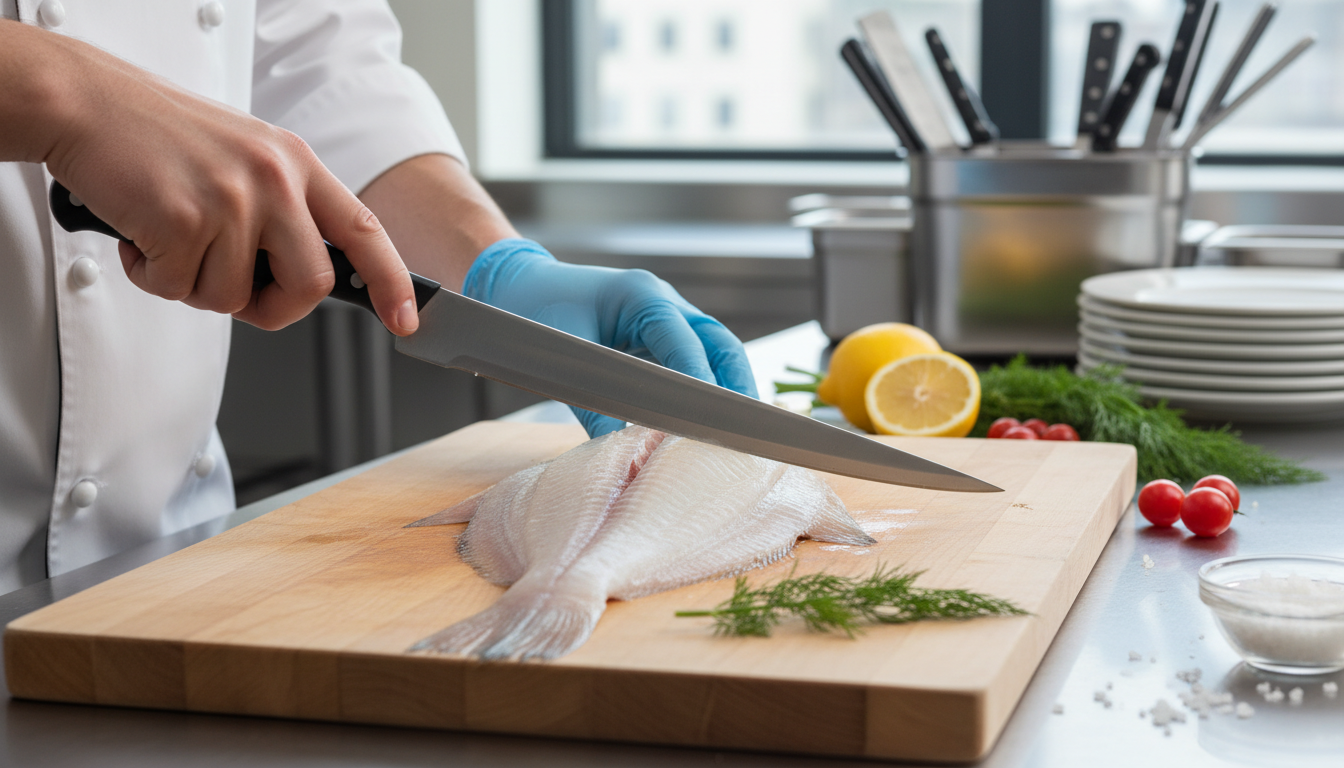
It seems abstract, but in practice, you quickly understand: when you hear a light, regular rubbing on the bone, you are exactly in the right place.
Actions to avoid so as not to damage the flesh
Avoid lifting the net too soon, as the pull will tear it. It's better to detach it gradually, alternating between using a blade and your fingers.
Wrist twists that bend the thread must also be avoided: the flexibility is intended to fit the frame, not to be "twisted".
Finally, do not strike hard edges as if with a cleaver: this is absolutely not the appropriate tool.
Knife maintenance: cleaning, sharpening, storage
After use, rinsing with warm water and gentle washing are sufficient, then immediate drying limits marks and prolongs the quality of the edge.
The dishwasher is rarely a good ally: shocks, aggressive detergents, heat, everything that the wire hates.
For sharpening, a suitable stone or honing steel helps maintain a sharp edge. Consistency is key: a few light strokes are better than trying to fix the damage later.
Finally, store it on a magnetic bar, in a blade guard or block, to avoid dulling contact.
A well-maintained tool remains reliable, and that's what makes your actions safer in the kitchen.
A second visual aid can also help you remember hand positions and cutting angle, especially on flatfish.
There you go! I hope you now know more about the sole fillet knife and that you will try using it to prepare some wonderful recipes.
For any questions or comments, feel free to participate in the "comments" section of this article!
Practical questions
What blade length should I choose for a sole fillet knife?
A blade around 18 cm is suitable for most common fish (sole, trout, sea bream). For larger fish, a slightly longer blade provides comfort, but good maneuverability must be maintained.
Can this knife be used on anything other than fish?
Yes, it's useful for fine cutting tasks, such as delicate charcuterie or trimming close to the bone. However, its strength lies in filleting, where its flexibility and sharp point make all the difference.
How can I prevent the blade from slipping during threading?
Quickly pat the fish skin dry with paper towels and place it on a non-slip board. Work with long, controlled strokes, without applying pressure, allowing the blade to follow the bones.
What is the best way to remove skin without wasting it?
Clamp one edge of the hide, angle the blade almost parallel to the board, and pull the hide taut while the blade moves slowly forward. The shallower the angle, the less flesh you remove.
