
In short
A recipe from a healthy Instagram account or an English-language website calls for cottage cheese, and there isn't a tub of it in the refrigerator.
Finding the French equivalent of cottage cheese is not always easy, as no French fresh cheese exactly reproduces its texture of small firm grains drowned in a light cream.
This article details the best substitutes according to the type of recipe, compares their protein content and reviews the actual availability of the product in supermarkets.
Cottage cheese, a fresh cheese without equal, perfect
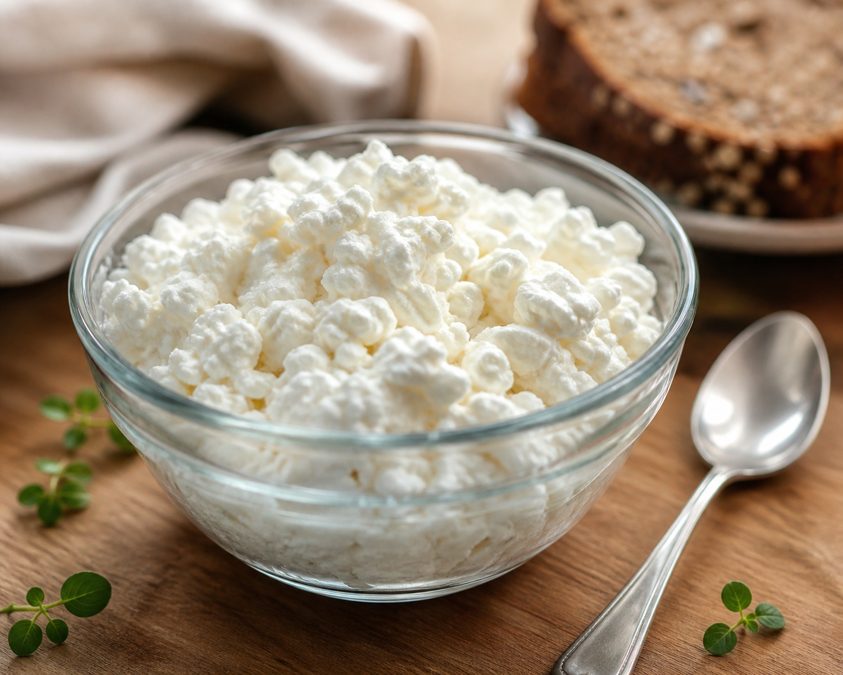
Cottage cheese is a fresh cheese of Anglo-Saxon origin, made from drained milk curds then mixed with a little cream.
Its distinct grainy texture, low salt and low fat content, makes it a common product in high-protein , low-fat diets.
The Cambridge dictionary sometimes translates cottage cheese as "fromage blanc", but this translation does not correspond to a real equivalent in cooking: the manufacturing processes and textures differ markedly.
No French cheese perfectly replicates cottage cheese: each substitute slightly changes the result in texture, taste or water content.
Faisselle, fromage blanc, ricotta: the best French equivalents
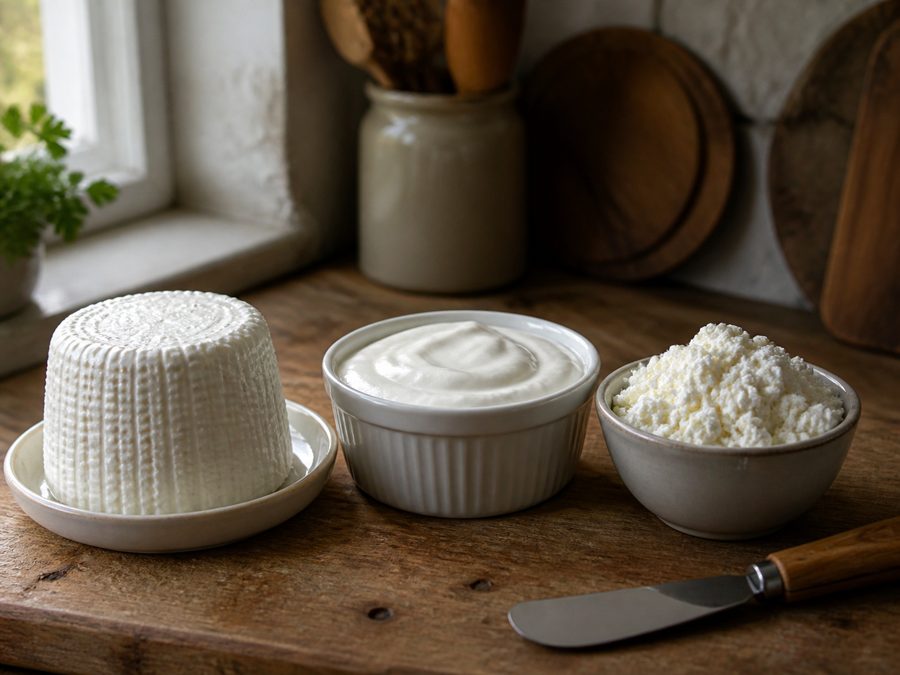
Three fresh cheeses cover the majority of uses of cottage cheese in French cuisine, each with its own particularities.
Drained fresh cheese
Drained faisselle is the closest substitute to cottage cheese in terms of texture, provided it is drained for fifteen to twenty minutes in a fine sieve.
This light draining removes excess whey and brings out the curd grains, similar to those of the original product.
Cottage cheese
Cottage cheese, with 20% or 40% fat content, is an easy substitute since it can be found in all supermarkets.
Its texture remains smoother and more homogeneous than that of cottage cheese, which is well suited to blended preparations or desserts, less so to dishes where the grains provide texture.
Ricotta
ricotta also offers a grainy structure, with a slightly sweeter taste and a creamier texture than faisselle.
It holds up particularly well to cooking, which makes it useful in gratins, quiches or stuffings.
In all three cases, the substitution ratio generally remains one to one, but a cheese that is wetter than cottage cheese (undrained fromage blanc, for example) can make a pastry soggy or lengthen a cooking time.
Which substitute should you choose based on your recipe?
The right substitute depends mainly on what the recipe expects from cottage cheese: texture, binding, or a source of protein.
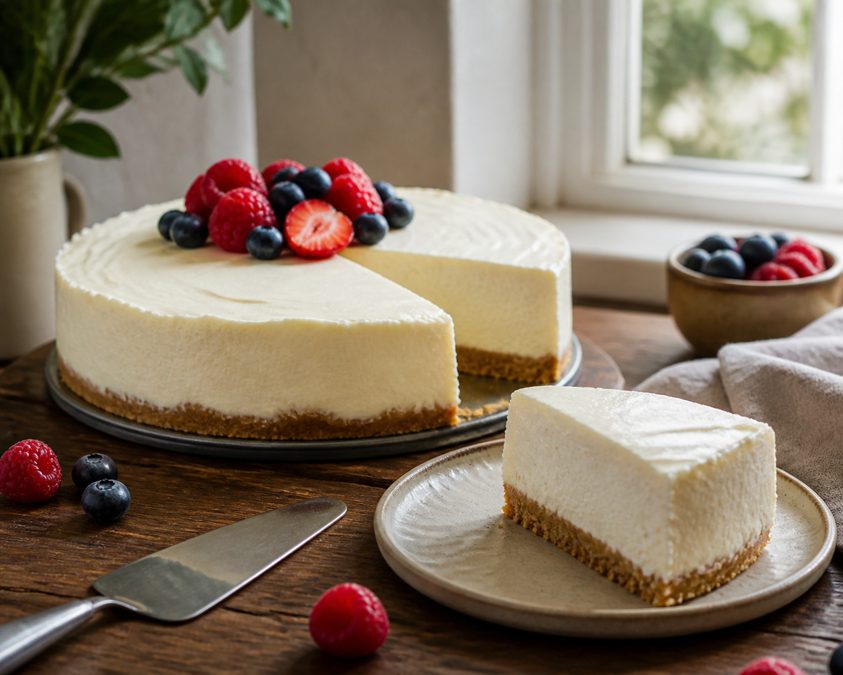
For a no-bake cheesecake, for example, a 40% fat cottage cheese drained overnight in a clean cloth, combined with a spoonful of mascarpone for firmness, properly replaces cottage cheese without making the biscuit base soggy.
For a protein-packed morning bowl, plain skyr provides a similar texture and comparable protein content, without the grains of cottage cheese.
| Recipe type | Best substitute | For what |
|---|---|---|
| Salad, open-faced sandwich, cold bowl | Drained faisselle | Similar grains, neutral taste |
| Gratin, quiche, cooked stuffing | Ricotta | Holds its shape well during cooking |
| Cheesecake, cold dessert | Drained cottage cheese + mascarpone | Smooth texture, good hold |
| High-protein bowl or recipe | Skyr nature | Comparable protein content |
Cottage cheese and protein: which substitute is the most interesting?
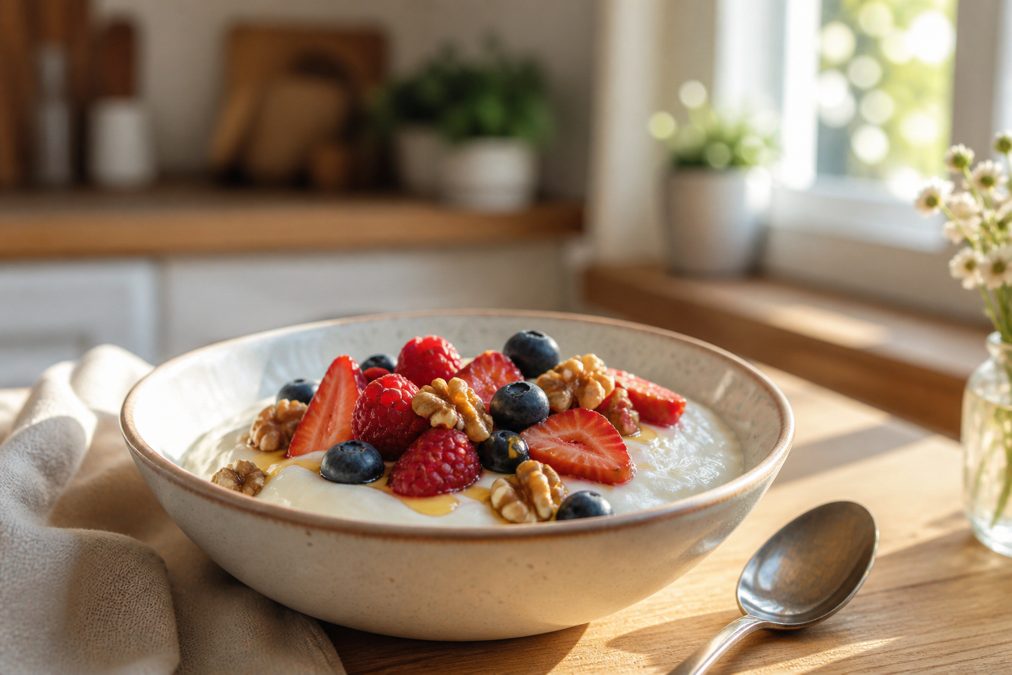
Cottage cheese owes much of its recent popularity to its reputation as a protein-rich cheese, which prompts many readers to compare substitutes on this specific criterion.
According to a comparison published by toujoursenforme.fr, skyr has about 10 to 11g of protein per 100g, traditional cottage cheese around 7 to 8g, and faisselle between 6 and 7g.
On her blog, dietician Audrey Falvo points out that skyr, cottage cheese and faisselle all provide good quality protein, with ultimately modest differences between them.
Protein values vary depending on the brand and fat content: the same 0% and 40% cottage cheese do not have the same content, and cottage cheese itself varies from 4 to 12g depending on the manufacturer according to the product sheets consulted.
Find your substitute in one click
Is cottage cheese really impossible to find in France?
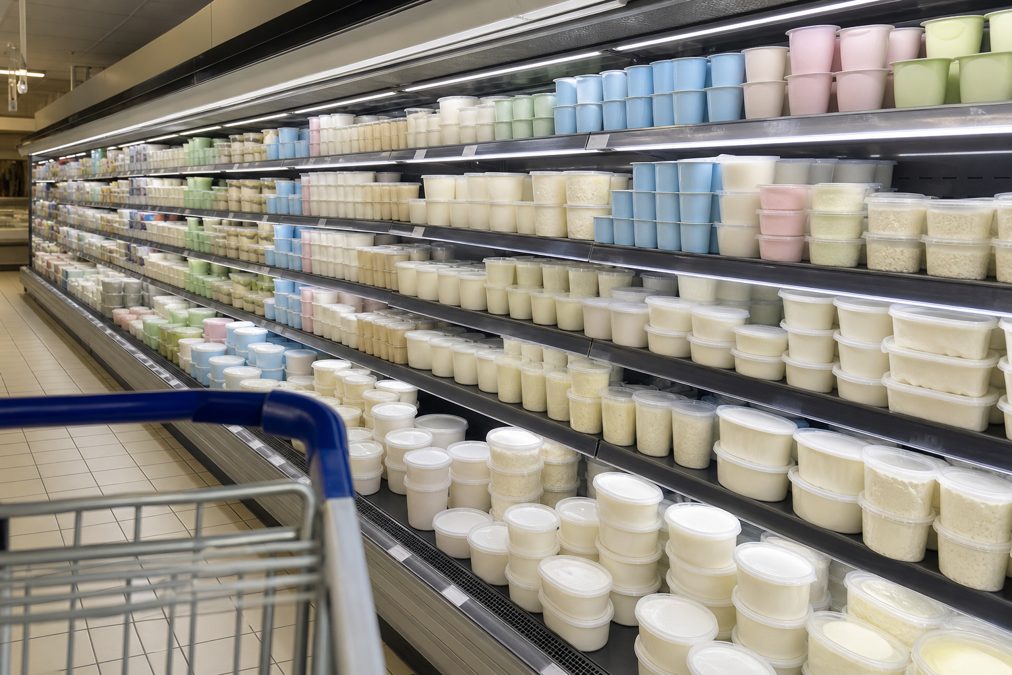
Long reserved for specialty grocery stores, cottage cheese is gaining ground in French fresh produce sections.
Danone now sells a savory cottage cheese, listed at Carrefour and Intermarché, generally in the fresh cheese section rather than with the classic fromage frais and soft white cheeses.
Before looking for a substitute, check the fresh cheese or protein dairy products section of your usual supermarket: availability is improving but remains uneven from one brand and region to another.
On the blog Ma cuisine et moi, the author describes her homemade version as follows: "the grainy texture contrasts pleasantly with the light cream that envelops the grains," a useful benchmark for judging whether a substitute is truly close to the original.
Lactose-free alternatives and a plant-based version
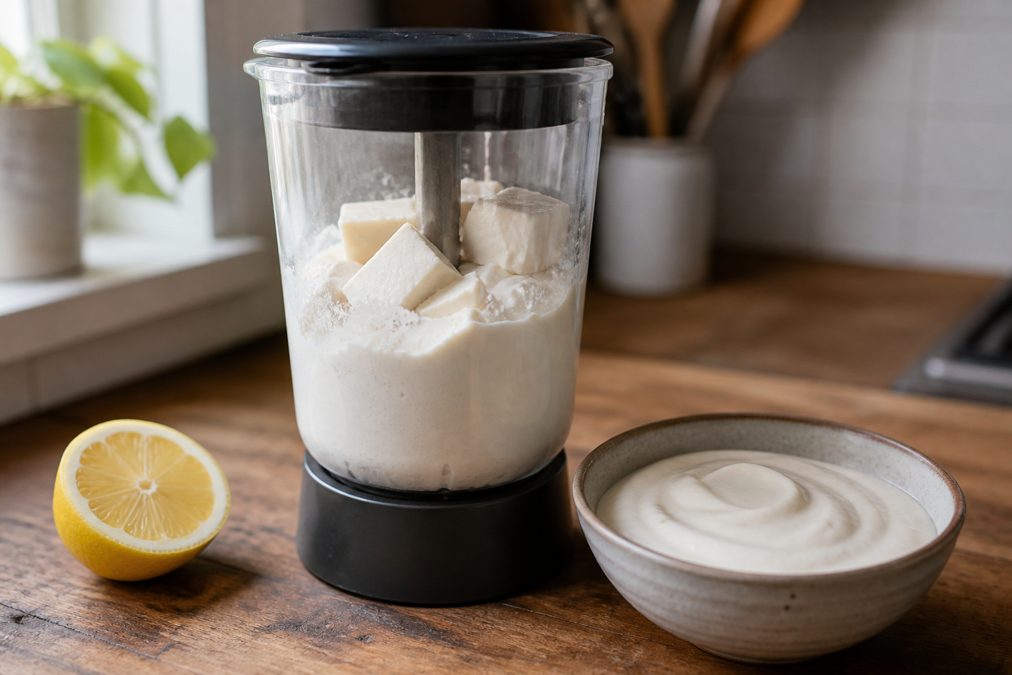
For a lactose-free option or a completely plant-based version, silken tofu remains the most reliable base.
A drizzle of lemon juice and a pinch of salt are enough to achieve an acidity similar to cottage cheese, without the grains.
To regain some of the grainy texture, roughly crumble the tofu with a fork instead of blending it completely.
Plain soy yogurt, drained for a few hours in a cheesecloth, works just as well in cold preparations.
In summary
There is no single French equivalent of cottage cheese, but a combination of fresh cheeses which each come close to it in a specific aspect: texture for faisselle, cooking stability for ricotta, availability for fromage blanc.
The choice is therefore made mainly according to the recipe and what it really demands of the original product.
And for those who want the exact ingredient, it is gradually becoming easier to find in French supermarkets.
Practical questions
What is the difference between cottage cheese and ricotta?
Both have a grainy texture, but ricotta is made from cooked whey, giving it a milder, sweeter taste and better cooking stability than cottage cheese.
Which cottage cheese substitute is the richest in protein?
Plain skyr generally has the closest protein content to cottage cheese, around 10 to 11g per 100g, but there are still significant differences between brands.
Can you find cottage cheese in supermarkets in France?
Yes, Danone now sells it in certain stores like Carrefour or Intermarché, although availability remains variable depending on the store.
How to replace cottage cheese in a cheesecake?
A 40% fat fromage blanc, drained overnight and mixed with a spoonful of mascarpone for firmness, gives a similar result without making the biscuit base soggy.
Is there a plant-based alternative to cottage cheese?
Blended or crumbled silken tofu, enhanced with a dash of lemon, reproduces a lactose-free base that is close in acidity, lacking the typical grains of the original product.
