
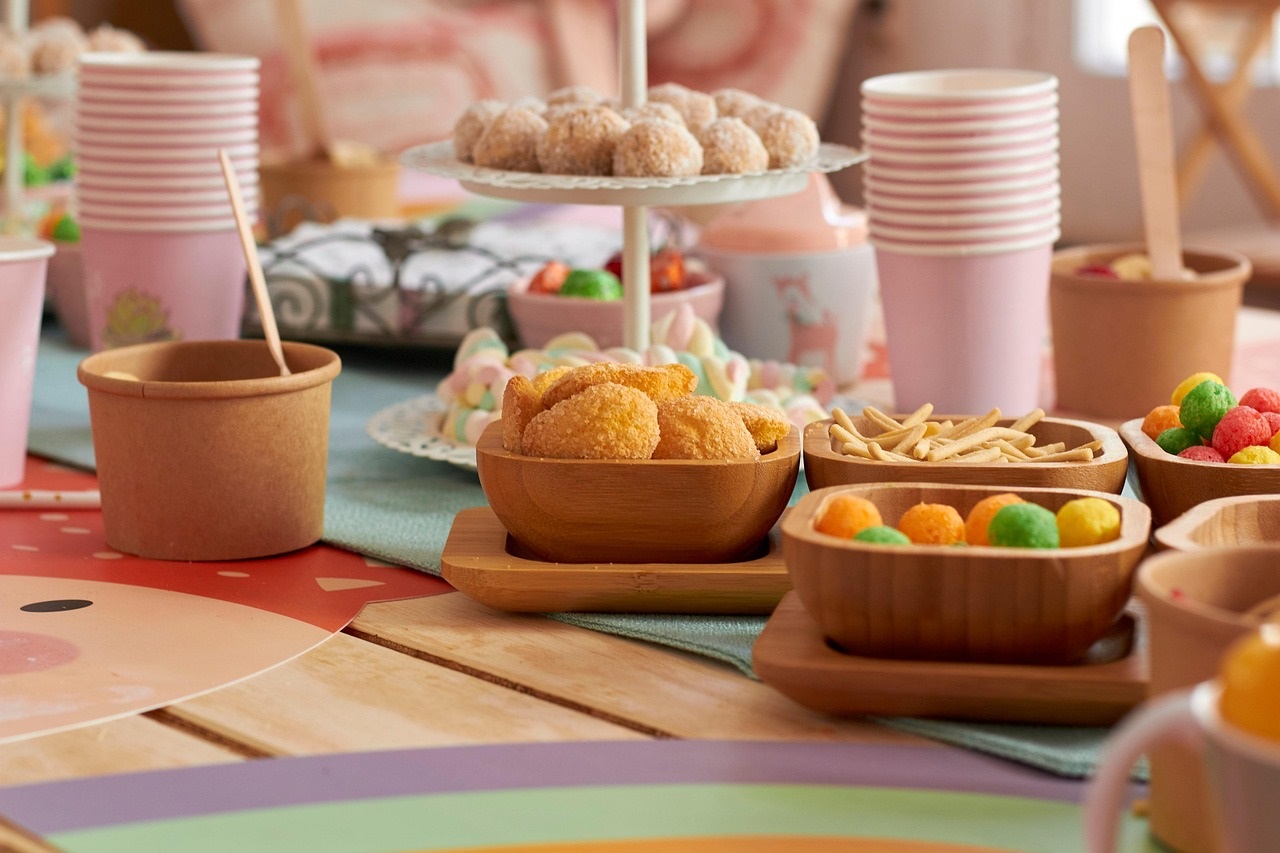
Organizing a birthday buffet at home is often the simplest idea… until the list of dishes grows longer, there is no more room for cold food in the fridge, and you realize (a little late) that there are not enough glasses .
The good news: with a clear checklist and a realistic reverse planning, everything becomes smoother, including the preparation of cold recipes that fit on the table.
A buffet tailored to your guests
Before even choosing a recipe, two questions avoid 80% of the headaches: how many guests, and when do we eat? A buffet at 6 p.m. does not have the same expectations as a buffet at 12:30 p.m.
Next, age matters: children, adults, a mix of both. Finally, dietary restrictions: vegetarian, allergies, intolerances.
Second point: 100% cold or a mix of cold and warm? A long aperitif works very well in all cold, while a meal format sometimes gains in comfort with a small warm touch.
The goal remains the same: practical dishes and easy-to-serve recipes without stress, even when there's a loud discussion around the table.
House, semi-detached house, or outside help?
Doing everything yourself is tempting… and sometimes exhausting. A good approach is to stick to recipes that are easy to assemble (verrines, wraps, salads) and delegate one or two "base" dishes if time is tight.
For example, to save time, reserve cold platters and dishes from a caterer in Villefranche-sur-Saône, around Lyon or in Mâcon at your nearest "Chez André" store.
Having some frozen petit fours on hand can also be a good backup solution.
The quick checklist
A buffet also depends on the equipment. Nothing glamorous, certainly, but it's what saves you from running around everywhere.
- Equipment : plates, glasses, cutlery, napkins, bin bags, cling film, serving dishes, one spoon per preparation, skewers if kebabs are planned.
- Logistics : space for cold storage, cooler if needed, ice cubes, markers for labels, trays for transport, and enough bread (always more than you think).
- Hygiene & comfort : hand soap, paper towels, sponges, dishcloths, side table, and a small “return” area to prevent the kitchen from overflowing.
Building your buffet: the "card" in 5 categories
To avoid piling up recipes haphazardly, it's best to think in terms of categories. The buffet becomes easier to navigate, and guests can choose what they like.
First, appetizers to nibble on: olives, dips, crackers, a few cherry tomatoes, a little cheese. Then, some hearty cold recipes (wraps, mini-sandwiches, pasta or rice salad).
Then the easy proteins : eggs, cheeses, well-seasoned salmon (or smoked if you're going for ready-to-serve), or a feta-based option.
Add a vegetarian option (raw vegetables, marinated zucchini), and if needed, a very simple warming touch. A soup served in small glasses can bridge the gap, depending on the season.
Cold recipe ideas that hold up well on the table
The key word here is "stable". A good cold buffet recipe doesn't turn into a puddle after 30 minutes, and can withstand being served in small portions.
It seems obvious… until the day a sauce that is too runny ruins everything (a mistake I experienced: a salad seasoned too early, and the cold “drinks” the seasoning, resulting in a sad outcome).
Skewers are always a hit: tomato-mozzarella-olive, or a more substantial version with pre-cooked chicken. Verrines are also a great option: salmon + cream cheese + pepper, or tomato + feta + herbs.
For buffet salads, the trick is to keep the dressing separate: a drizzle of oil, a little salt, then pepper just before serving. Gradually. Not all at once.
And for a change, a savory mini-cake recipe works very well cold (yes, it slices quickly, and it's filling).
As for serving dishes, plan for wraps, crackers and plenty of bread: without that, even the best recipes stay… on the plate.
Quantities: how much should I plan to avoid ending up with too many leftovers?
For a dinner party, the best approach is to aim for small but varied dishes: several bites, several courses, without overloading any single recipe. The longer the event, the more planning you need!
However, if the buffet comes after a meal, it is better to lighten up and concentrate the effort on the aperitif and a few signature dishes (a good salmon, a solid salad, a veggie option).
Another simple rule of thumb: count per person , not "by feel." Otherwise, the birthday party will end with a full fridge and everyone exhausted. And as for drinks, keep it simple: water, soft drinks, and one or two choices for the adults.
Having multiple bottles gives the impression of being ready, but complicates everything ( cold, waste, serving).
One detail that helps: take out a pitcher of water, then put it back in the fridge, rather than opening ten bottles at once.
Reverse planning: D-7 to D-5, we lock in the framework
At D-7: guest list, constraints, budget, and a provisional cold buffet menu.
At D-6: identifying missing equipment and thinking about traffic flow around the buffet (it's silly, but a blocked line in front of the drinks can spoil the atmosphere).
At D-5: shopping list in three blocks: “dry”, “fresh”, “last minute”, and fridge/freezer plan.
This is also a good time to decide who brings what, if the family offers "a little something".
Reverse planning: From 4 days to 2 days before, we prepare what can be prepared (without getting caught out)
Four days before: dry goods and drinks, and possibly a test if a recipe is new.
Three days before: preparations that keep well in the cold: sauces, dips, pre-cut and well-stored vegetables.
Two days before: cooking a protein item if planned (for example, a chicken to be sliced, or a small roast), preparing some salads, and organizing the serving dishes.
A common pitfall: salting too early, especially tomatoes, because they release water.
Reverse planning: D-1, the “assembly” day
One day before, it's time for fresh shopping: herbs, bread, feta, salmon, tomatoes, and anything else that can't wait. Then, assembly: verrines, wraps, skewers. Everything is wrapped in plastic wrap and labeled (contents, date, allergens).
One detail that changes everything: plan a drinks area and a "kitchen return" corner to prevent the buffet from turning into an improvised work surface.
D-Day: Minute-by-minute recap
Cold weather is an ally… provided you don't bring everything out too soon. Ideally, spread it out in waves. A first wave to start, a second to replenish.
When it comes to presentation, play with heights, think simple decor, use small portions, and keep the essentials on hand: salt, pepper, and a dash of seasoning to liven up a recipe at the last moment, without drowning it.
Common mistakes
Preparing everything that very morning: fatigue, forgetfulness, and saturated cold.
Too many different recipes: 9 good ideas are better than 18 average ones.
Underestimating bread, ice cubes, napkins: classic, and always a pain.
Finally, forget about variety: crunchy, fresh, filling, and a few more “pleasure” dishes to add some dimension to the aperitif.
Bonus tip: mini backup plan if a dish fails
One simple rule saves evenings: always have something on hand to enhance the aperitif without cooking.
A carton of decent soup to serve in small glasses, a packet of crackers, some olives, some tomatoes, a piece of feta cheese.
And to finish on a sweet note without complicating things? A bowl of quick desserts: yogurts, cookies, or sliced apples (it works, especially when the evening is already well underway).
Budget: what drives up the bill
In practical terms, what makes a cold buffet expensive is not just the "star" recipe. It's the extras: disposable tableware, drinks, snacks, and duplicates.
To keep things simple, it's best to choose 2 or 3 main dishes, supplement with easy homemade recipes, and avoid buying the same type of cheese three times.
And if time is short, a caterer can also provide some ready-to-serve pieces: this avoids multiplying preparations, while keeping a coherent whole.
