
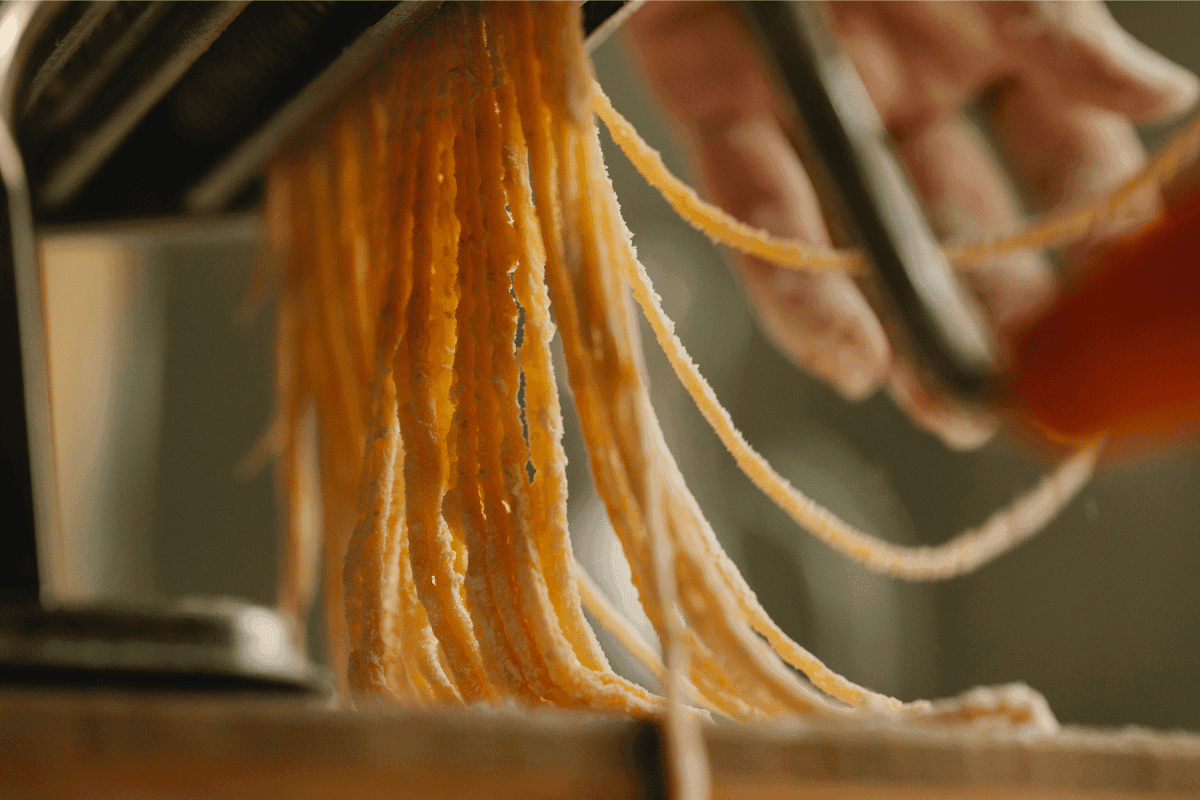
Do you dream of homemade fresh pasta worthy of an Italian chef? The secret is the pasta machine !
With it, say goodbye to thick and uneven pasta: hello to perfect tagliatelle, well-sealed ravioli and ultra-thin lasagne.
Follow the guide to master this tool and transform your kitchen into a veritable pasta workshop!
Manual or electric rolling mill: which to choose?
The manual model is the most common. It works with a crank and requires some force to pass the dough through several times.
Its main advantage is that it allows for complete control over thickness and speed, and is often more affordable. It's ideal if you make homemade pasta occasionally and like to take your time.
The electric pasta machine does all the work for you. No more turning the crank; the motor moves the dough smoothly and effortlessly.
It's perfect if you're preparing large quantities or if you simply want to save time.
The downside is that it is bulkier and more expensive.
If you like tradition and only make pasta occasionally, opt for a manual recipe.
If you prepare them often and are looking for speed, electric is a good investment!
How to choose the right rolling mill?
Not all models are created equal.
Opt for stainless steel to prevent rust and ensure good durability. The width of the rollers is also an important factor.
The larger it is, the larger the strips of dough you can work with, which is convenient for lasagna or ravioli.
A good pasta machine should also offer several thickness settings. Some models offer up to ten settings, allowing you to vary the thickness of the dough according to your needs.
Also check if accessories are available, such as cutters for spaghetti or tagliatelle.
Finally, ease of cleaning is an important point to consider. Some models can be disassembled, others cannot.
Avoid those that require complicated maintenance, as the paste tends to seep everywhere.
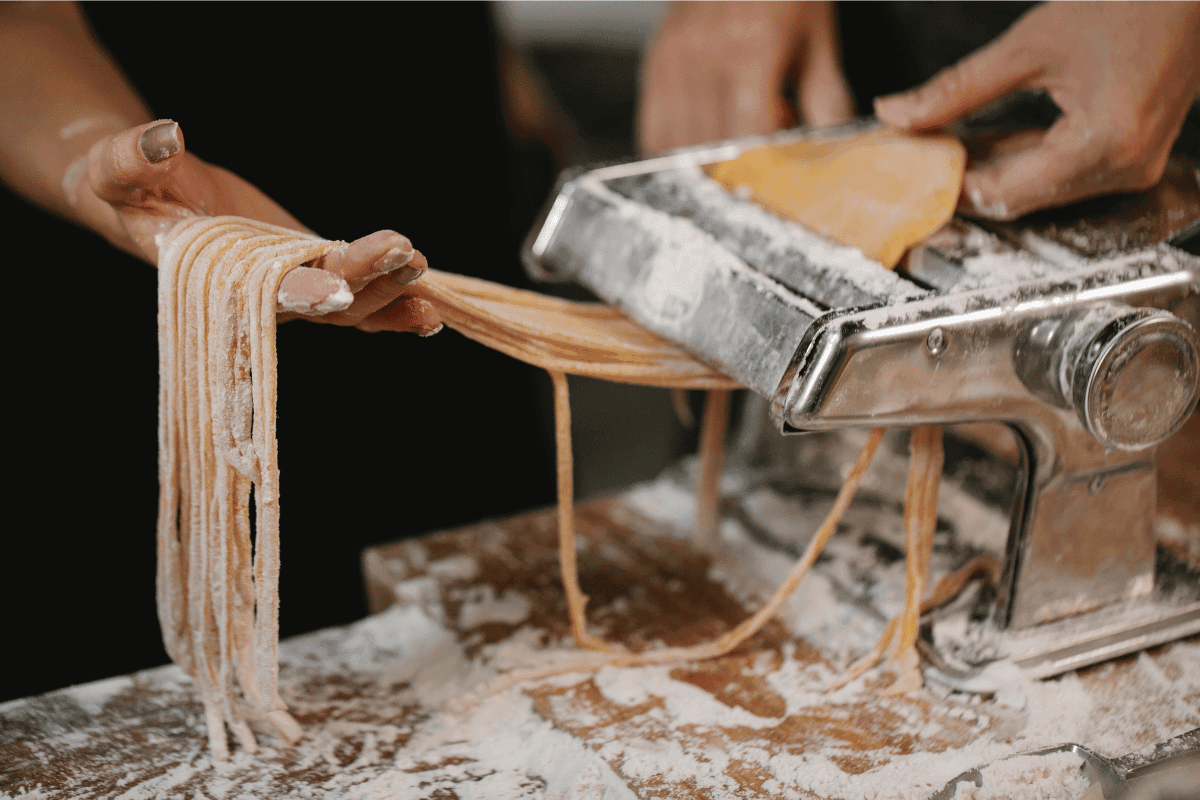
Maintenance and durability
A well-maintained rolling mill can last for years. The golden rule: never wash it with water.
Humidity can cause rust and damage the mechanism. After each use, simply wipe with a dry cloth or a small brush to remove any flour or dough residue.
It's advisable to lightly flour the rollers before use; this prevents the dough from sticking and makes cleaning easier. For models with gears, a drop of cooking oil once a year will keep the mechanism running smoothly.
Finally, always store it in a dry place, away from moisture. A simple cotton bag or an airtight container will do.
The basic recipe for fresh pasta
Making your own pasta is simple, economical, and far superior to store-bought versions. With a good pasta machine and a recipe, you can create silky tagliatelle, melt-in-your-mouth ravioli, and incredibly delicious lasagna!
The ingredients
The base is minimalist:
- Flour : The most common is soft wheat flour (T55 or T00 for a finer, silkier dough). For added texture, durum wheat semolina can be added.
- Eggs : They provide elasticity and richness. Generally, allow 1 egg for 100g of flour.
- Salt : To enhance the flavor. Note that some recipes prefer to add it after cooking.
- A drizzle of olive oil (optional) : It softens the dough and gives it a nice elasticity.
Obtain a soft and homogeneous dough
The key to success? Good kneading.
needs to be worked for at least 10 minutes until it becomes smooth and elastic. If it's too sticky, add a little flour. If it's too dry, a few drops of water will do.
After kneading, resting is mandatory! A well-rested dough is more supple and easier to roll out.
Minimum 30 minutes in the fridge, ideally an hour under plastic wrap to prevent it from drying out.
Steps to perfect lamination
A well-prepared dough is good. A well-rolled dough is even better!
Before going through the rolling mill
First of all, divide the dough into small portions. Working with a large block all at once is a hassle and you risk ending up with uneven strips.
Tip : Lightly dust the dough with flour or semolina to prevent it from sticking to the rolling pins.
Gradual adjustments: why go step by step?
Rolling is a marathon, not a sprint. You always start with the widest thickness, then gradually reduce it by passing the dough through several times.
Going too fast? Bad idea. A sudden reduction can break the dough or make it too elastic. Ideally, pass each setting twice for a perfectly smooth texture.
Prevent the dough from sticking or tearing
If the dough sticks to the rollers, there are two solutions:
- Too wet? Add a little flour and let it rest for a few minutes.
- Too elastic? That means it needs more rest. A break in the fridge can relax the gluten.
If it tears, it is often because it is too dry or has been stretched too much all at once.
The secret to an ideal texture
The right balance between flour and hydration is essential. Too much flour and the dough becomes brittle. Not enough and it sticks like chewing gum.
Ultimate tip : Once the dough is rolled out, let it rest for 5 to 10 minutes before cutting. It will regain a slight elasticity and hold its shape better during baking.
Mastering the art of rolling pasta requires a little practice, but once you get the hang of it, it's impossible to go back to store-bought pasta!