
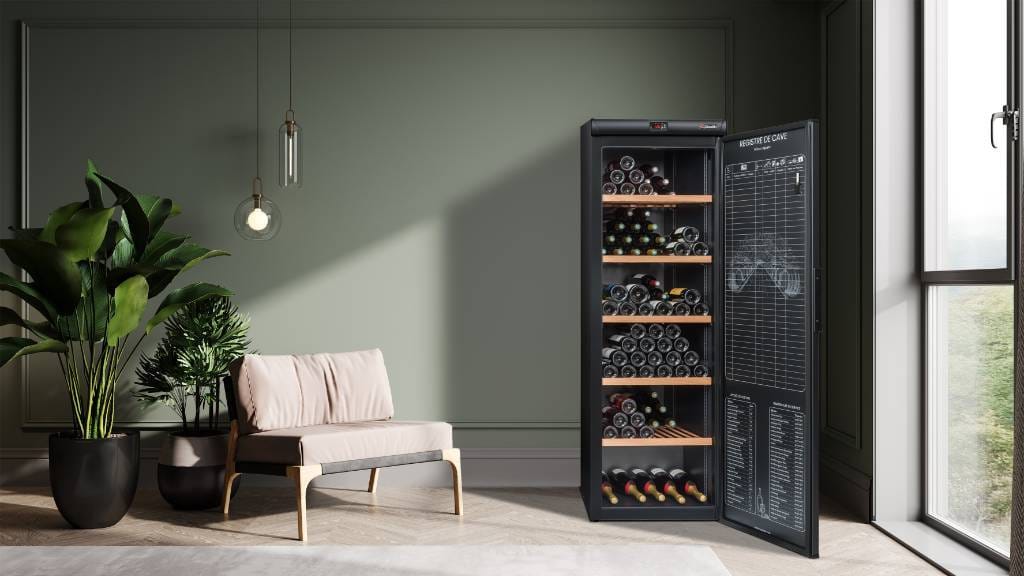
Wine is a constantly evolving product. To preserve its aromas and ensure its aging under ideal conditions, a wine cellar is the perfect solution. It stabilizes temperature and humidity to give each bottle the environment it deserves.
Whether you own a few exceptional vintages or a larger collection, discover reasons to invest in such a piece of furniture thanks to our simple but detailed explanations.
Why store your bottles in a wine cellar?
Wine is constantly evolving, influenced by its environment. Unstable temperature, poorly controlled humidity, or direct exposure to light can alter its aromas, degrade its bouquet, and accelerate its oxidation.
To avoid these problems, a wine cellar is the ideal solution. It creates a stable and controlled environment for the stored bottles, essential for their preservation. This space acts like a protective cocoon where every factor (heat, coolness, darkness) is perfectly balanced.
Properly regulated, this cabinet minimizes the risk of abnormal deterioration and preserves the wine's complexity, while respecting its natural maturation process. It also ensures a vibration-free environment, essential for successful aging.
Beyond simple preservation, it guarantees that each vintage reaches its peak under optimal conditions.
Whether you are a passionate enthusiast or a beginner collector, choosing tostore your bottles in a wine cellar remains the key to enhancing your selection of wines and appreciating their full richness when they reach maturity.
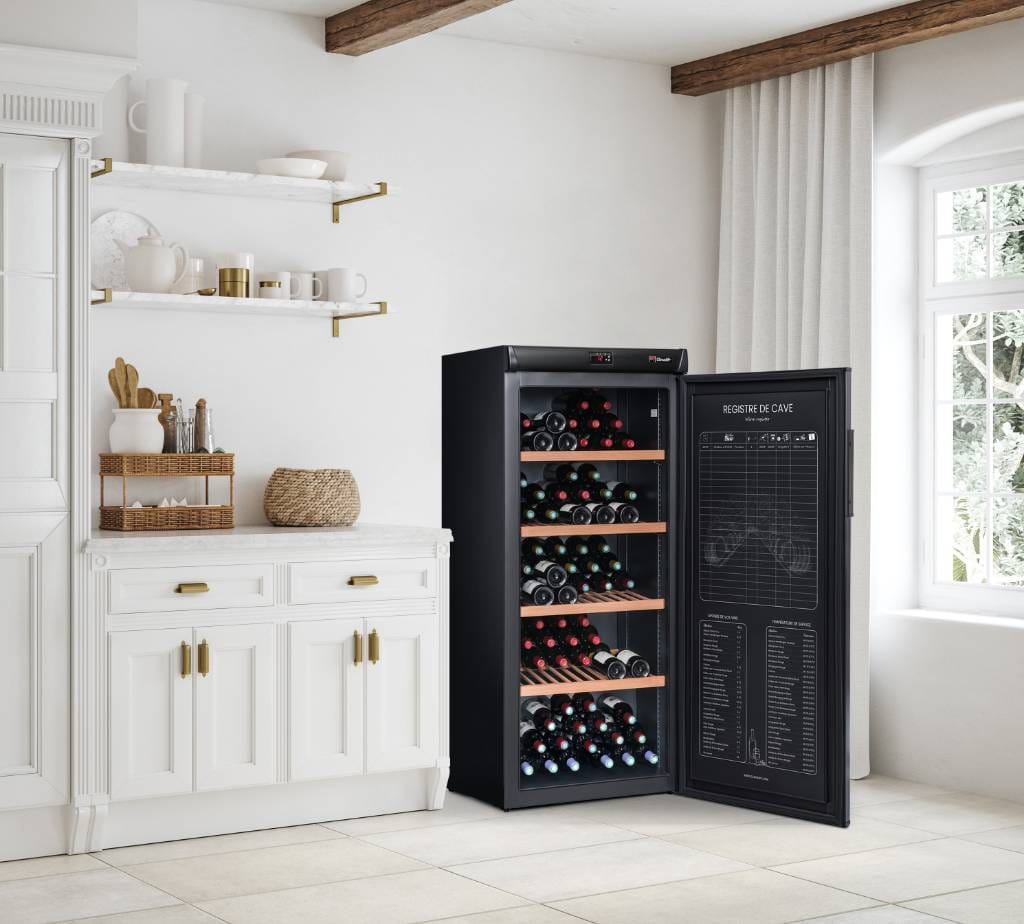
The different types of wine cellars and their specific characteristics
Not all wine storage cabinets meet the same needs. Each one has specific characteristics that influence how the bottles are stored and protected.
The aging cellar remains the benchmark for enthusiasts who wish to mature their wines over several years. It replicates the conditions of a natural cellar with a stable temperature, controlled humidity, and total darkness, perfect for accompanying the wines to their peak.
For those who prioritize accessibility and showcasing wines meant for immediate enjoyment, a serving cellar is a strategic choice. Designed to maintain bottles at the ideal serving temperature, it complements a dedicated aging cellar.
Some multi-functional models combine these two uses and offer separate temperature zones to meet different needs.
Built-in or integrated wine cellars are appealing due to their discreetness and ease of integration with kitchen or living space design. Their design optimizes available space while maintaining most technical performance levels.
Freestanding versions, however, offer greater installation flexibility and a wider range of capacities. They are better suited to large collections.
Finally, connected wine cellars, a recent addition to the market, allow for precise monitoring of storage conditions via dedicated applications. Temperature, humidity levels, and even internal management can be controlled remotely, thus enhancing control over essential parameters.
Comparison of wine cellars according to your use
| Type of cellar | Main use | Temperature | Ability | Benefits | Ideal for |
|---|---|---|---|---|---|
| Aging cellar | Long-lasting preservation | Stable (12-14°C) | Large (50-300+ bottles) | Recreates a natural cellar, with controlled humidity and total darkness | Collectors, vintage wines for aging |
| Serving cellar | Quick tasting | Variable depending on the wine (6-18°C) | Average (20-80 bottles) | Optimal serving temperature, easy access | Regular consumption |
| Multi-zone wine cellar | Storage and service | Separate zones | Variable (30-200 bottles) | Versatility, simultaneous management of different wines | Versatile amateurs |
| Built-in wine cellar | Design integration | According to the model | Small to medium-sized (20-100 bottles) | Discreet, space-saving, and harmonious with the kitchen | Small spaces, modern kitchens |
| Freestanding wine cellar | Flexible storage | According to the model | Wide variety | Flexible installation, large capacities available | Large collections, dedicated cellars |
| connected wine cellar | High-tech preservation | Precise remote control | Variable | Real-time tracking, alerts, and management via the app | Tech enthusiasts, optimized management |
This table helps you quickly identify the type of wine cellar best suited to your needs and consumption habits.
How to choose the ideal equipment for your collection?
Several criteria come into play when selecting a wine cellar, including storage capacity and consumption habits. A small model is likely to fill up quickly, while an overly large one takes up unnecessary space. It is therefore advisable to assess beforehand the number of bottles you intend to store, while also anticipating potential future purchases.
Furthermore, a built-in cabinet integrates harmoniously into a kitchen or custom-made furniture, while a freestanding version offers more flexibility.
Location also affects the device's performance. A heated room requires a high-performance system to guarantee a constant temperature, but in a cool place, the device exerts less effort to stabilize internal conditions.
Aesthetics remain another aspect not to be overlooked, especially for modern wine cellars visible in a living room or dining room.
doors showcase the wines while filtering out UV rays, while solid models plunge their contents into total darkness. Some units also feature soft lighting that enhances the presentation without altering the wine.
Regarding your budget, entry-level wine cellars will preserve wines adequately, but more advanced versions incorporate precise regulation technologies and materials that promote better insulation.
Connected cabinets offer the possibility of real-time monitoring, an advantage for enthusiasts who wish to control storage parameters.
Making the right decision therefore comes down to finding the balance between storage capacity, integration into your interior and financial constraints.
Before making a decision, carefully consider your true needs to ensure an environment suitable for your collection.
