
In short
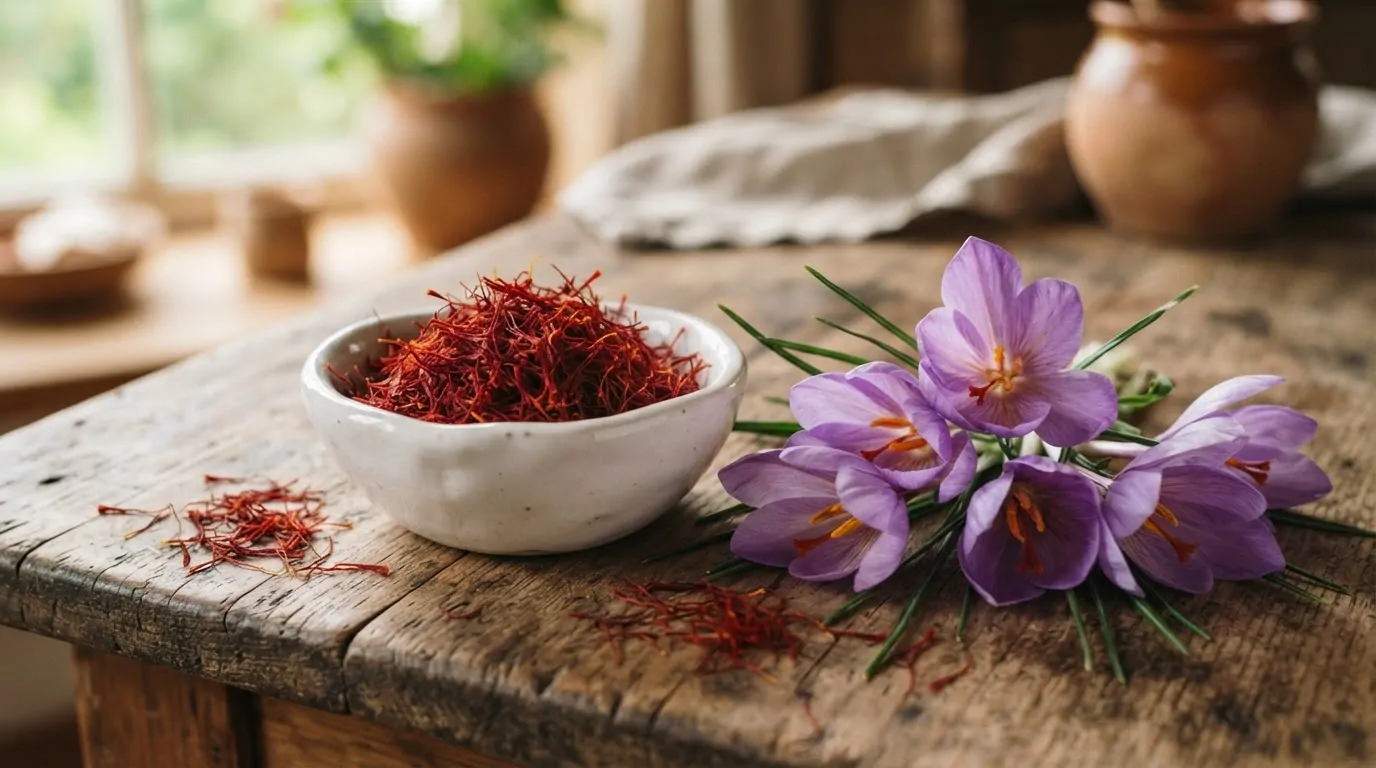
A red filament, a few moments of infusion, and a risotto immediately takes on a festive air.
Saffron fascinates cooks and wellness enthusiasts alike, to the point that it is now available in capsule form, in pharmacies and online.
This double life raises a real question: is it the same product, simply more convenient to swallow? Not quite.
This article follows saffron from flower to plate, then from plate to capsule, to explain the benefits of saffron as described in studies, without promising miracles.
Where does saffron come from and why is it so expensive?
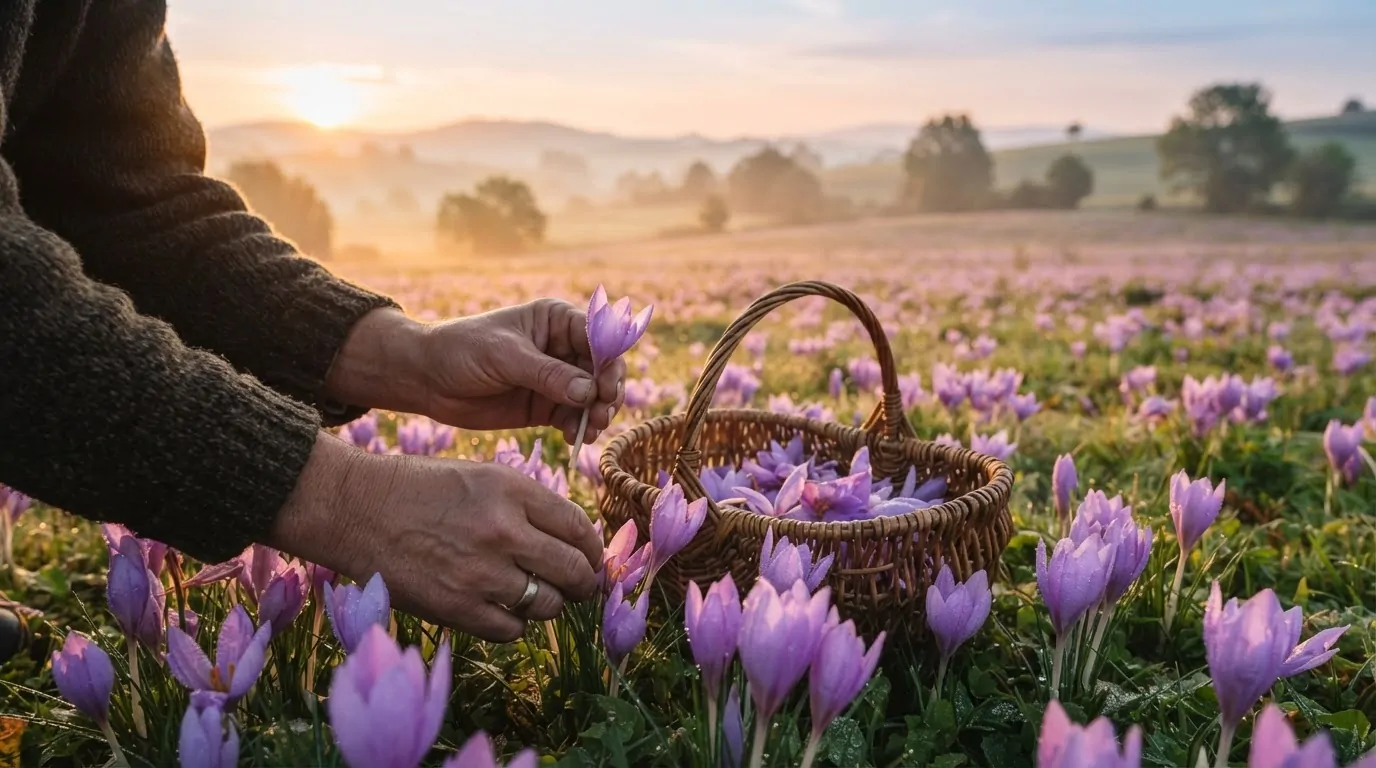
Saffron comes from a small purple autumn flower, Crocus sativus.
Each flower bears three red stigmas, and it is these, and these alone, that become the spice.
The harvest is done by hand, in October, within a window of one to two weeks: the flowers must be picked very quickly after they bloom at dawn, then the stigmas are detached one by one (source: Wikipedia, article "Saffron (spice)", accessed in November 2026).
This patience explains the price. It takes approximately 150 flowers to obtain 1g of dried saffron, or 150,000 flowers for one kilo, according to the same source.
With a global production of around 300 tonnes per year, of which Iran is the leading exporter (according to Wikipedia), the spice remains rare, expensive and often imitated.
How to use saffron in cooking?
Saffron finds its way into very different dishes: paella, Milanese risotto, bouillabaisse, tagine, but also Scandinavian brioches or Cornish saffron cake.
Its role is threefold: it colors golden yellow, it perfumes, and it brings a touch of slightly honeyed bitterness.
A small amount is sufficient, on the order of a few stigmas per person. An excess gives a medicinal taste, because picrocrocin, one of the molecules in saffron, is responsible for the bitterness.
It also makes an appearance in desserts, for example in a saffron syrup to flavor an orange salad.
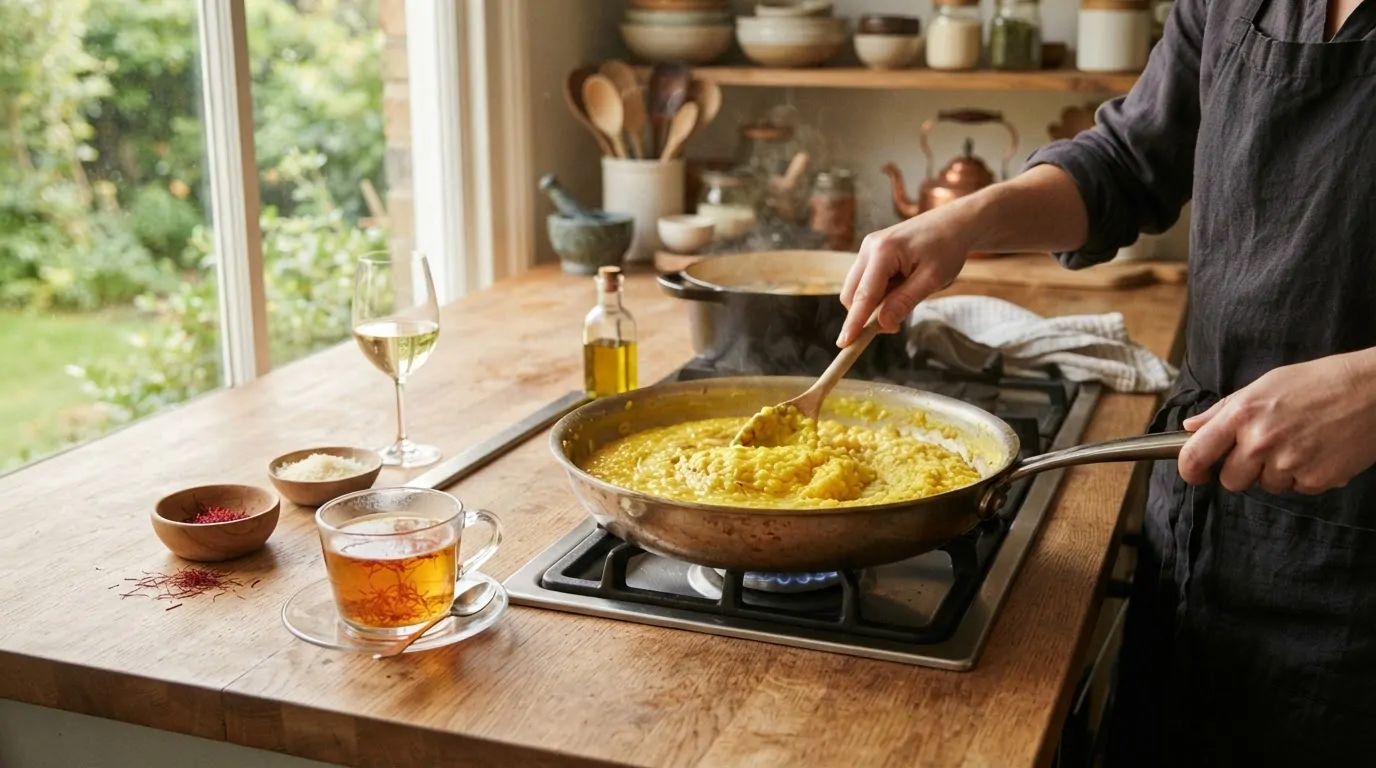
Never throw the dried stigmas directly into the dish. Let them infuse in a few spoonfuls of hot liquid (broth, milk or water) until the liquid changes color, then pour it all in at the end of preparation to preserve the aroma.
Typical example: for a risotto for four people, a small pinch of stigmas infused in a ladle of hot broth is enough to color all the rice, and adding it at the end of cooking preserves more of the flavor.
In terms of storage, the spice does not tolerate air and light well: store it in an airtight container, preferably glass, away from light.
How to recognize real saffron and avoid fraud?
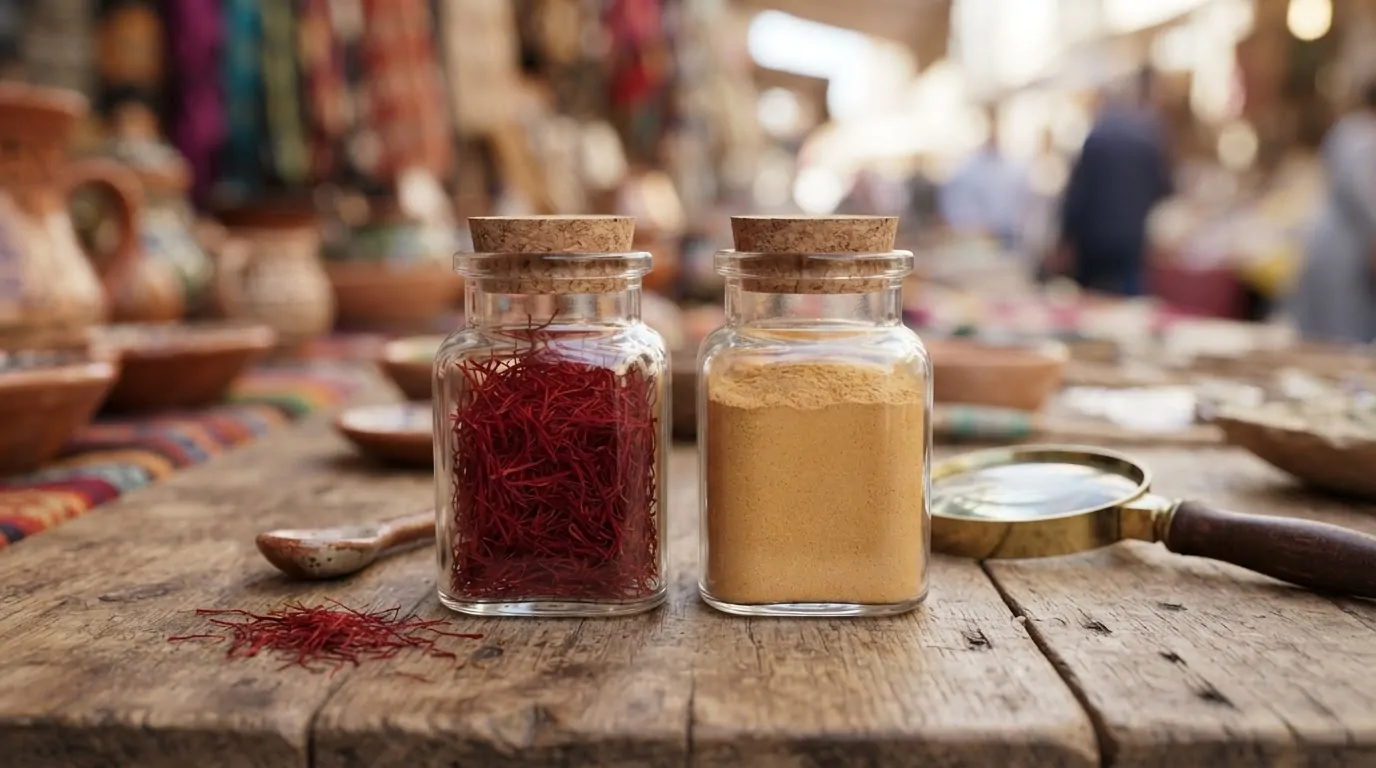
Saffron is a much-imitated spice. In 2019, a DGCCRF investigation into the quality of spices resulted in 219 visits to establishments and 138 samples, with one in four products sampled showing an anomaly (DGCCRF, 2019 investigation published in August 2021).
For saffron, the deceptions noted included the presence of styles or stamens as a partial substitute for stigmas, i.e. parts of the flower which do not have the same value.
A few simple guidelines can help you choose:
- entire filaments, bright red, without yellow or whitish parts;
- a mention of the origin and category according to the ISO 3632 standard, which classifies saffron according to its color, bitterness and aroma;
- a certain mistrust towards very cheap powders, which are easier to cut with other products.
Price alone tells you nothing about quality: a low price should raise a red flag, but a high price guarantees nothing either. A clear indication of the ISO 3632 category and origin is much more helpful when comparing two bottles.
What does saffron contain: crocins, picrocrocin and safranal?
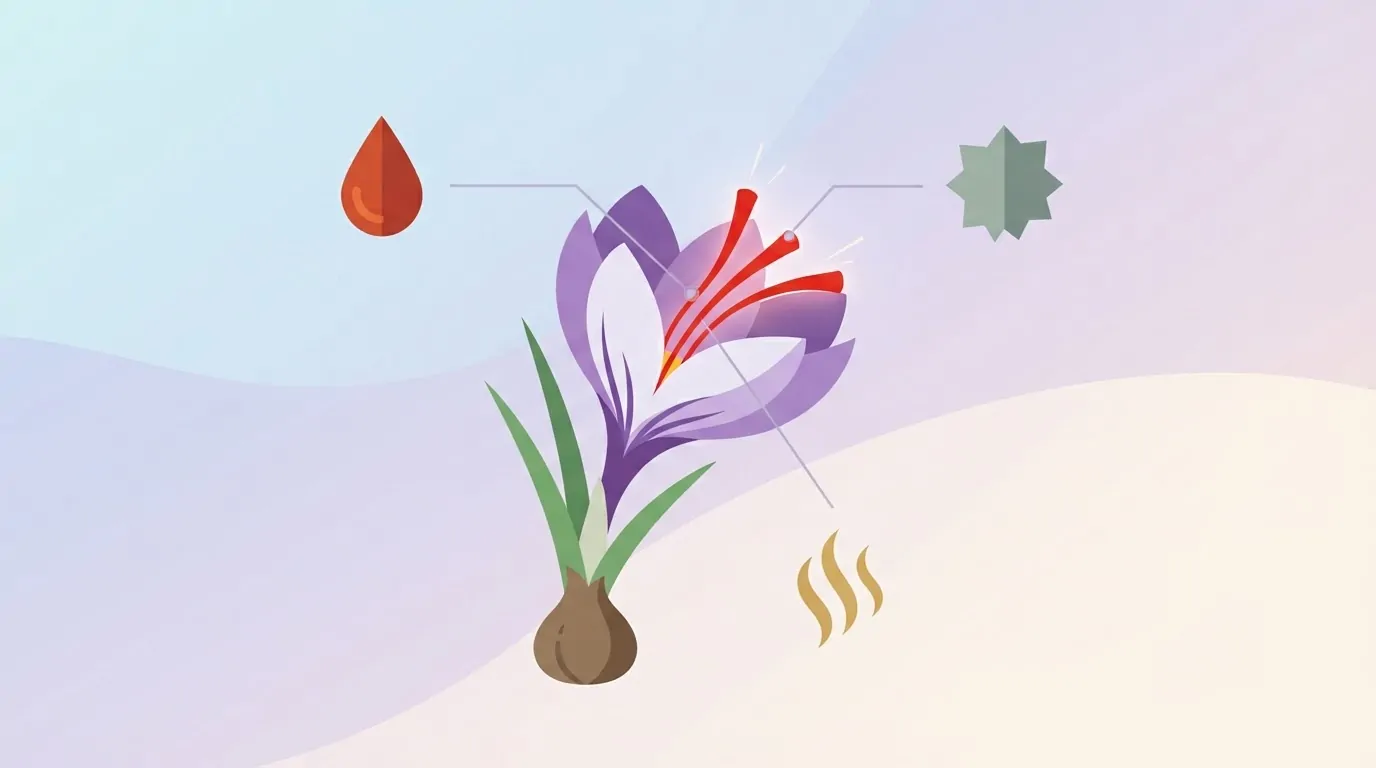
Three molecules determine the quality of saffron, and the ISO 3632 standard takes all three into account:
- crocins give the color;
- picrocrocin gives bitterness;
- Safranal provides the aroma.
Safranal is almost absent from fresh stigmas: it is formed during drying, when picrocrocin is transformed under the effect of heat and an enzyme.
These molecules are fragile. Crocins are sensitive to heat, oxygen, and light, and safranal is highly volatile.
This fragility explains why supplement manufacturers talk about "titration": they measure the percentage of crocins and safranal in the extract in the laboratory, instead of relying solely on color or scent.
Spices or capsules: what's the real difference?
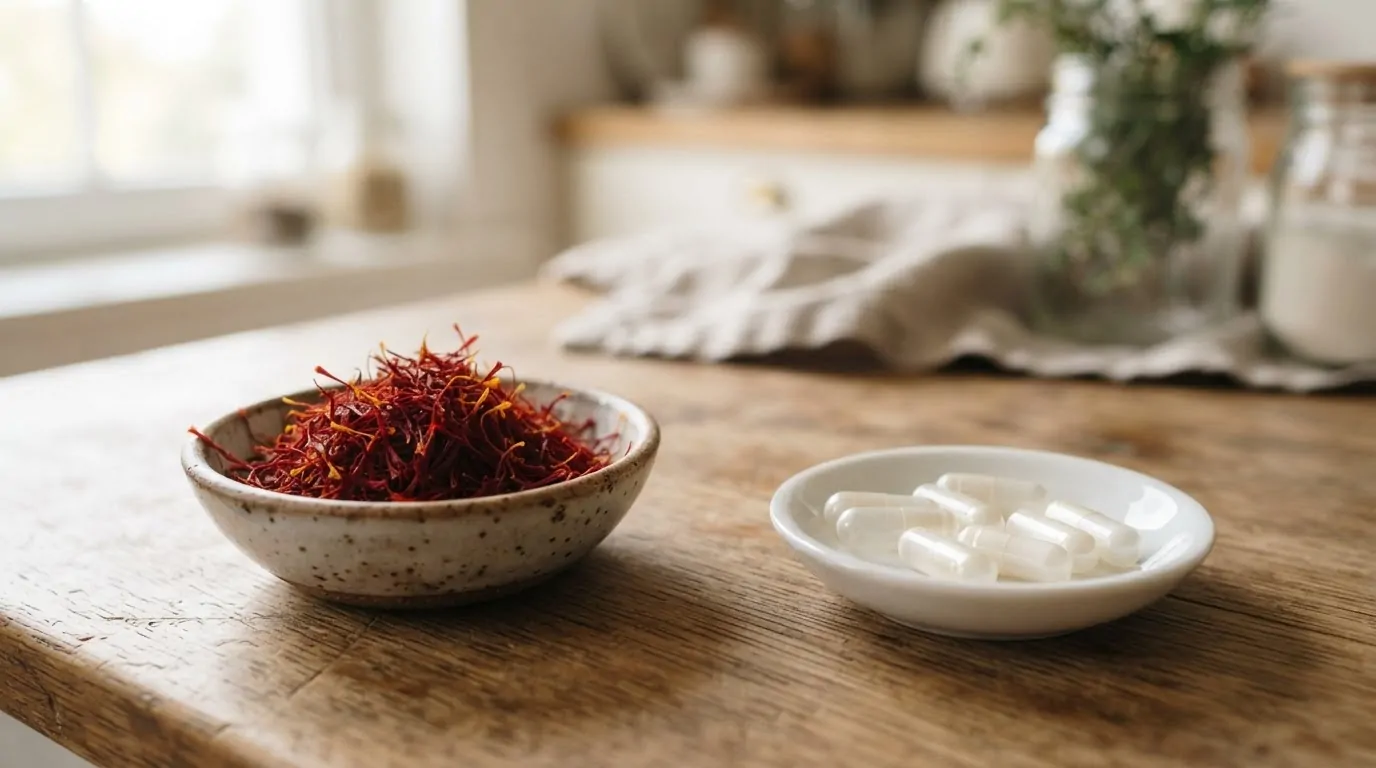
To say that saffron capsules are "saffron in a more convenient form" is an oversimplification. These are two products with different uses.
| Criteria | Spice in the kitchen | Extract capsules |
|---|---|---|
| Shape | Stigma filaments or powder | Dry extract of stigmas, concentrated |
| Quantity consumed | A few marks per dish | Daily dose defined in mg of extract |
| Active ingredient content | Variable (grade, age, preservation) | Indicated as a percentage of crocins and safranal, if the product is standardized |
| Objective | Taste, color, pleasure | Targeted delivery of active ingredients |
| Status | Foodstuff | Dietary supplement, not a medicine |
The key takeaway is that clinical studies use measured extracts, not saffron-infused dishes. Therefore, their results cannot be directly applied to cooking.
Another reading pitfall is the confusion between milligrams of extract and milligrams of active ingredients: a capsule may contain 15 mg of extract, of which only a small fraction corresponds to crocins and safranal.
- Regular and measurable dose with each intake
- The dishes had no taste or color
- Active ingredient content shown on the label
- Practical for a treatment of a few weeks
- Quality varies greatly from one brand to another
- Precautions and drug interactions to be aware of
- Effects vary from person to person
- This product is not a substitute for medical advice or a varied diet
What are the benefits of saffron according to studies?

The benefits of saffron relate to mood and sleep, with varying degrees of evidence depending on the individual.
For sleep, a randomized, double-blind trial followed 66 people with mild to moderate sleep disturbances associated with anxiety. For six weeks, they took either a placebo or 15.5 mg per day of a standardized saffron extract (Pachikian et al., Nutrients, April 2021).
The authors report an improvement in several sleep scores, including ease of falling asleep, in the saffron group, compared to the placebo.
This result should be read with caution: the sample is small, the duration short, the declared sponsor of the study is a company in the extracts sector, and a reviewer of the journal questioned the quality of the blinding, as the maltodextrin placebo could be distinguished by its color and taste.
Regarding mood, several trials have tested saffron during periods of mild to moderate low mood, and some brand information sheets, including the one shown below, recommend a dose of 30 mg of extract per day. The results are encouraging, but claims on sales websites sometimes exceed what is supported by the literature.
As for the female cycle, menopause or libido, often highlighted in commercial content, the level of evidence remains more limited and does not allow these effects to be presented as established.
A typical example: someone whose sleep deteriorates during a period of work-related stress is considering a treatment. It's best to talk to a pharmacist or doctor first, as studies focus on specific profiles that may not match their own.
Why choose organic saffron capsules?
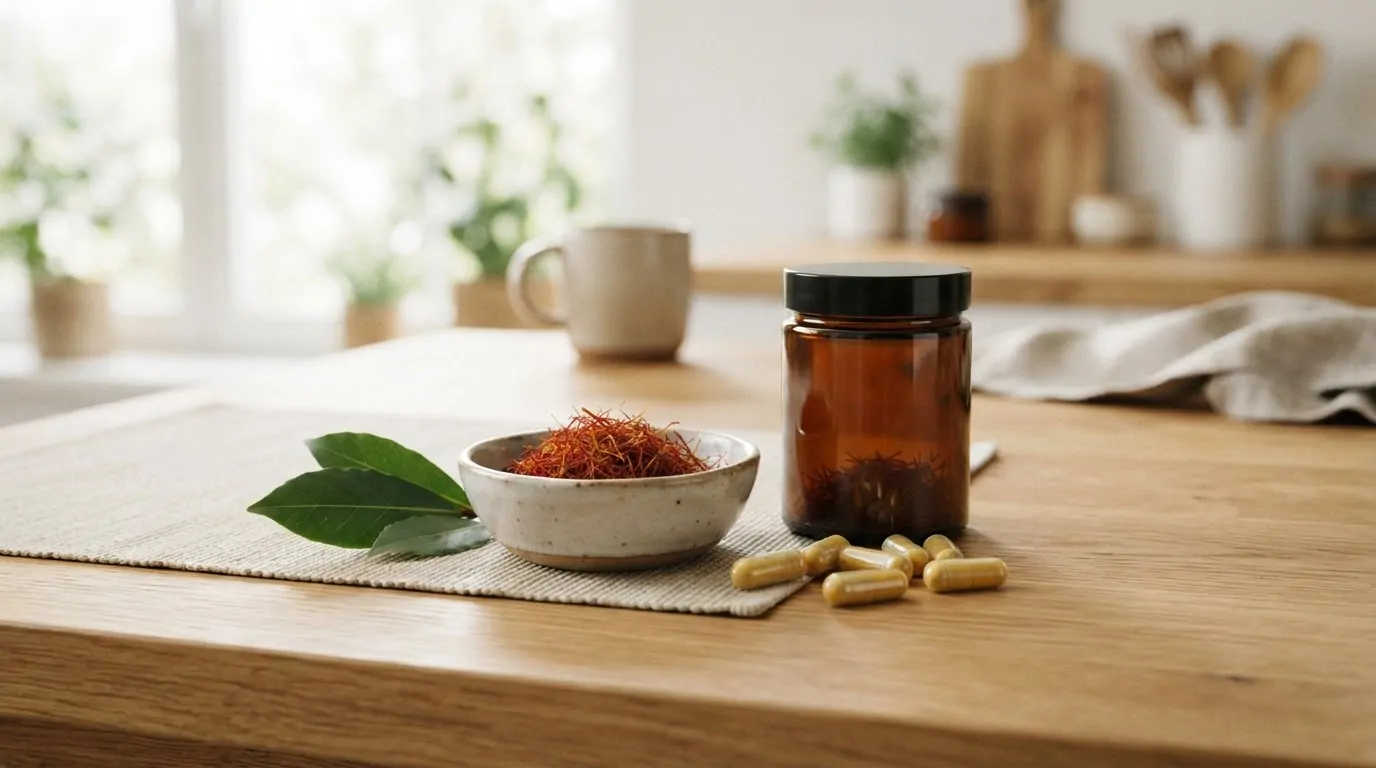
The main advantage of an extract in capsules lies in its regularity: each dose contains the same quantity of extract, without depending on the grade of the saffron, its age or its storage.
The organic label adds a guarantee regarding the farming method, since European standards exclude synthetic pesticides. However, it says nothing about the concentration of active ingredients, which must be checked separately.
To see what a detailed sheet looks like, the French brand Dynveo presents on its website organic saffron capsules with a stigma extract standardized to a minimum of 3% crocins and a minimum of 2% safranal.
According to this product information sheet (accessed in November 2026), each capsule contains 15 mg of extract, the recommended dosage is two capsules per day (30 mg), and a box of 60 capsules lasts for one month. The manufacturer also publishes batch analysis certificates, which are available online.
The 30 mg daily dose in this leaflet is also about double the 15.5 mg in the sleep study mentioned above, which serves as a reminder that one dose should not be compared to another without caution.
The brand emphasizes mood, sleep, and comfort during the menstrual cycle: these are its claims, which should be considered in light of the level of evidence outlined above. The product information sheet also specifies that the product is not recommended for pregnant or breastfeeding women, or for people taking antidepressants.
Always compare three things before buying: the mg of extract per daily dose, the percentage of crocins and safranal, and the presence of available batch analyses.
How to read the label of a saffron supplement?
A well-designed label answers a few simple questions:
- The species and part used: Crocus sativus L., stigmas.
- The amount of extract per daily dose, in mg.
- The titration: percentage of crocins and safranal.
- The extraction process and the ingredients that accompany the extract.
- The availability of searchable batch analyses.
- The precautionary statements (pregnancy, medications).
Typical example: a 15 mg capsule of extract standardized to 3% crocins and 2% safranal contains 0.45 mg of crocins and 0.3 mg of safranal. Two capsules per day provide 0.9 mg of crocins and 0.6 mg of safranal, which corresponds to the values shown on the information sheet cited above.
Conversely, a mention of "saffron 30 mg" without any titration does not allow one to know what the capsule actually contains.
Simulator: active users per day and number of boxes
This tool converts the data from a label into the quantity of crocins and safranal per day, then calculates the number of boxes for the intended duration of treatment.
Who should avoid saffron capsules or seek advice?

A food supplement is not a medicine. According to ANSES, the first question to ask yourself before consuming it is "do I really need it?", because a varied and balanced diet generally covers needs in the absence of pathology (ANSES, page updated in March 2025).
Several situations call for medical advice before any treatment:
- pregnancy and breastfeeding, for which the aforementioned information sheet advises against saffron as a supplement;
- taking antidepressants, which the manufacturer's information sheet cited above advises against combining;
- anticoagulant or antiplatelet treatments, for which caution is required in principle with a concentrated extract, hence the importance of seeking the advice of a doctor or pharmacist;
- persistent low mood or lasting sleep disturbances, which require a consultation and not a supplement.
These precautions apply to concentrated extracts: saffron used in the doses of a dish is considered to be of no particular risk to most healthy adults.
In summary
Saffron is first and foremost a rare spice, harvested by hand, and just a few infused stigmas are enough to transform a dish. To buy it well, it's best to choose whole threads and check the origin and grade.
Capsules operate according to a different logic: a standardized extract, a defined dose, and the framework of a dietary supplement. Studies on sleep and mood are encouraging, but limited, and some are linked to industry players, like the one mentioned above.
To choose the right product, compare the extract dosage, titration, and batch analyses, then seek advice if you are currently using it or have any doubts. The organic saffron capsules shown in the information sheet mentioned above illustrate what a clear label should display.
Practical questions
Is saffron an anxiolytic?
No. Saffron as a food supplement is not a medicine and cannot be presented as having a therapeutic effect. ANSES (the French Agency for Food, Environmental and Occupational Health & Safety) also reminds us that a supplement is not intended to replace medical treatment. Some studies are investigating its effect on mood and nervous tension, but in cases of persistent anxiety, a healthcare professional should be consulted.
How long does it take for saffron to take effect?
No timeframe is guaranteed. The sleep study mentioned above lasted six weeks, and manufacturers generally recommend courses of treatment lasting several weeks, as indicated on the information sheet cited above. If there is no improvement, there is no point in increasing the dose: it is best to consult a healthcare professional.
Does saffron lose its properties when cooked?
Partly, though it's impossible to quantify precisely. Crocins are sensitive to heat, oxygen, and light, and safranal is highly volatile. This is why the stigmas are infused and then added at the end of the preparation, primarily to preserve the aroma and color.
Organic or non-organic saffron: what's the difference?
The organic label guarantees cultivation without synthetic pesticides. It provides no information about the saffron grade, nor the crocin and safranal content of an extract. For a spice, look at the ISO 3632 category; for capsules, the extract dose and concentration.
Can a saffron treatment be done all year round?
Manufacturers typically recommend courses of treatment lasting a few weeks, repeated after a break: the information sheet mentioned above indicates 4 to 8 weeks depending on the intended use (6 to 8 for mood), to be repeated after a break of a few weeks. Prolonged use warrants the advice of a doctor or pharmacist, especially if you are currently undergoing treatment.
