
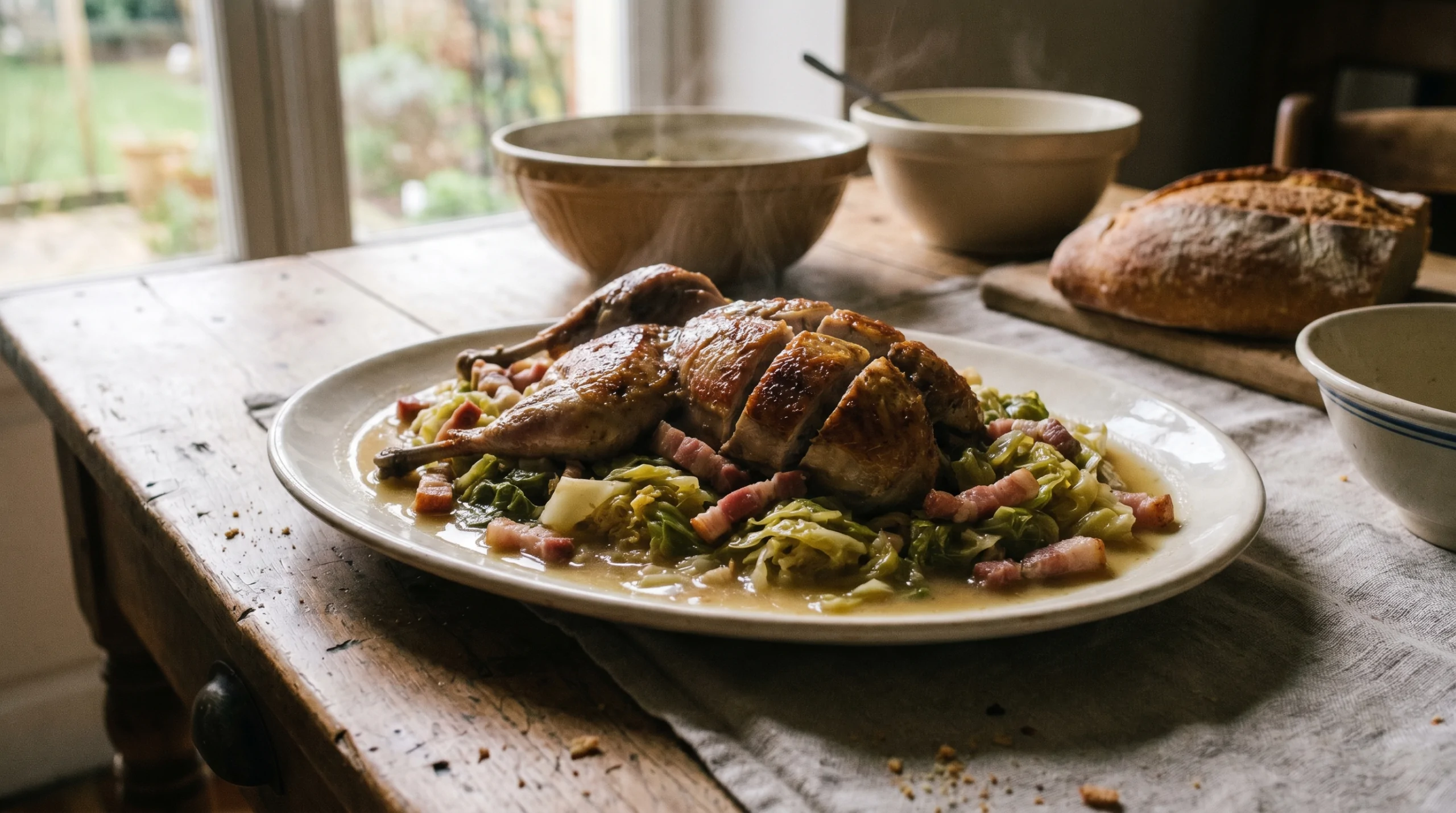
Pheasant with cabbage is the kind of dish that evokes country cooking, the kind that simmers gently while you set the table. The first time I cooked it, I was surprised by one detail: it's not the pheasant that "makes" the whole dish, it's the cabbage.
When it is well blanched and then braised with a little bacon and a base of white wine, it becomes ultra melting, almost sweet, and it envelops the meat like a cocoon-like filling.
Here I offer you a traditional version, in the spirit of old-fashioned recipes, but designed to last less than an hour.
The little secret is to cut the pheasant into pieces (it cooks faster) and not to skip the blanching step for the cabbage: 4 minutes in boiling water removes the bitterness and excess sulfur in one go. Then, the cabbage braises gently and absorbs the flavor of the bacon.
Seasonally, we're right in the middle of good winter ingredients: green cabbage, onion, carrot… simple things that make a solid dish.
Nutritionally, it's also interesting: a good portion of protein thanks to the pheasant (a rather lean meat), fiber from the cabbage, and a filling dish without needing potatoes on every level.
You can serve it as is, or with a slice of country bread for dipping (that's non-negotiable if you like sauce). And if you like your food a little spicier, a twist of freshly ground pepper at the last minute makes all the difference!
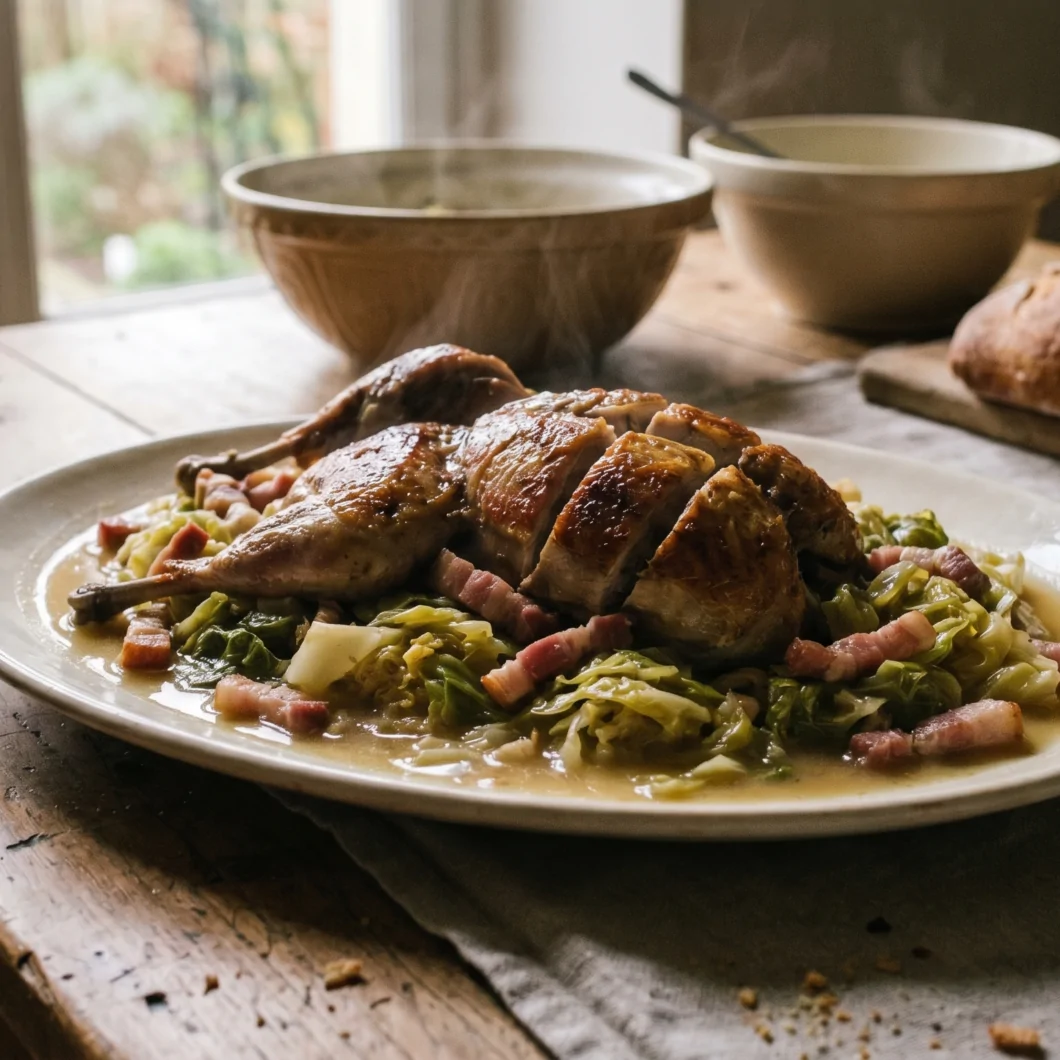

Pheasant with cabbage
4
people19
minutes36
minutes468
kcal55
minutesA classic of French cuisine: a recipe for golden-brown pheasant, tender green cabbage, bacon lardons, and a light white wine sauce. It's rustic, fragrant, and warming without being heavy!
Keep your device's screen on
Ingredients
1 Ready-to-cook pheasant (approx. 1.2 kg each), cut into 6 to 8 pieces
1 Curly green cabbage (approx. 900 g each)
150g of smoked bacon
1 large onion
1 carrot
2 garlic cloves
25g of butter
1 tablespoon of neutral oil
20 cl of dry white wine
20 cl of chicken stock
1 bay leaf
2 sprigs of thyme
Fine salt
Black pepper
Preparation steps
- Prepare the cabbage: remove any damaged leaves, cut the cabbage into quarters, remove the core, then slice into 1-2 cm strips. Rinse quickly.
- Blanch the cabbage: Bring a large pot of water to a boil, add a little salt, and plunge the cabbage in for 4 minutes. Drain, then refresh under cold water for 30 seconds. Drain very well, squeezing gently (overly wet cabbage will make the embers soggy).
- Prepare the aromatic base: finely chop the onion, cut the carrot into small cubes, mince the garlic.
- Brown the pheasant: In a large casserole dish, heat the oil and butter. Lightly salt and pepper the pheasant pieces, then brown them for 6 to 8 minutes, turning them occasionally to ensure a nice color. Set aside on a plate.
- Sauté the garnish: in the same casserole dish, add the bacon lardons and let them render for 2 minutes. Add the onion and carrot, and sauté for 4 minutes, scraping up the browned bits from the bottom.
- Deglaze: pour in the white wine, turn up the heat and scrape the bottom of the pot well. Let it reduce for 2 to 3 minutes to evaporate the alcohol.
- Braise the cabbage: add the cabbage, garlic, bay leaf and thyme. Stir for 1 minute to coat it. Pour in the stock.
- Return the pheasant to the pot: place the pheasant pieces back on top of the cabbage. Cover and simmer gently for 18 to 20 minutes. The cabbage should be tender and the pheasant cooked through (the meat should easily pull away from the bone).
- Finish the sauce: remove the lid for 3 minutes if you prefer a shorter sauce. Taste and adjust the salt and pepper. Serve piping hot, with the cabbage underneath and the pheasant on top.
📊 Nutritional Information
1 serving (approx. 430g)
| Nutrient | Value |
|---|---|
| Calories | 468 kcal |
| Proteins | 46g |
| Carbohydrates | 13g |
| including sugars | 6g |
| Lipids | 22g |
| including saturated fatty acids | 8g |
| Fibers | 6g |
| Sodium | 980mg |
| Vitamins | |
| Vitamin K | 185% AJR |
| Vitamin C | 95% RDA |
| Vitamin B3 | 55% AJR |
| Minerals | |
| Phosphorus | 45% AJR |
| Potassium | 30% AJR |
| Iron | 22% AJR |
* RDA = Recommended Daily Allowance
💡 Chef's Tips
To avoid a recipe that results in a dry pheasant, use a gentle cooking method (a light simmer, not a rolling boil) and be mindful of the cooking time: in pieces, it cooks quickly. If your casserole dish is narrow, brown the pheasant in two stages: browning adds to the flavor!
🔄 Variations
- Pheasant with cabbage, hunter's style: add 6 to 8 crushed juniper berries when braising the cabbage, if you like the very traditional hunting aspect.
- For a creamier recipe: replace 5 cl of stock with 5 cl of cream at the very end, off the heat, for a rounder sauce (without changing the spirit of the dish).
