

In short
A dishwasher that smells musty or leaves dishes dull is almost never defective.
Cleaning your dishwasher essentially involves treating four specific areas: the filter, the spray arms, the seals, and the tub. Each gets dirty at its own pace and requires its own method, not a single, identical action.
This guide starts with the most common symptoms (odor, limescale, poorly washed dishes) to trace them back to the exact cause, before detailing the complete routine and the point at which the problem goes beyond simple maintenance.
Why does my dishwasher smell bad or wash less well?
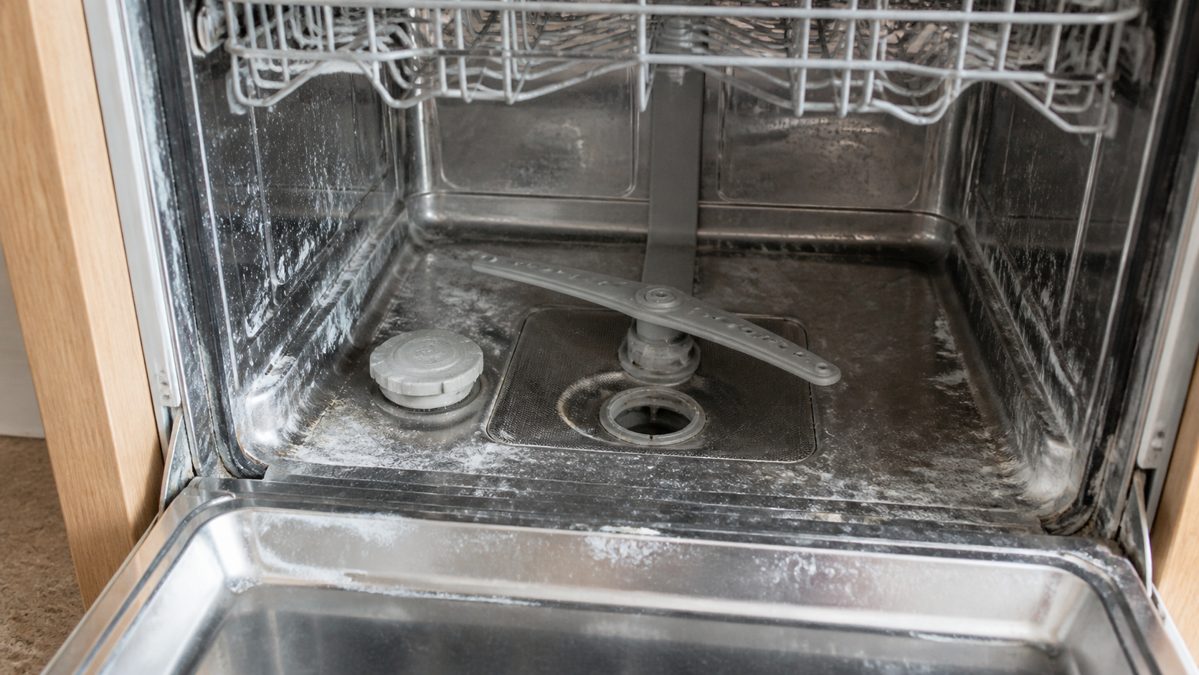
Food residues accumulate in the filter after each cycle. Without regular rinsing, they eventually become resuspended and redeposit grease on the dishes in the next cycle.
Limescale follows a different pattern. It accumulates on the heating element and spray nozzles, especially in hard water areas, and gradually reduces the water pressure sprayed onto the dishes.
A third, more discreet mechanism concerns the door seals: they remain permanently damp between washes, making them a breeding ground for mold and odors.
| Symptom | Probable cause | Action |
|---|---|---|
| Smell upon opening | Residue in the filter or seal | Rinse the filter, clean the seal with vinegar |
| White marks on the dishes | Limestone, lack of regenerating salt | Run an empty cycle with vinegar, then check the salt reservoir |
| Dishes still dirty at the end of the cycle | Clogged spray arms | Dismantling and unclogging of nozzles |
| Stagnant water at the bottom | Clogged filter or drain pump | Filter cleaning, drain hose inspection |
A limescale-encrusted heating element no longer heats the water sufficiently to dissolve grease, which worsens both the odor and the washing results. The problem is then no longer merely aesthetic: it causes premature wear and tear on the appliance.
Cleaning the filter, spray arms and seals: the complete routine

Each area is cleaned in a specific order, from the most accessible to the deepest.
- Remove the filter (usually by turning it in the bottom of the tank) and rinse it under hot water
- Brush the fine mesh with an old toothbrush to dislodge any ingrained residue
- If the model allows, remove the spray arms and unclog each nozzle with a toothpick or a fine needle, never a rigid metal object
- Clean the rubber door seal with a damp cloth and a little white vinegar, being careful not to press too hard into the folds.
- Pour 250 ml of white vinegar directly into the empty tub and start the hottest available cycle.
- Once this cycle is complete, sprinkle a cup of baking soda at the bottom and run a second empty cycle to neutralize any remaining odors.
Between two complete cleanings, a standard dishwasher tablet run alone in a 60°C cycle is sufficient for express cleaning of the tub.
A family living in the Hauts-de-France region, where the water hardness often exceeds 30°f, will see limescale build up on the nozzles in just a few weeks. Conversely, a household in Brittany supplied with soft water (5 to 15°f) can extend the intervals between disassemblies without any particular risk, provided they continue to rinse the filter weekly.
On a Que Choisir forum thread dedicated to white vinegar, opinions on its prolonged use vary considerably. One user claims to have used it as a rinse aid for ten years without any problems, while another reports that a Siemens technician attributed damaged internal seals to this very practice. This confirms above all that moderate and occasional use, rather than systematic use with every cycle, remains the safest approach.
Never mix white vinegar and bleach in the tank: the chemical reaction releases chlorine fumes that are dangerous to breathe in an enclosed space.
Regenerating salt, rinse aid, detergent: do not confuse them
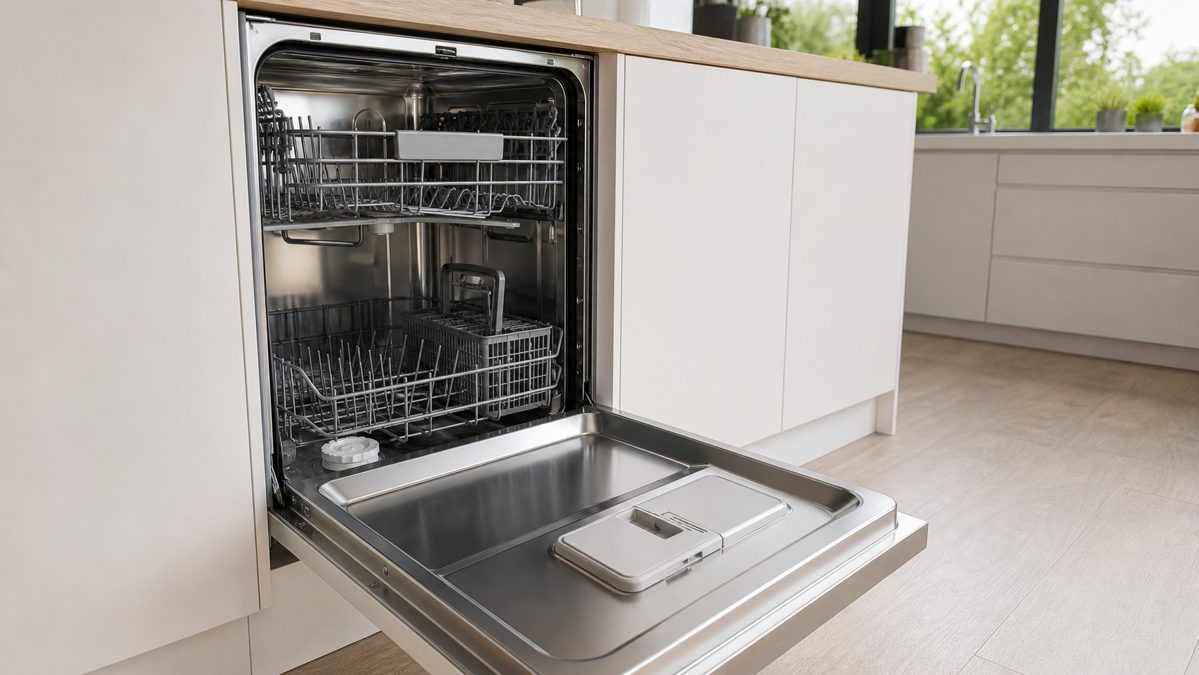
These three products are often confused, although they fulfill distinct and complementary functions.
The regenerating salt softens the water in the internal circuit before the wash cycle, preventing limescale from depositing on dishes and heating elements. The rinse aid is added at the very end of the cycle to make water bead and prevent white streaks when drying. The detergentthen effectively removes grease and food residue during the wash cycle.
According to ADEME's recommendations on dishwasher maintenance, the levels of regenerating salt and rinse aid should be checked before each use. The detergent compartment deserves the same attention and should be refilled before each cycle, regardless of the periodic cleaning of the appliance itself.
A Parisian household, where the water is rather hard, will fill its salt reservoir every two to three weeks for daily use, whereas a household in a very soft water area may sometimes be able to do without it almost entirely, according to the manufacturer's instructions.
Simulator: How often should I maintain my dishwasher?
These frequencies are indicative only. Some recent models include a salt level indicator or a dedicated cleaning program: the manufacturer's instructions always take precedence over a general rule.
Cleaning or breakdown? What you should never do with your dishwasher
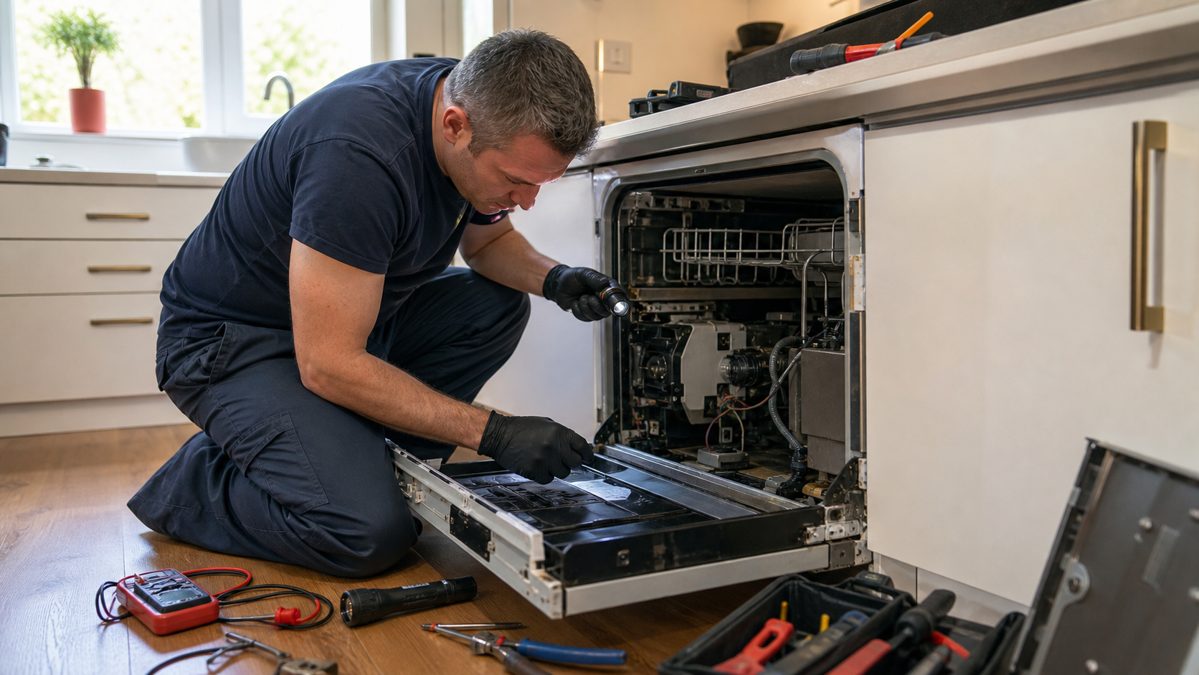
Some reflexes, though widespread, damage the device instead of maintaining it.
Avoid using dishwashing liquid intended for handwashing in the detergent dispenser drawer: its foaming formula will overflow during the cycle. Also, avoid overloading the baskets to the point of blocking the spray arms, which will leave some dishes unrinsed.
When cleaning alone is no longer sufficient, the problem likely stems from a mechanical failure rather than clogging. A blocked drain pump, a clogged hose, or an error code that persists after a thorough cleaning warrants professional intervention rather than another vinegar cycle.
Expect to pay between €100 and €350 depending on the fault: replacing a heating element or solenoid valve costs €130-€250, and a drain pump €100-€200, labor included. A repair bonus, the amount of which varies according to the applicable rate schedule (generally between €30 and €60), may be applied directly to the bill in some cases, without requiring any paperwork.
Before any intervention that involves dismantling the filter, the spray arms or accessing stagnant water at the bottom of the tank, unplug the appliance and consult the manufacturer's instructions.
In summary
Cleaning a dishwasher effectively requires treating the filter, spray arms, seals and tub separately, each at its own pace, rather than a single action repeated everywhere.
The ideal frequency depends mainly on the hardness of the tap water and the number of weekly cycles, two criteria too often ignored even though they concretely change the necessary maintenance rhythm.
If a problem persists after a complete cleaning of the four areas, it is better to consider a mechanical failure and call a professional rather than multiplying vinegar cycles.
Practical questions
Does white vinegar damage the dishwasher?
Used once a month in an empty cycle, it generally doesn't cause any problems. However, using it systematically with every wash can eventually weaken the rubber seals, according to several user reports.
The dishwasher still smells bad after a vinegar cycle, what should I do?
The odor almost always comes from the door seal or the filter, not just the tub. Clean all three areas on the same day, then leave the door ajar between washes to prevent moisture from building up.
Can you put bleach in the dishwasher?
This is not recommended without checking the instructions beforehand: bleach can attack certain stainless steel seals and components, and should never be combined with white vinegar in the same cycle.
How long should the door be left open after a cleaning cycle?
Approximately one hour is sufficient for the moisture to completely evaporate before closing the device, which significantly reduces the risk of mold on the seal.
When should you change the dishwasher salt?
As soon as the dedicated indicator light comes on on the control panel, or every two to three weeks in daily use with moderately hard water, according to the manufacturer's instructions.
