
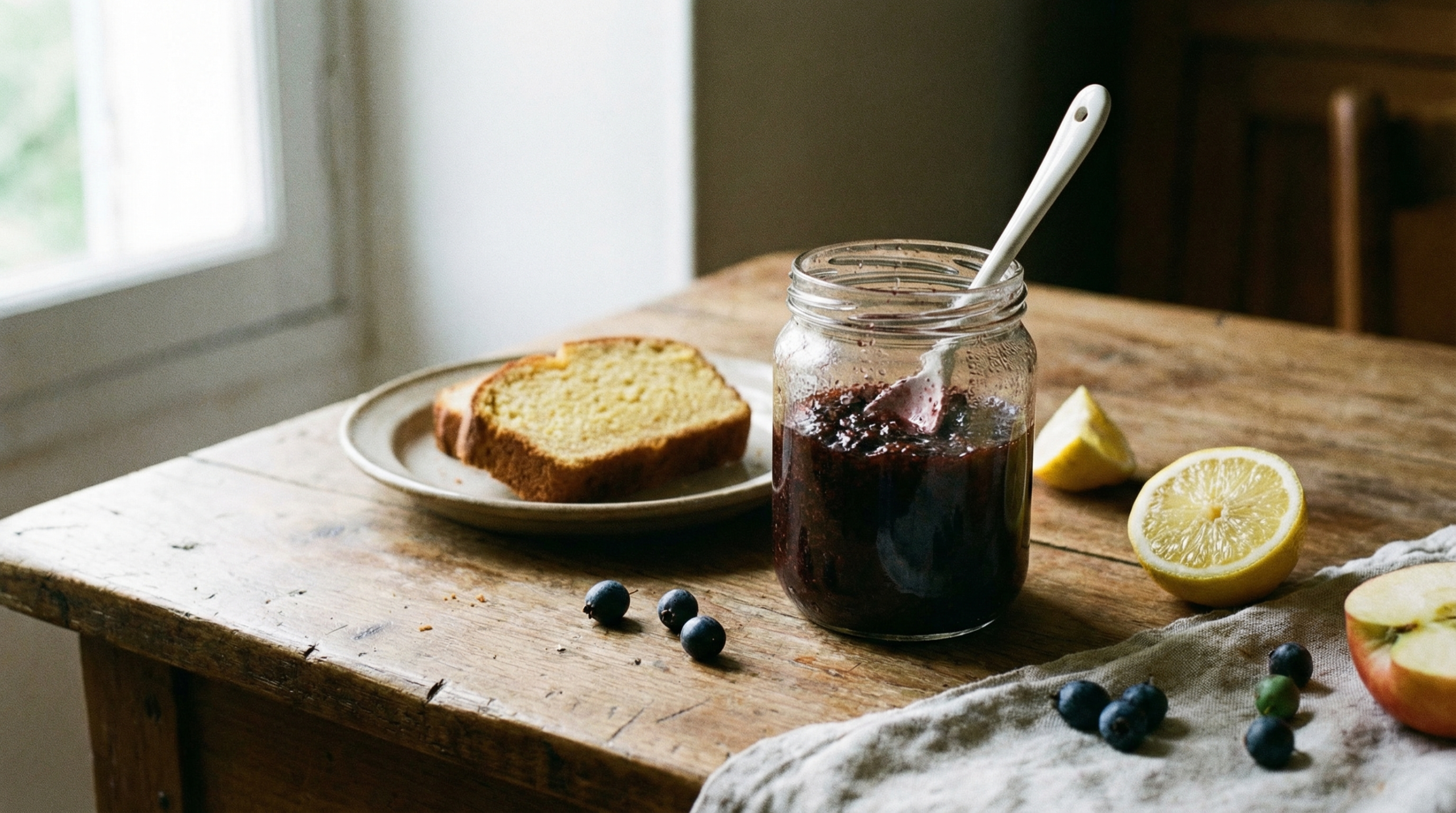
I discovered myrtle jam while enjoying breakfasts with a distinctly "maquis" flavor: a spoonful on buttered toast, and immediately that resinous, slightly wild aroma, somewhere between berries and dried grass. It's a jam with character, but it remains incredibly simple to make if you follow a couple of guidelines.
In my traditional version, I keep the classic myrtle + sugar + lemon combination, and I add a pectin-rich apple. This isn't for flavoring; it's just a little natural boost to help the jam set properly, especially if your berries are more or less ripe. The lemon, meanwhile, enhances the flavor and also aids in gelling.
I recommend cooking over a fairly high heat for a short cooking time: this preserves a cleaner, less "stewed" flavor. And most importantly, take two minutes to lightly crush the myrtle berries during cooking: this releases their aromas without turning everything into a puree.
Nutritionally, it's still a jam (so it's sweet), but the myrtle provides polyphenols, and the lemon and apple add some fiber and micronutrients. A small spoonful is often enough: it's an intensely flavored jam, also perfect with sheep's cheese or plain yogurt.
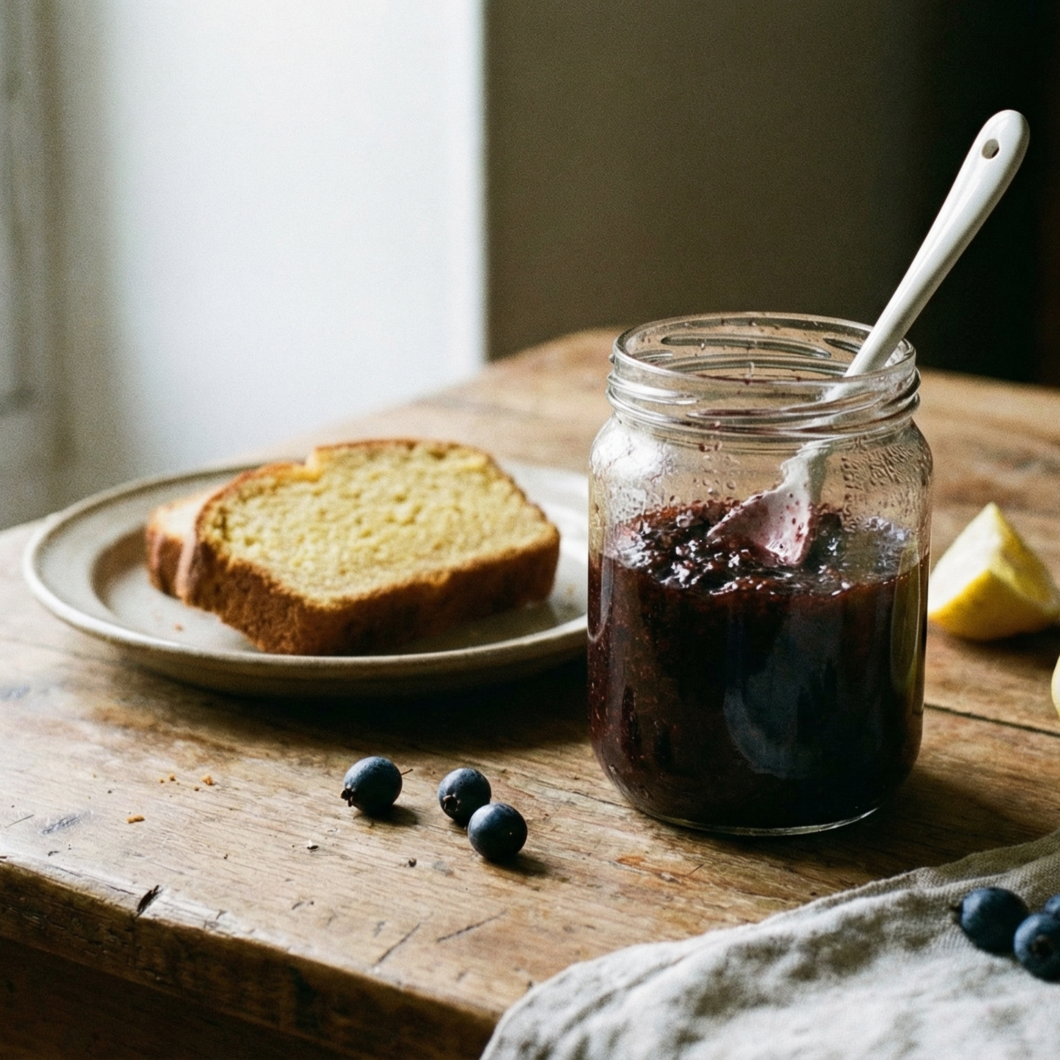

Myrtle jam
2
250g jars17
minutes34
minutes207
kcal51
minutesA dark and fragrant jam, with a resinous and slightly peppery taste typical of myrtle. Lemon and apple simply help it set, without overpowering it.
Keep your device's screen on
Ingredients
400g of myrtle berries (fresh or frozen)
320 g of caster sugar
1 untreated lemon (juice + fine zest)
1 small apple (approx. 150 g per unit) with peel, cored and grated
Preparation steps
- Quickly rinse the myrtle berries and drain them. If they are frozen, leave them at room temperature for 5 minutes to break the cold, without trying to defrost them completely.
- Remove the zest from the lemon (finely) then squeeze it.
- Grate the apple with the peel on, then remove the seeds if necessary (the goal is to have a fine pulp).
- Place in a jam pan (or a large, heavy-bottomed saucepan): myrtle berries, sugar, lemon juice, zest and grated apple. Mix well.
- Place over medium heat, stirring until the sugar is completely dissolved, then increase the heat to reach a rolling boil.
- Skim off any foam that forms. Let it boil for 18 to 22 minutes, stirring regularly (especially towards the end of cooking).
- After 10 minutes of boiling, roughly crush some of the berries with a potato masher (not a blender) to release the aroma while retaining some texture.
- Test the setting: place a small drop on a cold plate. If it sets and wrinkles when you push it with your finger, it's ready. Otherwise, continue in 2-minute increments.
- Immediately pour the boiling jam into clean, hot jars, seal, then turn the jars upside down for 2 minutes. Turn them right side up and let them cool.
📊 Nutritional Information
1 serving (approx. 80g)
| Nutrient | Value |
|---|---|
| Calories | 207 kcal |
| Proteins | 0.6g |
| Carbohydrates | 52.0g |
| including sugars | 49.8g |
| Lipids | 0.3g |
| including saturated fatty acids | 0.0g |
| Fibers | 1.9g |
| Sodium | 2mg |
| Vitamins | |
| Vitamin C | 18% AJR |
| Vitamin B9 | 4% AJR |
| Vitamin E | 3% AJR |
| Minerals | |
| Potassium | 5% AJR |
| Magnesium | 3% AJR |
| Iron | 2% AJR |
* RDA = Recommended Daily Allowance
📝 Notes
Storage: Keep jars closed, in a cool, dark place. Once opened, keep the jam/marmalade refrigerated and consume within 3 to 4 weeks.
💡 Chef's Tips
If you find the myrtle jam too tannic, let it rest for two weeks before opening: the flavor will mellow considerably. For a finer texture, pass only 1/3 of the jam through a food mill and then blend it again (without straining it all, otherwise you'll lose its character).
🔄 Variations
- Sweeter version: replace 30g of sugar with 30g of honey (add it off the heat just before putting in the jar).
- For a more citrusy version: add 1 tablespoon of orange juice along with the lemon.
