
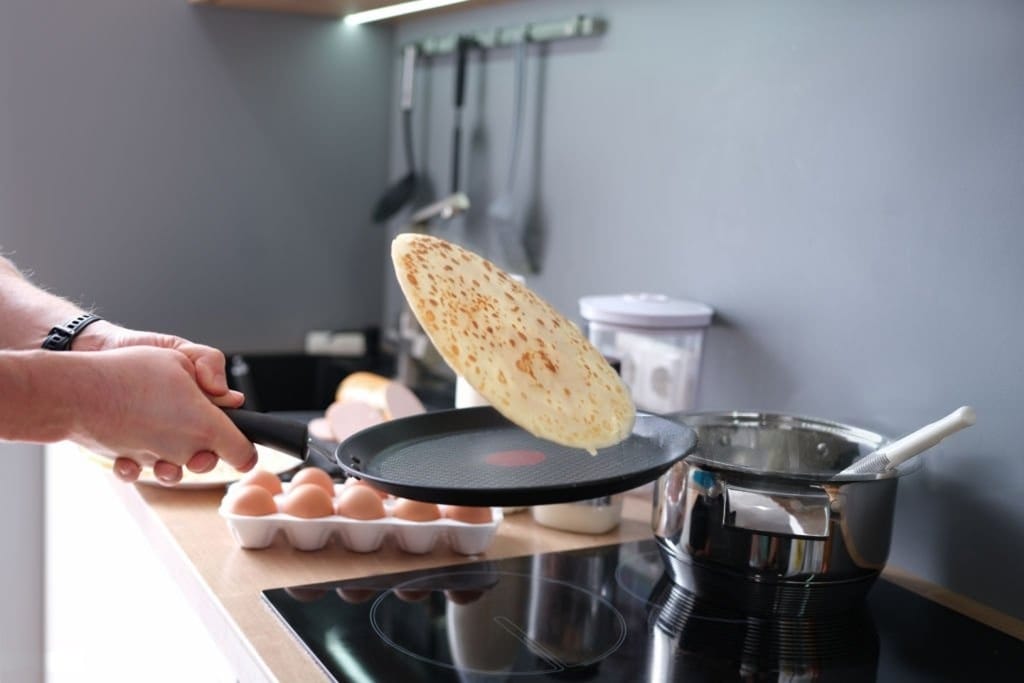
It's a question that comes up every Candlemas or every impromptu Sunday morning... You've just prepared your crepe batter, the bowl is overflowing with almost a liter of this viscous, golden mixture, and then a question arises — how many crepes will I be able to serve?
Between culinary optimism and practical realism, the answer to this question (which seems obvious) often depends on factors much more precise than we imagine!
Clearly define the expected return
The size of your pancakes: a matter of ladle and pan
The number of crepes you'll get depends primarily on the amount of batter you pour for each crepe. This amount varies depending on two things — your ladle and the diameter of your pan.
A standard ladle holds approximately 60 to 80 ml of batter. Using a 24 cm pan, this amount will produce a thin, evenly spread pancake. If you have a 28 cm pan, you will need to use more batter—approximately 100 ml—to achieve the same result.
The technique also matters. Some cooks pour generously, others are very careful with every drop. This difference in technique directly affects the final quantity of pancakes
Thickness: a traditional thinness or a thick, indulgent treat?
The thickness of the crepes radically changes the equation. Traditional Breton crepes, almost translucent, require less batter than thicker galettes, similar to American pancakes.
A thin crepe uses approximately 50 to 60 ml of batter → for a 24 cm pan. On the other hand, a thick crepe may require 80 to 100 ml.
This difference of 40 ml makes a big difference and represents several more pancakes per full litre.
Specific estimates based on stove formats
The standard size: 24 cm, classic thickness
Using a 24cm pan and a standard thickness, allow approximately 60ml of batter per pancake. One liter will make roughly 16 to 17 pancakes. This estimate reflects most common home use.
The website cuisine-pratique (or other reference sites in cooking) confirm this range, mentioning a yield of 15 to 18 crepes per liter depending on the technique used.
Expected yield for each pan size
| Pan diameter | Crepe thickness | Batter per crepe | Number of pancakes per liter | Ideal for: |
|---|---|---|---|---|
| 20 cm | Fine | 40-50 ml | 20-25 | Children, individual portions |
| 24 cm | Classic | 60 ml | 16-17 | Standard family use |
| 24 cm | Fine | 50 ml | 18-20 | Traditional Breton crêpes |
| 28 cm | Classic | 80 ml | 12-13 | Large portions |
| 28 cm | Thick | 100 ml | 10 | American pancake style |
Estimates include usual losses (first pancake, leftovers)
Large format: 28 cm and over
Larger pans require a more generous amount of batter → Allow 80 to 100 ml per crepe. Your liter of batter will then yield 10 to 12 crepes — larger but fewer in number.
The economical format: thin crepes of 20 cm max
With a small pan and a sparing technique, 40 to 50 ml is enough per crepe. This will yield 20 to 25 small crepes — ideal for children or elegant presentations.
Inevitable losses to anticipate
The first pancake: a necessary sacrifice!
The first crepe almost always ends up in the bin! This is usually due to batter that's too runny, a pan that's not heated enough, or an inaccurate measurement. This loss can sometimes amount to between 50 and 80 ml of your precious mixture.
The residue in the salad bowl
Can't get all your dough out? That's perfectly normal! Expect about 50 to 100 ml to stick to the sides of the container. This is quite logical, as it's due to the shape and material of the dough.
The setbacks along the way
Torn, burnt, or poorly spread crêpes → expect 2 to 3 failures in a full batch. These small mishaps represent approximately 150 to 200 ml of wasted batter…
The subtle influence of the recipe
Viscosity and consistency
Some crepe recipes produce a thicker batter than others. A batter rich in eggs is less spreadable than a batter made with less milk. This difference in viscosity affects the amount of each batter needed.
The type of flour and hydration
Buckwheat flour absorbs moisture differently than wheat flour. Without going into the specifics of each type—simply remember that the final texture of your dough directly influences its yield.
Practical estimate for 4 to 6 people
One liter of batter comfortably feeds 4 to 6 people with a hearty appetite. Generally, allow 3 to 4 crepes per adult to satisfy them for a full meal — 2 to 3 for a snack or dessert.
This quantity allows you to satisfy different appetites, while still leaving room for the inevitable second helpings when faced with good homemade pancakes.
Key takeaways
- Average yield = 15 to 18 with 1 liter of batter (24 cm pan, standard thickness)
- Main variables: pan size, desired thickness, pouring technique
- Expected losses = 200 to 300 ml (first pancake, leftovers, mistakes)
- Economy size: makes up to 25 small, thin pancakes
- Large size = 10 to 12 generous crepes
- Recommended portion: 3 to 4 crepes per person for a complete meal
Accuracy comes with experience. After a few sessions, you will develop your own technique and be able to refine these estimates according to your habits and preferences!
Answers to your questions
How do I know if I'm using the right amount of batter per crepe?
Your crepe should completely cover the bottom of the pan without overflowing, and with an even thickness. If holes appear after swirling the pan, you haven't poured enough batter. If it overflows or refuses to spread properly, you've used too much.
A successful crepe detaches easily after 1 to 2 minutes of cooking and has a slightly golden surface — without thick areas.
How many crepes are needed for 1 kg of flour?
One kilogram of flour produces approximately 3 to 3.5 liters of batter, depending on the recipe used. This is enough for a little over 30 very thick pancakes (galettes) — up to 50 or 70 for a standard size (24 cm pan).
This quantity is suitable for 15 to 20 people or for events requiring a larger number of crepes.
Can you increase the number of pancakes by diluting the batter?
Adding milk to thin a crepe batter that's too thick does indeed increase the volume—but be careful with the proportions. Adding 100 to 200 ml of milk to a liter of batter is perfectly acceptable—this can give you 2 to 4 extra crepes.
Beyond that point, your crepes will lose their shape and flavor. The texture becomes fragile, flipping difficult, and the final result less tasty than a batter that's balanced from the start.
Should you prepare more dough for large gatherings?
For 8 people or more, allow 1.5 to 2 liters of extra pancake batter
The yield does not change, but the losses increase proportionally → more failed first pancakes if you use several pans, more residue in the bowls, a few more accidents due to the sustained pace.
It's better to plan ahead than to run out of dough at the end of service, especially with hungry guests who always ask for one last round!