
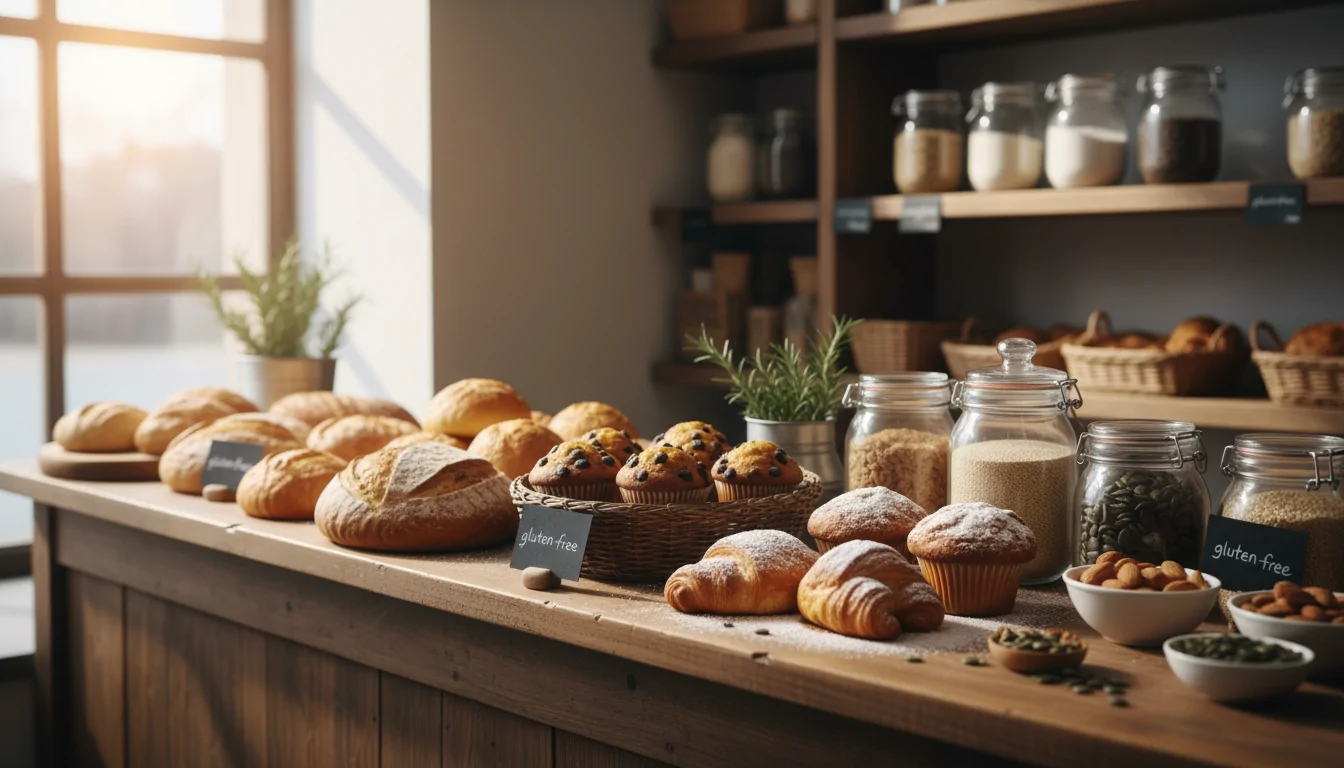
Long relegated to a “plan B” for a few people with disabilities, gluten-free baking has become a real field of creativity.
We are looking for safety, of course, but also a complete experience: a crust that sings under the blade, a soft crumb, aromas of buckwheat, chestnut or almond, and sweetness that is anything but a compromise.
In some families, the turning point comes after years of unexplained digestive discomfort; in others, after a diagnosis of celiac disease or a wheat allergy, which forces a review of habits without giving up pleasure.
In specialist shops, the challenge is not just to replace the wheat flour that is present everywhere: it is about reconstructing textures and aromas by relying on other cereals, legumes and well-chosen binders.
And that's where the "unexpected benefits" appear: better digestive tolerance in certain profiles, different intakes of fiber or micronutrients, increased dietary variety... all while rediscovering that simple ritual of morning bread.
So, what makes a gluten-free bakery so successful, and how can you enjoy this diversity day after day? We'll try to answer that in this article!
Gluten-free baking: definition, health and safety issues against cross-contamination
A gluten-free bakery is an establishment that designs and manufactures breads, pastries, cakes and snacks without wheat, barley, rye (and without derived ingredients that may contain gluten).
The important, often overlooked, nuance lies in controlling the risk of cross-contamination to avoid any problems.
In a conventional laboratory, a mere cloud of flour can be enough to render a product unsuitable for people with celiac disease.
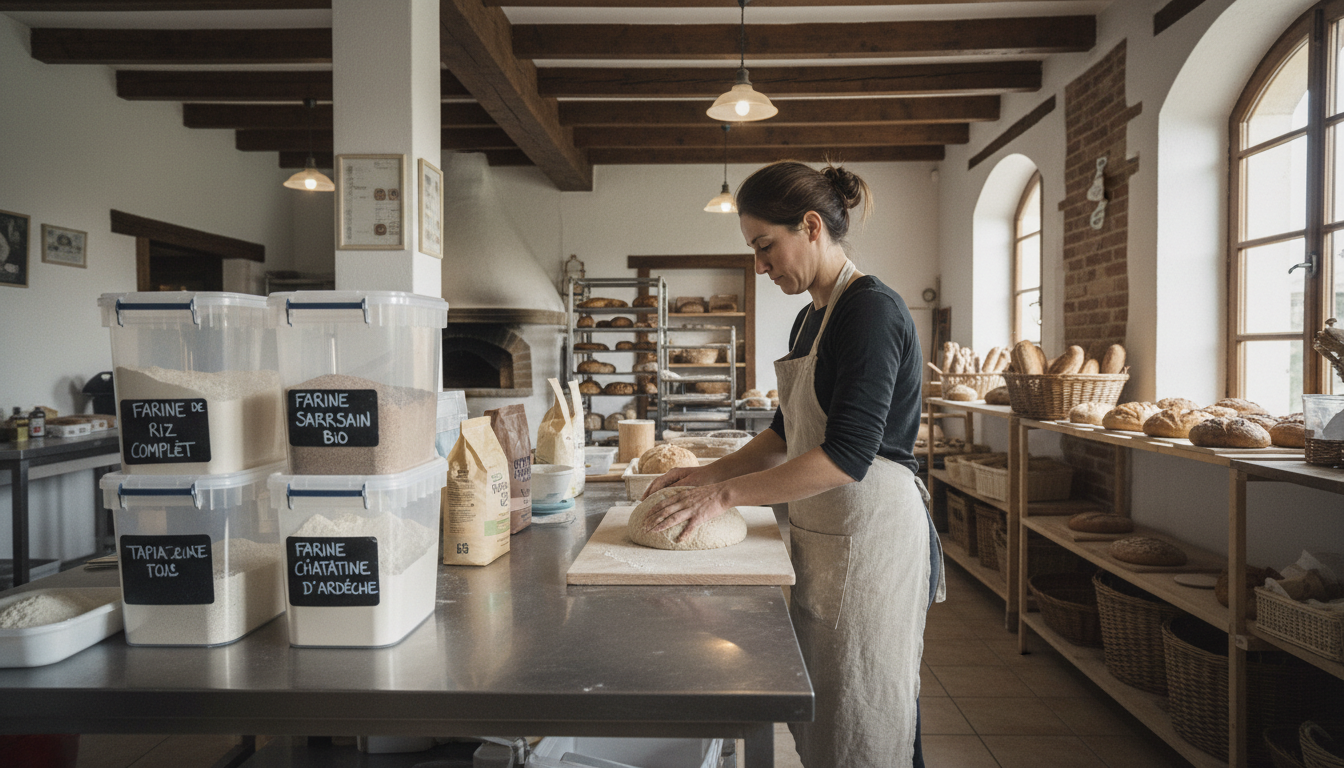
In a specialized structure, the organization is designed to avoid these “traces”: dedicated work surfaces, separate storage, identified utensils, strict cleaning procedures, and sometimes even a room exclusively reserved for gluten-free products.
Why this strictness? Because for people with celiac disease, ingesting gluten triggers an immune reaction that damages the intestine, even if the symptoms are not always immediate.
For other consumers, it may be a non-celiac sensitivity (digestive discomfort, fatigue, bloating) or a wheat allergy which may be chronic.
And then there are those who reduce gluten by choice, to explore a more varied diet or one better suited to their rhythm.
In practice, safety is not based on a vague promise, but on concrete indicators: labels, traceability of ingredients, clear information.
For example, the “crossed ear of wheat” logo (a common reference in France) corresponds to a requirement for very low gluten content, generally less than 20 ppm, a threshold considered safe for the majority of celiac people.
Recognizing a serious approach in a store
Camille, a young professional, discovered gluten-free after a period of recurring digestive problems.
She told me that the difference, in the context of her research to reduce the problems associated with this pathology, had hinged on details:
The bakery saleswoman was able to clearly explain the types of flour used, set up a separate display case, and provide individual packaging for certain perishable products. These are reassuring signs, especially when you're starting out!
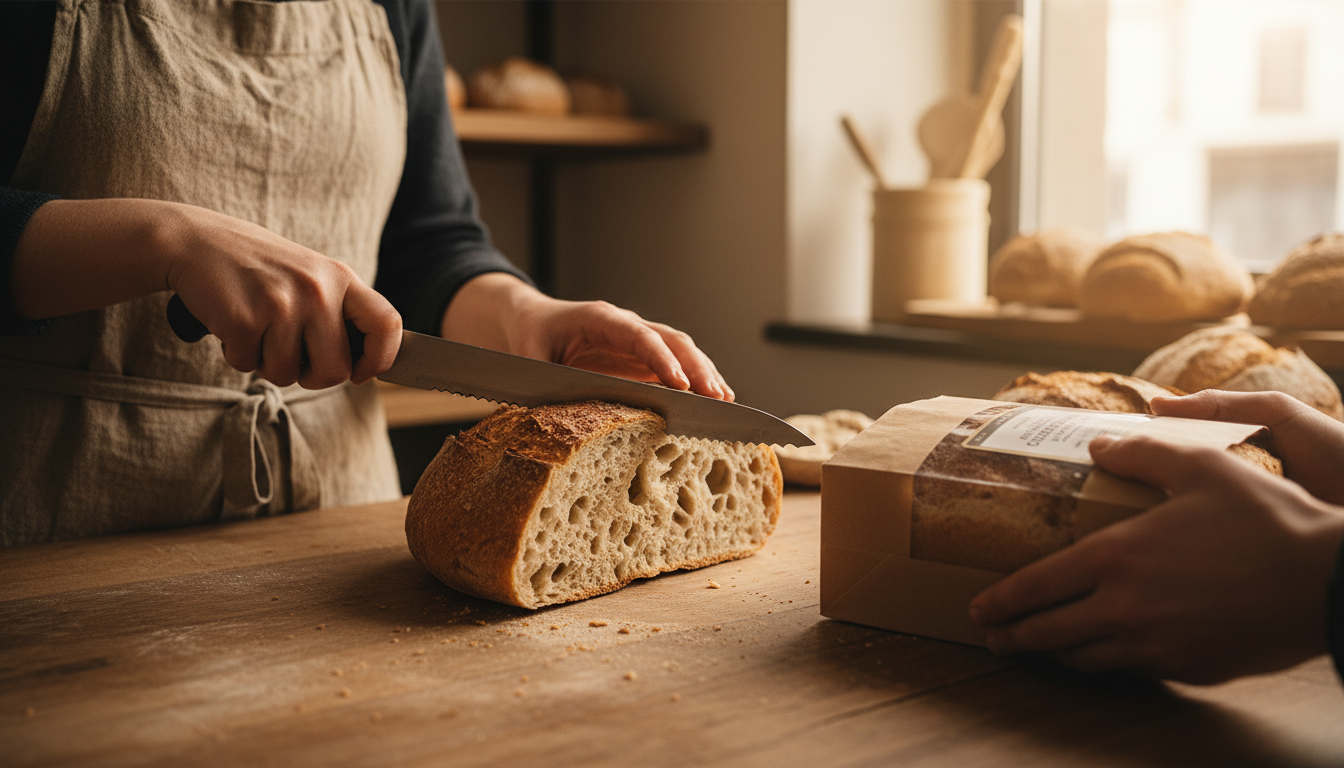
To take this lifestyle even further, some consumers also seek quality products from a dedicated gluten-free bakery, in order to always ensure consistent, regular and transparent production.
This requirement is not about being “obsessive”: it allows for more peaceful eating, diversification, which seems to change the daily lives of sensitive people according to their testimonies.
What products can you find in a gluten-free bakery? A really wide variety of breads, pastries, cakes and snacks
Entering a gluten-free bakery today often means being surprised by its diversity!
Bread is no longer a “compact block”: you can find baguettes with a thin crust, more rustic country loaves , loaves with seeds, and practical formats (rolls, slices).
Artisans play with flours and fermentation to achieve an airy crumb and a pleasant chew, without the dry sensation long associated with gluten-free products.
Pastries are following the same trend!
Some shops offer croissants and pain au chocolat made with puff pastry prepared differently, where the management of cold and turns becomes crucial.
We also see soft brioches, often enriched with eggs, plant-based milks or mild oils to enhance tenderness.
And on the pastry side, the classics are being reinvented: almond flour brownies, buckwheat financiers, fruit tarts on a crispy base, lighter desserts thanks to well-stabilized mousses.
Sensory quality: taste, texture, freshness (and the end of preconceived notions)
Success hinges on three key factors: the blend of flours, the binders (blond psyllium, xanthan gum, chia or flax seeds) and hydration.
Without gluten, dough that is too dry becomes crumbly; if it is too moist, it collapses!
Bakers therefore adjust the water, but also “functional” liquids such as milk, eggs or a drizzle of oil, which provide softness and better preservation.
For curious people who like to experiment at home, a well-guided recipe helps to understand these balances, for example our recipe for flourless and gluten-free bread, useful for understanding how the structure is built differently than with wheat.
A simple list to identify the major product categories
- Breads : plain, seeded, multi-flour (buckwheat-rice), chestnut, corn, quinoa.
- Pastries : brioches, cinnamon rolls, revisited puff pastries, apple turnovers.
- Pastries : cookies, chocolate brownies, tarts, entremets, travel biscuits.
- Snacks : wheat-free focaccias, legume crackers, savory snacks, homemade bars.
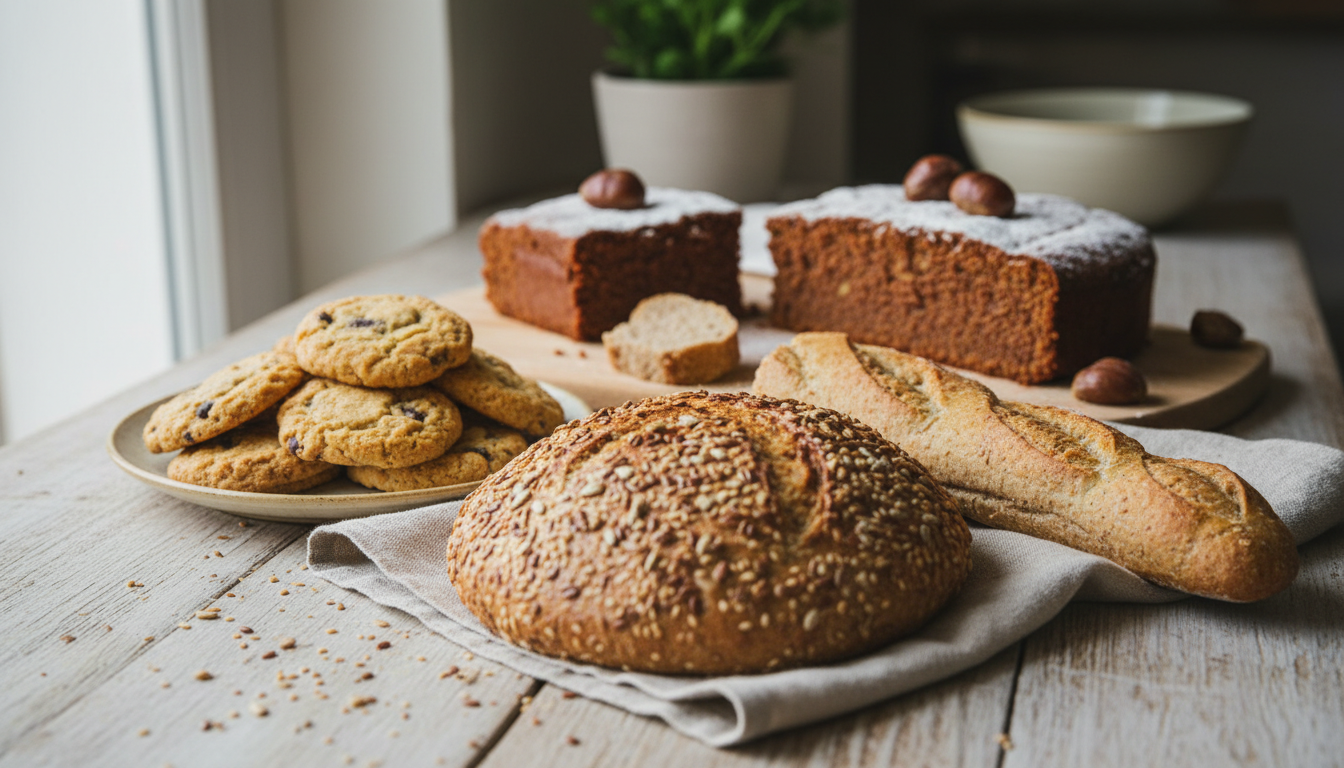
This variety has an unexpected effect: it encourages people to diversify their diet, which naturally leads to the next question, that of ingredients and their nutritional contributions.
Seeing examples of dough and fermentation techniques also helps to get an idea of the possible results.
Ingredients, alternative flours and health benefits: digestion, inflammation, energy and practical advice
Studies on the effects of gluten on health are sometimes controversial for healthy individuals, but are much clearer for people with immune problems. As you can read in this study https://www.mdpi.com/2072-6643/15/18/4013 or this one https://www.ncbi.nlm.nih.gov/pmc/articles/PMC10405818/
On the other hand, gluten-free products are of interest beyond simply alleviating symptoms, because they are based on different ingredients, with nutritional profiles that are sometimes richer or more varied, or even sometimes poorer, depending on the desired effect…
However, it is important to be careful not to create deficiencies by always varying your diet!
Generally, these are the popular ingredients most often used to reduce gluten levels:
Rice flour, which is widely used, provides a neutral and light base.
Buckwheat, on the other hand, gives a nutty taste and a real personality, while also offering interesting micronutrients.
Chestnuts provide a natural sweetness, appreciated in breakfast breads.
Chickpea or corn flour can strengthen the texture and add a more "gourmand" or rounder note.
Almond or coconut flours, often used in pastry making, contribute to aromatic density and satiety, as they are richer in lipids and proteins.
How to choose your flour according to its intended use?
| Gluten-free flour | Taste and texture | Notable nutritional advantage | Product ideas |
|---|---|---|---|
| Rice | Neutral, light | Versatile base, often well tolerated for digestion | Everyday breads, biscuits |
| Buckwheat | Rustic, fragrant | Interesting for varying the minerals | Country-style bread, flatbreads, muffins |
| Chestnut | Soft, fluffy | Adds a natural sweet note | Breakfast bread, cakes |
| Chickpea | Distinctive, dense | Higher in protein, good satiety | Focaccia, savory breads, crackers |
| Almond | Rich, melting | Protein and fiber, widely used in baking | Financiers, cookies, pie crusts |
The “unexpected” benefits: what some consumers are finding
For sensitive individuals, stopping gluten can be accompanied by more comfortable digestion : less bloating, a feeling of lightness, sometimes more regular transit (especially if the recipes use blond psyllium, which is rich in fiber).
Some also notice an improved “energy level” over the weeks, partly because they replace highly refined products with recipes using more diverse flours.
Others see it as beneficial in inflammatory contexts, although the effect depends heavily on overall diet: a very sweet gluten-free cookie is still a cookie, and the quality of the ingredients matters.
The key is therefore to aim for balance: favour breads rich in seeds, vary the flours, and do not confuse “gluten-free” with “automatically healthy”.
The best specialist bakeries have understood this: they work on the gourmet aspect, but also on short and readable ingredient lists.
Our practical advice: choose, store, support
When buying, ask a simple question: “Was the product made in a dedicated space?” Then, look at the texture: good gluten-free bread should be soft and not crumbly.
For storage, slice and freeze quickly if you are not going to eat it within 24 to 48 hours; toasting most loaves restores a nice crust.
As for accompaniments, buckwheat breads go very well with fresh cheese and salmon, while chestnut bread loves butter and a low-sugar jam.
To visualize recipes and realistic results, a video demonstration can sometimes help to get started or to better understand how to choose in store.
Answers to your questions
How can we be sure that gluten-free bread has not been cross-contaminated?
Ask if the product is made in a dedicated facility and check for clear labeling (ingredients, mention of traces, and possibly the crossed-out wheat symbol). A specialized bakery also organizes storage and utensils separately to prevent wheat flour from entering the environment.
Are gluten-free products always better for digestion?
They can improve digestive comfort in people with celiac disease, wheat allergies, or gluten sensitivity. For others, the effect depends mainly on the overall quality of the diet: a gluten-free product that is very sugary or very fatty will not necessarily be more digestible.
Which flours should I choose for a gluten-free bread that tastes close to traditional bread?
Blends are often the most effective: a rice base for neutrality, buckwheat for depth, and a binder like blond psyllium for the crumb. Artisans also adjust hydration and fermentation to achieve volume and elasticity.
How to keep a gluten-free baguette fresh and tasty?
It's best to eat it the same day. Otherwise, slice it and freeze it quickly in an airtight container. A quick toast or a few minutes in the oven will restore a crispier crust and a softer crumb.
