
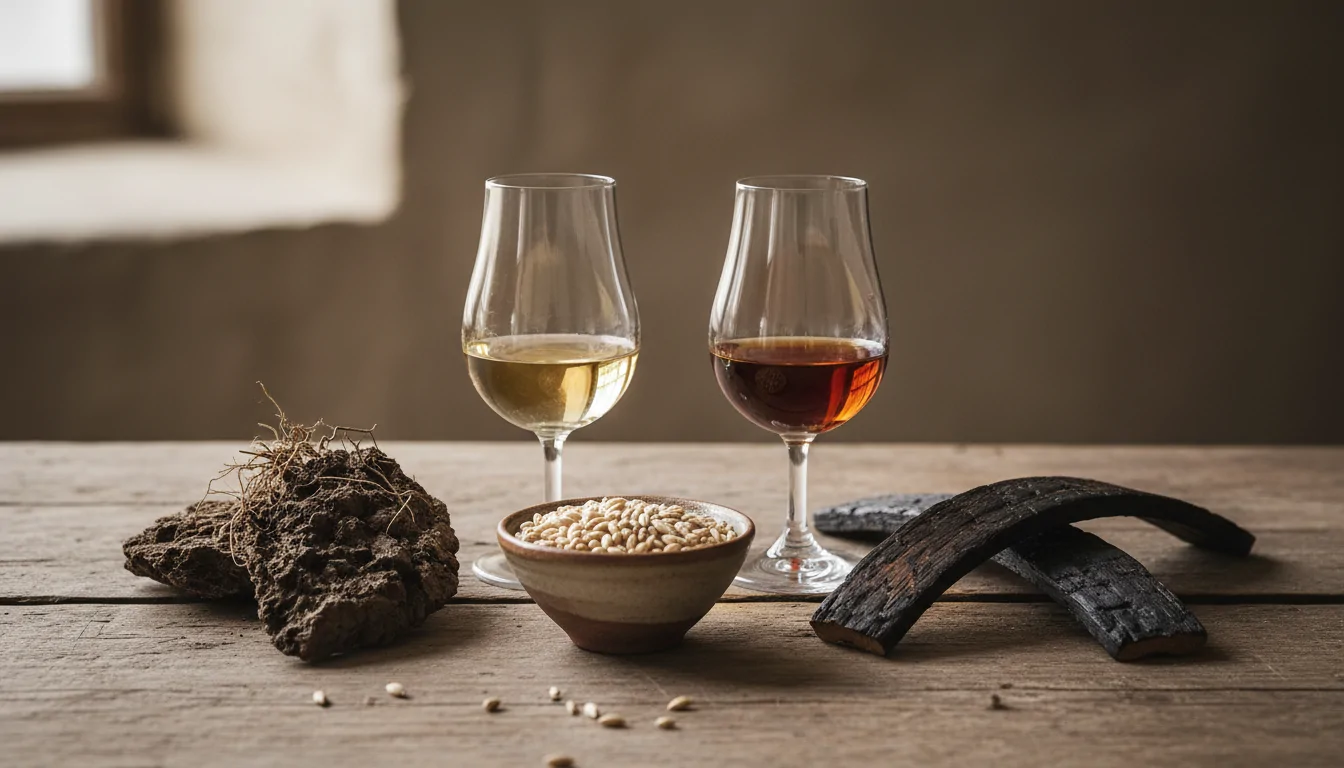
In Paris, in the plush rooms of the British Embassy, a tasting of Scotch whiskies bringing together seasoned wine merchants recently reminded everyone of a simple reality: Scotch whisky is no longer the only one to dictate the tempo.
Scotland remains a global benchmark, driven by iconic regions, time-honored methods, and a culture where patience is paramount. Yet, across the Channel, bottles from France are also finding their way onto countertops.
The phenomenon is not limited to a fad: it is based on a new generation of producers, on the mastery of barrels inherited from the vineyards and on a public curious about less expected aromatic profiles.
The dialogue between Scottish traditions and French creativity is now played out on a more equal footing, sometimes with rivalry, often with mutual admiration.
Behind the labels, the same question is being asked: how to preserve this heritage while meeting today's tastes and demands? That's what we'll discover in this article!
Scottish traditions: from grain to glass, a manufacturing process rooted in the land
In Scotland, the reputation of whisky has been built on a chain of consistent decisions, where every step counts.
The selection of barley, first of all, remains an important marker: some distilleries favour regular batches to guarantee consistent quality, while others value more identified origins.
Malting then transforms the starch into fermentable sugars, and it is often here that a signature character is found.
On Islay, for example, the drying process may incorporate peat, the smoke of which permeates the malt and brings iodine, medicinal or ashy notes depending on the practices.
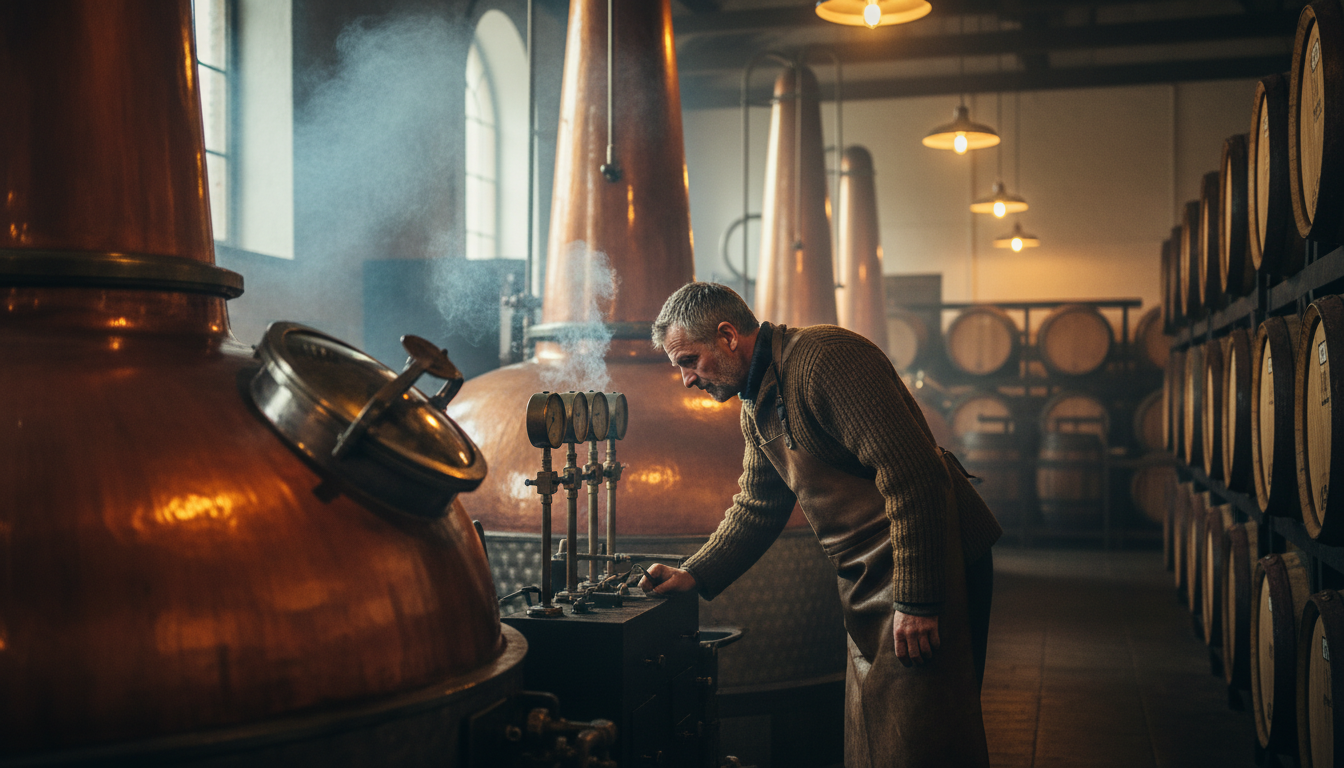
Distillation out in copper pot stills. The goal is not simply to obtain alcohol, but to shape a spirit.
The shape of the stills, the heating speed or the cuts (heads, heart, tails) influence the final character.
To illustrate this logic, let's take the example of a fictional wine merchant, Marc, who compares two profiles: a Speyside malt, which is fruitier, and an Islay that is smokier.
He notes each time that the texture in the mouth differs as much as the aromas, a sign that distillation is not a simple necessary step, but a true staging of flavors.
Barrel aging is another key element.
The casks that previously held bourbon or sherry impart vanilla, dried fruit, and spice notes, and structure the finish. Over time, the "angel's share" reduces the volume, concentrating certain sensations.
In the Highlands, the diversity of microclimates and spring waters also contributes to the variety of ranges, while Speyside is known for its refined spirit, often associated with careful breeding.
Beyond techniques, Scotland boasts a artisanal know-how : a memory of gestures, smells, and landmarks that connects generations.
This continuity gives whisky a cultural stability that new players are observing closely!
Good to know: in Scotland, innovation exists, but it is most often expressed as a controlled variation of a heritage, without any break.
The revival of French whisky: terroirs, casks and controlled boldness
The revival of French whisky is based on a dynamic of artisanal distilleries which, for several years, have gained in precision and ambition.
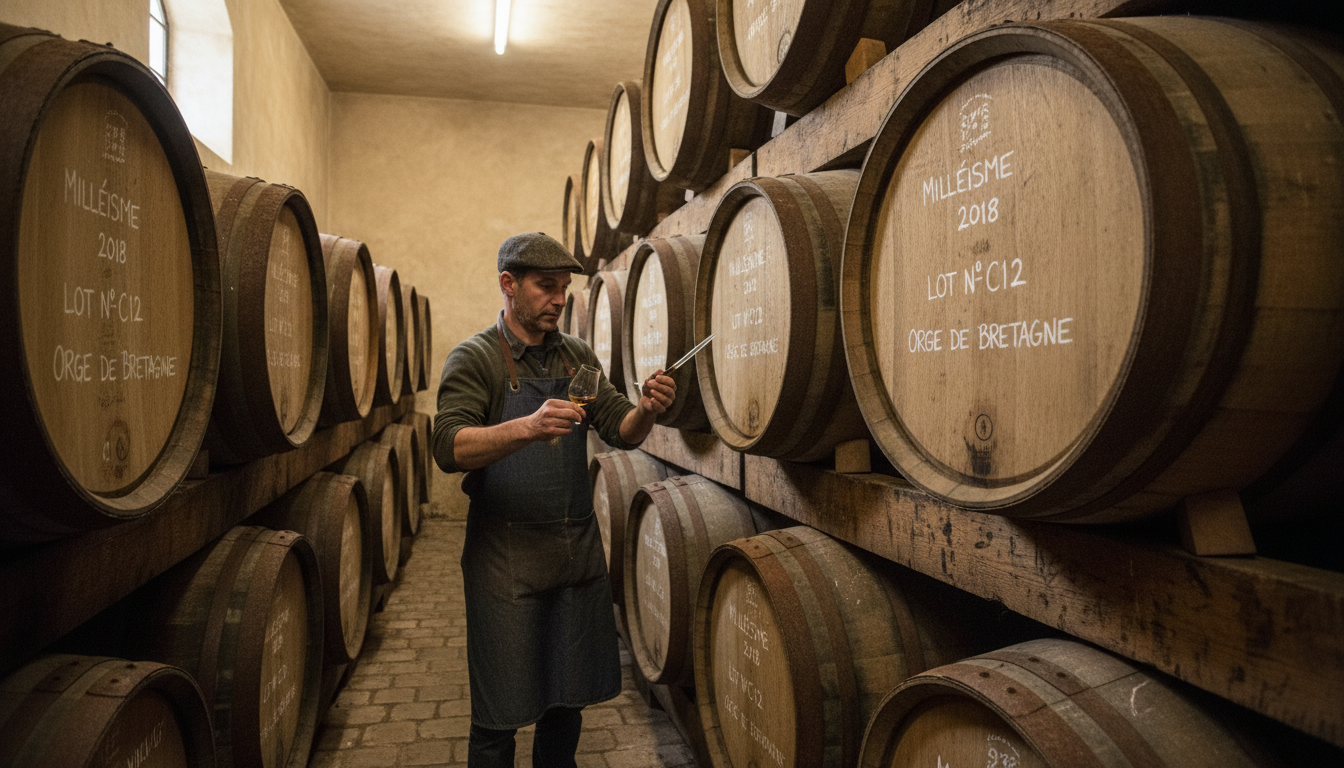
Many were initially perceived as regional curiosities, before convincing through regularity, transparency and distinctive aromatic profiles.
One of the major assets is the French terroir, understood in the broadest sense: diversity of cereals (barley, but also rye, wheat or ancient varieties), varied catchment waters, and above all a culture of aging inherited from wine and brandies.
France has a historical familiarity with wood: cooperage, aging, blending… This translates into a fine attention paid to barrels, sometimes made from French oak, sometimes having contained sweet wines, red wines, or even regional spirits.
In this context, an innovative whisky is not necessarily “extreme”: it can simply offer a local interpretation of a classic process, for example a short finish in a barrel that contained a sweet wine, to bring honeyed notes without overpowering the distillate.
Some French producers draw inspiration from Scottish standards while adapting them.
A brand like Bellevoye, for example, popularized a “triple malt” approach, blending whiskies from different French origins and then finishing them in a region renowned for its cellar expertise.
This logic speaks to Single malt as well as the curious: it highlights the art of blending, while asserting a national identity.
To explore references and understand the current variety, specialized selections marketed on online shops offering French whisky clearly illustrate the breadth of the offer, between accessible ranges and more sophisticated vintages.
An anecdote often comes up among wine merchants: customers who have historically been loyal to Scotch malts now ask for “a French one, but with character”.
This sentence alone sums up a real expectation: to rediscover the high standards of manufacturing, while discovering something else.
Producers are responding to this demand with longer fermentations to enrich the fruitiness, more selective cuttings, or double-maturation trials.
International recognition is following this trend, particularly through competitions and professional tastings where French whiskies are no longer evaluated as "newcomers", but as peers!
The main advantages of French whisky:
- Local cereals : a search for typicity, sometimes with old varieties or more sustainable agricultural approaches.
- Barrel work : use of French oak, finishing in wine barrels, and supervised experimentation.
- Regional identity : highlighting a place, a water source, a maturation process adapted to the climate.
- Transparency : more detailed information on the processes, expected by an informed public.
Good to know: French whisky asserts itself less through imitation than through the translation of international codes into credible local expressions.
Scotland vs France: comparison, dialogue on methods and new expectations
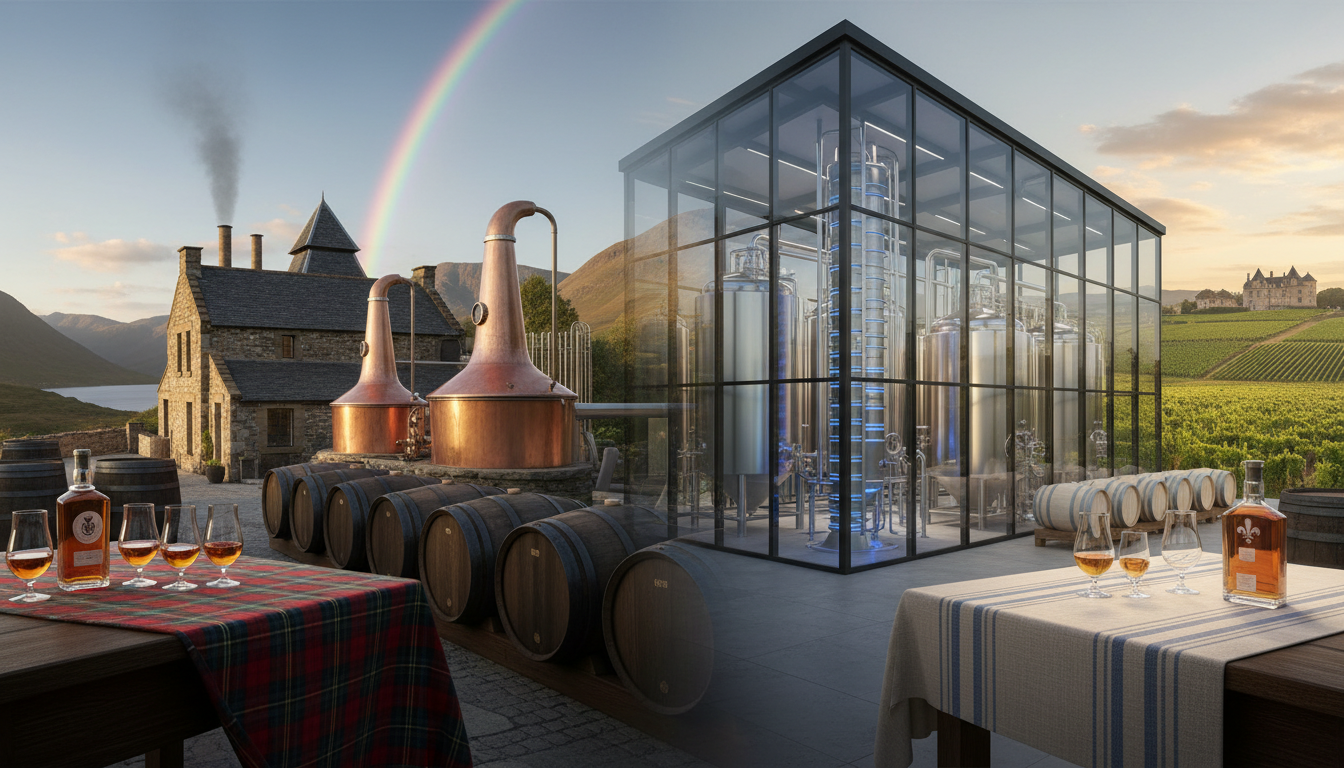
Comparing Scotland and France is not about declaring a winner, but about understanding two ways of achieving quality.
Scottish traditions are based on solid historical frameworks: identified regions, expected skill requirements, and strong clarity for the consumer.
France, for its part, is moving forward with more freedom, but also with a responsibility: to demonstrate that creativity remains at the service of balance.
In both cases, the search for authenticity involves concrete choices, from fermentation to the final barrel.
A recent episode illustrates the constructive tension of the moment: the mobilization of Scottish organizations to meet with French wine merchants and present independent bottlers.
The objective is clear: in a French market that has become more demanding, mere reputation is no longer enough. Professionals want to taste, compare, understand the origin of batches, the consistency of a range, and a producer's ability to enhance its expertise from one year to the next.
This “assisted sale” by the advisor reflects a broader trend: enthusiasts are more interested in manufacturing details and are asking for accessible explanations, without unnecessary jargon.
The convergence is striking on certain points!
First, the role of wood: in Scotland, aging in barrels structures the major aromatic families; in France, the experience of cellars and finishing expands the taste vocabulary.
Next, attention is being paid to the environmental footprint: distilleries in both countries are investing in energy efficiency, water management, and better traceable grain supply chains.
Finally, the rise of more “raw” bottlings (natural strength, smaller batches) responds to a demand for more direct experiences.
| Dimension | Scottish approach | French approach |
|---|---|---|
| Features | Well-defined regions (Islay, Speyside, Highlands), established aromatic expectations | Growing reputation, more varied ranges depending on the distilleries and casks |
| Aromatic markers | Peat is emblematic in some malts, a possible maritime influence | Emphasis on French terroir and finishes inspired by the world of wine |
| Mastering the barrel | Historical use of ex-bourbon/ex-sherry casks, continuity of traditions | Supervised experimentation, searching for an innovative whisky without losing the balance |
| Relationship to the market | Export power, increased need for education among wine merchants | Domestic growth, rising international recognition |
For Marc, our wine merchant, the most telling moment comes during a blind tasting: a French whisky with notes of ripe fruit and sweet spices is mistaken for a "Speyside style" malt, before revealing an unexpected finish.
This type of surprise fosters dialogue between producers and refines the palates of enthusiasts, who learn to distinguish the effect of the cask from the distillery's signature.
Good to know: competition primarily stimulates greater transparency in practices, and it is often the consumer who benefits in terms of diversity and quality!
This dynamic is also reflected in cocktail culture, where some more mellow French whiskies are used in classic recipes, while more distinctive Scotch whiskies remain preferred for neat tasting.
The important thing is no longer to follow a fixed hierarchy, but to understand the producer's intention and the desired harmony, both in the glass and at the table.
Additional information
What is the simplest difference to perceive between a peated Scotch whisky and an unpeated French whisky?
A peaty Scotch whisky often evokes smoke, ash or iodine, while an unpeated French whisky more readily highlights fruit, sweet spices and the influence of wine casks, depending on the cask aging choices.
Does single malt whisky also exist in France?
Yes. A single malt refers to a whisky produced in a single distillery from malted barley, and many French distilleries today produce their own single malts, sometimes complemented by original blends.
Why is barrel aging so crucial to the taste?
The wood imparts color and aromas (vanilla, spices, dried fruit) and rounds out the alcohol. The type of cask, its history (bourbon, sherry, wine), and the maturation time significantly alter the final profile, in Scotland as in France.
How to start a comparative tasting of Scotland/France without getting your bearings wrong?
Choose two whiskies of similar strength (around 40–46%), taste them in tulip glasses, then note the nose, palate, and finish separately. Adding a few drops of water can help reveal aromas and better understand the effects of distillation and cask aging.
