
Building a collection of fine wines represents a long-term investment in wealth management.
The question of their preservation quickly arises: how to preserve valuable bottles without transforming one's interior into a utilitarian space?
Integrating a custom-made wine cellar into a home raises both technical and aesthetic challenges.
Let us examine the layout solutions that reconcile decorative discretion and conservation requirements, the climatic parameters to be controlled, and then the organization of storage according to formats and uses.
Incorporate a wine cellar that matches your decor
Installing a wine cellar in a living space requires balancing several constraints. The available space determines the storage capacity, but the circulation around the installation and the visibility of the bottles also influence the choice.
For collector-owners, the challenge is to avoid disrupting the harmony of an interior while ensuring convenient access to the service.
Integration options vary depending on the layout of the accommodation:
- Built-in wine cellar in the kitchen : fits seamlessly into the furniture, provided that thermal insulation and ventilation are properly maintained;
- Built-in column: in a hallway or living room, offers superior capacity but requires a certain consistency with the surrounding materials;
- Wall niches or under-stair storage: make use of wasted space;
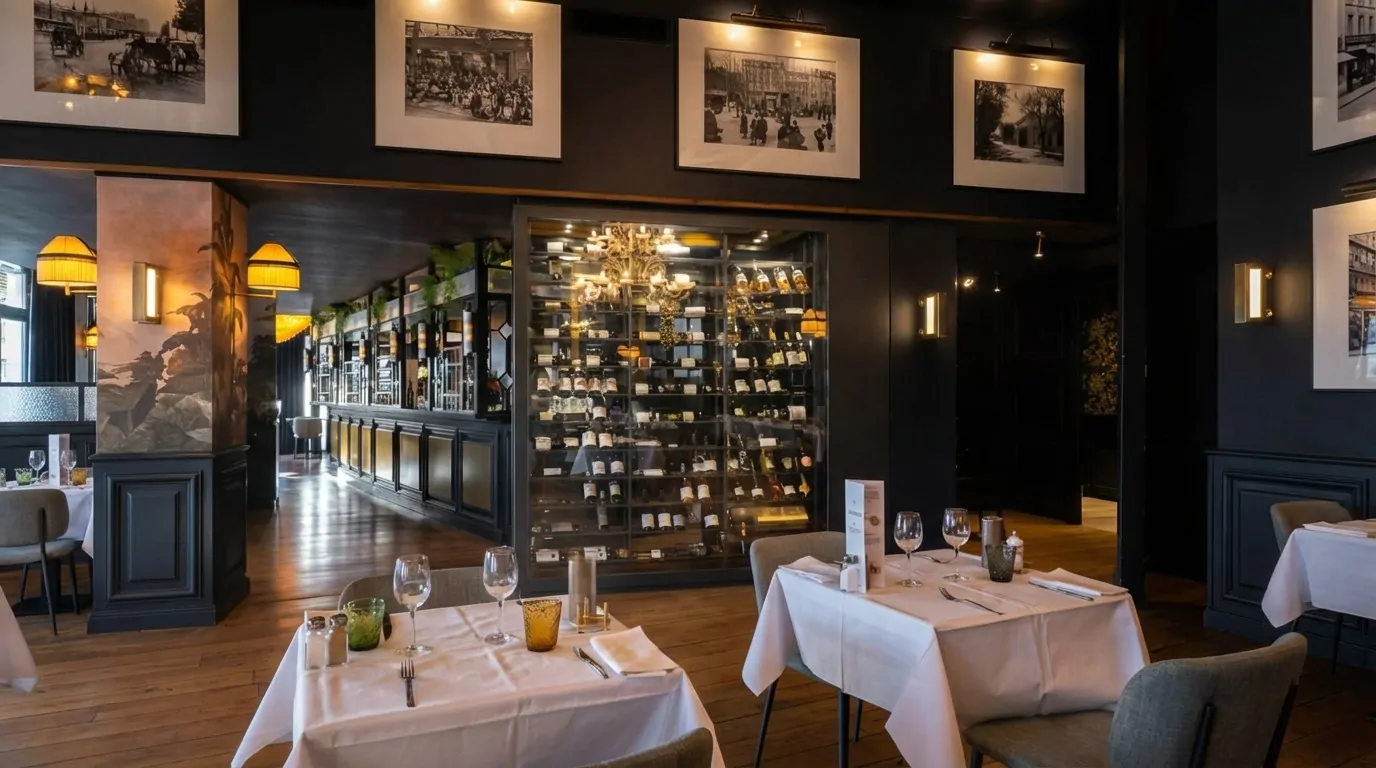
- Glass-fronted wine cellar, shop window style : fully embraces its presence;
- Discreet built-in solutions: prioritize discretion behind opaque facades.
The choice is based on several criteria, including price, which varies according to capacity and finishes.
The finishes (wood, metal, glass) should complement the existing furniture. Interior lighting, when present, should remain subtle so as not to alter the wines.
The noise level of the compressor, the quality of the ventilation and the accessibility of the shelves determine the ease of use.
Built-in kitchen wine cellars require special attention to temperature variations related to cooking appliances.
The market offers various solutions, from entry-level built-in models to custom-designed climate control systems.
To delve deeper into integration and design options, consulting avintagesurmesure.com, for example, will allow you to explore layout possibilities adapted to each configuration.
Beyond aesthetics, the success of an installation depends on mastering the conservation parameters.
Master the essential parameters of preservation
Climate stability takes precedence over technical performance.
Preserving fine wines over several decades requires understanding the factors that influence their evolution. Temperature and its variations, humidity, darkness, the absence of vibrations, and air quality are the cornerstones of successful preservation.
Thermal regulation must avoid shocks. The best climate control systems maintain constant temperatures, but the immediate environment plays a crucial role.
Insulation and ventilation of built-in cellars limit deviations, while exposure to heat sources (oven, radiator) compromises stability.
Humidity helps maintain the seal of the caps, but excessive humidity promotes the growth of mold on the labels.
Darkness protects wines from light, which accelerates their oxidation.
Finally, vibrations, even slight ones, disrupt the natural sedimentation of deposits.
Common situations in houses or apartments reveal frequent mistakes:
- A built-in wine cellar installed in the immediate vicinity of an oven is subject to thermal variations incompatible with preservation;
- Prolonged vertical storage dries out the corks and promotes oxidation;
- Direct exposure to natural light, even filtered, gradually alters aromatic compounds;
- Ambient air quality, when strong odors are circulating (cooking, household products), can migrate through the plugs.
These parameters determine the organization of storage and the usable capacity of a cellar. They also guide the choice of bottles to store according to their sensitivity and their intended aging period.
Optimize storage according to bottle types
The capacity advertised by manufacturers rarely corresponds to the actual capacity.
Bottle sizes vary: a narrower Bordeaux bottle takes up less space than a wider Burgundy bottle. Magnums and special formats require adjustable shelves.
This diversity influences the layout of the cellars and the distribution of the bottles.
Organizing a collection in a sustainable way is based on a zoning logic.
The best layouts distinguish several functional zones:
- Long aging potential: wines occupying the most stable areas, often at the bottom of the cellar where temperatures are coolest;
- Ready to drink: accessible bottles, near the service area;
- Separation of white/red/sparkling wines: facilitates the management of serving temperatures.
Good practices include horizontal storage, which keeps the cap moist, discreet labeling, and regular rotation.
This organization reflects the composition of the collection and its prospects for evolution.
Accessibility and safety constraints deserve special attention; indeed, anti-vibration systems preserve the stability of the bottles, while the sturdiness of the shelves prevents the risk of falling.
Access to heavy bottles, especially magnums, must be designed to limit handling.
In a built-in or integrated wine cellar, optimizing space involves a thoughtful distribution of formats and a hierarchy of uses.
Storing fine wines without compromising interior style requires aligning three dimensions: storage organization, preservation requirements, and decorative coherence.
This approach transforms the cellar into an integral part of the layout, reflecting a wine culture rooted in time.
Theintegration of a wine cellar into a contemporary interior illustrates the continuity of a living wine heritage.
The best arrangements combine aesthetic discretion and technical rigor, integrating conservation into everyday life without ostentation.
The price of a custom installation underlines this dual requirement: preserving the quality of the wines while respecting the harmony of a living space.
This approach extends, on a domestic scale, the know-how developed by producers and traders in their own cellars.
