
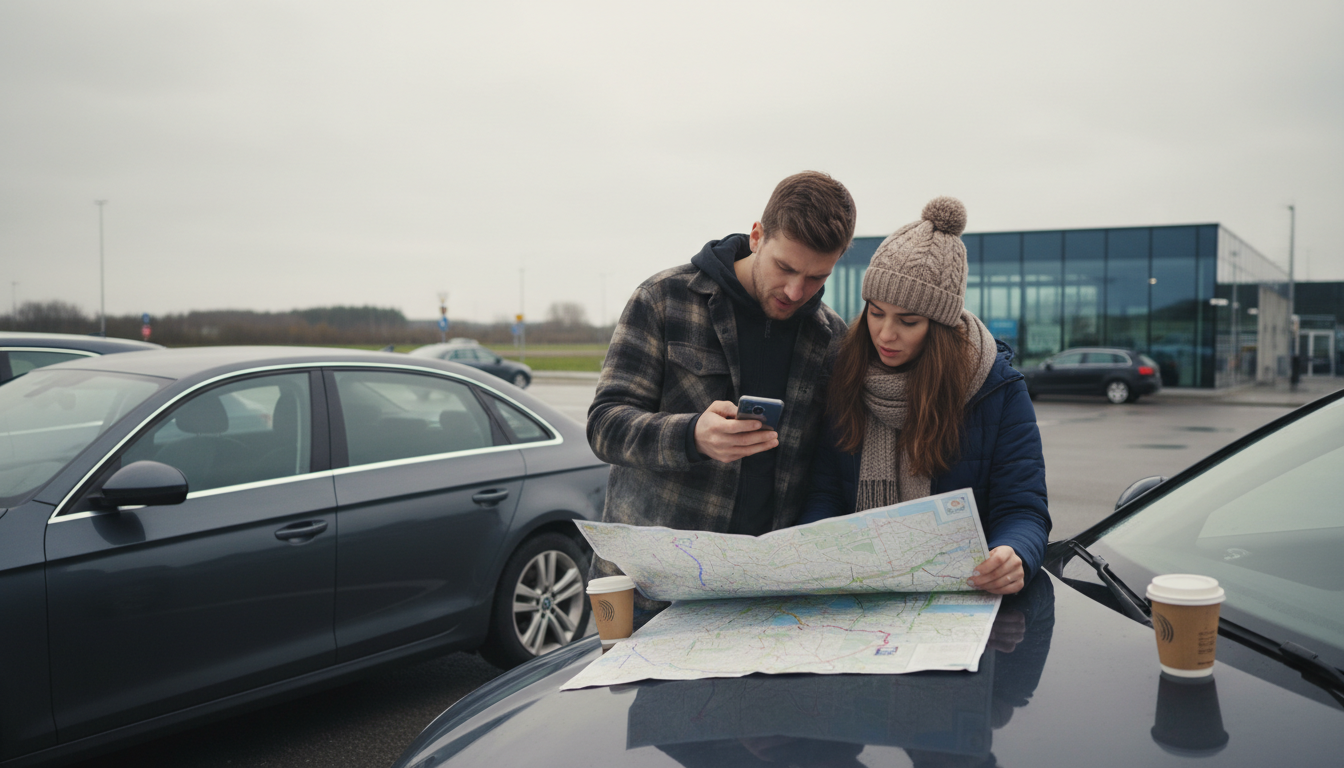
Setting off on a European road trip means embarking on a journey where every motorway exit can be a surprise. In a single loop, you can go from an Alpine pass to an Atlantic coast, then end the day in an old cobbled town!
The goal of this article is simple: to anticipate as little as possible and keep a light heart, even when the road decides to test you!
Administrative documents and insurance: a solid foundation before hitting the road in Europe
Start by securing what can stop your trip in seconds: the formalities.
Your identity documents (identity card or passport) must be valid for the entire duration of your stay, plus a margin of error.
A classic oversight: the document expires during the trip, right when you change countries or pick up a rental car.
The driving licence is the other key document. In most European Union countries, your French driving licence should be sufficient.
If you are leaving the EU or if you have any doubt depending on the route (Balkans, certain border areas, etc.), check in advance whether an international driving permit is necessary.
It's rarely complicated, but it's always easier from home than in the middle of a rushed departure!
Car insurance, health insurance and digital copies: the trio that avoids headaches
For the vehicle, keep the registration certificate and insurance certificate with you. Check that your policy covers all the countries you will be traveling through, including those "in transit".
Regarding health, the European Health Insurance Card remains a useful reflex, and comprehensive travel insurance is relevant if you are planning activities (high-altitude hiking, water sports).
Simple tip: scan everything and save it in a secure location.
Many travellers also choose encrypted messaging to send their documents to each other and retrieve them quickly.
A practical example is a email address , whose functions can be particularly useful when you need to retrieve a copy or access information from a hotel computer or backup phone…
Staying flexible without spreading ourselves too thin: the "core" route and its variations
To illustrate, imagine Clara and Julien, who are traveling from Lyon to Tuscany via Switzerland. Their mistake on their first trip: not having proof of insurance when the network was weak. On their second trip, they prepare a printed folder plus a digital file accessible offline.
Result: a check near Milan is resolved in two minutes!
In the same vein, build a clear itinerary (your main stages) and keep 2 or 3 variations: a detour to a lake, an extra night in a favorite city, or on the contrary, skipping a stage if fatigue sets in.
This method avoids the "military planning" effect while limiting inconsistent journeys.
For long distances, it can be smart to mix car and ground transport to avoid driving for 8 hours straight.
Intermodal comparators allow you to combine train, bus and carpooling, which can make your journey more relaxing, especially between two major capitals.
The key phrase to keep in mind: your documents should never depend on an internet connection.
Preparing the vehicle and navigation: reliability, mandatory equipment, and simple tools
A road trip rarely succeeds "despite" the car: it succeeds because of it.
If you are leaving with your own vehicle, do a complete check before departure: fluid levels (oil, coolant), condition of the tires and spare tire, brakes, lights, windshield wipers.
This check will prevent costly repairs abroad and complicated discussions when you don't speak the language.
If you rent locally, read the reviews and clarify the points that increase the bill: deductible, mileage, fuel policy, cross-border fees.
A "cheap" rental can become a trap if the deposit skyrockets or if each country visited adds another option.
Equipment that is often mandatory: better too prepared than not prepared enough
Requirements vary from country to country, but some elements come up very often.
Provide at a minimum a reflective vest accessible from inside the vehicle, a warning triangle and an adequate first aid kit to perform basic care.
In some countries, fire extinguishers or other accessories are required, and controls can sometimes be strict.
Equipment to prepare for any eventuality:
- Safety vest: within easy reach, not at the bottom of the trunk.
- Triangle: useful even for a simple breakdown on the emergency stopping lane.
- First aid kit: bandages, compresses, disinfectant, survival blanket.
- Jumper cables or boosters: invaluable in winter or after a cold night.
- Chargers and adapters: especially if you are going through several countries.
If you drive an electric vehicle, the planning changes: charging stations sometimes dictate the pace.
Remember to cross-reference charging information with your route, and always leave a margin to avoid charging "to the exact percentage".
GPS, road maps, and good apps: stress-free navigation
GPS is perfect for getting there quickly, but it has one drawback: it locks you into an optimization mindset.
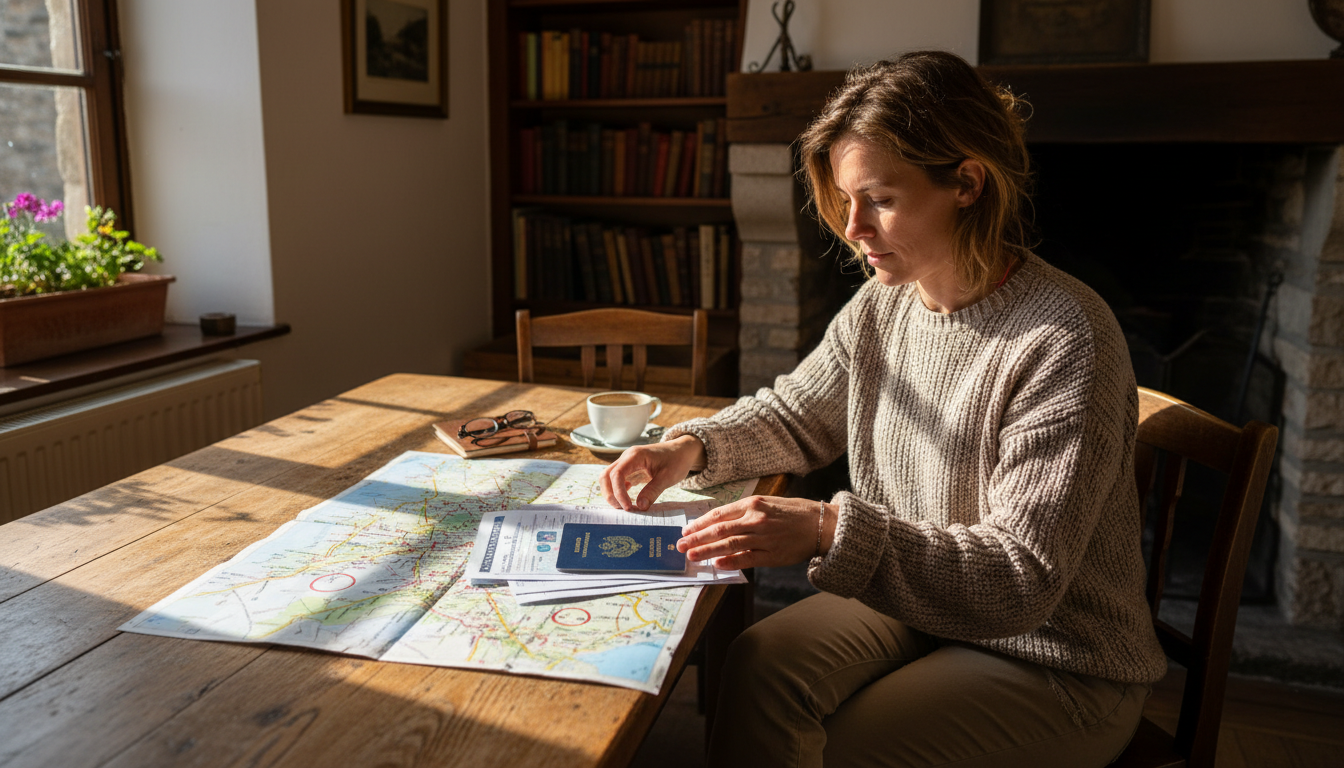
A paper road map remains invaluable for visualizing a mountain range, a coastline, or a rural area. It helps you spot a scenic route, a detour via a lake, or an alternative route when a road is closed.
Combine the two with useful mobile applications: an offline navigation app, another to estimate tolls and travel time, and a third to locate nature spots or suitable areas if you are travelling by van.
The idea is not to accumulate, but to choose 3 or 4 reliable tools. Let's compare them according to each situation!
| Road conditions | Recommended solution | Why it works |
|---|---|---|
| No network coverage area | Offline maps + paper map | You maintain an overall view and minimal guidance |
| Tiring long-distance journey | Train/bus on one section + local rental | Fewer hours behind the wheel, more energy to explore |
| City with expensive parking | Parking on the outskirts of town + public transport | You avoid stress, fines, and traffic jams |
| Change of country | Check mandatory equipment and local rules | You avoid penalties and drive more calmly |
To stay in control, set a simple rule: every long day of driving must end with a buffer of time. Arriving at night in an unfamiliar region, in the rain, without a plan B, is a classic recipe for stress!
The next logical topic: what you pack and how you manage accommodation and budget on a daily basis.
Luggage, accommodation and budget: travel light, sleep smart and keep your spending under control
Comfort on a road trip rarely depends on a "gadget" item. It depends mainly on your ability to move quickly, find your belongings, and adapt to the weather.
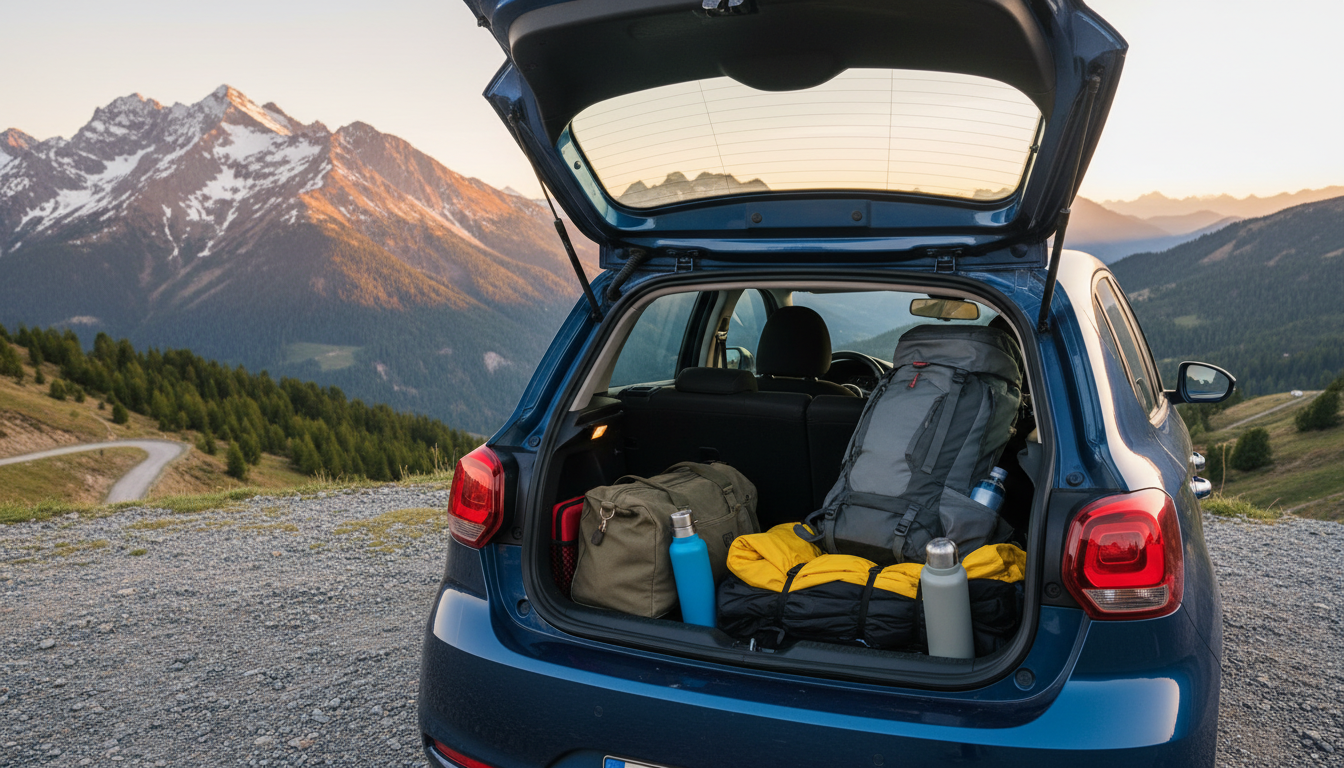
Aim for lightweight and modular luggage: a "warm" outfit, a "rain" outfit, and layers that are easy to stack.
In Europe, you can go from 30°C on the coast to a cool evening in the mountains, sometimes in just two days.
If you need a simple method to limit excess, take inspiration from a "capsule" logic: few parts, but compatible with each other.
A helpful reminder for structuring a short-term suitcase can help you stay organized! Even for three weeks, the philosophy remains the same: you save time each morning, and you avoid turning the trunk into a storage room.
Accommodation: book just what you need, keep some options open
Booking everything in advance is reassuring, but ultimately makes your itinerary more rigid, while not booking anything at all can expose you to high prices, especially in peak season.
A balanced strategy: block out the first 2 or 3 nights, then alternate depending on the atmosphere.
In large cities, booking accommodation saves you hours of driving around. In rural areas, you can often improvise, especially if you're traveling outside of weekends.
For a concrete example, Clara and Julien chose a rule: "one night booked out of two". They keep a fixed point to relax, then leave room for detours.
As a result, they were able to stay two more days near a national park in Slovenia, without disrupting their entire schedule.
Budget: Anticipating major expenses without depriving yourself of pleasures
A realistic budget is built around four items: fuel/energy, tolls, nights, meals.
For two weeks for two people, an average budget of around €3,500 is observed when including rental, fuel and accommodation, but it varies greatly.
If you stay in a hostel or campsite, and if you cook sometimes, you can significantly reduce the bill!
The van or campervan completely changes the game: your bed comes with you, and you can have dinner with a view.
In several countries (France, Germany, Sweden), low-cost parking areas exist, which reduces the cost of overnight stays. Conversely, parking is expensive in tourist city centers: it's better to sleep a little further out and use public transport to get there.
Travel more responsibly: combine car, train, bus and carpooling
A road trip doesn't have to be 100% car-based! On long journeys, trains or buses reduce fatigue and can lower costs.
You can, for example, travel a long distance by night train, then rent a car to explore a region.
To organize this mix simply, multimodal comparators for finding buses, trains or carpooling will help you build a smoother journey.
If you are also looking for ideas for "off the radar" detours, some readings offer interesting suggestions on how to add original experiences to a trip, such as unusual activities or gastronomic getaways.
Even if the context is different, the approach is transferable: seek a local experience rather than a simple photograph.
One last point that is often overlooked: digital security! Between hotel public Wi-Fi and cafe networks, protect your connections, especially if you are handling bookings and payments on the go.
A stress-free road trip is also a trip where your bank accounts stay with you!
Tip: When your luggage is simple and your budget is clear, you become available again for the unexpected.
To help you plan ahead, you can also consult a useful video resource that details the practical preparation, including equipment, organization, and driving pace…
Some additional information
What identity papers and documents should I carry with me during a road trip in Europe?
Always carry a valid ID card or passport, your driver's license, and an accessible copy of your insurance certificate and vehicle registration document. Add digital copies stored in a secure location to avoid relying on an internet connection or a lost paper document.
Do I need travel insurance if I already have a premium bank card?
Yes, often. Read the limits, exclusions, and conditions (length of stay, activities, deductibles). Dedicated travel insurance can supplement the coverage, particularly for repatriation, high medical expenses outside the EU, or cancellations, depending on your bookings.
How to avoid exceeding your budget without depriving yourself during your road trip?
Set a daily budget for variable expenses (meals, activities), and secure larger costs (accommodation, fuel/energy, tolls) with estimates. Alternate between restaurants and simple meals, and opt for accommodation slightly outside the city center when parking downtown is too expensive.
Which mobile apps are really useful on the road?
Offline navigation with maps, an app to estimate tolls/travel times, an app for accommodation/parking spots if you're traveling by van, and a tool to compare routes if you're using a mix of transport (train, bus, carpooling). The goal is to cover the essential needs without creating a multitude of apps.
Why carry a road map when I have a GPS?
Because it provides an overview: terrain, scenic routes, and alternative routes in case of closures or traffic jams. The road map complements the GPS and helps you make decisions, not just follow the road.
