
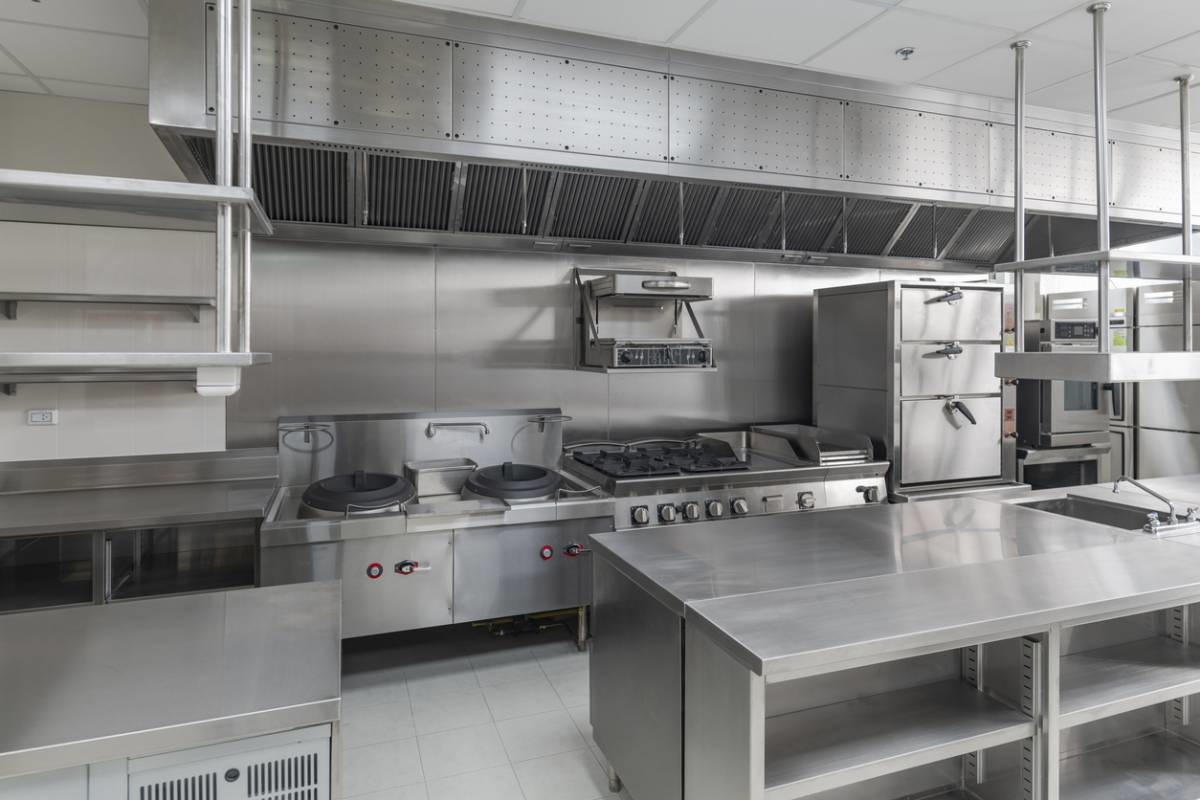
Opening a restaurant or renovating an existing kitchen involves dozens of technical decisions, sometimes made in a hurry. Yet, the choice of professional equipment directly impacts the productivity of your team, the quality of your dishes, and the profitability of your establishment.
Between regulatory constraints, size issues and budgetary trade-offs, every mistake has a direct cost, sometimes within the first few weeks of operation.
This guide reviews the essential steps to equip your catering kitchen without any unpleasant surprises!
Identify the key catering equipment according to your concept
Each type of restaurant requires a different equipment fleet. A fine dining restaurant does not have the same needs as a pizzeria or a fast food establishment.
Before placing any order, list the workstations based on your map and your projected volumes.
A grill-focused concept will require a professional griddle, a grill, and a high-powered extraction hood. A catering-oriented kitchen will prioritize blast chillers and a large number of gastronorm containers.
As the website mondialchr.com points out , there are several families of equipment available to refine your selection according to your activity.
Also consider small equipment often overlooked in initial quotes, such as sinks, wall shelves or transport trolleys, which nevertheless greatly facilitate daily work.
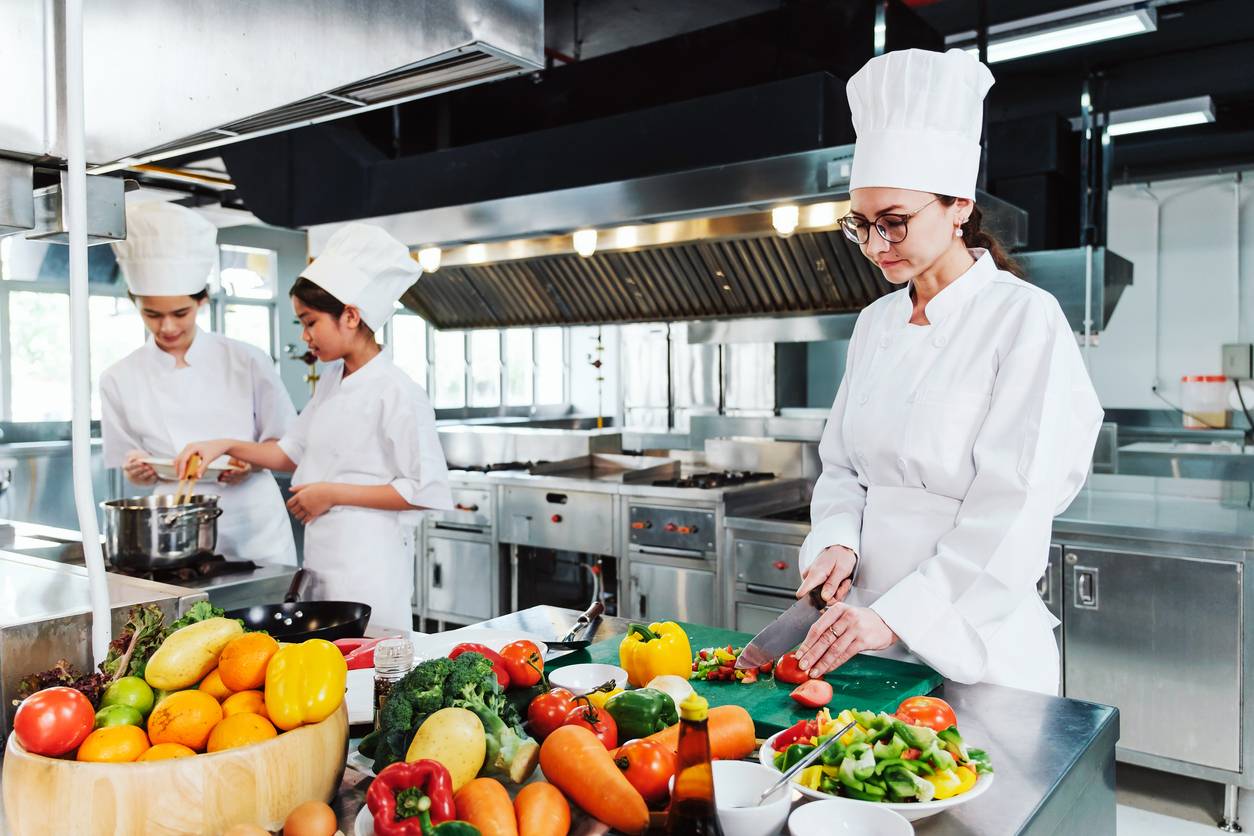
What criteria should be compared before buying catering equipment?
Beyond the purchase price, it is essential to anticipate the actual cost of ownership of your equipment.
A basic combination oven can quickly become a financial drain if it breaks down in the middle of a busy period.
Conversely, investing a few hundred euros more in a reliable model is often much more profitable.
Keep an eye on energy consumption, but also on ease of cleaning and access to spare parts.
In terms of materials, AISI 304 stainless steel remains the benchmark for long-lasting resistance to corrosion and cleaning products. Also ensure that the appliance complies with CE and NF certifications.
Finally, don't neglect space, because poorly sized equipment can be enough to break the rhythm of your kitchen and disorganize the whole team.
Plan the layout to improve flow and hygiene
The layout of a professional kitchen follows a fundamental principle called "forward flow".
Food items move in only one direction, from the moment goods are received until they are sent to the dining area, without ever crossing paths with the waste stream. This flow limits cross-contamination and speeds up the work of the kitchen staff.
Draw a scale plan showing the cold storage areas, the dishwashing area, the cold preparation stations, the cooking stations and the plating area.
Also plan for aisles at least 1.20 m wide to allow two people to pass simultaneously.
Electrical outlets, water inlets and drainage must be planned in advance of installing the equipment, otherwise costly work will be required afterwards.
Cold, cooking and refrigeration: how to size your equipment?
The sizing is based on two main variables, namely the number of covers per service and the frequency of your supplies.
If you receive daily deliveries, a moderate amount of cold storage space is sufficient. However, weekly deliveries require larger cold storage rooms.
When it comes to cooking, assess the power required in kW according to the flagship dishes on your menu.
A 6-burner gas range is suitable for most traditional restaurants seating 40 to 60 people. Add a combination steam/convection oven to increase versatility and reduce the number of appliances on the floor.
This type of oven allows roasting, steaming and regenerating in a single appliance, freeing up usable space in even the most compact kitchens.
Also consider ice production if you offer a bar or ice cream desserts, because running out in the middle of summer is very costly in terms of customer satisfaction.
The equipment budget includes price, delivery and maintenance
For a medium-sized restaurant, the kitchen equipment budget generally ranges between 30,000 and 80,000 euros, excluding the cost of fitting out the premises.
Include delivery, commissioning and connection costs from the outset, which can represent 10 to 15% of the total amount.
Negotiate a preventive maintenance contract with your supplier or a specialist service provider. Regular maintenance of burners, door seals, and filters extends the lifespan of the appliances by several years.
Also keep a cash reserve for urgent repairs, especially on refrigeration units whose failure can lead to an immediate loss of merchandise.
Leasing can also be an attractive alternative to preserve your start-up cash flow while gaining access to high-performance equipment.
Ensure compliance and maintenance of stainless steel equipment
Health inspections check the condition of your work surfaces, ventilation systems and fire safety devices.
Keep a maintenance log that includes intervention dates, parts replaced, and inspection reports.
This document will be systematically requested during DDPP inspections.
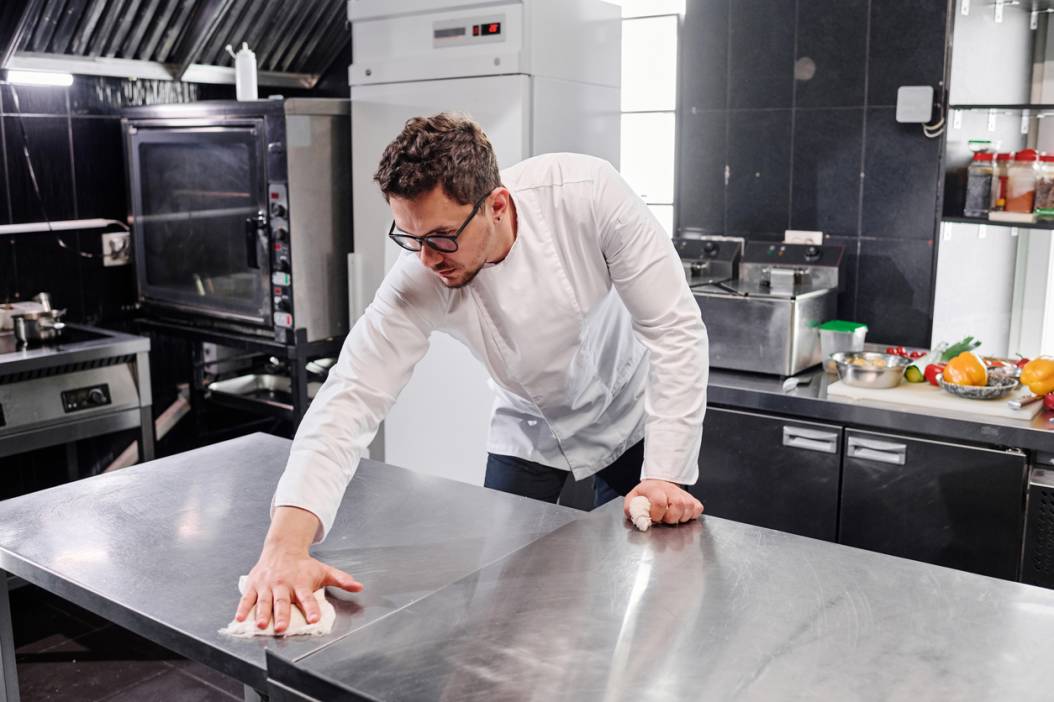
Clean stainless steel daily with food-safe products and avoid abrasive sponges that scratch the surface and create areas for bacterial retention.
In addition, have your cooker hoods and extraction ducts checked at least once a year by an approved professional, in accordance with the fire safety regulations applicable to public access buildings.
Finally, keep all the certificates of conformity and technical data sheets for your devices in a binder accessible to the entire brigade.
Equipping a professional kitchen is not simply a matter of filling out an order form. Every decision, from the choice of stainless steel to the size of the refrigeration unit, has a direct impact on your profitability and the safety of your team.
Take the time to compare, plan your implementation and budget for the entire lifecycle of your devices.
A well-thought-out investment from the outset will save you from premature replacements and costly service interruptions.
