
In short
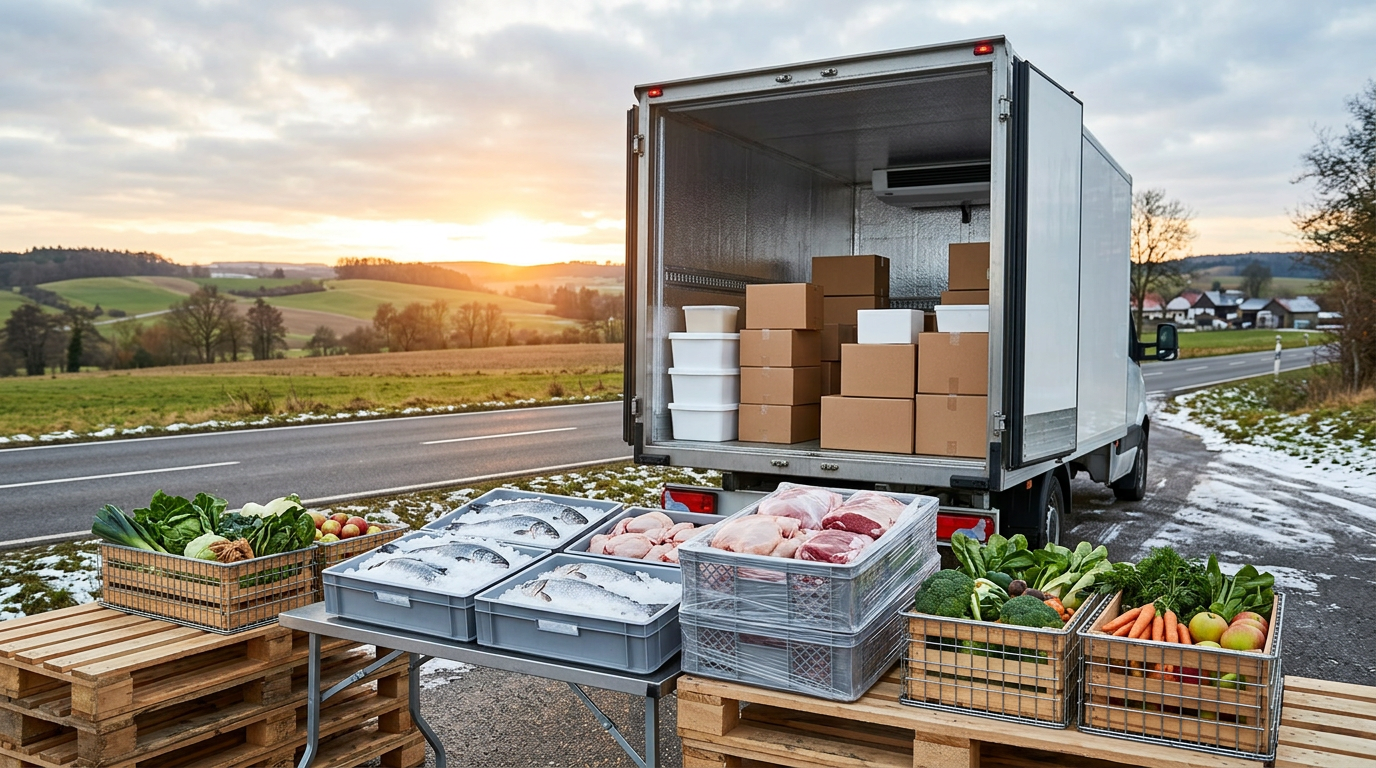
Ordering meat, fish, or cheese online is commonplace. But between the producer's warehouse and your refrigerator, these products go through a logistics process where everything hinges on a few degrees.
The cold chain refers to all the measures that maintain a constant temperature from production to consumption. Breaking it doesn't just mean a lower quality product: it exposes the consumer to pathogenic bacteria such as listeria or salmonella, without anything being visible to the naked eye.
For an artisan producer, a fishmonger, or a delicatessen that delivers its products, complying with these requirements is not optional. It is a legal obligation and a matter of reputation.
This guide reviews the temperatures to be respected by category, the packaging solutions available and the best practices to adopt at each stage.
Cold chain: what exactly are we talking about?
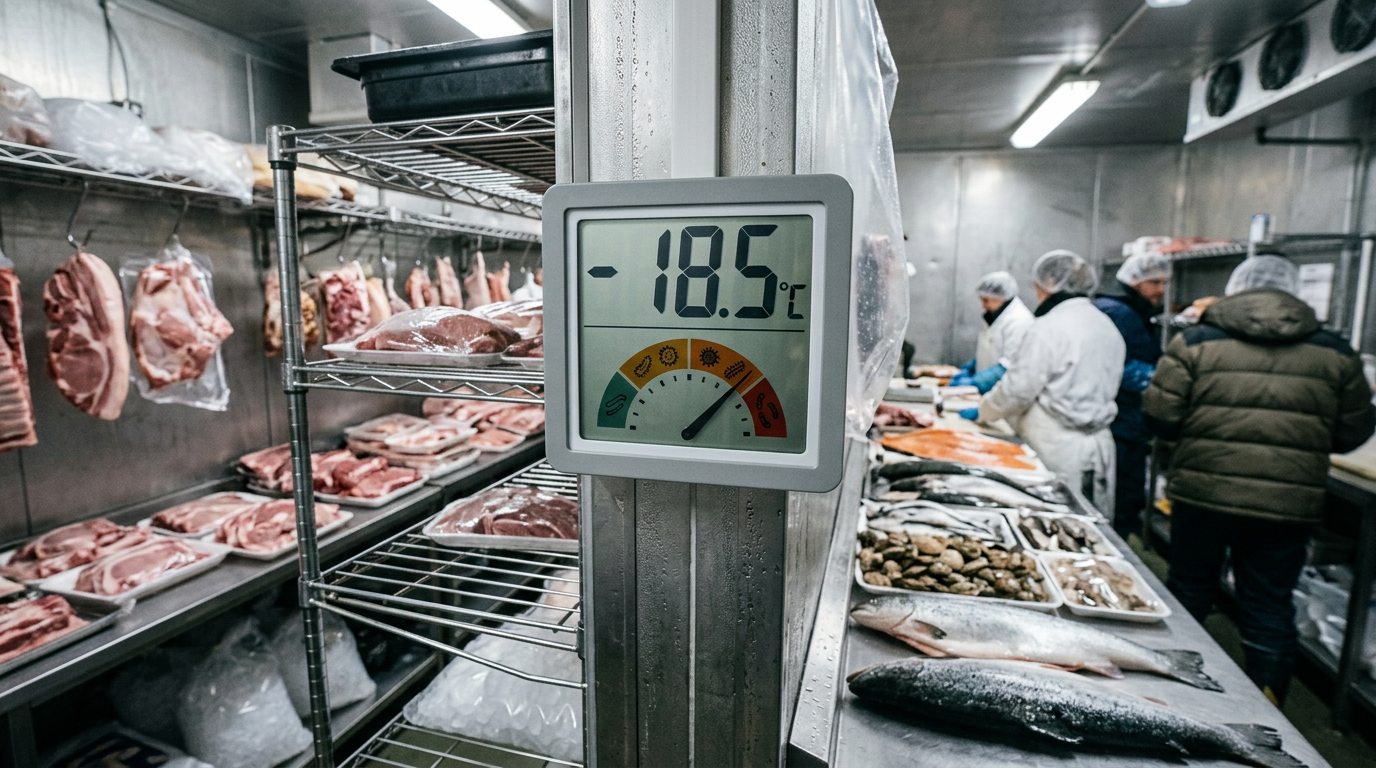
The cold chain is a continuous process. It begins with the packaging of the product, continues in the cold storage rooms of warehouses, in transport trucks, and ends when the customer places their order.
Every disruption, even a brief one, can jeopardize the whole system. A truck door left open too long, a package left in the sun in front of a door, a poorly regulated warehouse: each of these incidents is enough to raise the temperature above the permitted threshold.
The health risks of a supply chain disruption
When the temperature exceeds the regulatory threshold, microorganisms multiply rapidly. Bacteria such as Salmonella, Listeria monocytogenes , or Staphylococcus aureus can reach dangerous concentrations in a matter of hours.
What's deceptive is that the product remains visually intact. No particular odor, no visible discoloration: the consumer detects nothing and still consumes a potentially contaminated food.
A temperature increase of 2 to 4°C above the permitted threshold is sufficient to classify the incident as a regulatory violation for highly perishable products. For online sellers, the responsibility is absolute: both the carrier and the sender can be held liable.
The last kilometer, the weakest link
In conventional logistics, ATP-certified (Agreement on the International Carriage of Perishable Goods) refrigerated trucks handle the majority of the journey smoothly. The difficulties begin when it comes to delivery to the individual customer.
The delivery driver takes the package out of the vehicle, rings the doorbell, and waits. If no one answers, the package can remain in front of the door or in the mailbox for several hours. The truck's certification no longer provides any protection at this point.
That is why the choice of the appropriate insulated packaging and refrigerant is just as important as the vehicle itself.
Regulatory temperatures: what the law requires by product type
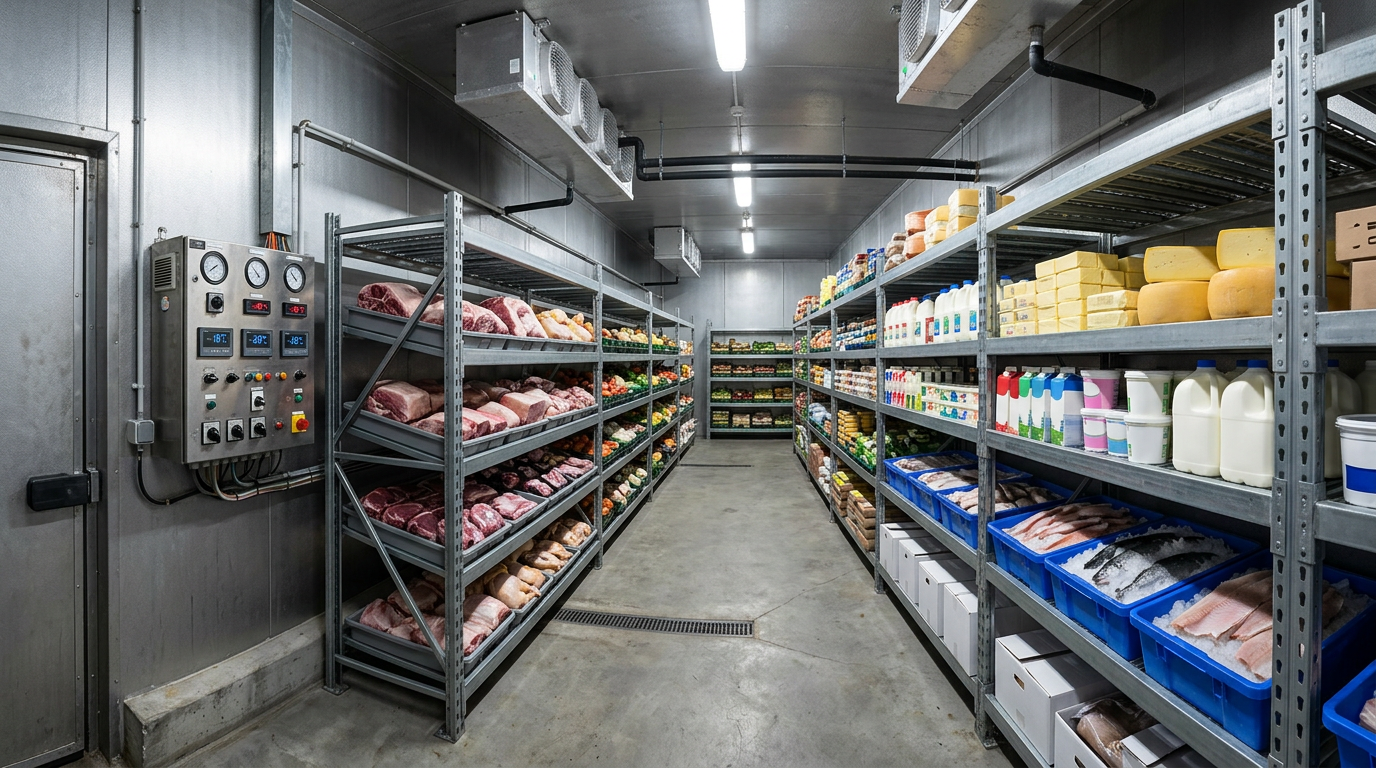
In France, the decree of December 21, 2009, sets maximum transport temperatures for foodstuffs of animal origin. These thresholds are binding and subject to health inspections. Failure to comply can result in penalties of up to €15,000, along with the risk of losing approval.
| Product category | Maximum transport temperature |
|---|---|
| Minced meat | +2°C |
| Fresh fish (on melting ice) | 0 to +2°C |
| Poultry, offal, egg products | +4°C |
| Fresh meat (beef, pork, lamb) | +7°C |
| Pasteurized milk, fresh dairy products | +6°C |
| Mature cheeses | +8°C |
| Vacuum-packed ready meals | +3°C |
| Frozen foods and ice cream | -18°C |
For fresh fruits and vegetables, no minimum regulatory temperature is imposed. In practice, a range of +4 to +8°C is still recommended to slow ripening and limit losses during transport.
For a package containing multiple items (for example, poultry and aged cheese), the temperature to be maintained is that of the most demanding product: +4°C, not +8°C. Check each item before preparing your shipments.
Packaging and refrigerants: how to maintain cold during transport?
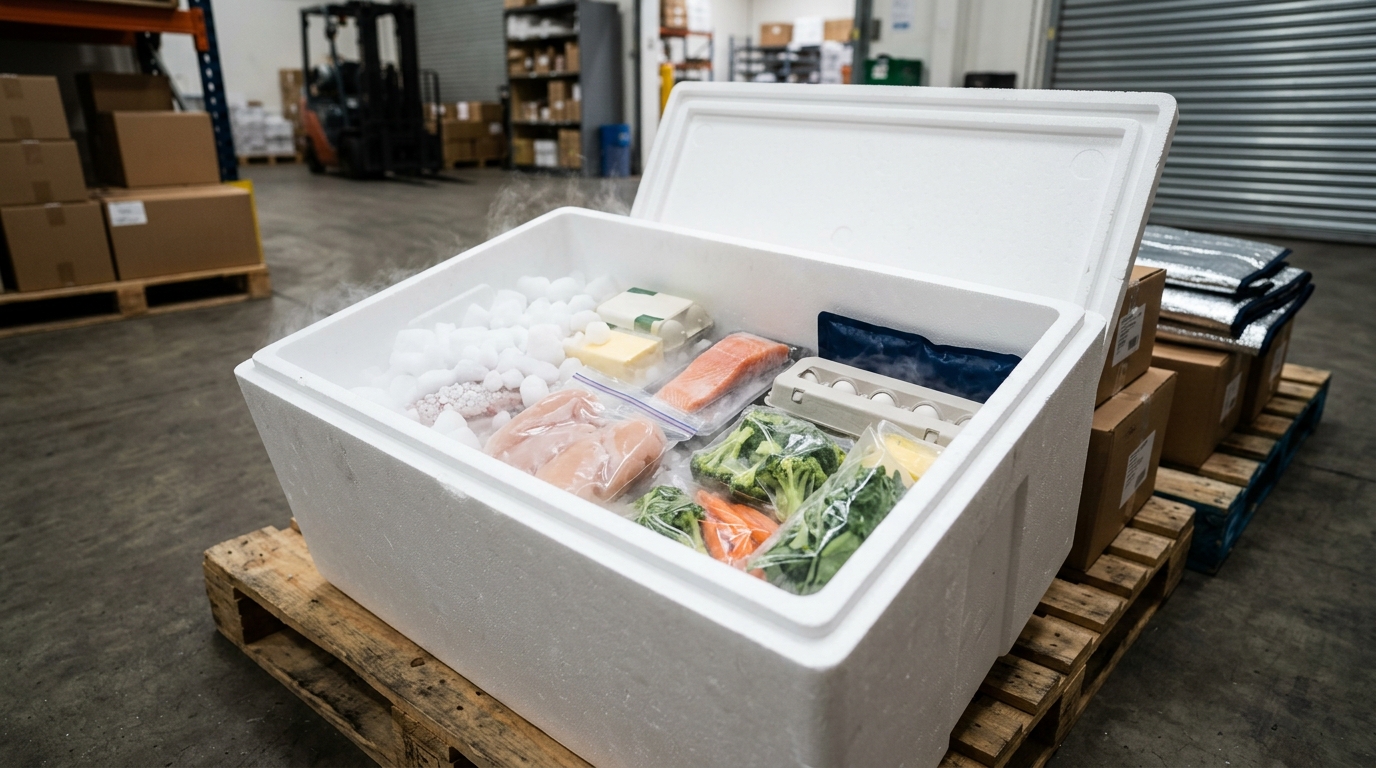
Insulated packaging is the last line of defense when refrigerated trucks are no longer available. The choice of packaging depends on the transport duration, the products being shipped, and the weather conditions.
Insulated boxes and gel packs
Expanded polystyrene (EPS) containers remain the most common solution. For 24-hour transport, a minimum wall thickness of 3 cm is required. For 48 hours or during the summer months, this increases to 5 cm, with cold packs placed directly in contact with the products.
Standard gel packs (blue gel) maintain a temperature between 0 and +4°C depending on their initial charge. Their main drawback: they become liquid during transit, adding weight to the package over long distances and increasing the risk of moisture on product packaging.
Dry ice, the preferred option for sensitive products
Dry ice is solid CO₂ that sublimates directly into gas without leaving any liquid residue. Its surface temperature is around -78°C, making it approximately twice as efficient by mass as conventional water ice.
For the delivery of fresh products via e-commerce, the commonly accepted rule of thumb is 1 kg of dry ice for every 2 kg of product over 24 hours. In practical terms: a 6 kg package of fish and meat requires approximately 3 kg of dry ice to last a full day in transit.
Combine dry ice with a 3 cm thick EPS (expanded polystyrene) container. This combination allows it to last 48 hours, even during a heatwave, whereas standard gel packs will fail in less than 12 hours at 35°C outside. Remember to label the container "Contains dry ice — UN 1845" if you are using air freight or certain express delivery services.
- No liquid residue (sublime in gas)
- Thermal efficiency twice that of gel packs
- Suitable for products at +2°C and frozen
- Neat presentation at reception
- Handling with gloves is mandatory (risk of burns)
- UN 1845 marking required for certain carriers
- It sublimates faster if the package is opened
- Cost per kilo higher than gel packs
Calculate your refrigerant quantity
Estimate the amount of refrigerant needed for your package
Best practices at each stage of food delivery
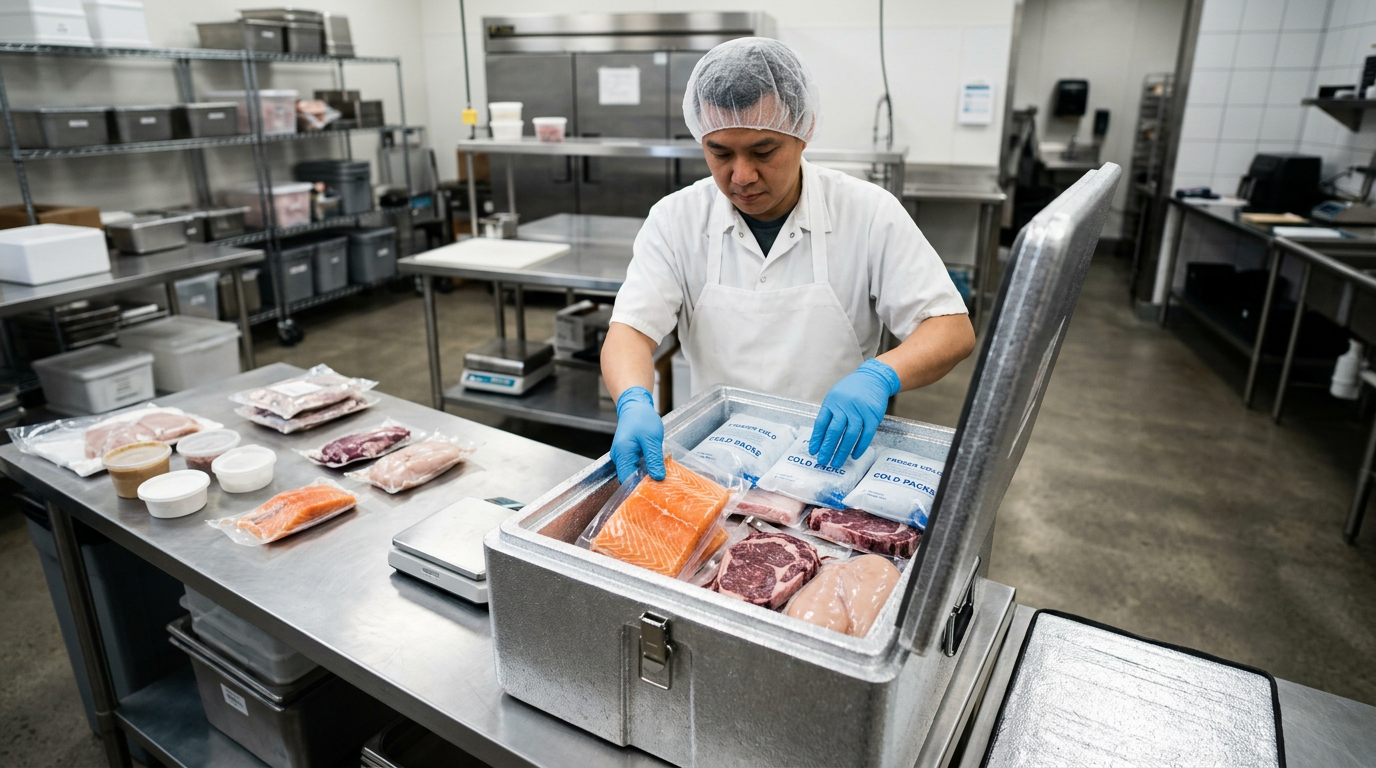
Respecting the cold chain means taking action at several distinct moments, and not just at loading.
When preparing the order
Pre-cool the insulated container before filling it. A container at room temperature absorbs the first few hours of useful cold. A container removed from a cold room an hour before use starts with a significant thermal advantage.
Place the ice packs at the bottom and sides, not just on top of the products. Cold air naturally descends: place the most sensitive items, such as fish or minced meat, directly in contact with the ice packs.
During transport
Limit the opening of vehicle doors to the bare minimum. Each opening lets in warm air and can raise the temperature by 2 to 5°C in a few seconds, depending on the season.
If you are using a refrigerated vehicle, ensure that it has a valid ATP certificate (6 years for the initial period, renewable every 3 years thereafter). This document is required during any health inspection.
Integrate a temperature datalogger into the package for sensitive shipments. Some models send a real-time alert if the temperature threshold is exceeded. In case of a dispute, the temperature history serves as evidence to establish when and where the damage occurred.
Upon receipt at the client's address
Inform your customer by SMS or email as soon as the package is delivered so they can collect it promptly. The recommended time between delivery and refrigeration should not exceed 15 minutes.
Clearly state on the package: "Keep refrigerated — do not leave at room temperature." This simple statement reduces the risks associated with the customer's absence and transfers some responsibility if the instructions are not followed.
E-commerce for groceries: the specific challenges of home delivery

Delivering to a private individual is much more complicated than delivering to a business. A supermarket has a receiving dock to accommodate a refrigerated pallet. A private individual might be out of town, in a meeting, or simply slow to respond.
The recipient's absence: a risk to anticipate
When no one answers, two scenarios arise. The delivery person leaves the package in front of the door: if the outside temperature exceeds 20°C, the insulated packaging begins to lose its effectiveness after 4 to 6 hours depending on the type of refrigerant used.
The other option is delivery to a refrigerated collection point. While still relatively uncommon in France, this option is growing. Check contractually that the collection point has a certified cold storage room, not just a standard commercial refrigerator.
For highly perishable products shipped within 24 hours, dry ice combined with a 5 cm EPS (expanded polystyrene) box provides a significant thermal buffer. Temperature retention can reach 36 to 48 hours in summer conditions, compared to 10 to 14 hours with standard gel packs.
The legal obligations of the online seller
Selling fresh food products online is not a simple matter of declaration. European regulation EC 852/2004 mandates a formalized food safety risk assessment (HACCP), even for a small online shop.
In practice, this means keeping a document that tracks the cold chain for each shipment: recorded temperatures, types of refrigerants used, and transport times. In the event of an inspection or consumer dispute, this document serves as proof.
General delivery services (standard Colissimo, Chronopost Express non-premium) are not certified for highly perishable goods. Using them for products requiring a temperature of +2 or +4°C makes the sender fully liable should a food safety incident occur. Opt for a specialized carrier or verify the ATP certification of each service provider.
Practical questions
What constitutes a break in the cold chain?
A product break occurs when its temperature exceeds the regulatory threshold during transport or storage. For highly perishable products, a temperature difference of 2 to 4°C above the threshold is sufficient to trigger a breach. For standard perishable products, the threshold is set at +8°C. A break can be caused by a refrigeration failure, prolonged opening of a vehicle, or a package left exposed to air for too long.
How long can fresh produce be transported without active refrigeration?
It depends on the packaging and the refrigerant. With a 3 cm EPS box and fully charged gel packs, expect 18 to 24 hours in winter and 10 to 14 hours in the height of summer. With dry ice in a 5 cm EPS box, temperature retention can reach 36 to 48 hours, even in extreme heat. Without any insulated packaging, do not exceed 30 minutes for products at +4°C or below.
What should be done if the cold chain was broken upon delivery?
Do not consume the affected products. Contact the seller with any available evidence (photo of the package, temperature reading). As the seller, if you included a temperature sensor in the package, the data history will help determine when the breakage occurred. If it occurred after delivery and the storage instructions were ignored, the responsibility shifts to the customer.
Is dry ice safe for food?
Yes, provided the products do not come into direct contact with the dry ice. The CO₂ released by sublimation is harmless outdoors, but can accumulate in an enclosed space. In well-designed packaging, the dry ice is placed in a separate layer (kraft paper, dedicated tray) and does not directly touch the food. Its use is common in the distribution of pharmaceutical and gourmet products.
What mandatory information must a package of fresh produce contain?
For products of animal origin, the minimum required information includes: the nature of the product, the use-by date (DLC) or best-before date (DLUO), storage conditions, and transport temperature. If the package contains dry ice, the statement "Contains dry ice — UN 1845" is mandatory for certain carriers and for all air shipments.
In summary
The cold chain in food delivery rests on three pillars: proper packaging, refrigeration adapted to the transport duration, and consistent practices at each stage. None of these three elements alone compensates for the failure of the other two.
For businesses launching or expanding a fresh produce delivery service, regulations mandate documented traceability for each shipment. This requirement protects both consumers and sellers in the event of a dispute.
The choice of refrigerant is often underestimated. Dry ice radically changes the thermal safety margins available over 24 to 48 hours of transit, whereas conventional solutions show their limitations as soon as outside temperatures rise.
