
In short
Three days in Marrakech is a format that comes up all the time when searching for cheap flights or long weekends in May. It's short, but more than enough to see the main sights without rushing around.
The problem isn't a lack of things to see: the medina, the souks, the gardens, the palaces—everything is concentrated in a small area. The real difficulty is the time of day you go.
Arriving at Jemaa el-Fna at midday or in the souks at the peak of the afternoon transforms a pleasant stroll into a forced march through the crowds.
This article therefore offers a day-by-day itinerary that takes into account actual peak times, with a detailed budget item by item rather than a vague range. This ensures you arrive at your destination with a concrete plan, avoiding any unpleasant surprises regarding prices or crowds.
When to leave and how long to allow?
Spring (March to May) and autumn (September to November) bring the most comfortable temperatures, around 20 to 27°C during the day. This is the ideal time to walk for several hours in the medina without suffering from the heat.
Summer temperatures regularly climb above 40°C, sometimes reaching 45°C in July and August. It's not impossible to manage, but it does mean scheduling outdoor activities for early morning or late afternoon, and reserving the hottest hours for the riad's pool.
Winter remains mild during the day (18-20°C) but nights can drop to nearly 5°C, and traditional riads sometimes have poor heating. Be sure to check this before booking in December or January.
Three full days means a minimum of two nights on site, often three if the flight arrives or departs late. Check flight times before finalizing your itinerary; a flight landing at 10 p.m. practically cuts out your entire first evening.
Day 1: The medina and Jemaa el-Fna at the right time
The first day focuses on the historical heart. The trick here is not to choose between morning and evening in Jemaa el-Fna square, but to see it at both times, since it completely changes its appearance between 10am and 8pm.
Start early, around 9 a.m., by visiting the square while it's still quiet: a few orange juice vendors, snake charmers setting up their equipment, and few people around. This is the perfect time to take photos without dozens of tourists in the frame and to find the terraces overlooking the square.
Continue your visit with the Koutoubia Mosque, whose 77-meter minaret serves as a visual landmark from almost anywhere in the medina. The interior is not accessible to non-Muslims, but the surrounding gardens can be visited freely.
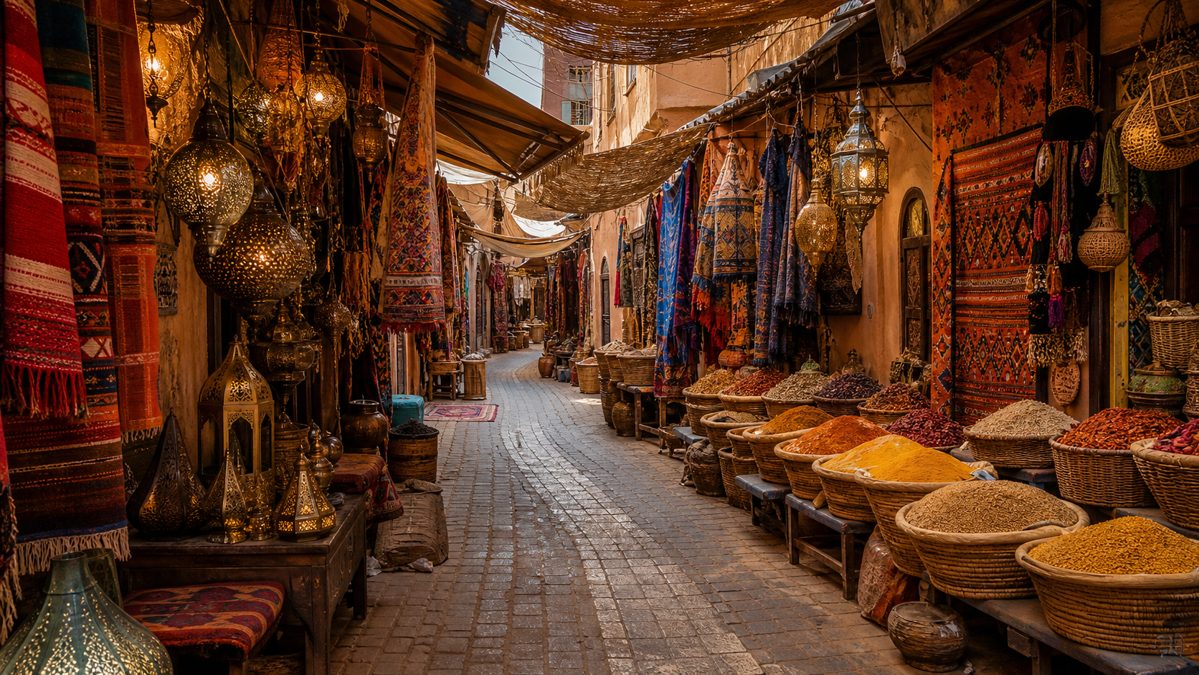
Midday is reserved for the souks. Take them in the order of the dyers' souk, then the babouches' souk, then the spices souk, a route that follows a logical slope and avoids going through the same alleys twice.
Haggling is part of the game: start at about a third of the advertised price and gradually increase it.
Keep an offline map of the medina on your phone (Maps.me or the Google Maps app downloaded locally). Moroccan mobile network coverage is poor in the covered alleyways of the souks, and getting lost without landmarks can easily waste an hour.
End the day by returning to Jemaa el-Fna around 6:30-7:00 PM, when the food stalls are being set up and the square really comes alive.
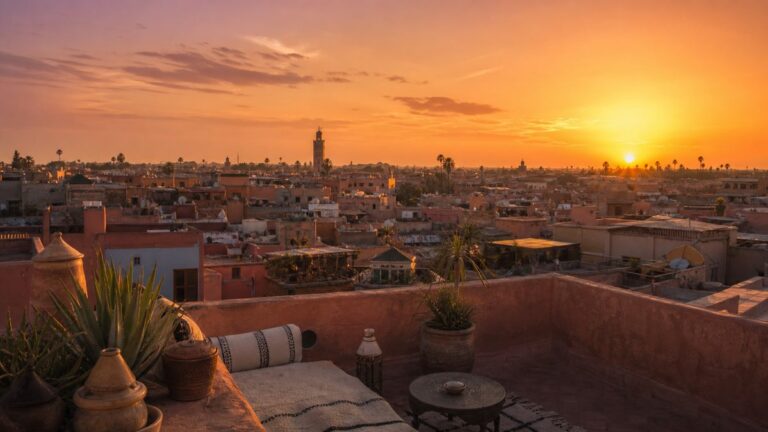
This is the best time to dine in, enjoying kebabs, snails and freshly squeezed juices, then have mint tea on the terrace and watch the sunset over the Koutoubia.
Day 2: Palace, gardens and a moment of relaxation
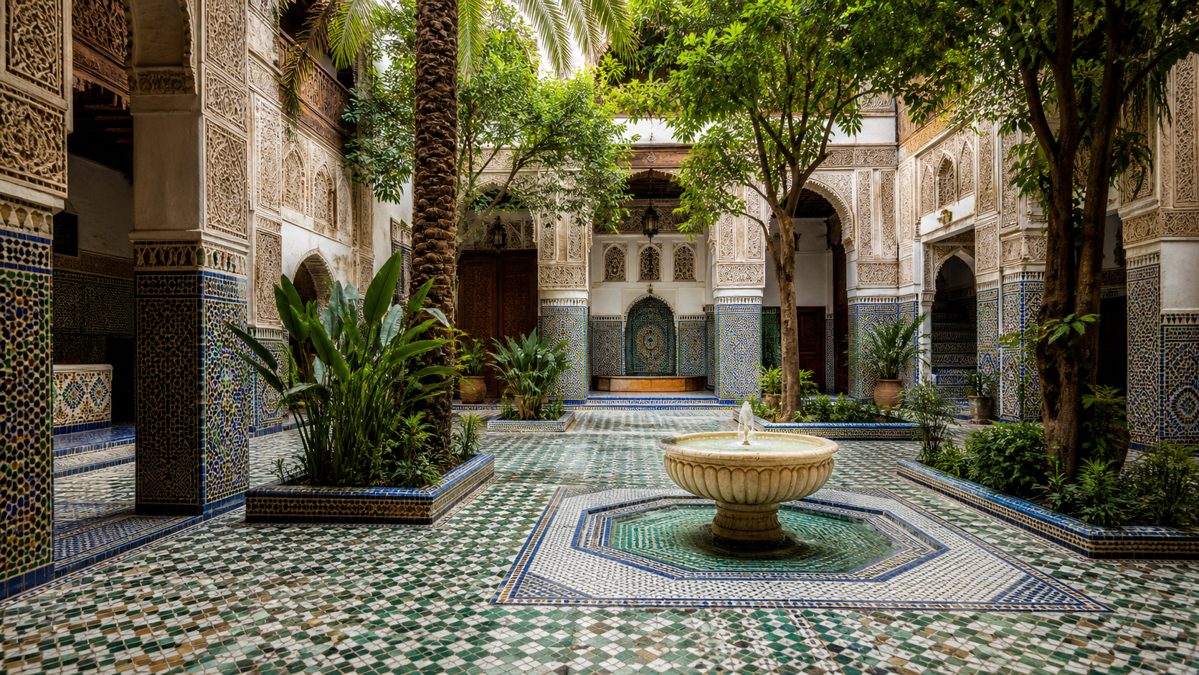
The second day begins early at the Bahia Palace, which usually opens around 9am. Arriving at opening time avoids the groups that invade the inner courtyards from 10:30am onwards.
Allow 45 minutes to 1 hour for the visit.
Just a few minutes' walk away, the El Badi Palace presents an interesting contrast: unlike the richly decorated Bahia, it consists of open-air ruins, now inhabited by storks nesting on the ramparts. The view from the terraces is well worth the visit.
The Saadian Tombs, right next door, can be visited in about 30 minutes. Access is narrow and the queue can get long by mid-morning: it's best to go there directly after the Badiî rather than coming back later.
In the afternoon, we headed to the Majorelle Garden, a property restored by Yves Saint Laurent and Pierre Bergé.
Entry costs approximately 150 to 170 dirhams for an adult depending on current rates, which is roughly 14 to 16 euros.
The site is open every day from 8am to 6:30pm, with last entry at 5:30pm.
Book your ticket only on the official Jardin Majorelle website : morning slots often sell out several days in advance on site, and unauthorized sites sometimes resell fake tickets that are refused at the entrance.
Continue your visit to the Majorelle Garden with a trip to the Gueliz district right next door: this is the modern part of Marrakech, with cafes, concept stores, and a different atmosphere from the medina. Ideal for relaxing for an hour before heading back out.
End the day with a traditional hammam.
A popular local hammam costs a few dirhams to enter and is practiced independently, with your own black soap and loofah glove.
A hammam in a riad or spa, with scrub included, is significantly more expensive, but remains more comfortable for a first try.
Day 3: Nature excursion or leisurely stroll, depending on your preference
The third day lends itself to two very distinct options, and the choice depends mainly on the time you have left before your return flight.
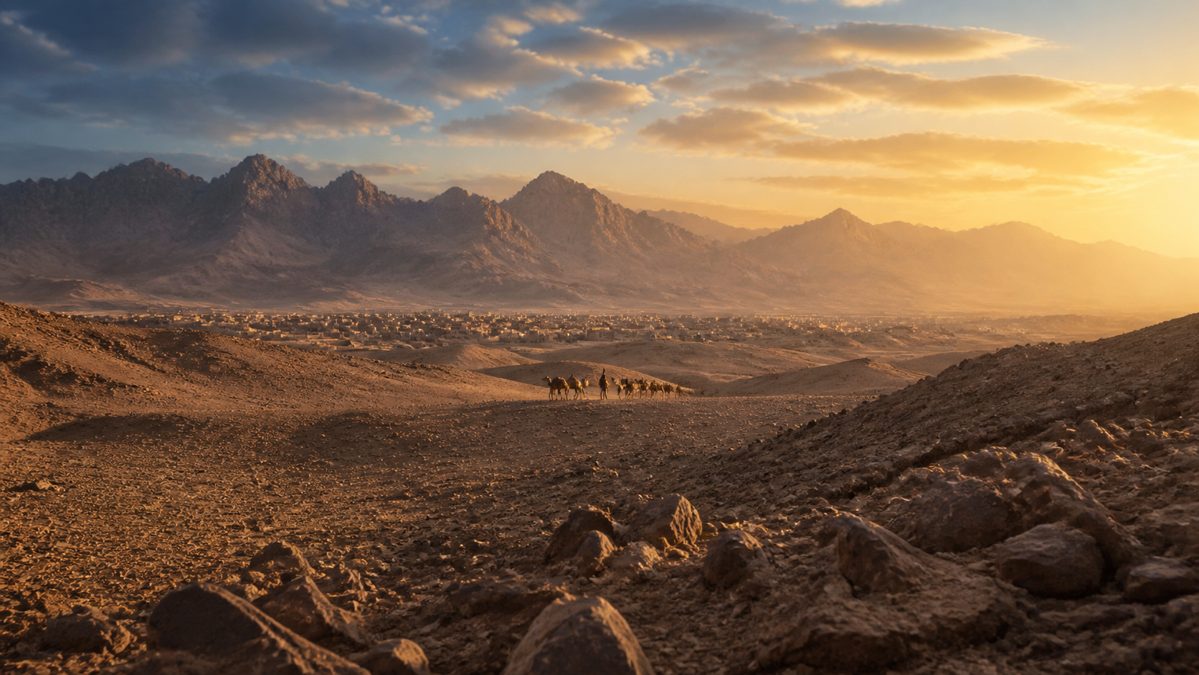
If the flight departs in the evening, a day trip is possible. The Agafay Desert, about a 45-minute drive away, offers camel rides or quad biking on stone dunes.
It's a real time-saver compared to the Sahara Desert at Merzouga, which requires a 9 to 10 hour journey each way. For a 3-day stay, Agafay remains the most realistic compromise.
The Ourika Valley, in the foothills of the Atlas Mountains, offers a greener alternative: waterfalls, Berber villages and air that is significantly fresher than in the city, about an hour's drive to the first villages.
If your flight departs in the early afternoon, don't plan any day trips: the return journey plus unforeseen traffic delays can easily turn a tight schedule into a missed airport experience. In that case, dedicate the morning to the Palmeraie (closer, 20-30 minutes away) or a last-minute stroll through the souks for some extra shopping.
If the excursion does not fit into the schedule, the Palmeraie of Marrakech, on the northern outskirts of the city, allows for a shorter ride by bike or horse-drawn carriage, between century-old palm trees and a few open-air brunch spots.
Moving between sites
The small taxi (identifiable by its beige or ochre color depending on the city) remains the most economical way to get around town. While theoretically equipped with a meter, in practice it is rarely switched on with tourists: agree on the price before getting in.
Expect to pay between 15 and 40 dirhams for a trip in the city centre depending on the distance, which is a little less than 4 euros at the highest price in this range.
For a trip to the airport, expect to pay between 70 and 150 dirhams, with prices approximately 50% higher after 8 p.m.
For the medina itself, walking remains the only option: the alleyways are too narrow for cars, and many are even prohibited to motorized two-wheelers at certain times.
Realistic budget for 3 days in Marrakech
General guidebooks often give a broad price range without detail. Here is a breakdown by item, based on a 2-night/3-day stay for one person, excluding airfare.
| Job | tight budget | Comfort budget |
|---|---|---|
| Accommodation (2 nights) | €30 to €60 (simple riad) | €150 to €300 (high-end riad) |
| Meals (3 days) | €25 to €40 | €70 to €120 |
| Visits and admissions | €30 to €50 | 80 to 120 € |
| Local transport | 10 to 15 € | €25 to €40 |
| Half-day excursion | €25 to €30 | 50 to 80 € |
In total, a tight budget is around 120 to 195 euros per person over the 3 days excluding flight.
A comfort budget is generally between 375 and 660 euros.
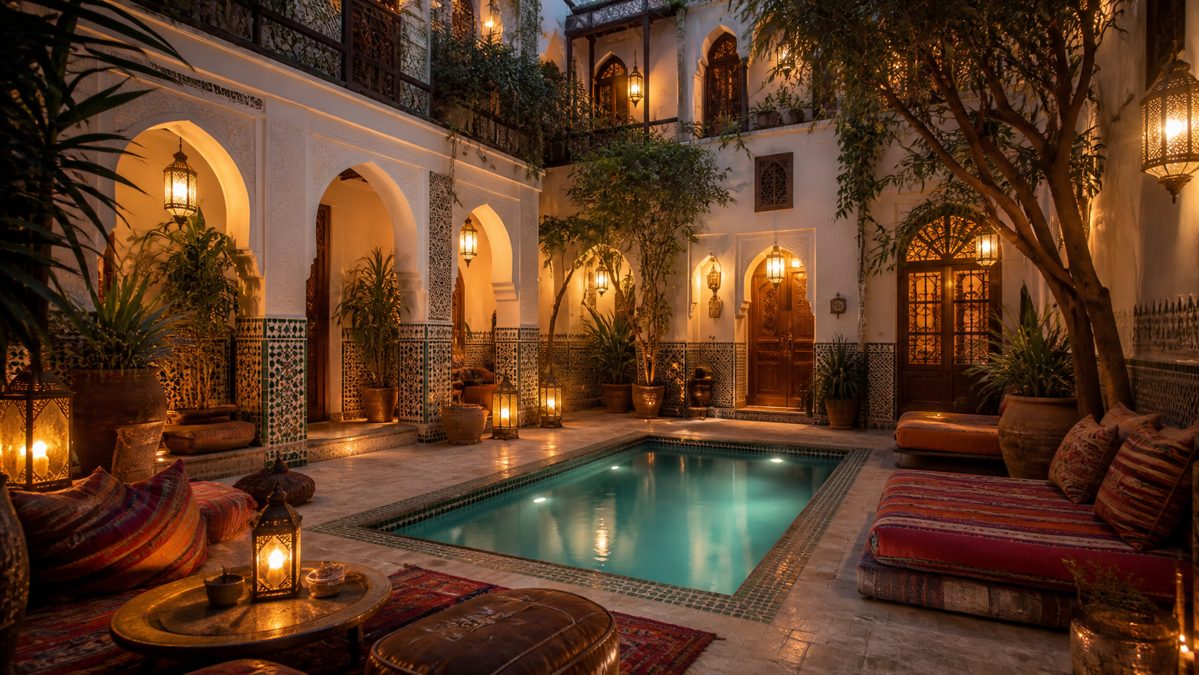
The biggest difference lies in the accommodation. For a short stay, a well-located entry-level riad in the medina doesn't necessarily mean a significant loss of comfort, despite the price difference with high-end options.
- Everything is within walking distance
- An immersive atmosphere from the moment you wake up
- Riads are often cheaper than hotels in Gueliz
- Sound of the muezzin and nighttime activity
- Luggage delivery can sometimes be complicated (narrow streets)
- Less swimming pool/outdoor space than in Guéliz or Hivernage
Budget simulator for your stay
In summary
Three days in Marrakech is plenty of time to see the medina, its souks, two or three major palaces or gardens, and a half-day excursion outside the city. The key isn't to do more, but to schedule each visit at the right time of day.
This is especially true in Jemaa el-Fna, where a calm morning and a lively evening offer two completely different experiences.
In terms of budget, the range varies enormously depending on the level of comfort sought, but a decent stay remains accessible at around 120 to 195 euros per person excluding flight for a compact format.
Booking tickets for the Majorelle Garden online and allowing plenty of time for the return journey to the airport avoids the two main sources of stress during the stay.
Practical questions
Are 3 days really enough to visit Marrakech?
Yes, for most of the medina, the palaces, and a short excursion. That's not enough to justify adding the Sahara (Merzouga), which alone requires 2 to 3 days of travel round trip.
Do we need to book the tours in advance?
The Majorelle Garden fills up quickly: book your ticket online a few days in advance. Palaces and tombs can usually be booked on-site without any problem, except during periods of very high demand (especially French school holidays).
What is the best area to stay in near the medina?
The medina itself for immersion and proximity to everything on foot, or Hivernage/Guéliz for more peace and quiet, swimming pools and easier access by car, at the cost of a few extra minutes by taxi each day.
How to avoid being ripped off on taxi fares?
Agree on the price before getting into the vehicle and keep in mind the usual ranges (15 to 40 dirhams in the city, 70 to 150 dirhams for the airport). Ride-hailing apps, when they work locally, completely eliminate the need for negotiation.
Is it better to visit the medina in the morning or in the evening?
Both, weather permitting: the morning for tranquility and photos, the late afternoon and evening for the atmosphere of the food stalls and the lively energy of Jemaa el-Fna. A single visit in the middle of the day misses both sides of the square.
