
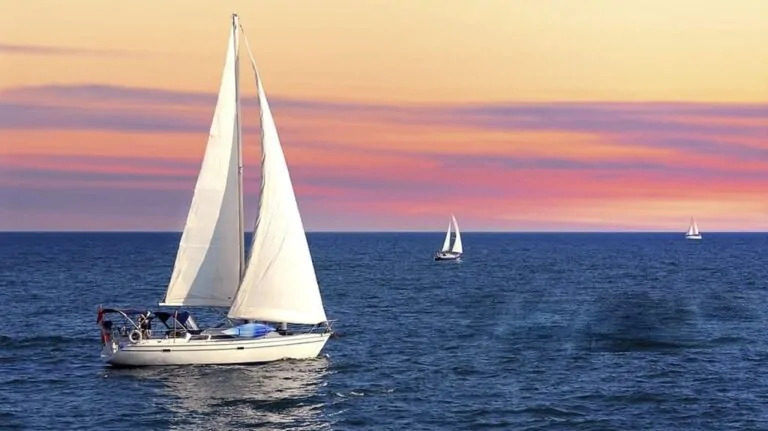
Do you dream of solo sailing and sea voyages in your own sailboat? Are you looking for that unique feeling of freedom on the water, where it's just you and your boat? Then you should already know that choosing your first sailboat carefully is a crucial element!
Finding the right balance between maneuverability, safety, and comfort, and knowing most of the little tricks, is not as simple as it seems…
That's why we created this practical guide, to help you discover what type of small sailboat to buy so that it's easy to handle during your solo getaways, even if you have a fairly limited budget.
Why choose a small, maneuverable sailboat?
Sailing alone for pleasure will present you with particular challenges that will make certain sizes of sailboats more suitable than others.
A small, habitable sailboat of 6 and 10 meters could be a good compromise, either to start more easily, or to allow you to quickly improve as a solo sailor.
In fact, it is the best type of sailboat for tackling this demanding discipline.
The undeniable advantages of small units
With a small sailboat, you'll stay in control! All maneuvers will remain within easy reach from the cockpit, and the reduced sail area will greatly facilitate changes of course.
Lighter and with a reduced draft, your boat will react better to the wind and allow you to anticipate its reactions, even in the event of a pronounced heel.
Maintenance and port costs will also remain reasonable, leaving you with more budget for safety equipment and sailboat insurance to better protect yourself against the risks of accidents or theft.
It should also be taken into account that a sailboat that is easy to maneuver single-handed will give you access to more secluded anchorages, often inaccessible to larger boats.
The limitations of this type of boat
Let's be honest! A small sailboat will limit your ambitions for long voyages…
Indeed, the limited living space could become restrictive over long periods, and autonomy in water and food will remain limited.
But for coastal cruises or long weekends, these constraints will remain negligible compared to the pleasures and well-being they will provide.
The basic criteria for making a better choice
The optimal size: between 6 and 10 meters
The ideal size for solo sailing falls within this range.
In general, a6-meter habitable sailboat will be perfectly suitable for day trips and beginner sailors wishing to learn the basics.
A boat between 8 and 10 meters in length will offer you greater comfort and carrying capacity during longer voyages, while maintaining good maneuverability.
If you have the budget, it's a rather interesting option!
Here is a summary table of sailboat sizes, adapted to each need:
| Size | Recommended use | Benefits | Disadvantages |
|---|---|---|---|
| 6-7m | Day trips, learning | Very easy to handle, economical | Limited comfort |
| 8-9m | Weekends, coastal | Good compromise between comfort and handling | Moderate costs |
| 9-10m | Micro-cruises | Autonomy, comfort | More technically demanding |
Beyond 10 meters, management becomes more complex and requires proven experience.
The skippers of the Transquadra sail on sailboats of about 10 meters, which proves to be an interesting reference for setting a maximum limit.
Handling above all
Opt for a simple and efficient rig . A classic sloop with a genoa furler remains the most practical.
Avoid overly sporty regatta configurations with running backstays or genoas with significant overlap, which complicate maneuvers.
The cockpit should be arranged so that all the main controls are within easy reach. A mainsheet traveler in the center of the cockpit, rather than on the coachroof, greatly facilitates maneuvers from the helm.
The fittings must also be sized to be operable by a single person.
Sailing safety : essential equipment
Safety takes on a special dimension when sailing alone.
Your habitable sailboat must be equipped with at least the following:
- A reliable autopilot with remote control
- With a permanent harness and safety tether
- From a fixed and portable VHF radio
- From a distress system (radio beacon, flares)
- Appropriate personal rescue equipment
- An AIS system to be seen by other ships
- A complete first aid kit
- A spare anchor and sufficient chain for anchoring
The sailboat's equipment specifically designed for solo sailing
Automation of maneuvers
A mainsail furler literally transforms your experience. Reefing or reducing sail becomes possible without leaving the cockpit. It's a game-changing investment for the solo sailor.
Electric winches on the headsail sheets significantly reduce effort, especially in strong winds. Even if your budget is tight, at least include an electric winch handle for challenging situations.
The cockpit layout
Everything must be planned to avoid unnecessary travel!
A waterproof map holder within easy reach, storage for essential navigation tools, and above all, red lighting to preserve night vision.
The interior chart table deserves special attention. It should serve as a true navigation office where you centralize charts, instruments, radio and onboard computer.
Properly adapted on-board electronics
A GPS tracker with detailed mapping remains your best ally.
Complete with a fish finder for shallow areas and an anemometer to monitor marine weather conditions.
Don't forget electrical autonomy: solar panels or a bridge wind turbine allow you to keep your equipment running without running the engine constantly.
A 12V/220V converter can be essential for charging your electronic devices.
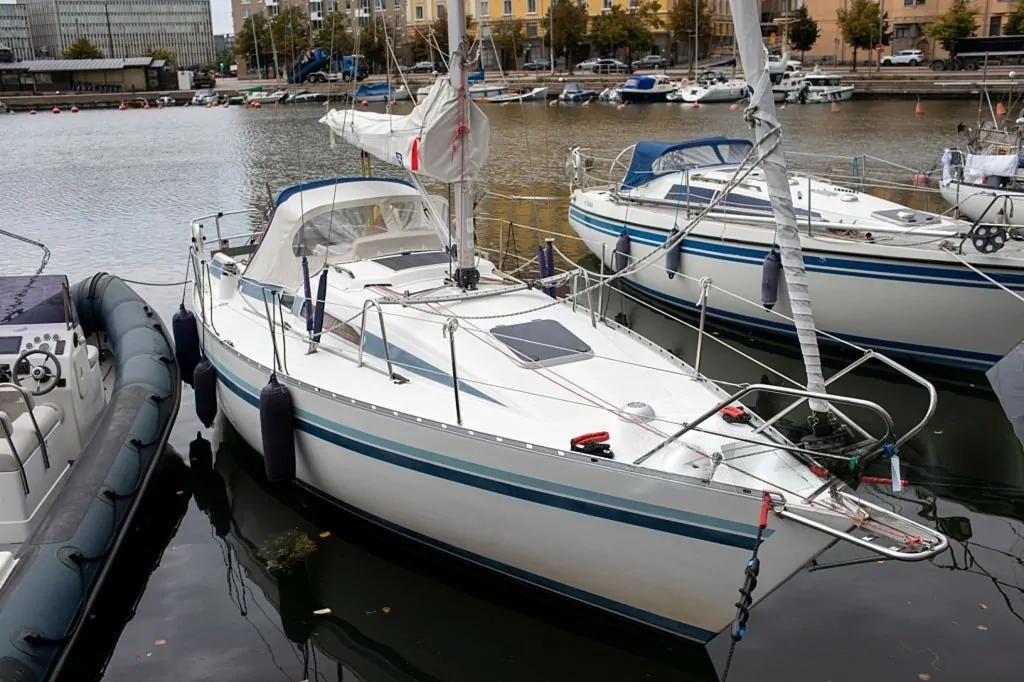
The different types of small habitable sailboats
Recent production sailboats (2000s-2020s)
These boats benefit from the latest innovations in layout and ergonomics.
Manufacturers have incorporated the needs of solo sailors with optimized cockpits and easier sail reduction systems.
Racing-cruising sailboats of the 1990s
Often considered the best compromise, these sailboats combine performance and livability.
Less regatta-oriented than their successors, they remain lively and seaworthy while being easily maneuverable.
Transportable sailboats : versatility
For those who wish to change their playing field, small transportable habitable sailboats offer unparalleled flexibility.
You can explore different bodies of water without being limited to your home port. However, be aware of the boating license required depending on the waters you frequent.
Solo sailing : some practical tips
Preparation and anticipation
The key to success sailing solo lies in anticipation. Prepare your maneuvers in advance, monitor marine weather forecasts carefully, and never hesitate to cut your trip short if conditions deteriorate.
Learning to sail alone requires patience and a gradual approach.
Managing fatigue
Sailing alone requires constant vigilance!
Plan to take regular breaks and don't hesitate to anchor in a safe place to recover. The saloon remains the ideal place to rest while keeping an eye on the instruments. Manage roll and pitch by adjusting your resting position.
Maneuvering in port solo : best practices
Port maneuvers often represent the greatest apprehension for solo sailors.
Prepare your mooring lines in advance, maneuver at reduced speed and don't be ashamed to ask for help from your pontoon neighbors.
The budget and maintenance costs
The acquisition cost
A small, used sailboat in good condition can be found for between €15,000 and €50,000 depending on its age and equipment. Models from the 1990s often offer the best value for money.
For a tighter budget, a small, inexpensive sailboat can be found for around €10,000 but will require some refurbishment work.
Annual costs
Expect to pay approximately 10% of the purchase price in annual costs (maintenance, sailboat insurance, port fees).
A sailboat costing €25,000 will therefore cost you around €2,500 per year, excluding fuel and additional equipment.
Insurance typically represents 2 to 3% of the boat's value.
| Expenditure item | Annual cost (sailboat €25k) | Details |
|---|---|---|
| Port space | 800-1500 € | Varies by region |
| Sailboat insurance | 500-750 € | 2-3% boat value |
| Routine maintenance | 600-1000 € | Antifouling, servicing |
| Fuel | 200-400 € | Medium recreational use |
| Total annual | 2100-3650 € | Excluding major works |
Educate yourself before you buy
Before investing in your small sailboat, adult sailing training is essential. Sailing courses allow you to acquire the basic technical and safety skills.
A recreational boating license remains mandatory for most motorized sailboats, and you should expect to pay between €300 and €500 to obtain it.
The French Sailing Federation offers numerous training courses adapted for beginner adults.
Opt for a gradual learning approach: start with supervised outings before venturing into solo sailing.
Many clubs offer introductory courses specifically designed to teach people how to sail safely on their own.
Our recommendations for each profile
The beginner in solo sailing
Choose a simple and robust sailboat between 6 and 7 meters. Prioritize ease of handling over pure performance. A First 210 or equivalent is an excellent choice for beginners.
The experienced navigator
Between 8 and 10 meters, you'll find what you're looking for with models offering more comfort without sacrificing maneuverability. The racing-cruising sailboats of the 1990s excel in this category.
The micro-cruise enthusiast
If your trips last several days, prioritize livability and self-sufficiency. A well-thought-out layout with a proper chart table and optimized storage will make all the difference.
Questions and answers about sailboats
Is it possible to sleep in a small sailboat?
Yes, most sailboats with cabins 6 meters and longer have a usable berth. Comfort varies depending on the layout, but it's perfectly feasible for short cruises.
What is the price of a small, habitable sailboat?
Expect to pay between €10,000 and €50,000 for a used one. A small, inexpensive sailboat can be found for around €15,000 for a 1990s model in good condition.
Do you need a boating license for a small sailboat?
Yes, a recreational boating license is mandatory for sailboats equipped with an engine of more than 6 horsepower, regardless of their size. You can find the exam requirements on the official website of the Ministry of Ecological Transition or the Ministry of Transport.
Your solo adventure starts now!
Choosing your small sailboat for solo sailing requires clearly defining your needs and level of experience.
Between 6 and 10 meters, you will definitely find the boat that meets your expectations, provided you prioritize simplicity, safety and ergonomics.
The best part of all this? Once you've made your choice and equipped your sailboat, you'll discover that unique feeling of total freedom that comes with sailing alone.
This communion with the elements, this satisfaction of mastering your boat alone, these secret anchorages that only you will know…
So, ready to cast off for your next solo adventure?