
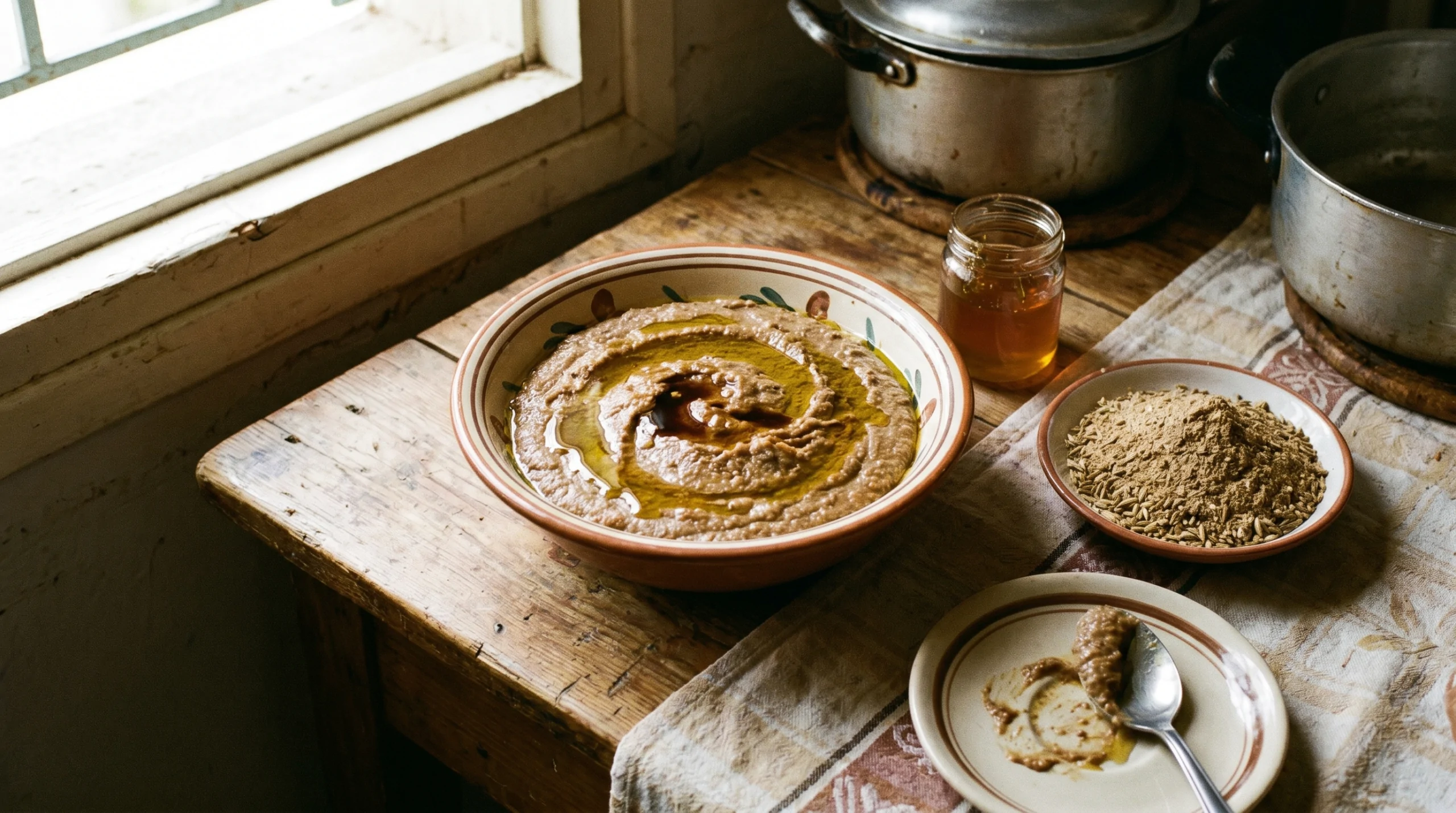
I discovered bsissa like one discovers a treasure in a cupboard: a jar of golden powder, smelling of toast, anise, and seeds. In Tunisia, it's a family classic, often prepared in large quantities after thorough roasting, then stored away from moisture.
On the day you feel like it (or need a boost), all you have to do is mix it with olive oil and a little honey (or sugar) to obtain a sandy and fragrant dough.
What I love is the "simple technique that changes everything" aspect. Roasting is truly the heart of the flavor: you heat it dry, you stir it, and everything becomes rounder, nuttier, more indulgent.
And then, it's a Tunisian recipe and ultra adaptable in the way it's eaten: in balls, in a dome on a plate, or even in a more fluid version with a spoon.
To stay true to tradition, I'm starting with a base of barley + chickpeas + wheat, with sesame, fennel, anise, and a hint of cinnamon.
And as a subtle seasonal touch without compromising the essence, I add a little orange zest and a pinch of cinnamon just before serving (winter citrus and spice go perfectly with the toasted notes). You can also sprinkle with crushed almonds for a bit of crunch.
Nutritionally, it's packed: grains, legumes, healthy fats from olive oil, and mineral-rich seeds. Perfect for a hearty breakfast before a hike, or as a truly satisfying snack.
And if you prepare it in a jar, you'll have a traditional "snack" ready in 2 minutes!
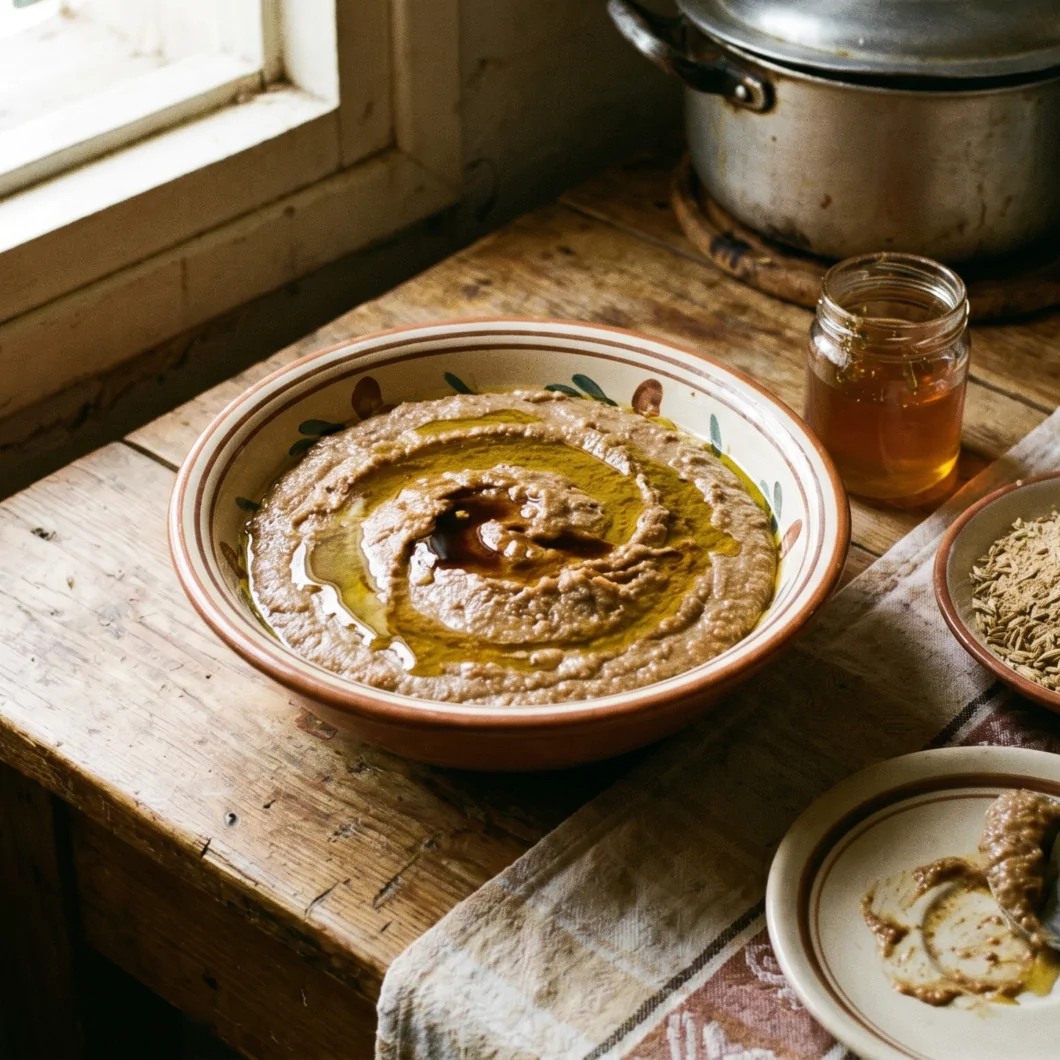

Tunisian Bsissa
4
people14
minutes11
minutes615
kcal25
minutesA recipe made with roasted cereal powder and seeds, flavored with anise and fennel, mixed with olive oil and honey. Tunisian bsissa has a sandy texture, a toasty taste, and provides an immediate energy boost.
Keep your device's screen on
Ingredients
120 g of barley flour
80g of dried chickpeas
60g grains (or very coarse, uncooked bulgur)
40g of sesame seeds
25g of almonds
2 teaspoons of fennel seeds
1 teaspoon of anise seeds
1/2 teaspoon of ground cinnamon
1/2 teaspoon of fine salt
80 g of honey
90 g of olive oil
1 orange (finely grated zest, to serve)
10g of crushed almonds (for serving)
Preparation steps
- Prepare the base: In a large pan, pour the dried chickpeas and toast them over medium heat for 6 to 7 minutes, stirring often, until they darken slightly and smell nutty. Set aside.
- In the same pan, toast the wheat grains for 3 to 4 minutes, stirring constantly. Set aside with the chickpeas.
- Next, add the sesame seeds for 1 to 2 minutes: they should barely brown and start to pop. Set aside.
- Finish by adding the fennel and anise seeds: 30 to 45 seconds is enough, just to release the aromas (otherwise, it becomes bitter). Turn off the heat.
- Let it cool for 3 minutes. Finely blend the chickpeas and wheat (using short pulses to avoid overheating the motor). Then add the sesame seeds and almonds, and blend again to obtain a fairly fine powder.
- Transfer to a bowl. Add the barley flour, cinnamon, and salt. Mix thoroughly: you have just made bsissa powder.
- To serve (for 4 servings): put all the powder in a bowl, add the honey, then drizzle in the olive oil while stirring with a spoon. You're looking for a "damp sand" texture that clumps together when you press it between your fingers. Adjust with 1 to 2 tablespoons of oil if needed.
- Arrange in small domes or balls. Add the orange zest and some crushed almonds just before serving.
📊 Nutritional Information
1 serving (approx. 125g)
| Nutrient | Value |
|---|---|
| Calories | 615 kcal |
| Proteins | 14g |
| Carbohydrates | 65g |
| including sugars | 22g |
| Lipids | 34g |
| including saturated fatty acids | 5g |
| Fibers | 10g |
| Sodium | 290mg |
| Vitamins | |
| Vitamin E | 18% AJR |
| Vitamin B1 | 22% AJR |
| Vitamin B9 | 12% AJR |
| Minerals | |
| Magnesium | 32% AJR |
| Iron | 28% AJR |
| Phosphorus | 30% AJR |
* RDA = Recommended Daily Allowance
📝 Notes
If you prepare the powder in advance, only mix it with the oil and honey at the last moment: otherwise the Tunisian bsissa will clump and lose its sandy texture.
For a perfect result, zest the orange directly over the bowl; it adds flavor without wetting.
💡 Chef's Tips
For a truly fragrant bsissa, monitor the roasting: medium heat, constant stirring, and remove as soon as it smells good.
To preserve the powder, put it in a perfectly dry jar, away from heat and humidity.
🔄 Variations
- Rustic Bsissa: blend a little less finely to keep a slightly crunchy grain.
- Sweeter recipe: replace some of the honey with icing sugar (same quantity) and serve with a dash of orange blossom water.

You say to keep the powder in a dry jar away from moisture, but for how long is that really reliable? I wonder if the sesame doesn't go rancid after a few weeks.
That's a good point; the article doesn't specify a timeframe. In a truly airtight jar, away from light, I generally keep it without any problems for three to four weeks; beyond that, sesame and other seeds can indeed lose their freshness. If you're making a large batch, it's best to freeze some rather than leaving it in the cupboard for too long.
Freezing is a good idea, I actually make a large quantity each time and it avoids waste.
In the milder variation, you mention replacing some of the honey with icing sugar: does it mix as well with the olive oil, or does it tend to become a little grainy?
Hi Leontine, in practice, icing sugar dissolves very well in warm oil; the texture remains sandy without becoming grainy, it's even smoother than with honey, which tends to solidify a bit faster as it cools. The final result is therefore quite similar, just a little sweeter on the palate.
I tested it with icing sugar this weekend, no lumps when mixing it right away, the result was even more melt-in-your-mouth than usual.
Good to know about the honey solidifying faster, it will prevent me from messing up the texture next time.