
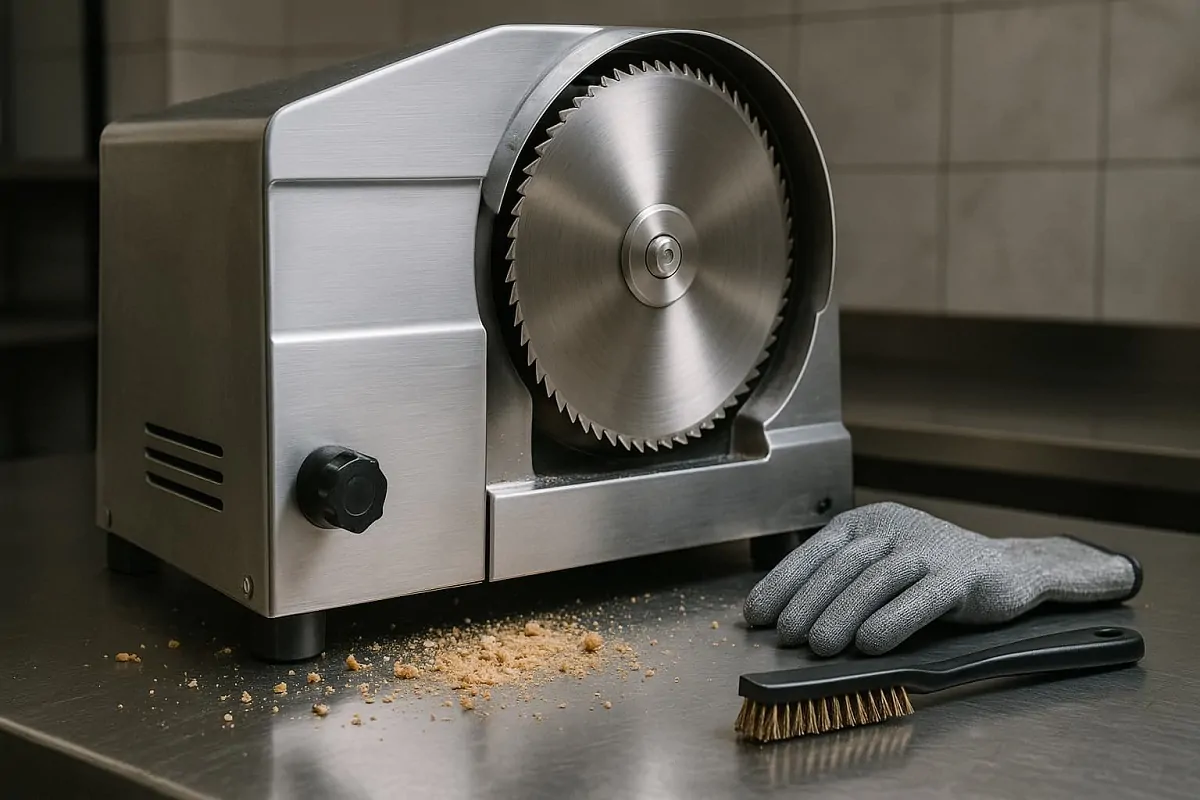
A professional bread slicer is an essential piece of equipment for any bakery, sandwich shop or establishment where bread is cut and sliced daily.
Regular use requires adopting good practices to ensure the machine's efficiency, safety, and durability
Sharpening and honing the blade, cleaning and maintenance , and adherence to safety are essential to fully benefit from the advantages of your professional slicer (intensive use).
Let's explore together the key points for taking care of this essential tool!
Summary
Why maintain your professional bread slicer?
Take care of your equipment and you'll quickly see the benefits: a clean cut, better hygiene , and fewer technical problems. Proper maintenance also prevents the premature replacement of expensive parts.
Several reasons explain why regular cleaning and maintenance are necessary when handling a professional slicer.
The accumulation of crumbs or residue can cause breakdowns or degrade the cutting quality, while a poorly maintained blade quickly loses its effectiveness.
By acting methodically, everyone extends the life of the equipment and works in an environment that meets the hygiene standards expected in the food sector.
How to sharpen and hone the blade?
Over time, even a removable or replaceable blade will eventually lose its sharpness. To maintain a precise cut, the blade must be regularly sharpened and honed.
Various accessories and sharpening devices exist for this purpose and make it possible to avoid replacing the blade too often, especially by having easy access to Robot Coupe spare parts.
Be sure to follow the manufacturer's instructions . Depending on the model, the methods may vary, but there are common steps, such as safely disassembling and reassembling the machine to access the blade
Protective gloves are strongly recommended for these operations, especially when removing or replacing the blade.
The steps to successful sharpening
Sharpening always begins with a thorough check of the blade's condition. If it is too worn, it is best to opt for a replaceable blade suitable for your appliance.
Otherwise, here are the main steps to follow:
- Unplug the slicer before any intervention.
- Wear rigid protective gloves to prevent any accidents.
- Remove the guard around the blade according to the instructions in the user manual.
- Use the sharpening accessories and devices provided by the manufacturer.
- Proceed gradually to avoid damaging the blade.
- Carefully reassemble all components to ensure complete safety.
After each sharpening session, test the cut on a small amount of bread to check the result without damaging the machine.
The use and operating instructions vary depending on the design of the professional slicer. It is therefore essential to consult the documentation provided with the machine before each technical operation.
When do you know when to sharpen or replace the blade?
Certain signs are unmistakable. Difficulty sliding the bread, unusual effort required, or uneven slices often indicate that sharpeningthe blade is urgently needed.
If the blade is scratched, bent or cracked, it is best to replace it immediately with a certified part.
Don't underestimate the effect on the quality of the cut : the sharper the tool, the more perfect the bread cut remains. This contributes to a neat presentation of the products served to customers.
Cleaning and maintenance after each use
Hygiene should never be neglected in a kitchen or workshop. After each service, a complete cleaning and maintenance ensures compliance with hygiene standards while minimizing the risk of cross-contamination.
The process includes the removal of food residues, the washing of removable parts, and then disinfection with products suitable for the food industry.
drying surfaces prevents premature deterioration of materials and limits unwanted odors.
Which parts should be cleaned and how should it be done?
On a professional slicer, several elements require special attention:
- The blade : to be disassembled and cleaned separately if it is removable.
- Bread guides and casings : potential sources of accumulated crumbs.
- Control buttons : regular wiping reduces traces of flour or grease.
It is always important to use appropriate tools to avoid damaging the metal surface and thus maintain the manufacturer's warranty. Some models have watertight compartments to facilitate waste collection.
Also consider periodically planning a complete and thorough cleaning, including the possible lubrication of moving axes to avoid blockage or unexpected breakage.
Recommended frequency for cleaning and maintenance
Ideally, small cleaning operations throughout the day, especially after each series of intensive slicing.
At the end of service, take a few minutes to disassemble and reassemble the machine to easily access difficult areas.
A frequency adapted to the intensity of use guarantees the performance of the professional slicer. This routine also limits prolonged maintenance periods that disrupt the organization of the establishment.
Safety: essential actions and indispensable equipment
Slicing bread presents certain dangers if basic precautions are not taken. Never neglect the issue of safety, especially on a machine designed for intensive and repetitive use.
Several measures effectively protect against potential incidents and reduce unplanned production shutdowns.
Dispensers of protective gloves should be kept readily available. Also, be sure to remind each user of the importance of keeping the area clean and handling the blade with care.
Before any major operation, check that the device is completely switched off.
What equipment should be used to prevent accidents?
Wearing cut-resistant protective gloves is essential. They provide a physical barrier when assembling, sharpening, or handling the removable blade.
Additional protections, such as transparent covers, exist to limit the risk of accidental contact with the cutting parts.
The installation of safety switches and protective covers complements regulatory requirements, further strengthening the overall prevention system.
Consult the instructions to adjust each component according to your specific needs.
Train staff and establish clear guidelines
Properly trained staff are proficient in safe operating procedures and know how to react in the event of a minor incident.
Schedule regular sessions to explain theuse and operation of each item, including maintenance or sharpening tools.
Clearly displaying the machine disassembly and reassembly stepsnear the workstation facilitates strict adherence to procedures and encourages collective vigilance.
Everyone understands that safety contributes as much to efficiency as to a calm atmosphere within the workshop.
Useful accessories to simplify use and maintenance
Certain options optimize the daily use of the professional bread slicer . In addition to special sharpening devices or cleaning kits , various accessories make the bread cutting and slicing process faster and safer.
Consider this to facilitate the integration of these devices into your daily operations.
Popular solutions include removable crumb collection trays, ready-to-use extra blades, and complete sets including gloves, brushes, and disinfectant sprays.
Investing in accessories compatible with the chosen model accelerates the return to optimal functional condition after each maintenance operation.
Removable or replaceable blade: advantages to consider
The ability to easily change the blade offers a significant advantage. Not only does it simplify maintenance, but this configuration also contributes to thorough cleaning, a key point for meeting the hygiene standards required by the profession.
On some models, rapid blade manipulation significantly reduces interruptions in activity.
Always keep compatible spare parts on hand – new blades or maintenance kits – to prevent any sudden shortages. This proactive approach avoids a complete shutdown of a production line or improvised changes, which result in lost time and reduced productivity.
Optimize usage with simple tips
Adopt efficient routines: prepare the workstation in advance, remove any potentially bothersome packaging from the bread, and gather all the necessary accessories before starting a slicing session.
By preserving fluidity and logical gestures, each user minimizes the risk of accidents and makes the most of the power offered by a modern professional slicer.
Don't forget to create a maintenance log for the machine . This document helps to organize cleaning, sharpening, and replacement cycles , while respecting the strict regulatory environment imposed on this type of equipment.