
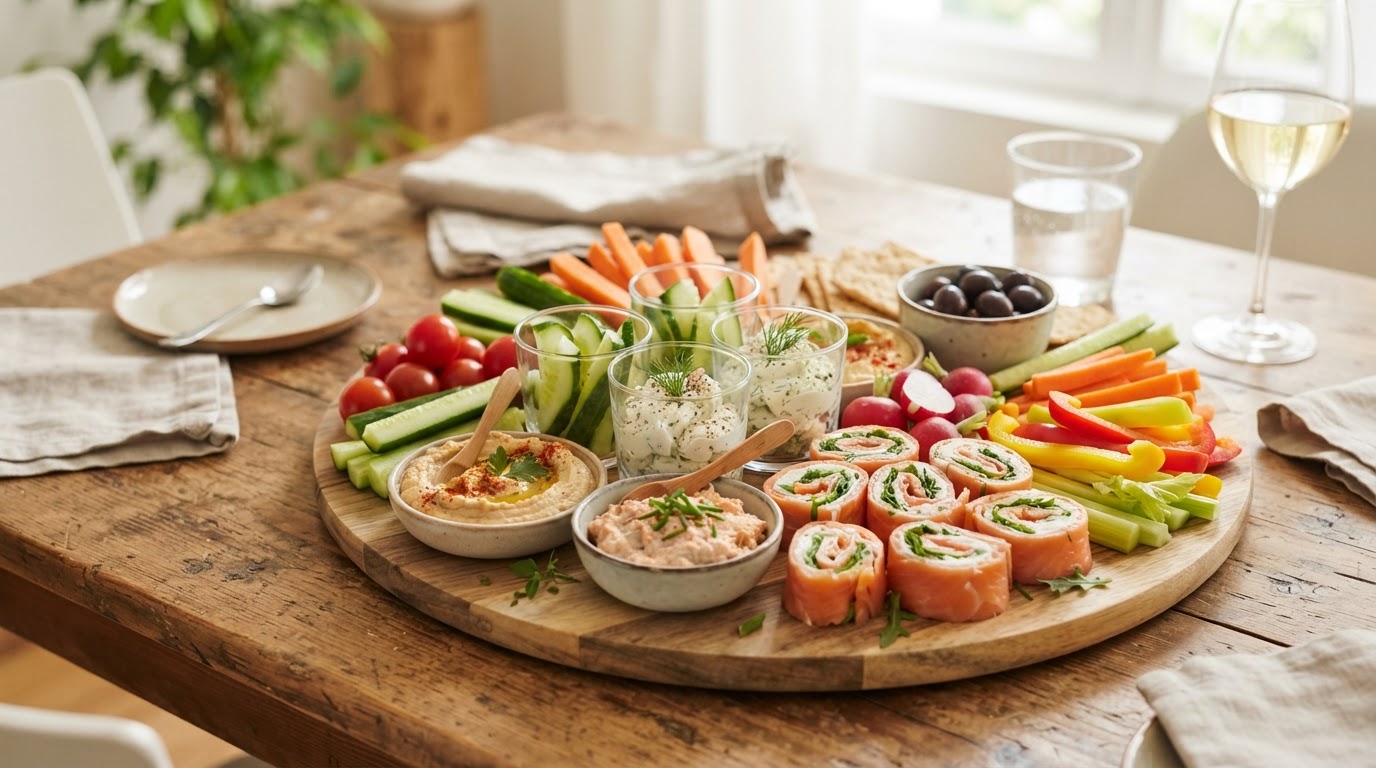
A cold aperitif that can be prepared in advance has a big advantage: on the day of the reception, you are with your guests and not in front of the worktop.
The trap is the texture. A soggy piece of toast, a verrine that releases water, or a roulade that collapses is enough to ruin the work of the previous day.
Here are six cold recipes that can be prepared in advance, a table of preparations to be done the day before and those to be finished at the last minute, quantities per person and a schedule from the day before to serving.
What is prepared the day before, what is left until the last moment
The rule can be summed up in one sentence: prepare in advance what is creamy or rolled, assemble at the last moment what is crispy or very moist.
Moist toppings soften the bread if spread too early. Topping just before serving is the best approach, as Croq Kilos reminds us (accessed October 2026).
The table below separates the two timeframes. The times given are conservative guidelines for cooking, not guaranteed durations.
| Preparation | Ready the day before | To be finished at the last minute |
|---|---|---|
| Hummus | Blended, covered, chilled | Drizzle of fresh olive oil |
| Tuna rillettes | Mixed, in a closed container | Fresh chives |
| cucumber verrines | Cream cheese in a glass | Diced cucumber, drained dry |
| Tortilla rolls | Filled, rolled, and wrapped | Cut into sections |
| Savory cake | Cooked and cooled | Slices and toothpicks |
| Tomato and mozzarella skewers | Nothing assembled | Assembly and oil |
| Bread, breadsticks, crackers | Whether bought or grilled, in an airtight container | Add to cart |
Typical example: You are hosting eight people on Saturday at 7 p.m. On Friday evening, the hummus, rillettes, cake, and roulades are prepared. On Saturday, the verrines still need to be filled, the skewers assembled, and the bread taken out of the refrigerator.
A dish that is eaten cold is not indifferent to the duration: the more fish, egg or fresh dairy product it contains, the longer it must be kept cold without interruption.
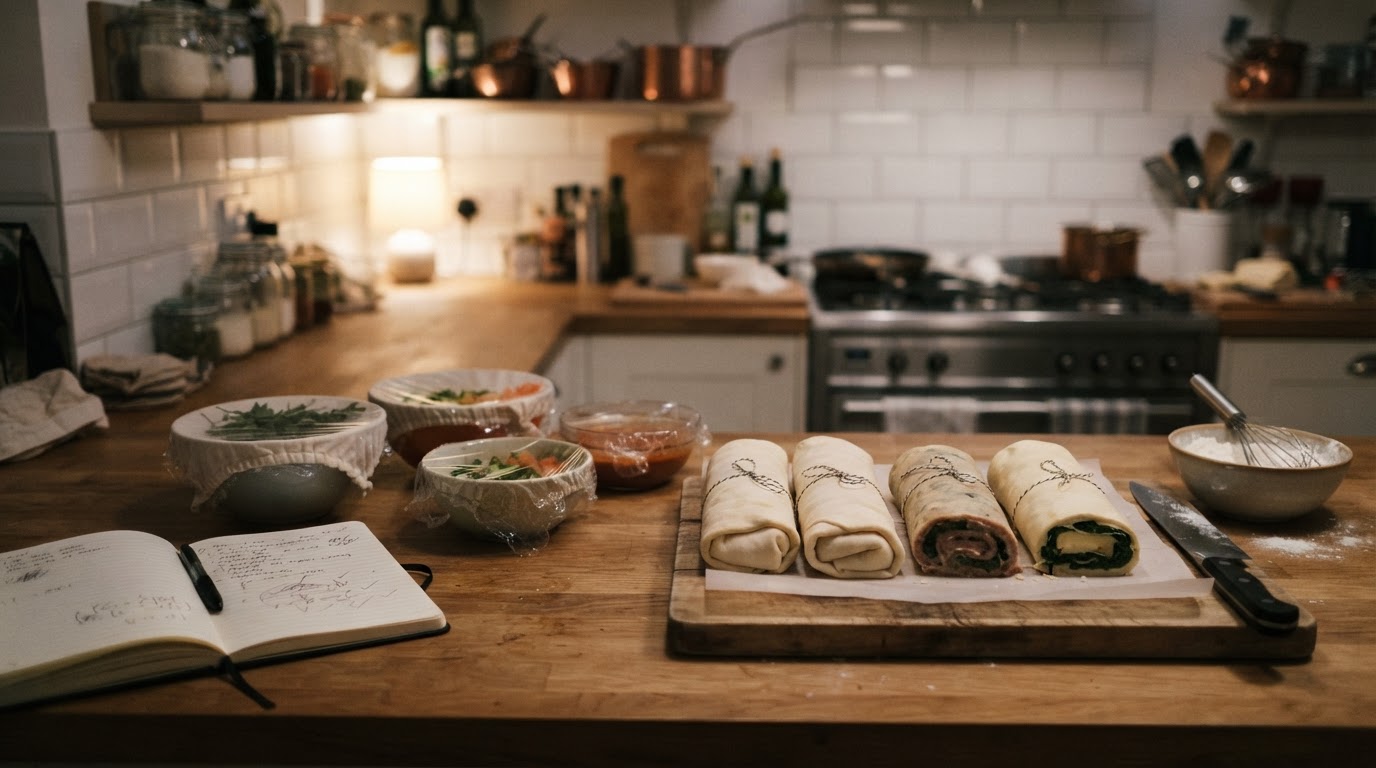
Spreads and dips: yesterday's reliable choices
Spreads are the best allies for making ahead: they gain in flavor when left to rest and do not fear waiting, as long as the bread remains separate.
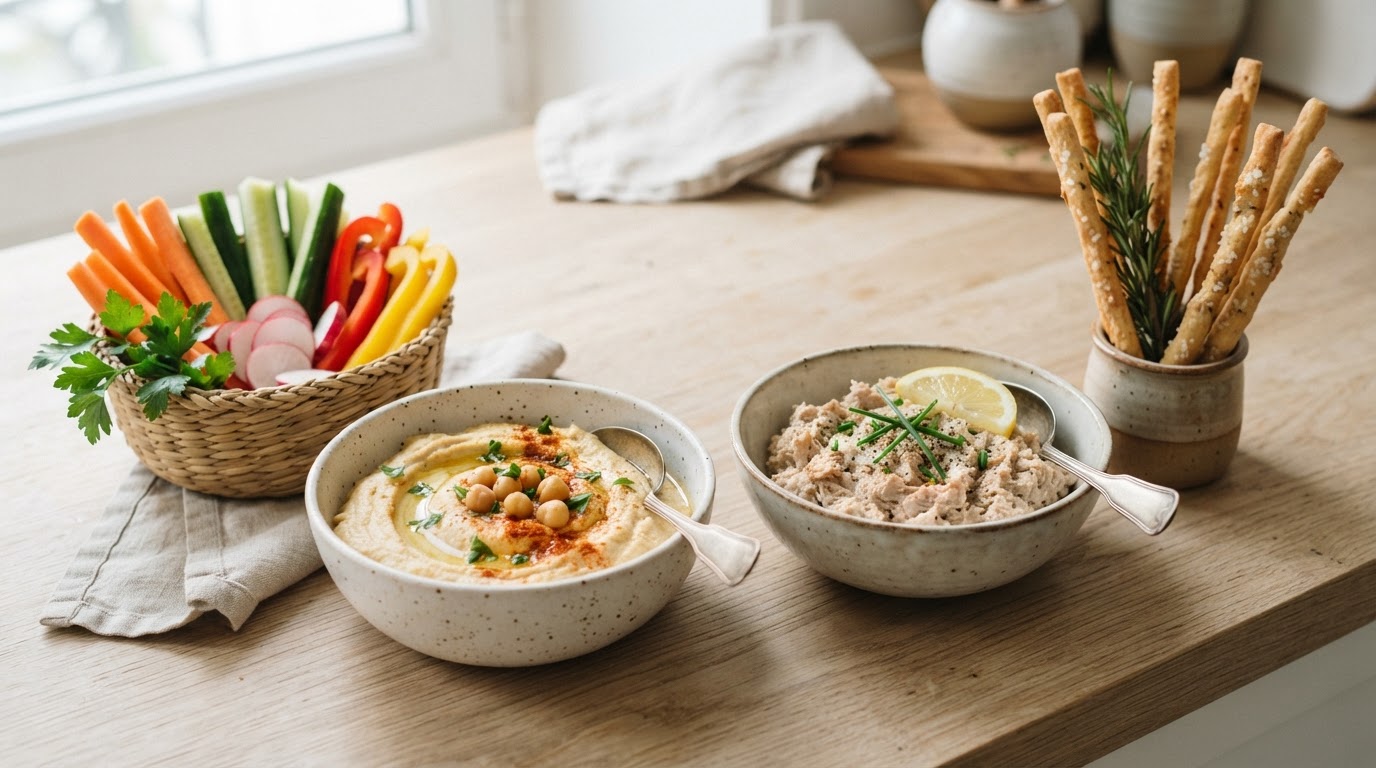
Quick homemade hummus
Blend 240g of cooked and drained chickpeas, 2 tablespoons of tahini, the juice of one lemon, a small clove of garlic, and 3 tablespoons of olive oil. Add 3 to 4 tablespoons of cold water until you obtain a smooth texture.
Keep it in a sealed container with a drizzle of oil on the surface. The flavors have time to meld overnight.
Tuna rillettes with cream cheese
Mash a well-drained 140g can of tuna in water with a fork, along with 100g of plain cream cheese, the juice of half a lemon, and pepper. Add the chives only at the end of serving to preserve their green color.
This dish contains fish: it should be refrigerated as soon as it is made, without waiting on the work surface.
In practical terms: keep breadsticks, crackers, and toast in a separate airtight container. If the bread has lost its crispness, a few minutes in a hot oven will restore it.
Verrines, roulades and cake: assembly in two steps
These recipes are prepared in two stages: the base the day before, the finishing touches a few hours before or when serving.
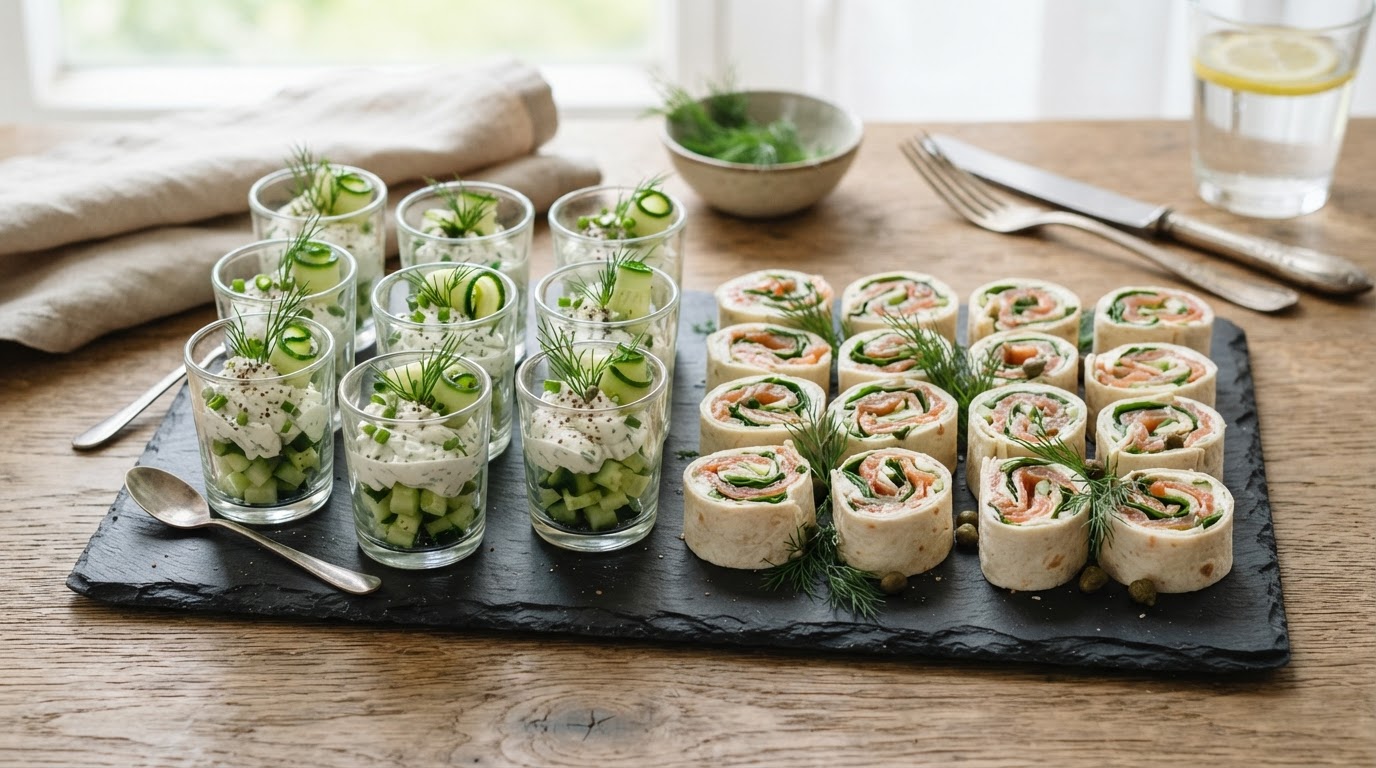
Cucumber, cream cheese and herb verrines
Whisk 200g of cream cheese with chives, a little mint, the juice of half a lemon, and salt. Divide this cream among eight small glasses, cover with cling film, pressing it directly onto the surface, and chill.
The cucumber releases water: cut it into small cubes, sprinkle with salt for 10 to 15 minutes, pat dry, then place it on the cream within the hour before serving.
Smoked salmon tortilla rolls
Spread 150g of dill-flavored cream cheese on four tortillas, top with smoked salmon (approximately 120g total), squeeze in a little lemon juice, and roll up tightly. Wrap each roll in cling film.
A night in the refrigerator makes for clean slicing: cut into 2 cm pieces when ready to serve. For smoked salmon, follow the packaging instructions: according to manufacturer datasheets consulted in October 2026, the shelf life after opening ranges from 24 hours to six days.
Ham, olive and Gruyère cake
Mix 200g of flour, a sachet of baking powder, 3 eggs, 10cl of oil and 10cl of milk. Stir in 100g of grated Gruyère cheese, 100g of diced ham and 100g of olives, then bake for 40 to 45 minutes at 180°C in a loaf tin, until a knife inserted into the center comes out clean.
Let it cool completely on a wire rack before covering it with film: condensation softens the crust.
Cherry tomato, mozzarella and basil skewers
Thread a cherry tomato, a ball of mozzarella, and a basil leaf onto a skewer. Nothing needs to be done the day before, except draining the mozzarella and washing the tomatoes.
Assemble them in ten minutes before the guests arrive and keep them chilled, without oil until the last moment.
For other formats to skewer, our 12 appetizer skewers to make the day before offer variations with fish, meat or vegetables.
What quantities should I allow per person?
It all depends on the role of the aperitif. According to Qui veut du fromage (accessed in October 2026), allow approximately 3 to 4 bites per person before a meal and 6 to 8 for a complete aperitif dinner.
Other guides suggest even more. Our corporate buffet , for example, recommends 10 to 14 savory items per person for a cocktail reception: keep this range in mind if your guests have hearty appetites.
Appetizer simulator for your guests
Indicate the number of guests and the type of party: the simulator calculates the total number of bites and an indicative distribution between the recipe families in this article.
Keep without taking risks
For dishes that will be left out for several hours, the refrigerator must be set correctly. The ideal temperature is between 0 and 4°C at the coldest point, and raw meats and fish, as well as homemade preparations made with raw animal products, should be placed in the coldest zone, according to sante.fr (published in December 2020).
The same page recommends not waiting more than two hours before refrigerating a dish. As a precaution, apply this guideline to tuna rillettes and salmon rolls: refrigerate as soon as they are ready.
Regarding shelf life, Health Canada (updated September 2024) indicates three to four days for prepared meals refrigerated at 4°C. An appetizer prepared the day before is still well below this guideline, but for fish or fresh dairy products, the best-before date on the packaging takes precedence.
These guidelines apply to cooked products. For smoked fish or raw eggs, the label and the use-by date always take precedence.
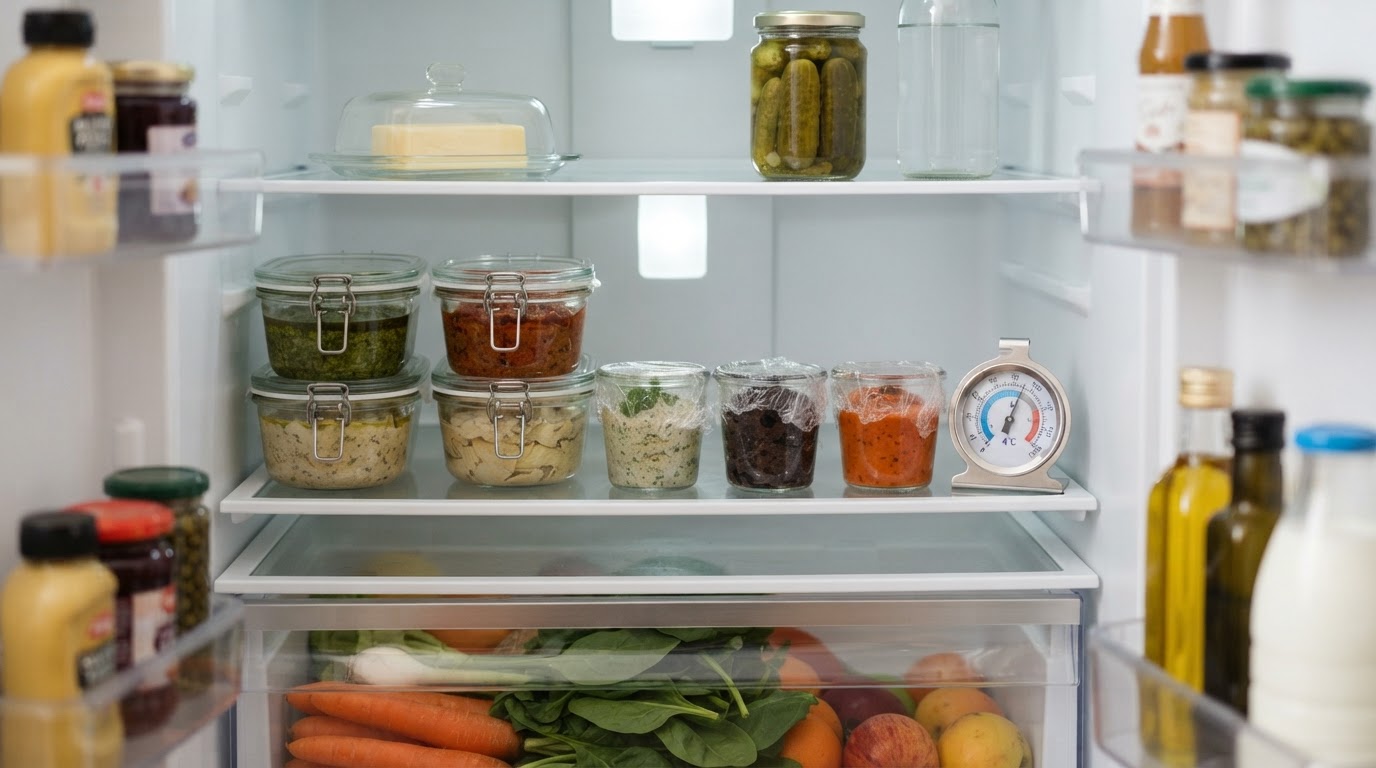
Another practical constraint: space. Twenty verrines and four boxes take up more than one shelf, so clear out the fridge before you cook, not after. Our guide to organizing a homemade aperitif also details the equipment and drinks.
The previous day's schedule for the service
Here is a typical schedule, designed for eight guests.
- The day before, around 1:15 am: hummus, rillettes, cream for verrines, cake and roulades.
- In the morning: take out the bread, wash the raw vegetables that will accompany the spreads, free up space in the fridge.
- One hour before: diced cucumber, salted and then patted dry, skewers assembled.
- To serve: slice cake and rolls, fill the verrines, garnish with chives and oil.
If you are looking for an appetizer idea in advance to open the meal afterwards, avocadoas an appetizer works with the same late-finishing logic.
In summary
To successfully prepare a cold appetizer in advance, separate what is made the day before (spreads, creams, cake, rolls) from what is assembled at the end (bread, cucumber, skewers).
Keep everything at a maximum of 4°C, do not leave anything for more than 2 hours before refrigerating, and allow 3 to 4 bites per person before a meal, more for a dinner party.
Practical questions
- Can you make a puff pastry appetizer in advance?
Yes, by baking it the day before and leaving it uncovered under a clean cloth, then reheating it for a few minutes in a hot oven before serving. If sealed tightly, it will soften. - Can you freeze appetizers?
Savory cakes freeze well in slices. Preparations made with cucumber, cream cheese, or raw vegetables don't freeze well, becoming watery. - What if the hummus is too thick the next day?
It has firmed up in the cold: add a tablespoon of cold water or lemon juice and whisk, then adjust the seasoning.
