
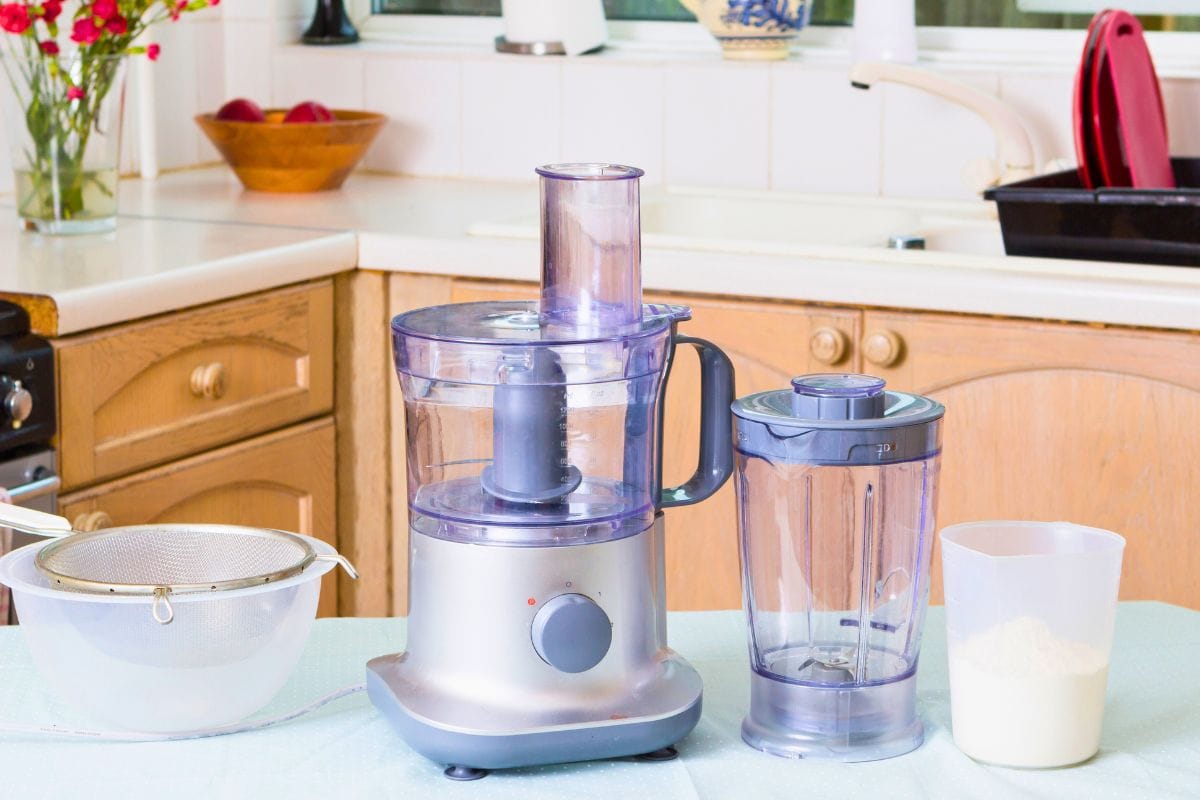
Choosing a food processor is a crucial step in saving time and optimizing your cooking. With the wide variety of models available on the market, it's essential to carefully compare offers and features.
This article helps you make the right choice, guiding you through the fundamental criteria, the different families of robots, usage tips and leading brands.
Why invest in a food processor?
The food processor has become an indispensable tool for anyone wanting to simplify meal preparation. This type of appliance is suitable for both amateur and professional cooks.
Whether you're a busy parent or a passionate cook, a food processor saves you precious time. It also makes it easy to prepare a variety of recipes.
What is a food processor?
A food processor is a multifunctional kitchen appliance. It performs various culinary tasks such as kneading, chopping, grating, blending, and even cooking food. Its versatility is making it increasingly popular in French households.
The benefits of a food processor in everyday life
One of its major advantages lies in the autonomy it provides. Once programmed, it manages cooking or preparation without continuous human intervention. Furthermore, it reduces the number of utensils needed and simplifies cleaning. The most advanced models even offer guided recipes and interchangeable accessories to adapt to all types of kitchens. Their modern design makes them attractive additions to any countertop. It's a practical solution to diverse culinary needs, whether for baking, soups, or stews. Moreover, investing in a high-performance food processor often translates into long-term savings, as it replaces several separate appliances. Finally, it encourages creativity and inspires you to try new recipes.
The evolution of kitchen robots
Over the years, the food processor has evolved to meet consumer expectations. Initially a simple household appliance, it has transformed into a truly intelligent culinary assistant. Manufacturers have introduced technologies such as touchscreens, Bluetooth connectivity, and Wi-Fi to facilitate everyday use. Pre-programmed settings are increasingly common, making sophisticated dishes accessible to everyone. Today, there are even models capable of weighing ingredients, cooking sous vide, or adapting settings based on the selected recipe. Constant innovation can sometimes make choosing the right food processor complex, hence the importance of being well-informed.
Decoding the essential features
Each food processor offers a range of functions, some more extensive than others. It's crucial to identify your needs before making a purchase. Distinguish between essential functions (chopping, kneading, mixing) and secondary options (sous-vide cooking, fermentation, automatic programs). Some brands emphasize power, while others focus on a wide range of accessories. Also consider the bowl capacity, the ergonomics of the controls, and maintenance. The more features a food processor offers, the higher its price. However, it's sometimes better to invest in a complete appliance from the start, rather than having to buy additional equipment later. Don't forget to check after-sales service, spare parts availability, and compatibility with other accessories.
Compare to make a better choice
Given the wide variety of food processors available, comparison is essential. Set a budget, but keep in mind that the cheapest option isn't always the best in the long run. Pay attention to the sturdiness of the materials, ease of storage, and the warranty offered. Reading user reviews can provide valuable insights into durability and real-world use. There are also specialized websites where you can find promotional offers and access detailed technical specifications. Finally, choose a brand known for its reliability to maximize the lifespan of your investment.
The main types of food processors
Before buying, it's helpful to know the main categories of food processors. Each has its own specific features and meets particular needs.
Multifunctional robot: the most versatile
The multi-functional food processor stands out for its ability to do almost anything. It mixes, chops, grates, slices, and more. This model is especially suited to those who like to diversify their recipes without needing multiple appliances.
Stand mixer: for dessert lovers
Designed for beating, kneading, and whipping, this stand mixer prioritizes power and precision. Its design allows for the attachment of various baking accessories, making it ideal for preparing breads, brioches, creams, and cakes repeatedly.
Food processor: the modern all-in-one
The food processor has revolutionized home cooking. Not only does it prepare food, but it also steams, simmers, browns, and blends it. It's the ideal appliance for those who want to come home to a ready-made meal or who want to try out a variety of dishes. This category is experiencing growing success thanks to brands like Thermomix and Moulinex. However, the cost of these appliances remains high, but the investment is very often worthwhile. Those who love healthy cooking will find it an invaluable tool.
Robot blender: the champion of blending
The blender is specialized for blending fruits and vegetables, preparing smoothies, soups, and cocktails. It's the perfect complement to a multi-function food processor or stand mixer, offering even more culinary possibilities at home.
Comparison of the main types of robots
| Robot type | Main functions | Target audience | Average price |
|---|---|---|---|
| Multifunctional | Chop, grate, slice, blend | Families, beginners | 100-400€ |
| Pastry chef | Knead, beat, whisk | Passionate about pastry | 150-600€ |
| Cooker | Cook, simmer, blend, weigh | Demanding chefs | 400-1300€ |
| Blender | Mixing, emulsifying, crushed ice | Lovers of healthy drinks | 40-250€ |
Essential criteria for making the right choice
Beyond the type of robot, certain criteria should always be considered when making a purchase.
Capacity and power
The bowl's capacity will determine the amount of food that can be prepared at once. A large family will need a food processor with a high capacity. Power influences the speed and efficiency of the appliance. It is advisable to choose a model of at least 700 watts for regular use.
Accessories included
A good food processor comes with a variety of accessories: blades, whisks, grating discs, etc. Check their sturdiness and ease of installation. Some kits also include accessories for making fresh pasta or juice, which can be very practical for everyday use. The more accessories the food processor comes with, the more versatile it will be. However, make sure you'll actually use these additions over time to avoid unnecessary clutter. Also consider how easy it is to clean – some parts are dishwasher-safe, others are not.
Maintenance and durability
A food processor should be easy to clean, as frequent use can lead to stubborn stains and residue. Opt for models with smooth surfaces, removable bowls, and dishwasher-safe parts. The robustness and quality of the materials are also crucial for ensuring a long lifespan. Finally, checking the availability and price of spare parts can prevent disappointment in the long run.
Ergonomics and intuitiveness
A food processor should be pleasant to use, even for intensive use. The controls should be clear, ideally touch-sensitive or with easily identifiable buttons. Some models have a digital screen providing access to guided recipes or automatic modes, greatly simplifying the experience, even for beginners.
Example of a pre-purchase checklist
- Define the intended frequency of use
- Assess the available space in your kitchen
- Compare the power and capacity of the bowl
- Check that the desired accessories are present
- Consider ease of storage and maintenance
- List the recipes or preparations being considered
Where can I find a food processor at the best price?
Today, numerous specialized platforms exist for comparing models, reading reviews, and taking advantage of attractive promotional offers. To find your dream food processor at the best price, visit Black-Month.com, which lists a wide selection of food processors from all brands, with the option to filter according to your budget and needs. You can thus make substantial savings on your appliance purchase, while also benefiting from warranties and personalized advice.
Some tips for optimal use
Once you've acquired your food processor, take the time to read the instruction manual carefully. Gradually experiment with the different functions, starting with simple recipes to familiarize yourself with the accessories. Regularly maintain your appliance to ensure its performance and longevity. Finally, explore food blogs and video channels for inspiration and to optimize the use of your new kitchen companion.
Must-have brands and trends for 2025
The food processor market is dominated by a few established players: Thermomix, Moulinex, Magimix, Kenwood, KitchenAid, and Bosch, among others. Recent innovations focus on connectivity, remote programming, and compact design. Consumers are increasingly attentive to energy efficiency, modularity, and ease of use. Models are also evolving toward greater accessibility for beginners, with more automatic programs and guided recipes.
The art of choosing the right food processor
Choosing a food processor is an investment in ease, efficiency, and culinary enjoyment. Take the time to compare models, test them in-store if possible, and evaluate all the criteria in light of your actual cooking habits. The ideal purchase is the one that perfectly matches your needs and budget, without compromising on quality.