
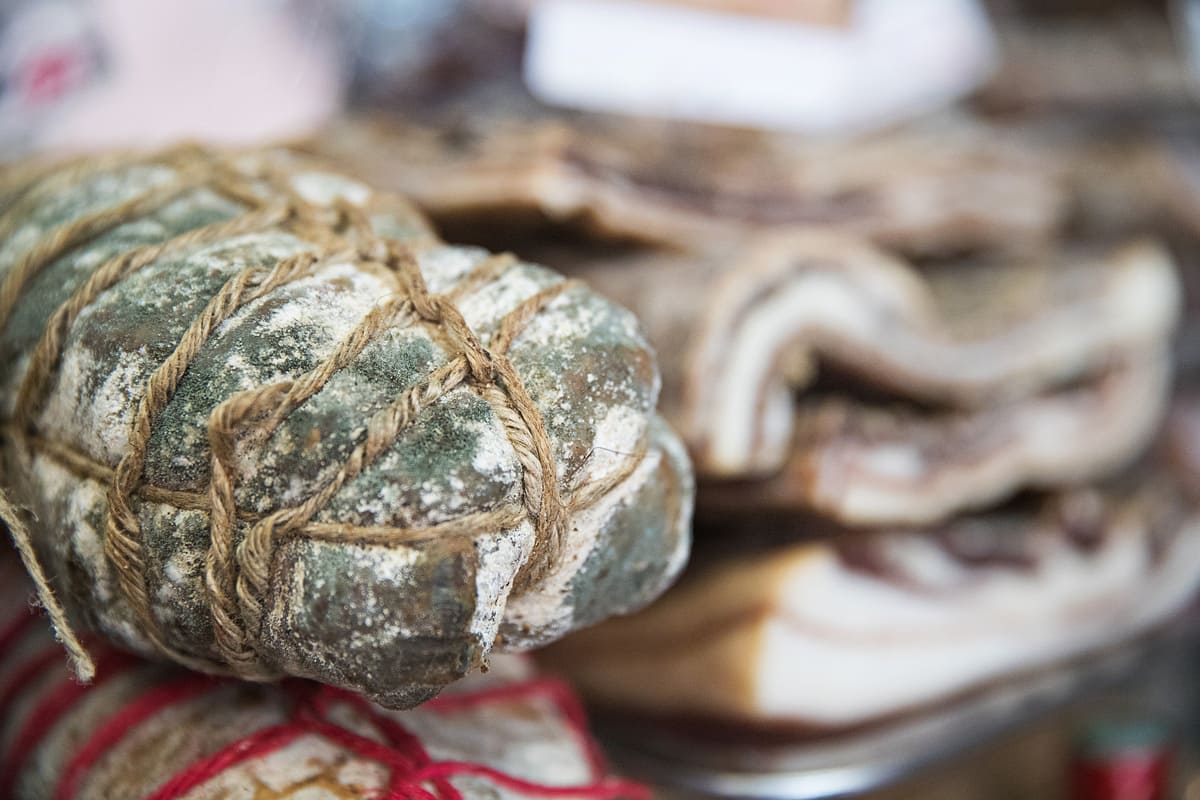
Sausage, a staple of charcuterie boards, delights gourmets with its rich flavors. Prolonged exposure to unsuitable conditions can lead to mold growth on this delicacy.
Faced with this phenomenon, a question arises: can we still enjoy this sausage without jeopardizing our health?
If you see a white mold, similar to that found on cheese, this may be normal and can simply be removed. However, if green or black mold appears, it indicates that the sausage is no longer edible.
The formation of the sausage
This delicacy is primarily made from minced pork, enhanced with various ingredients such as salt, spices, and preservatives. The preparation then involves three phases: stuffing into casings, drying, and curing.
During these stages, various microorganisms can develop on the sausage, including bacteria, yeasts, and fungi.
These microorganisms play a role in the fermentation process, allowing the sausage to develop its unique flavor and inimitable texture.
Is the mold on the sausage natural?
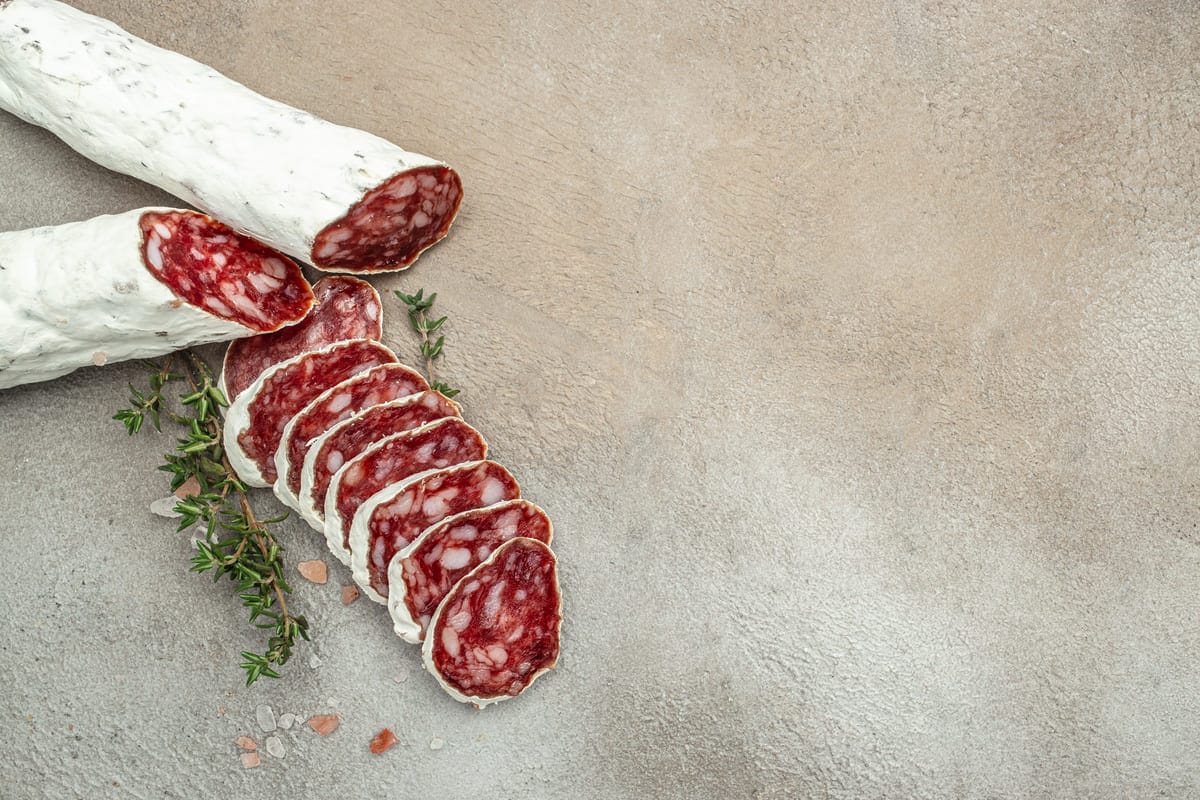
The presence of mold on sausage is not a sign of poor quality or spoilage. Sausages undergo a maturation process that promotes the growth of beneficial microorganisms such as lactic acid bacteria and certain fungi. These contribute to improving the sausage's flavor and its preservation.
However, there are also so-called "undesirable" molds that can appear on sausage, particularly due to unsuitable humidity or temperature conditions during drying or curing.
These molds can alter the taste quality of the product and pose health risks.
Sausage consumption indicators
The general appearance
If the mold covers the entire sausage and has a uniform color (usually white), this may be a sign of normal fungal growth during the curing process and does not necessarily represent a danger.
However, if you observe molds of different colors (green, black, blue, etc.), this may indicate the presence of undesirable and potentially harmful molds.
The smell
A sausage at the correct stage of curing should give off a pleasant and characteristic aroma. If a moldy sausage gives off an unpleasant, sour, or ammonia-like odor, this may be a sign of abnormal microorganism growth, and it is best not to consume it.
The taste
If, after removing the surface mold, the sausage still has an unpleasant or bitter taste, this may indicate that unwanted mold has altered the product's flavor. In this case, it is best not to consume it.
How to prevent excessive mold growth on sausage?
To limit excessive mold growth on your sausages, here are a few tips:
Check the origin: opt for quality sausages, made by artisan butchers who respect hygiene and preservation rules
Respect storage conditions: keep your sausages in a cool, dry place, away from light and humidity
Inspect the sausage regularly: watch for the possible appearance of unwanted mold and do not hesitate to remove it from the surface if necessary.