Dubai

Everything about Dubai
What if a city built its entire identity in less than half a century? Visiting Dubai means stepping into a place where the desert meets the sea and ambition has no ceiling.
This city in the United Arab Emirates went from a modest pearl-diving port to one of the most visited destinations on the planet. The skyline alone tells the story better than any history book.
But Dubai is not just skyscrapers and shopping malls. Beneath the glitter, there are spice souks, wind-tower houses, and a genuinely layered culture waiting to be discovered.
Why visit Dubai?
What makes Dubai unique
Dubai compresses extremes into a single city block. You can ski indoors in the morning and swim in the Arabian Gulf by afternoon.
The city hosts over 200 nationalities, making it one of the most ethnically diverse urban centers on Earth. That diversity shows up vividly in the food, the neighborhoods, and the street life.
The contrast between old and new is sharper here than almost anywhere else. Ancient wind towers stand within sight of supertall glass towers, and neither feels out of place.
Dubai at a glance
Dubai sits on the southeastern coast of the Persian Gulf, covering roughly 4,114 square kilometers. It is the most populous emirate in the UAE, home to around 3.6 million residents.
The official language is Arabic, but English is spoken almost universally in hotels, restaurants, and transport hubs. The currency is the UAE dirham, pegged to the US dollar.
The emirate runs on a Friday-Saturday weekend, so plan museum visits and government-related errands accordingly. Most attractions stay open daily, including public holidays.
What to see and do in Dubai?
Burj Khalifa (828 m)
At 828 meters, the Burj Khalifa is the tallest structure ever built by humans. No photograph fully prepares you for standing at its base and craning your neck upward.
Two observation decks welcome visitors: At the Top on level 124 and the premium Sky level at 148. On a clear winter morning, the view stretches past the coastline and deep into the Arabian desert.
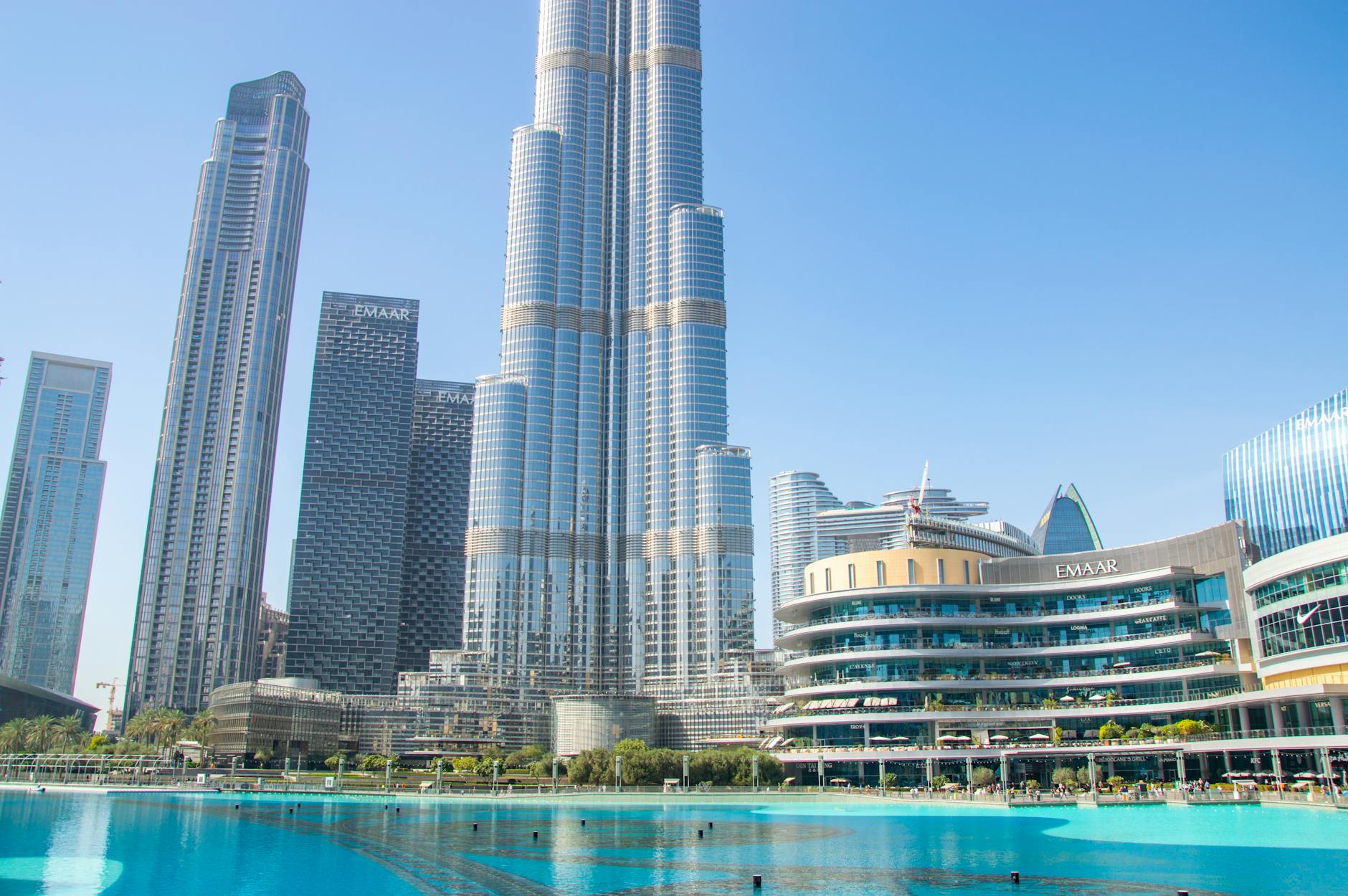
Book tickets well in advance, especially for the sunset slot, which sells out days ahead. The light show at the base fountain runs every evening and draws large crowds to the surrounding plaza.
Local guides recommend arriving at least 30 minutes early to navigate security and the queue for the high-speed elevator, which reaches the observation deck in under a minute.
Dubai Mall
The Dubai Mall is the world's largest shopping mall by total area, covering over 500,000 square meters of retail, dining, and entertainment space. It receives more than 80 million visitors per year.
Beyond the 1,300 stores, the mall contains a full-sized ice rink, a massive aquarium with a 270-degree walkthrough tunnel, and a VR park. Shopping is almost secondary to the spectacle.
The ground-floor food court connects to dozens of cuisines from Lebanese and Indian to Japanese and American. Visitor reviews confirm that the authentic Emirati restaurant near the old town entrance is worth seeking out specifically.
Come on a weekday morning to avoid the weekend crush. The mall connects directly to the Burj Khalifa metro station via a covered walkway, making the journey easy from most parts of the city.
Palm Jumeirah
The Palm Jumeirah is a human-made archipelago shaped like a palm tree, reclaimed from the sea using 94 million cubic meters of sand and rock. It remains one of the most ambitious engineering projects in modern history.
The Palm Monorail runs the length of the trunk, connecting the mainland to Atlantis at the crescent tip. The ride itself gives a striking aerial perspective of the island's symmetry.
The boardwalk along the western crescent is a favorite for an evening stroll, with unobstructed views back toward the Dubai Marina skyline. Several open-air restaurants line this stretch.
Travelers note that the beach clubs on the Palm tend to charge entry fees but include food and drink credits. The public beach at the northern tip is free and less crowded than the Marina beaches.
Dubai Old Town (Al Bastakiya)
Al Bastakiya, now officially called Al Fahidi Historical Neighbourhood, is the oldest surviving residential area in Dubai. Its wind towers, narrow lanes, and courtyard houses date back to the early 1900s.
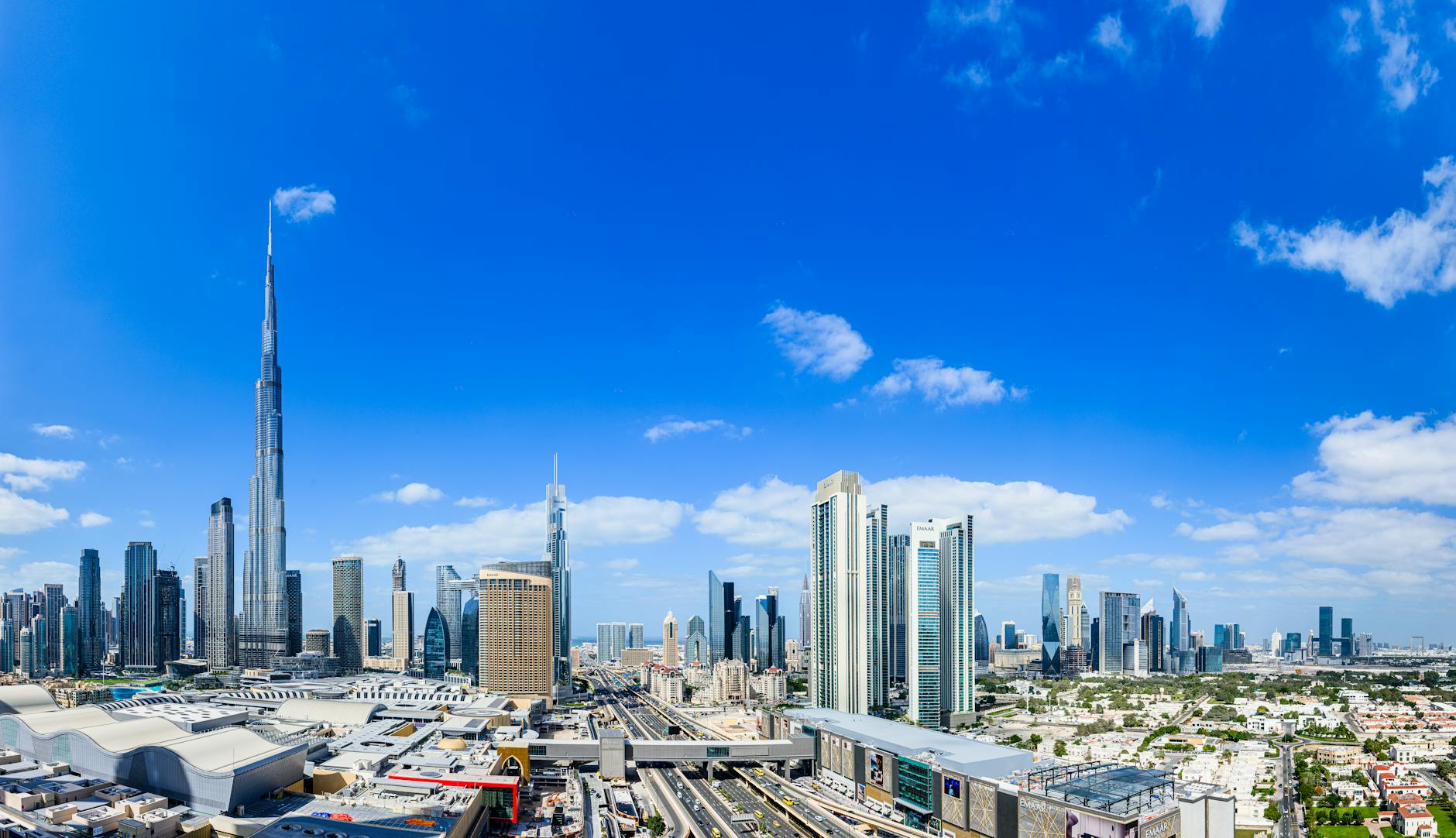
Merchants from Persia and India originally built this quarter during the pearling boom. Walking through it feels like the rest of the city has briefly paused.
The Dubai Museum sits at the edge of the neighborhood inside the 18th-century Al Fahidi Fort. The entry fee of just 3 dirhams makes it one of the best-value experiences in the city.
The nearby Textile Souk and Spice Souk are best reached by crossing Dubai Creek on an abra, a traditional wooden water taxi that costs one dirham per crossing. Take that ride even if you have no shopping in mind.
Food and local cuisine in Dubai
Dubai's food scene reflects its population: every cuisine imaginable exists here, from hole-in-the-wall Pakistani dhabas to Michelin-recognized fine dining restaurants.
Emirati cuisine itself centers on slow-cooked meat, rice, and aromatic spices. Dishes like machboos, a spiced rice with lamb or chicken, and harees, a slow-cooked wheat and meat porridge, appear frequently at local restaurants during Ramadan and national holidays.
Al Ustad Special Kabab in Deira is a Dubai institution, open since 1978. Visitor reviews consistently praise its simple grilled meats and fresh bread as some of the most satisfying food in the city.
For street food, the area around Al Rigga in Deira delivers cheap, excellent shawarma, falafel, and fresh juices. Breakfast here often means a plate of ful medames with flatbread and a glass of karak chai, a milky spiced tea that fuels the city.
- Machboos: spiced rice with slow-cooked meat, a staple of Emirati home cooking
- Shawarma: widely available across the city, quality varies significantly by neighborhood
- Luqaimat: small fried dumplings drizzled with date syrup, a popular street snack
- Karak chai: condensed-milk spiced tea, sold at virtually every corner café
Alcohol is available at licensed hotel restaurants and bars but is not sold in regular shops or unlicensed establishments. Plan dining nights out accordingly, especially during Ramadan.
Getting to Dubai and getting around
Getting there
Dubai International Airport is one of the busiest airports in the world by international passenger traffic, handling over 86 million passengers in 2023. Direct flights connect it to virtually every major city across Europe, Asia, and Africa.
Emirates and flydubai both operate from Terminal 1 and Terminal 2 respectively. Flight time from London is approximately 7 hours; from Paris, roughly 6.5 hours.
A second airport, Al Maktoum International near Expo City, handles some budget carriers. Check carefully which terminal your airline uses before booking onward transport, as the two airports are 45 kilometers apart.
Getting around
The Dubai Metro runs on two lines: the Red Line and the Green Line. It is clean, air-conditioned, and punctual, covering most major tourist areas from the airport to the Marina.
Taxis are metered, plentiful, and reasonably priced by international standards. A ride from the airport to Downtown Dubai costs roughly 60 to 80 dirhams depending on traffic.
The RTA Nol card works across the metro, buses, trams, and water buses. Visitor reviews confirm it is the smartest way to pay for all public transport during a week-long stay.
Budget and practical tips
How much to budget for Dubai
Dubai sits in the moderate budget range for travelers, though costs vary sharply depending on where you eat and sleep. A mid-range hotel in Downtown runs between 400 and 700 dirhams per night (roughly €100 to €180).
Eating at local restaurants in Deira or Al Karama keeps food costs very low. A filling meal rarely exceeds 30 to 50 dirhams at a non-tourist establishment.
Major attractions carry real admission fees. The Burj Khalifa At the Top ticket costs around 170 dirhams, while the Dubai Frame admission runs about 50 dirhams. Budget these in advance rather than on arrival.
Alcohol significantly inflates a bar tab. A beer at a hotel bar typically costs 40 to 60 dirhams. Travelers on a tight budget should stick to the extraordinary food scene rather than prioritizing nightlife.
Best time to visit: November to April
The period from November to April is the clear sweet spot for visiting Dubai. Daytime temperatures stay between 20 and 30 degrees Celsius, making outdoor exploration genuinely comfortable.
Summer months from June to September see temperatures regularly exceeding 40 degrees with high humidity. Most outdoor activities become impractical, and the city essentially retreats indoors.
December and January bring the largest tourist crowds and some of the highest hotel prices of the year. Shoulder months like November and March give pleasant weather at better rates.
Ramadan falls on a different date each year and transforms the city's rhythm entirely. Restaurants close during daylight hours, alcohol service becomes more restricted, and nighttime comes alive with Iftar gatherings and late-night markets. Man
Frequently Asked Questions about Dubai
Similar Destinations
Medina
In Medina, Saudi Arabia, lantern-lit courtyards lead to the Prophet's Mosque (Al-Masjid an-Nabawi) and the…
DiscoverJeddah
Jeddah, Saudi Arabia's gateway to the Red Sea, pairs UNESCO-listed coral houses in Al-Balad with the world's…
DiscoverIstanbul
Istanbul, Turkey's legendary crossroads of Europe and Asia, draws travelers to iconic landmarks like Hagia…
Discover