Explore Sweden
1 destination to discover
Everything about Sweden
Traveling to Sweden means stepping into a country where vast forests meet a jagged coastline, and modern design sits comfortably alongside Viking heritage.
With over 220,000 lakes, two UNESCO-listed archipelagos, and cities that somehow feel both cutting-edge and deeply rooted in nature, Sweden rewards every type of traveler.
From the northern lights above Lapland to the cobblestone streets of Stockholm's Gamla Stan, this Scandinavian giant never quite fits the postcard version you imagined.
Why travel to Sweden?
What sets Sweden apart from other destinations
Sweden covers roughly 450,000 square kilometers — larger than California — yet holds only about 10.5 million inhabitants. That ratio means space, quiet, and wilderness on a scale rare in Europe.
The concept of allemansrätten, or "the right to roam," gives everyone legal access to nature. Hiking, wild camping, and berry-picking across private land are not just tolerated — they are written into law.
Sweden also ranks among the world's most progressive societies. Infrastructure is reliable, English is spoken almost universally, and sustainability is woven into daily life rather than treated as a marketing angle.
Sweden at a glance
Sweden spans from the agricultural plains of Skåne in the south to the Arctic tundra of Lapland in the north. The country shares borders with Norway and Finland and has a long coastline facing Denmark across the Øresund strait.
The population sits around 10.5 million, with Stockholm alone home to roughly 1 million people. The official currency is the Swedish krona (SEK), with approximately 11 SEK to 1 USD at recent exchange rates.
Regions and cities to explore
The main regions of Sweden
Lapland in the far north is a world of reindeer herding, dog sleds, and the midnight sun. In winter, the sky above Abisko National Park is considered one of the clearest places in Europe to see the aurora borealis.
The Lake District around Dalarna sits at Sweden's emotional heartland — folk painting traditions, red wooden cottages, and the longest cycling route in the country all converge here.
The island of Gotland in the Baltic Sea deserves its own category. Medieval Visby, surrounded by intact ring walls, draws visitors every summer with its rose gardens and restaurant scene that punches well above its size.
Skåne in the south feels almost Danish — rolling farmland, sandy beaches, and a food culture heavily influenced by proximity to the European continent. Local guides recommend it as Sweden's most underrated food region.
Which cities should you visit?
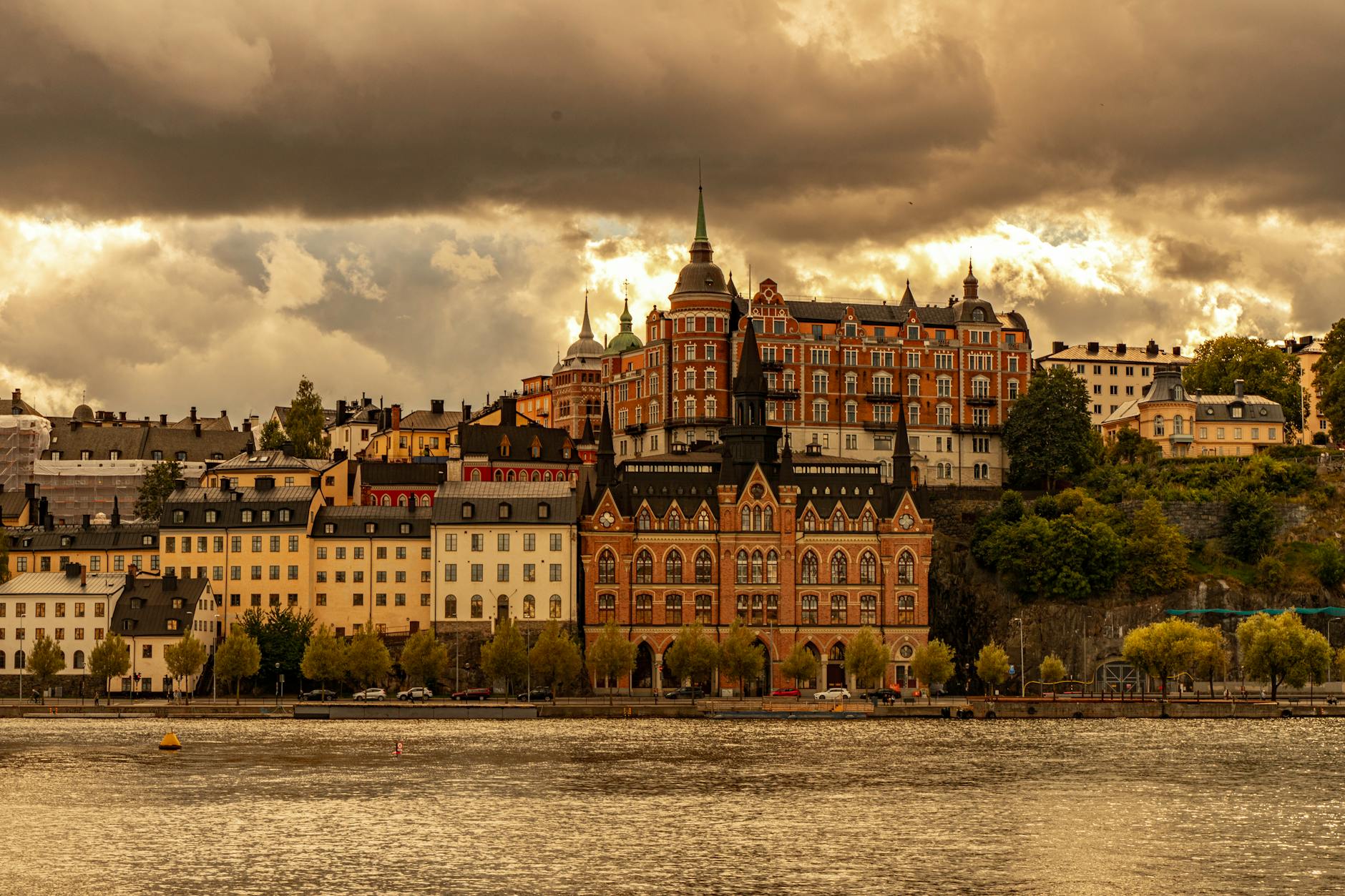
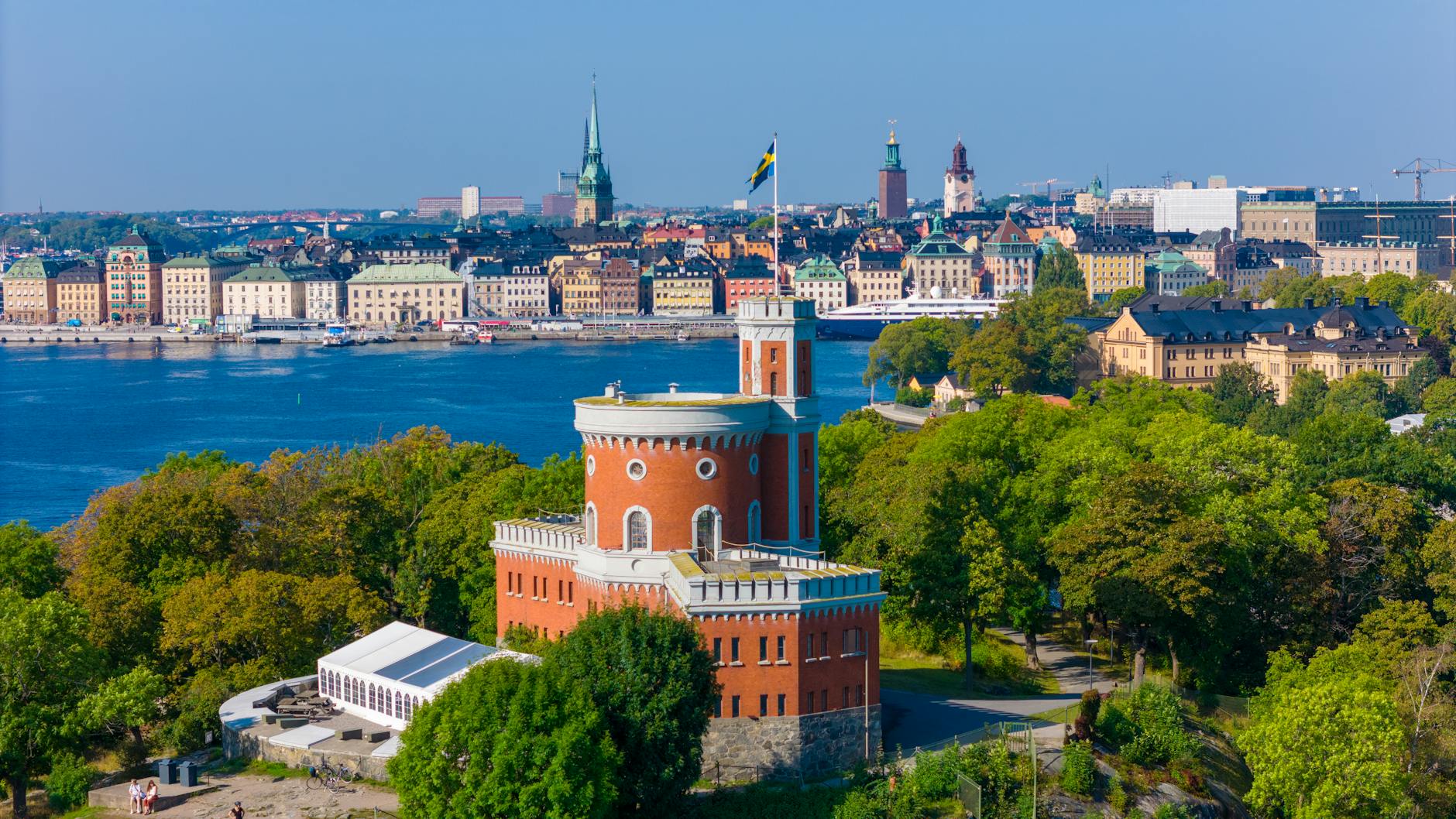
Stockholm, built across 14 islands, is the unavoidable starting point. The old town of Gamla Stan dates back to the 13th century, and the Vasa Museum houses a nearly intact 17th-century warship salvaged from the harbor floor.
Göteborg is Sweden's second city and arguably its most livable. The Haga district's wooden houses, the Liseberg amusement park, and a restaurant scene ranked among Scandinavia's best make it worth more than a transit stop.
Malmö connects to Copenhagen by the Øresund Bridge in just 35 minutes. The Turning Torso tower, a Santiago Calatrava landmark, dominates the skyline of a city that has quietly transformed from industrial port to creative hub.
Uppsala, just 70 kilometers north of Stockholm, hosts Scandinavia's oldest university, founded in 1477. The twin-spired cathedral, the largest in the Nordic countries, and the botanical gardens of Carl Linnaeus give the city a scholarly, unhurried atmosphere.
Culture, traditions and way of life
The Swedish concept of lagom — roughly translated as "just the right amount" — shapes nearly every social interaction. Not too loud, not too reserved; not too extravagant, not too sparse.
Fika, the twice-daily coffee break taken with pastries and conversation, is a genuine social institution. Traveler reviews consistently describe it as the easiest way to connect with locals.
Midsommar celebrations in late June are among the most visually striking traditions in Europe. Villages across the country raise flower-wrapped maypoles, and communities dance through the white night until the sun barely sets.
Sweden has produced a disproportionate amount of global culture relative to its size. ABBA, Ingmar Bergman, Astrid Lindgren, and an entire wave of crime fiction writers from Stieg Larsson onward have all shaped international storytelling.
Design and architecture are taken seriously at every level — from the furniture in a provincial guesthouse to the typography on a city bus. Visiting the Nationalmuseum in Stockholm or the Röhsska Museum in Göteborg puts that tradition into sharp context.
Food: the flavors of Sweden
Swedish cuisine has moved far beyond the meatball cliché. The New Nordic movement, pioneered partly by Swedish chefs, has pushed foraged ingredients, fermented fish, and hyper-seasonal menus into the international spotlight.
Traditional dishes remain deeply satisfying. Husmanskost — hearty home cooking — includes pea soup on Thursdays, gravlax cured with dill and salt, and janssons frestelse, a creamy anchovy-and-potato gratin that appears on every julbord.
Smörgåsbord at Christmas is not a buffet concept but a choreographed sequence of dishes. Herring comes first, then salmon, then warm dishes, then cold meats — the order matters to Swedes.
Street food is anchored by the tunnbrödsrulle — a flatbread wrap filled with mashed potato, shrimp salad, and sausage. Budget travelers note that hot dog kiosks, known as korvkioskar, keep prices under 60 SEK for a filling snack.
Swedish coffee culture deserves special mention. Sweden ranks among the world's top five countries for per-capita coffee consumption. The cardamom bun, known as kardemummabulle, is the refined alternative to the classic kanelbullar cinnamon roll.
Practical information
Visa and entry requirements
Sweden is a member of the Schengen Area, meaning citizens of EU and EEA countries enter without a visa. Citizens of the United States, Canada, Australia, and the UK can visit for up to 90 days without a visa within any 180-day period.
From 2025, the European Travel Information and Authorisation System (ETIAS) will apply to non-EU nationals who currently enter visa-free. Travelers should verify current requirements through official Swedish Migration Agency channels before booking.
Budget and cost of living
Sweden is not a cheap destination, but it is manageable with planning. A mid-range hotel in Stockholm typically runs between 1,200 and 2,000 SEK per night, while hostels start around 350 SEK in a dormitory.
A sit-down lunch at a krog averages 150–200 SEK. Supermarkets like ICA and Coop allow self-catering at reasonable cost. Museum entry fees range from free (Nationalmuseum) to around 180 SEK for major attractions like the Vasa Museum.
Public transport is well-priced relative to service quality. A single metro ride in Stockholm costs around 39 SEK, and monthly passes run approximately 970 SEK.
Getting around
Sweden's rail network, operated largely by SJ, connects Stockholm to Göteborg in about three hours and to Malmö in under three hours. The Inlandsbanan, a scenic railway through central Sweden, is slower but atmospheric.
Domestic flights connect Stockholm to Lapland cities like Kiruna and Luleå efficiently, especially in winter. Ferries are the practical way to reach Gotland from Nynäshamn or Oskarshamn, with crossing times of two to three hours.
When to visit Sweden?
Sweden's geography means the right time to visit depends entirely on what you are after. The country spans 15 degrees of latitude, so Malmö and Kiruna can feel like different planets in the same season.
Summer — June through August — brings long days, outdoor festivals, and temperatures of 20–25°C in the south. The midnight sun above the Arctic Circle peaks in late June and creates an experience unlike anything in temperate Europe.
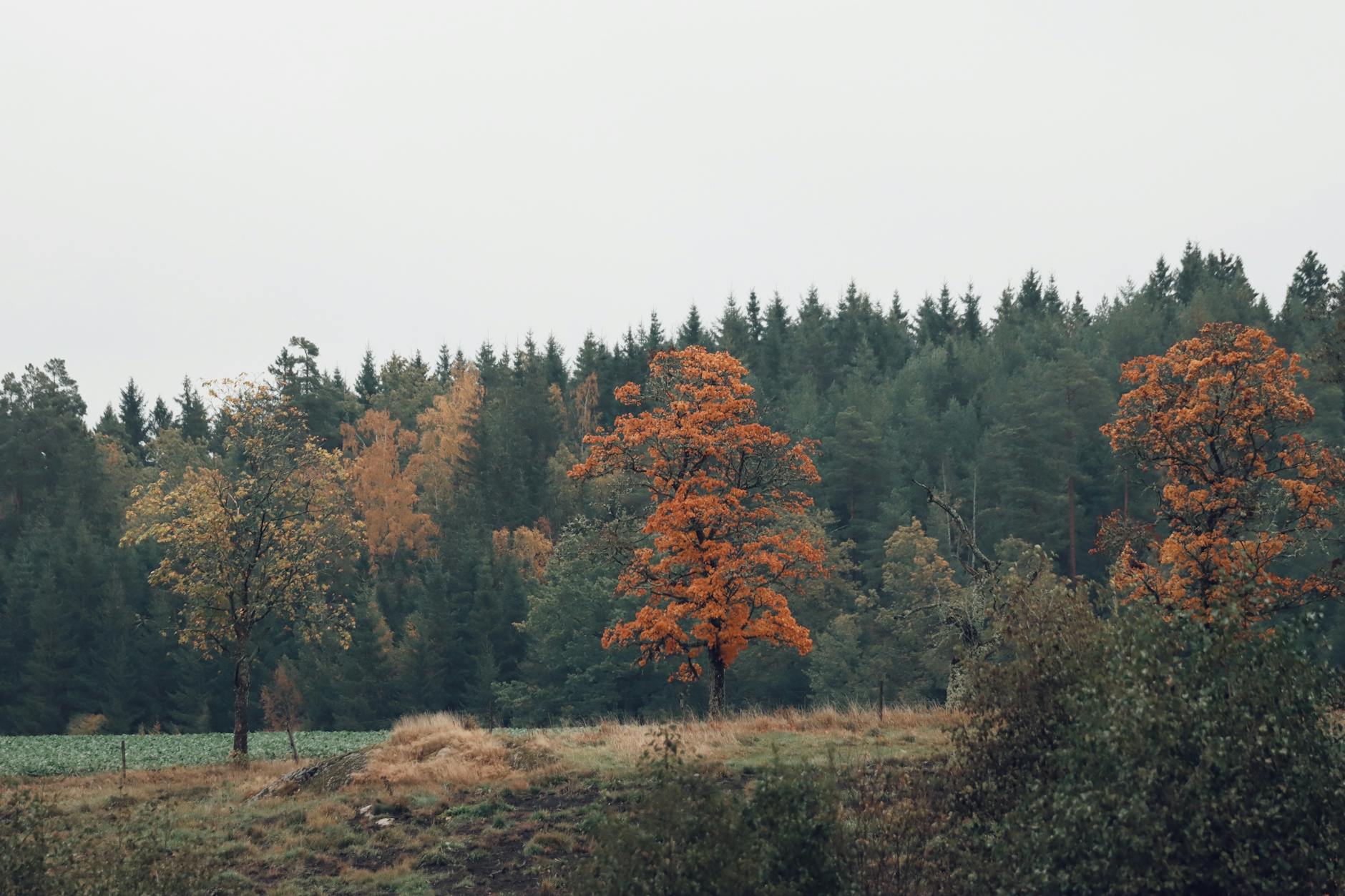
Autumn turns the forests copper and amber from mid-September. Visitor reviews consistently praise September and early October for hiking, mushroom foraging, and thinner crowds at major museums.
Winter in northern Sweden runs from November through March and delivers sub-zero temperatures, snowmobiling, and genuine possibilities of seeing the northern lights, particularly around Abisko and Kiruna.
Spring arrives late by southern European standards — expect snow in the north through April — but May brings a remarkable burst of light and wildflower bloom across Skåne and the Swedish countryside.
Stockholm and Göteborg in December host atmospheric Christmas markets with mulled glögg, handicrafts, and candlelit streets that make the cold feel entirely worthwhile.
Frequently Asked Questions about Sweden
Similar Destinations
Explore more destinations in the same region of the world.
Copenhagen
Copenhagen, Denmark's vibrant capital, pairs the candy-colored facades of Nyhavn with the magic of Tivoli…
DiscoverOslo
Oslo, Norway's dynamic capital, pairs raw Scandinavian landscapes with world-class culture: the Edvard Munch…
DiscoverLondon
London, United Kingdom, pulls visitors in with landmarks like Big Ben, the London Eye, and the British…
Discover