Porto

Everything about Porto
What if one of Europe's most atmospheric cities had been hiding in plain sight all along? Visiting Porto rewards travelers with layered history, dramatic riverscapes, and a culture that feels genuinely lived-in rather than staged for tourists.
Porto sits on granite hills above the Douro River, just a few kilometers from the Atlantic coast. The city moves at its own pace, somewhere between melancholy and celebration.
Expect azulejo-tiled facades, the smell of grilled sardines drifting through narrow lanes, and wine cellars that have aged quietly for centuries. This guide covers everything you need to plan a visit worth remembering.
Why Visit Porto?
What Makes Porto Unique
Porto is not a polished museum city. Its beauty comes from the friction between old and new, between crumbling baroque churches and contemporary wine bars carved into medieval stone.
The city's historic center earned UNESCO World Heritage status in 1996, recognizing centuries of layered architecture that no renovation campaign has managed to flatten. Street art coexists with granite chapels here without apology.
Porto also has a port wine tradition that belongs entirely to itself. No other place in the world produces this fortified wine, and understanding it means crossing a bridge and descending into the lodges of Gaia.
Porto at a Glance
Porto is Portugal's second-largest city, home to roughly 237,000 residents in the municipality proper. The greater metropolitan area pushes that figure past 1.7 million.
The estimated budget sits comfortably in the moderate range, making Porto accessible without requiring sacrifice. A full day of sightseeing, a good meal, and a glass of wine rarely demands extravagance.
The city's international airport connects directly to dozens of European hubs. Most major highlights cluster within walking distance of the Douro riverfront, keeping logistics refreshingly simple.
What to See and Do in Porto?
Ribeira
The Ribeira district lines the northern bank of the Douro in a tight row of color-washed houses that lean slightly, as if curious about the river below. Classified as part of the UNESCO zone, it is Porto's most immediately striking neighborhood.
Stone steps connect the waterfront promenade to the upper city, passing taverns that have barely changed their interiors in decades. The quayside fills with both locals and visitors from early evening onward.
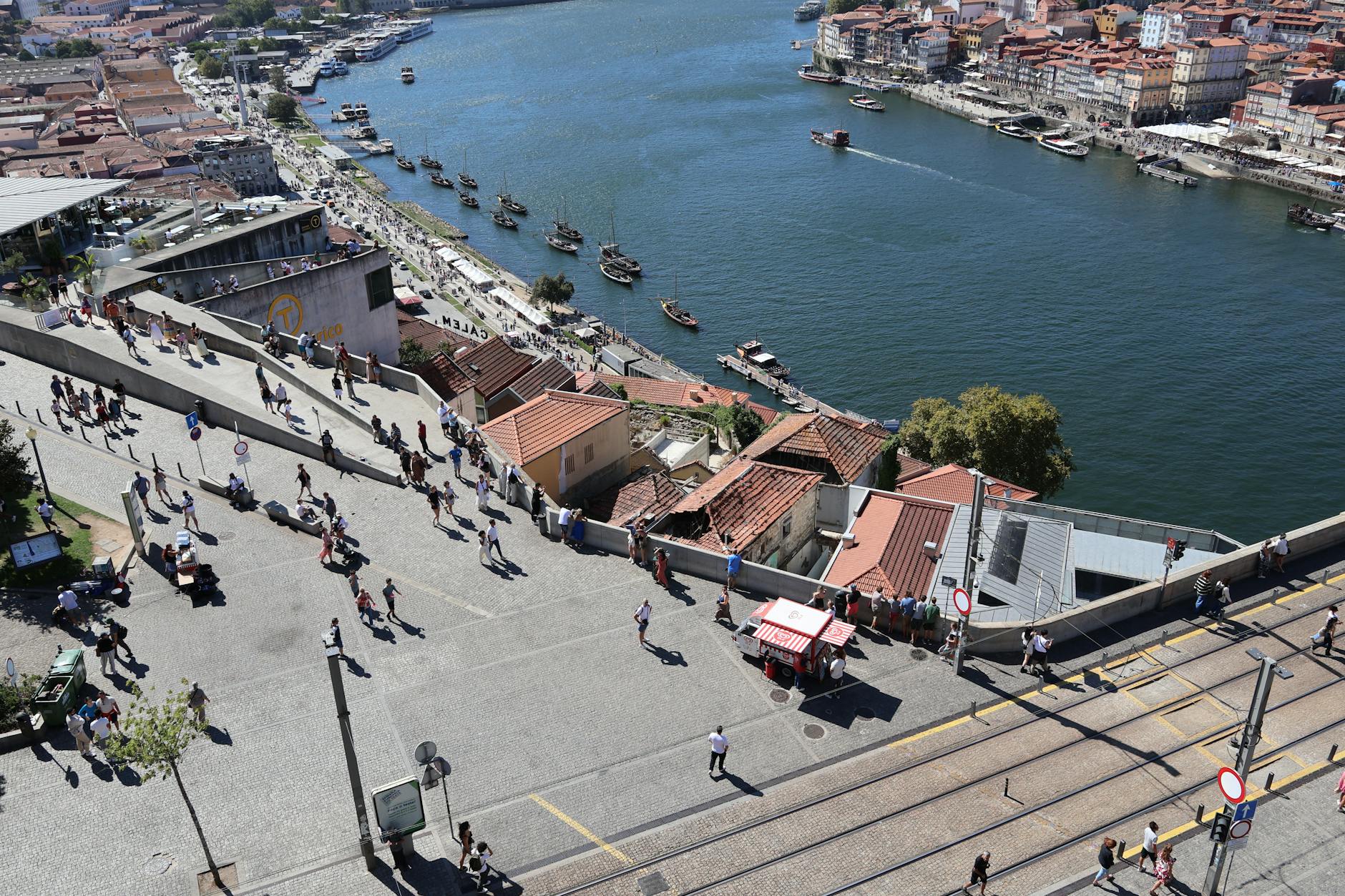
Flat-bottomed rabelo boats, once used to transport wine barrels down the Douro from the Douro Valley, still float at anchor here. They serve as a vivid, photogenic reminder of how port wine reached its cellars.
Ribeira rewards slow exploration rather than rushed ticking-off. Sit at a riverside table, order a cold Super Bock, and watch the afternoon light shift across the bridge above.
Port Wine Cellars of Vila Nova de Gaia
The wine lodges of Vila Nova de Gaia sit directly across the Douro from Porto, occupying the southern hillside in a dense cluster of whitewashed buildings marked by painted brand names. More than 30 lodges line the riverside area.
Houses including Graham's, Sandeman, and Ramos Pinto have aged their barrels here for generations. A standard lodge tour takes roughly 45 minutes and concludes with a tasting of two or three wines.
The difference between a tawny and a vintage port becomes immediately obvious once a knowledgeable guide explains it over a glass. Visitor reviews consistently highlight these tastings as a highlight of any Porto trip.
Prices vary between lodges, but most tours cost between 15 and 25 euros and include the tasting. Booking in advance is advisable during peak summer months.
Lello Bookshop
Livraria Lello, founded in 1906, frequently appears on lists of the world's most beautiful bookshops. Its neo-Gothic facade and sinuous red staircase draw an extraordinary volume of visitors for a building that is, technically, just a place to buy books.
The staircase's swooping double curve rises through the center of the main room under a stained-glass ceiling. Light filters through the colors in a way that stops most people mid-step.
Entry costs around 8 euros, redeemable against a book purchase inside. Local guides recommend arriving at opening time to experience the space without the afternoon crowds pressing in from every angle.
The shop's connection to J.K. Rowling, who lived in Porto during the early 1990s and reportedly drew inspiration from its atmosphere, adds a layer of literary mythology that only amplifies the interest.
Dom Luís I Bridge
The Dom Luís I Bridge spans the Douro on two levels, connecting Porto's upper city directly to the heights of Vila Nova de Gaia above, and the Ribeira waterfront to the lower Gaia quayside below. Gustave Eiffel's firm designed it in the 1880s.
The upper deck carries Metro Line D across the gorge, and pedestrians can walk alongside the tracks with the river some 45 meters below. The view from midspan is the best panoramic shot in the city.
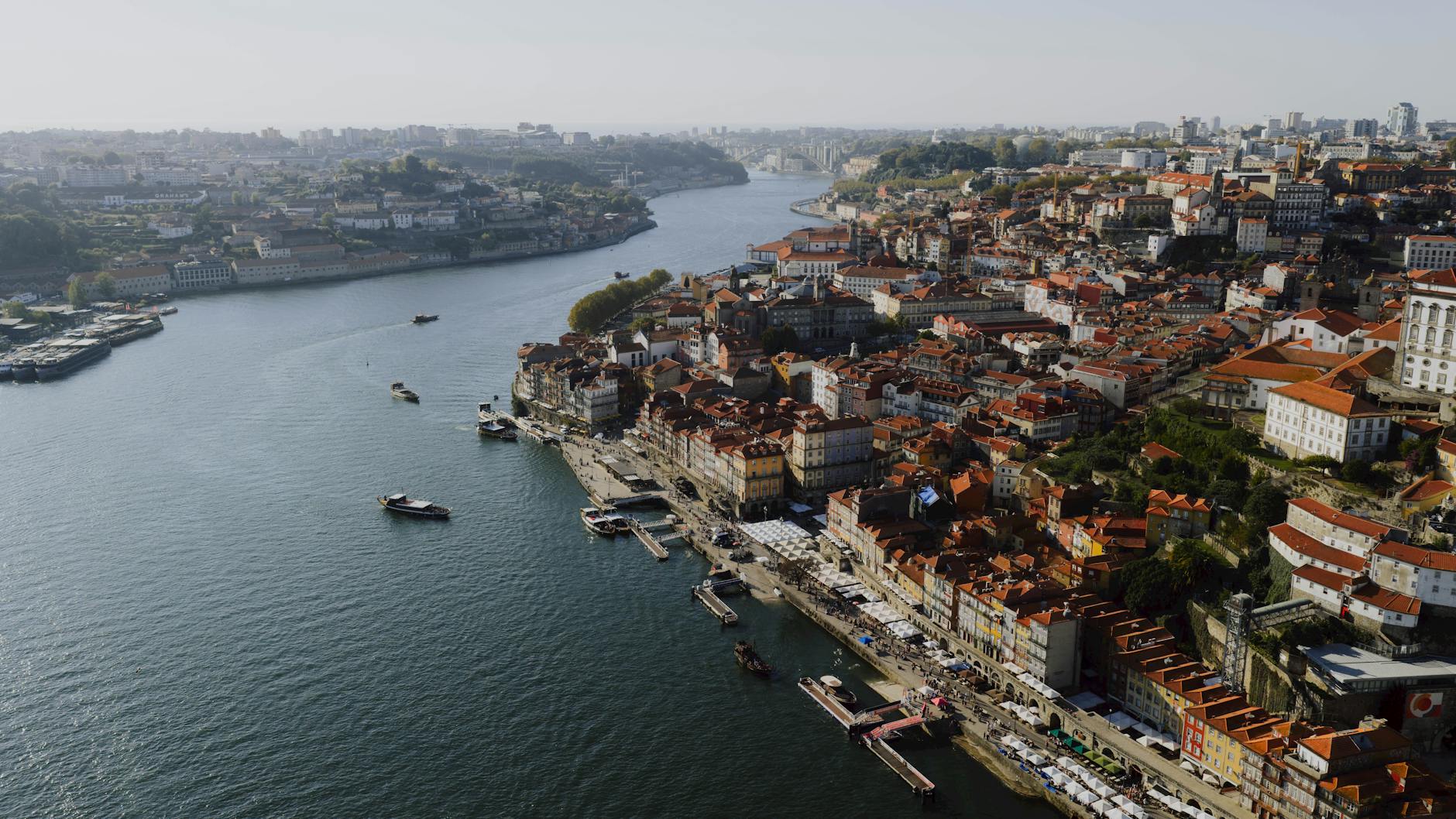
Most visitors cross it at least twice, once at street level and once on the upper deck. The two perspectives feel like completely different bridges.
At night, the lit bridge reflected in the Douro becomes one of Porto's most reproduced images. Sunset from the upper walkway, with the rabelo boats below and the wine lodge names glowing across the water, is a moment travelers consistently describe as unexpectedly moving.
Food and Local Cuisine in Porto
Porto's food culture is direct, generous, and built around ingredients that working people have cooked for centuries. There is little interest in fashionable minimalism here.
The francesinha is Porto's signature dish and requires explanation before a first encounter. It is a layered meat sandwich covered in melted cheese and a thick, beer-and-tomato-based sauce, often served with fries alongside.
Café Santiago in the Bolhão area is considered by many regulars to make one of the definitive versions. The dish is filling enough to serve as both lunch and dinner combined.
Bacalhau, salt cod, appears in countless preparations across the city's restaurants. Portuguese culinary tradition claims over 365 recipes for it, one for each day of the year.
The Bolhão Market, currently restored and reopened after years of renovation, gives the clearest picture of Porto's daily food life. Stalls sell fresh fish, cured meats, regional cheeses, and seasonal produce.
For a lighter meal, tascas serve petiscos, the Portuguese equivalent of tapas. These small plates pair naturally with a glass of Vinho Verde, the light, slightly sparkling wine produced just north of the city.
Pastel de nata, the custard tart, is available at nearly every bakery. In Porto, the local version sometimes appears with a slightly more caramelized top than the Lisbon standard.
Getting to Porto and Getting Around
Getting There
Francisco Sá Carneiro Airport sits about 11 kilometers northwest of the city center and connects Porto to over 60 international destinations, with strong links to London, Paris, Amsterdam, and Frankfurt.
Metro Line E runs directly from the airport to downtown in roughly 30 to 40 minutes. A single ticket costs around 2 euros, making the airport connection one of the most straightforward in Southern Europe.
Train connections from Lisbon take around three hours via the Alfa Pendular high-speed service, departing from Oriente station. Booking in advance secures significantly lower fares on this route.
Getting Around
Porto's Metro system covers the main tourist corridors reliably, but the city's hilly terrain means some neighborhoods require serious walking effort. Comfortable shoes matter more here than in many other European cities.
Historic tram lines still run in Porto, particularly Line 1 (Massarelos), which follows the Douro riverfront. These vintage cars are genuinely in service rather than tourist attractions placed behind glass.
Uber and Bolt both operate throughout the city with competitive pricing. For trips between the Ribeira and the wine lodges, walking across the Dom Luís I lower deck is faster and far more enjoyable than any vehicle.
Budget and Practical Tips
How Much to Budget for Porto
Porto sits in the moderate budget category for Western Europe. Daily spending of 80 to 120 euros per person covers comfortable accommodation, meals at good local restaurants, entry fees, and transport.
A mid-range hotel near the city center typically runs between 80 and 150 euros per night depending on season. Hostels and guesthouses in Bonfim or Cedofeita bring this figure down considerably.
Museum entries remain reasonably priced. The Porto Card, available for 24, 48, or 72 hours, includes unlimited Metro travel and discounts or free access to over 50 attractions. Frequent visitors to the main sites find it pays for itself quickly.
Wine tastings at the Gaia lodges, a meal with wine, and tram tickets rarely push a day's total above 50 euros if budget-conscious choices guide the planning.
Best Time to Visit: April to October
The period from April to October gives Porto its most reliable weather, with temperatures climbing from around 17°C in spring to a peak of 25 to 28°C in July and August. Rain drops significantly compared to the wet Atlantic winters.
June through September brings the highest visitor numbers, particularly around the Festa de São João on June 23rd, Porto's wildest and most locally beloved annual celebration. Streets fill with grilled sardines, plastic hammers, and midnight fireworks over the Douro.
April, May, and October balance pleasant temperatures with thinner crowds. Local guides recommend these shoulder months for anyone who prefers exploring at a slower pace without competition for tables at the better tascas.
Frequently Asked Questions about Porto
Similar Destinations
Lisbon
In Lisbon, Portugal, trams rattle past tiled facades to Belém Tower, then on to Jerónimos Monastery’s carved…
DiscoverBarcelona
Barcelona, Spain's most visually daring city, pulls travelers between Gaudí's gravity-defying Sagrada…
DiscoverVenice
Venice, Italy, rises from the Adriatic lagoon as a living masterpiece, where St. Mark's Square, the Rialto…
Discover