Explore Norway
1 destination to discover
Everything about Norway
Traveling to Norway means stepping into a landscape that seems almost too dramatic to be real — fjords carved by glaciers, mountains dropping straight into the sea, and skies that glow green in winter.
This Scandinavian nation stretches 2,500 kilometers from south to north, making it one of Europe's most geographically diverse countries.
From Viking heritage to modern design, Norway rewards every type of traveler willing to venture beyond the obvious.
Why travel to Norway?
What sets Norway apart from other destinations
Norway holds a rare combination: raw, untamed wilderness and a society that ranks consistently among the world's most livable. With a population of just 5.5 million spread across 385,000 square kilometers, the sense of space is genuine.
The fjords alone — UNESCO-listed Nærøyfjord and Geirangerfjord among them — are unlike anything else in Europe. But Norway also has world-class cities, Viking ship museums, and the world's most spectacular road trips.
Norway at a glance
Norway borders Sweden, Finland, and Russia to the east, with the North Sea and Norwegian Sea defining its western edge. The capital Oslo sits in the southeast, while the Arctic Circle cuts across the country's midsection.
The currency is the Norwegian Krone (NOK). Norway is not in the EU but is part of the Schengen Area. The country has three UNESCO World Heritage Sites related to its natural landscape alone.
Regions and cities to explore
The main regions of Norway
Western Norway is the fjord heartland — this is where the postcard images come from. The Vestland region clusters Bergen, Hardangerfjord, and the iconic Sognefjord, the longest fjord in the world at 204 kilometers.
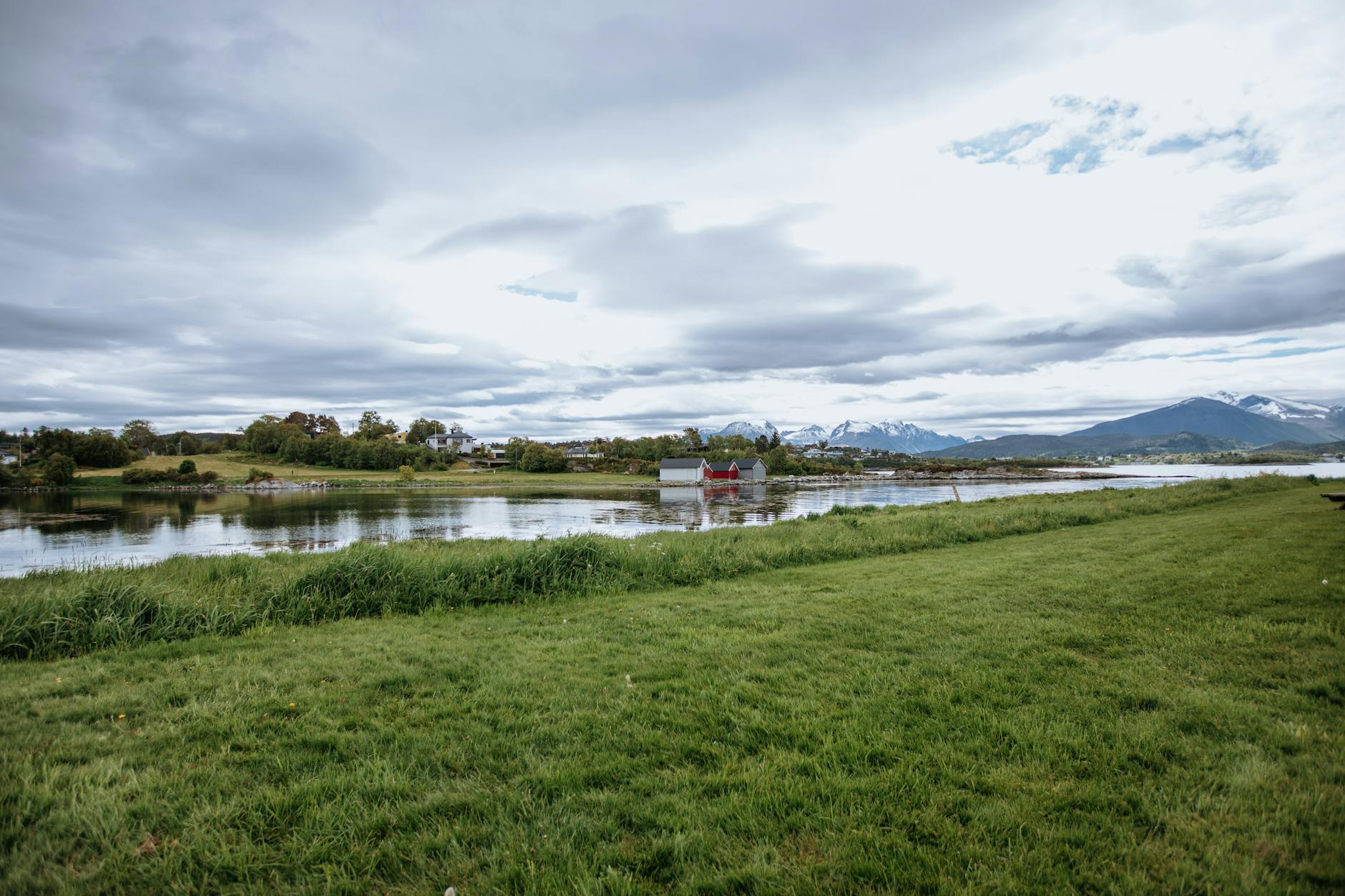
Northern Norway stretches above the Arctic Circle into a world of midnight sun, polar night, and reindeer herding. The Lofoten Islands, with their red fishing cabins perched on stilts, draw photographers and hikers year-round.
Eastern Norway centers on Oslo and the Østlandet, a softer landscape of forests, farmland, and lakes. This region holds most of Norway's population and cultural institutions.
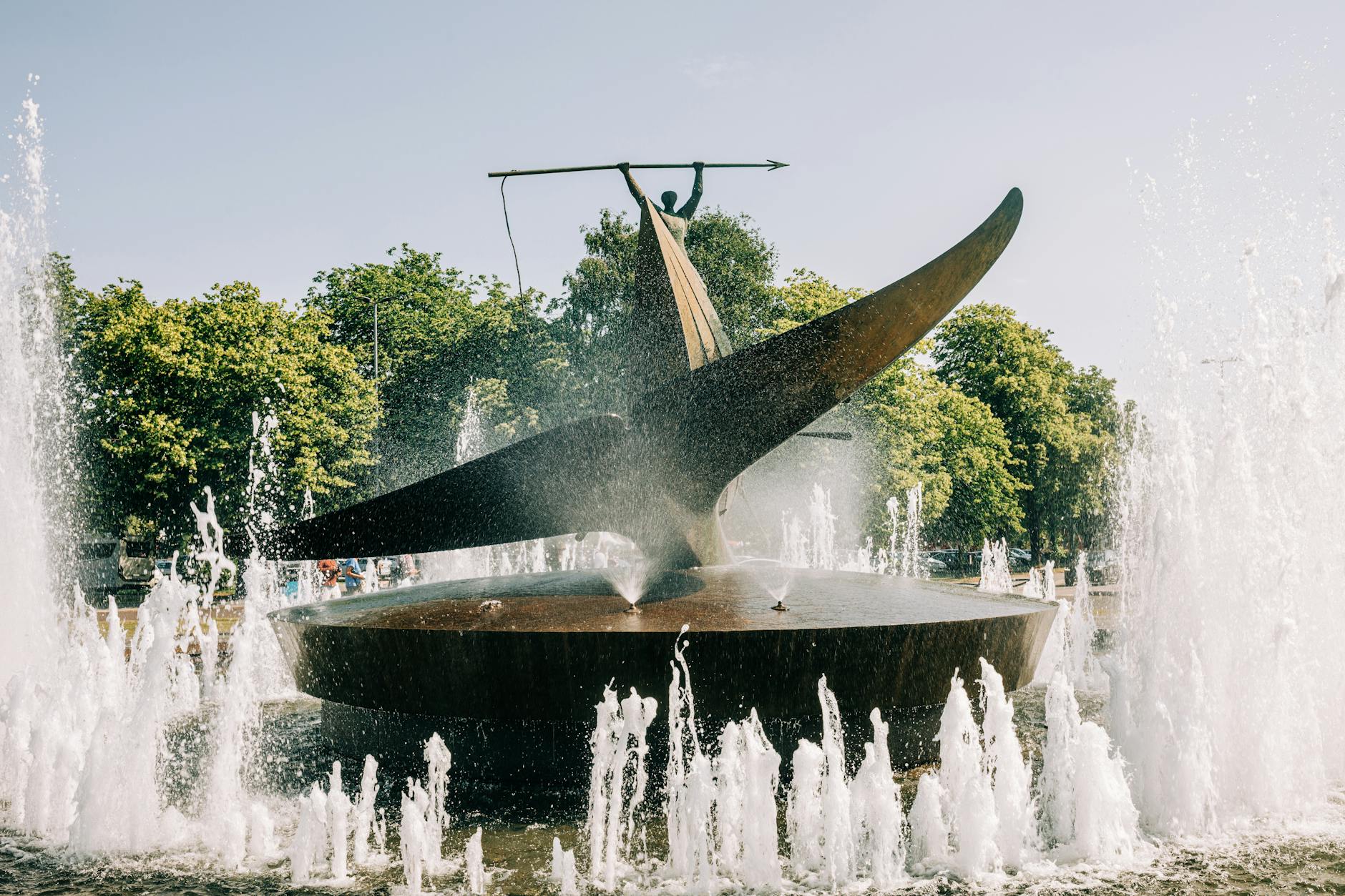
Trøndelag, centered on Trondheim, bridges north and south. It holds Nidaros Cathedral, the northernmost medieval cathedral in the world, and a food scene that locals take seriously.
Which cities should you visit?
Oslo punches above its weight for a capital of 700,000 people. The Munch Museum, the new Opera House, and the Aker Brygge waterfront district make it a genuinely compelling urban destination.
Bergen is the gateway to the fjords and a UNESCO-listed city in its own right. The Bryggen wharf — a row of colorful Hanseatic wooden buildings — dates to the 14th century and still functions as a commercial district.
Tromsø, 350 kilometers north of the Arctic Circle, is the northern lights capital of Norway. It has a university, a lively bar scene, and the striking Arctic Cathedral as its architectural landmark.
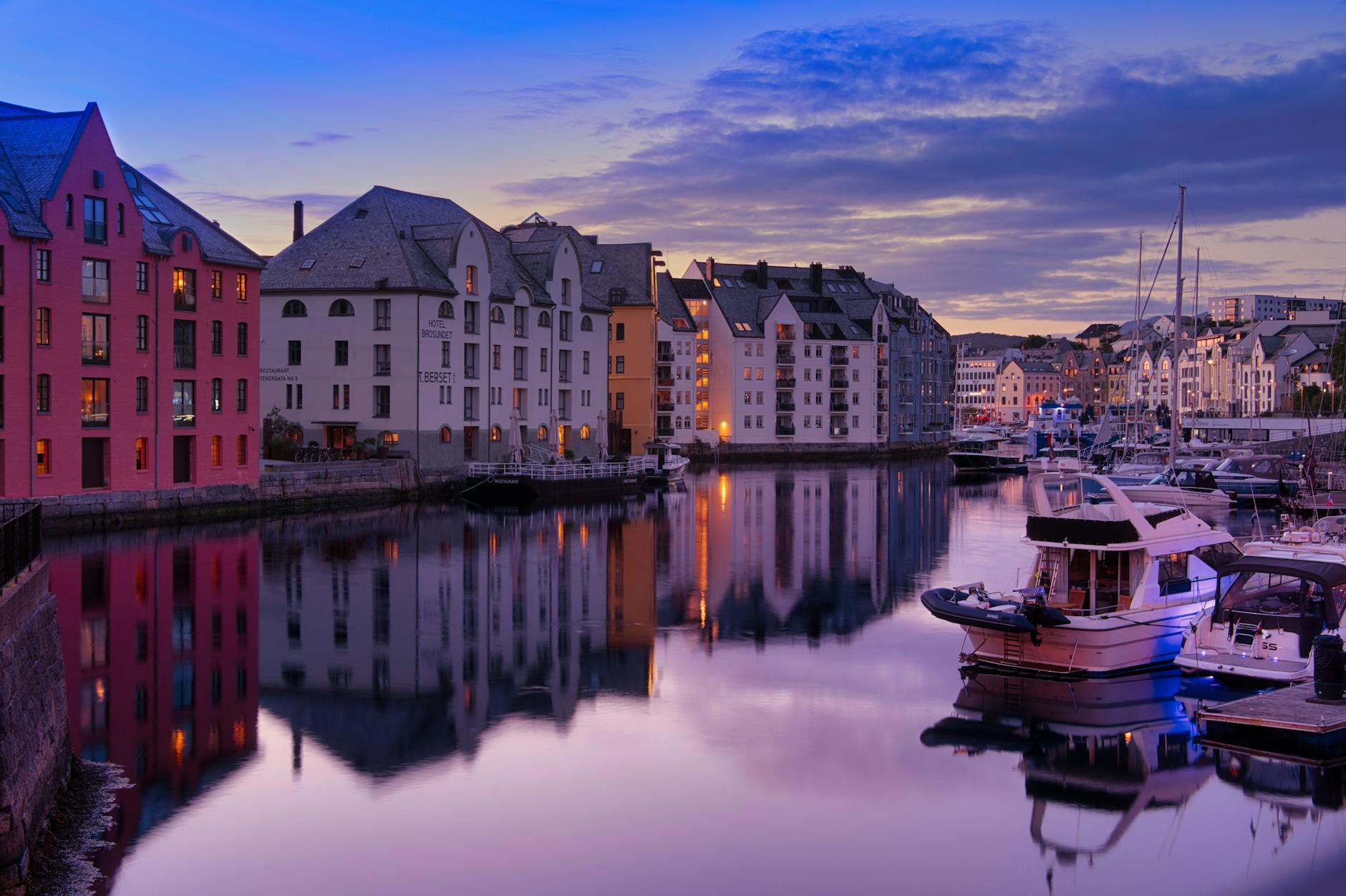
Ålesund stands alone for architecture. Rebuilt after a 1904 fire, the entire city center is Art Nouveau, making it one of the most visually coherent towns in Scandinavia. Local guides recommend climbing Mount Aksla for the panoramic view over its islands.
Culture, traditions and way of life
Norwegian culture is built around a concept called friluftsliv — literally "open-air life." This isn't a hobby; it's a philosophy. Families ski in winter and hike in summer as a matter of routine, not recreation.
The Law of Everyman (Allemannsretten) gives everyone the legal right to roam freely in uncultivated nature, camp anywhere for up to two nights, and swim in any body of water. This shapes Norwegian society profoundly.
Vikings are not just a tourist theme here. Norway takes its Norse heritage seriously, with world-class archaeological museums in Oslo housing actual 9th-century ships recovered from burial mounds.
Constitution Day on May 17th is the most important national celebration. Cities fill with people in traditional bunad costumes — each region has its own distinct design — and the mood is genuinely festive rather than formal.
Norwegians tend to be reserved with strangers but warm once acquainted. Social equality is a deeply held value; the gap between rich and poor is among the smallest in the world, and it shows in everyday interactions.
Food: the flavors of Norway
Norwegian food is shaped by the sea and the seasons. Atlantic salmon is practically a national emblem, served smoked, cured as gravlaks, or simply grilled. The quality of seafood here is exceptional by any standard.
Rakfisk — fermented trout — is an acquired taste that visitors either love or find unforgettable for other reasons. Travelers note it as one of Norway's most authentic culinary experiences, best tried at an autumn food market.
Bergen has a famous fish market, Fisketorget, operating since the 13th century. Visitor reviews confirm it's more than a tourist trap — local fishermen sell directly here, and the seafood soup alone justifies the visit.
Brunost, the brown whey cheese with a caramel-sweet taste, appears at nearly every Norwegian breakfast. It's eaten sliced thin on crispbread and polarizes international visitors almost immediately.
The New Nordic food movement has taken strong root in Oslo, with several restaurants earning Michelin recognition. Expect hyper-local ingredients — foraged herbs, reindeer, cloudberries — presented with architectural precision.
Beer culture is thriving. Norwegian craft breweries have multiplied rapidly since laws relaxed in the 2010s, and Tromsø and Oslo both have excellent taproom scenes worth exploring.
Practical information
Visa and entry requirements
Norway is part of the Schengen Area, so EU and EEA citizens enter freely with a valid ID card or passport. Citizens of around 60 countries, including the US, Canada, Australia, and the UK, can visit without a visa for up to 90 days.
From 2025, travelers from visa-exempt non-EU countries need to register through the ETIAS (European Travel Information and Authorization System) before arrival. This is an online pre-clearance, not a visa. Always check current entry requirements with the Norwegian Directorate of Immigration before traveling.
Budget and cost of living
Norway is consistently one of Europe's most expensive destinations. A sit-down restaurant meal in Oslo typically costs 250–400 NOK (roughly €22–35) per person. A beer in a bar runs 90–120 NOK. Budget travelers who self-cater and use hostels can manage on 800–1,000 NOK per day.
Mid-range travel — decent hotels, one restaurant meal daily, activities — runs closer to 2,000–2,500 NOK per day. The good news: Norway's public infrastructure is excellent, many hiking trails are free, and some of the best experiences cost nothing at all.
Getting around
Norway's domestic transport network is remarkably well-developed for such a mountainous country. NSB (Vy) trains connect Oslo to Bergen, Trondheim, and Stavanger with scenic routes that are journeys in themselves.
The Bergen Railway — Oslo to Bergen in about 7 hours — is considered one of Europe's great train journeys. Ferries and express boats connect coastal towns where roads don't reach.
Renting a car gives maximum flexibility for fjord exploration. Roads are well-maintained but mountain routes close in winter, so always check conditions seasonally.
When to visit Norway?
Norway's geography means the "best time" depends entirely on what you're after. The country rewards visits in every season, but each delivers a radically different experience.
Summer (June–August) brings the midnight sun above the Arctic Circle and long, bright evenings across the whole country. Temperatures in Oslo reach 20–25°C. This is peak season — prices rise and popular fjord areas get crowded, but the light is extraordinary.
Winter (November–March) is northern lights season in Tromsø and the Lofoten Islands. The aurora is visible when skies are clear and solar activity is high; visitor reviews confirm that Tromsø between late January and March gives the best statistical chances.
Autumn (September–October) is arguably the most underrated window. Crowds thin out, forests turn amber and red, and the fjords reflect the colors with perfect stillness. Prices drop noticeably from summer peaks.
Spring (April–May) sees snow still covering mountain passes while coastal towns bloom. Constitution Day on May 17th makes late May a particularly lively time to be in any Norwegian city.
Frequently Asked Questions about Norway
Similar Destinations
Explore more destinations in the same region of the world.
Copenhagen
Copenhagen, Denmark's vibrant capital, pairs the candy-colored facades of Nyhavn with the magic of Tivoli…
DiscoverDublin
Dublin, Ireland pulls travelers in with centuries of history layered across cobblestone streets, from the…
DiscoverStockholm
Stockholm, Sweden's capital spread across 14 islands, rewards visitors with medieval cobblestones in Gamla…
Discover