Mexico City

Everything about Mexico City
One of the largest cities on the planet sits at 2,240 meters above sea level, ringed by volcanoes, and built on the ruins of an ancient Aztec capital. Visiting Mexico City means stepping into a place where 700 years of history press against the present at every corner.
The contrast is relentless and thrilling. Pre-Columbian temples, Spanish colonial palaces, and modernist museums stand within walking distance of each other in the historic center.
This is also one of the most affordable major capitals in the world for international travelers. The value here is extraordinary, and the depth of experience goes far beyond what most visitors expect.
Why Visit Mexico City?
What Makes Mexico City Unique
Mexico City was built directly on top of Tenochtitlán, the great Aztec city that once rose from a lake. That layered foundation, both literal and cultural, gives the city an atmosphere unlike anywhere else in the Americas.
The street food alone would justify the trip. Add world-class museums, a neighborhood-by-neighborhood diversity of character, and a creative energy that has made the city a magnet for artists and architects for over a century.
Mexico City at a Glance
The metropolitan area holds over 21 million people, making it one of the five largest urban centers on Earth. Yet individual neighborhoods like Coyoacán, Roma, and Condesa feel remarkably human in scale and easy to explore on foot.
Spanish is the dominant language, but English is widely spoken in tourist areas and restaurants. The currency is the Mexican peso, and the city runs on a mix of metro lines, buses, and rideshare apps that keep getting around simple and inexpensive.
What to See and Do in Mexico City?
Zócalo (Plaza de la Constitución)
The Zócalo is the geographic and symbolic heart of Mexico City. At roughly 46,000 square meters, it ranks among the largest public squares in the world, and on most days it buzzes with vendors, protesters, school groups, and curious travelers.
On the northern edge stands the Metropolitan Cathedral, built over two centuries starting in 1573. Its baroque facade tilts visibly, a direct result of the soft lakebed sediment slowly sinking beneath the city.
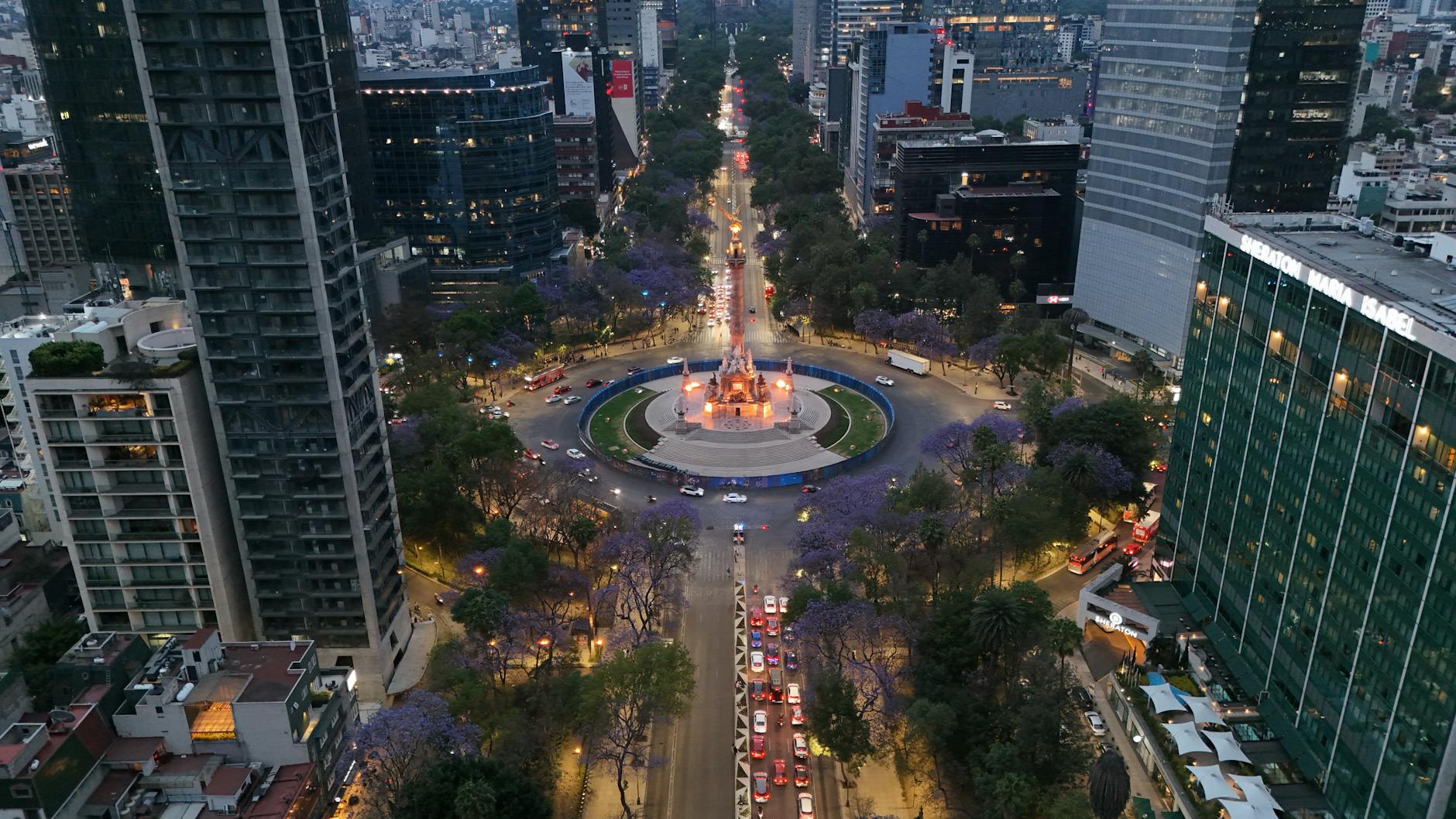
Just beside the cathedral, the ruins of the Templo Mayor sit partially excavated in the open air. An adjacent museum displays the obsidian knives, carved stone discs, and ceremonial vessels recovered from the site.
The surrounding streets feed into a grid of colonial-era buildings now housing government offices, shops, and cantinas. Local guides recommend arriving early in the morning before tour groups fill the square.
National Museum of Anthropology
The National Museum of Anthropology in Chapultepec Park is widely considered one of the finest museums in the world. Its collection spans the entire breadth of pre-Columbian Mexican civilization across 23 permanent exhibition halls.
The centerpiece is the Aztec Sun Stone, a 24-ton basalt disc carved around 1500 CE and often mistakenly called a calendar. The room containing it alone draws thousands of visitors each week.
Beyond the Aztec hall, separate galleries cover the Maya, Olmec, Zapotec, and Toltec cultures with equal seriousness. Visitor reviews confirm that a single visit rarely feels sufficient to absorb what the building contains.
Admission costs around 90 pesos for international visitors, and the museum closes on Mondays. The building itself, designed by Pedro Ramírez Vázquez and completed in 1964, is an architectural landmark in its own right.
Frida Kahlo Museum (Coyoacán)
The Frida Kahlo Museum, known locally as La Casa Azul (The Blue House), sits in the tranquil neighborhood of Coyoacán, about 10 kilometers south of the historic center. Kahlo was born here in 1907 and spent much of her life within these cobalt-blue walls.
The house preserves her studio, her personal belongings, her corsets, and a significant number of her paintings in the rooms where she actually created them. The intimacy of the space sets it apart from conventional museum experiences.
Coyoacán itself rewards a longer visit. The central market and the Jardín Centenario nearby are perfect for spending a slow afternoon with local food, artisan goods, and street musicians.
Tickets sell out frequently, especially on weekends. Booking in advance through the official museum website is strongly recommended, as walk-in availability is limited throughout the year.
Xochimilco (Chinampas)
Xochimilco lies in the southern reaches of the city and contains the last surviving remnant of the ancient lake system that once surrounded Tenochtitlán. The floating gardens, known as chinampas, have been cultivated here for over a thousand years.
Brightly painted flat-bottomed boats called trajineras carry visitors through the canals on weekends. Mariachi bands, food vendors, and flower sellers paddle up alongside, turning the canals into a slow-moving floating market.
The Xochimilco Ecological Zone is a UNESCO World Heritage Site, recognized in 1987 alongside the historic center of Mexico City. The axolotl, the famous salamander found almost nowhere else on Earth, is native to these waters.
Travelers note that Sunday afternoons bring the most lively atmosphere, though the canals become very busy. Renting a trajinera for a private group gives more flexibility and is still remarkably affordable.
Food and Local Cuisine in Mexico City
Mexico City's food culture runs from street-level tacos to restaurants holding spots on the World's 50 Best list. Both ends of that spectrum are worth exploring, and neither requires a large budget.
Tacos de canasta, steamed tacos carried in baskets by bicycle vendors, cost a few pesos each and count among the city's defining breakfast foods. Tlayudas, tamales, and quesadillas con flor de calabaza appear at markets throughout the city.
The neighborhood of Roma Norte has become the city's most celebrated food district. Mezcalerías, natural wine bars, and casual taco counters line streets that also host serious fine-dining kitchens.
Local markets like Mercado de Medellín and Mercado Jamaica give direct access to ingredients and prepared foods that tourists rarely find. Visitors who spend time in these markets leave with a much clearer sense of how the city actually eats.
Mezcal and pulque are the traditional spirits of the region. Pulque, a fermented agave drink with a thick, slightly sour flavor, has been consumed here since pre-Columbian times and is found in dedicated pulquerías across the city.
Getting to Mexico City and Getting Around
Getting There
Benito Juárez International Airport (MEX) sits just 5 kilometers from the historic center and handles direct flights from dozens of cities across Europe, North America, and Latin America. Flight time from Europe averages around 11 to 12 hours depending on the departure city.
A second major airport, Felipe Ángeles International Airport (NLU), opened in 2022 about 50 kilometers north of the city center. Several budget carriers use this terminal, though the transfer into the city takes longer and requires planning.
Getting Around
The Mexico City Metro is one of the most extensive subway networks in the Americas, with 12 lines connecting the city for just 5 pesos per ride, regardless of distance. Trains run frequently during peak hours and cover most areas visitors want to reach.
Rideshare apps like Uber and DiDi work reliably throughout the city and cost very little by European standards. Walking works well inside compact neighborhoods like Coyoacán, Roma, and the historic center, where most attractions cluster together.
Budget and Practical Tips
How Much to Budget for Mexico City
Mexico City sits firmly in the budget-friendly category for most international travelers. A daily budget of 40 to 60 euros covers accommodation in a clean guesthouse or hostel, street food meals, metro rides, and museum entries with money to spare.
Mid-range travelers spending 80 to 120 euros per day access comfortable boutique hotels in Roma or Condesa, sit-down restaurant meals, and private transport. At that level, the city feels genuinely luxurious compared to comparable European capitals.
Museum admission fees are low across the board. Many national museums, including the Museum of Anthropology, are free for Mexican citizens on Sundays, which slightly reduces capacity available to foreign visitors that day.
Best Time to Visit: November to April
The dry season runs from November through April, and these months bring the clearest skies, lowest humidity, and most comfortable temperatures, typically between 15 and 25 degrees Celsius during the day. Rain is rare, and air quality tends to be noticeably better than during the summer months.
December and January see the city buzzing with local festivals and holiday decorations, particularly around the Zócalo. Travelers note that late February and March represent a sweet spot, with good weather, manageable crowds, and no major holidays inflating hotel prices.
Frequently Asked Questions about Mexico City
Similar Destinations
Chicago
Chicago, Illinois, hits hard from the first glance: the Cloud Gate in Millennium Park, the Art Institute's…
DiscoverLos Angeles
Los Angeles, California's sprawling metropolis, pulls travelers from Hollywood Boulevard's Walk of Fame to…
DiscoverToronto
Toronto, Canada's largest city, pulls travelers from the iconic CN Tower to the cobblestones of the…
Discover